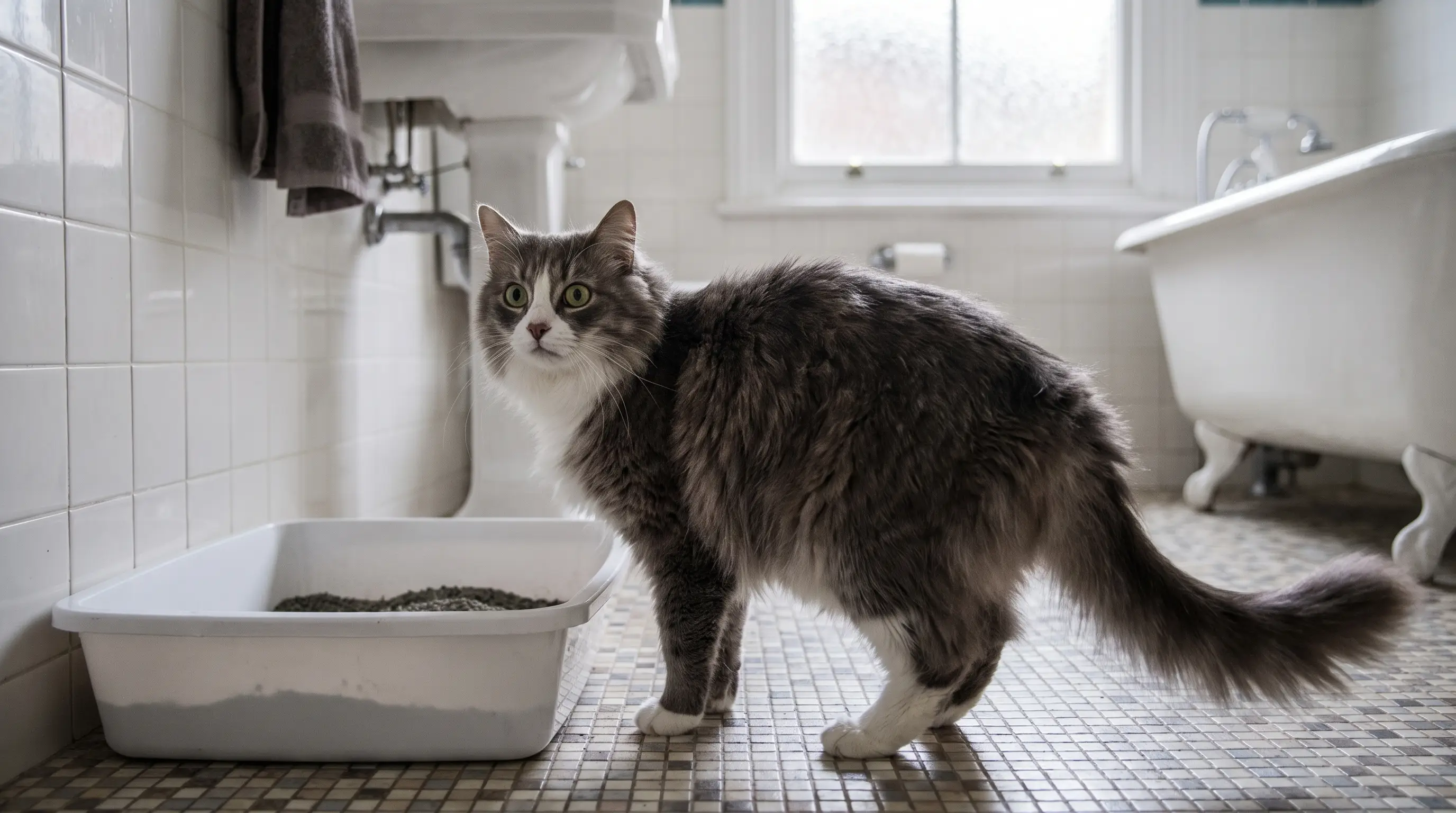
Why is my cat pooping outside the litter box? Causes and fixes
A cat that poops on the floor is running a different problem than a cat that pees on the wall, and mixing the two up wastes weeks. Defecation problems are dominated by two things — a body that hurts or hurries, and a tray that has become unpleasant or unreachable — with genuine territorial messaging a distant third. The order you investigate in matters, because the most common causes are the ones a vet finds, and every behavioural fix works better on a cat that isn't in pain.
Start at the vet: the medical causes
The most common reason an adult cat abruptly stops using the tray for poop is that something has changed inside. Diarrhoea creates urgency a cat can't schedule — it goes where it stands, often with soft or unformed stool as the giveaway. Constipation does the opposite and worse: hard, painful defecation teaches the cat that the tray is where pain happens, so it tries other places hoping for a better outcome, and untreated constipation in cats can escalate into megacolon, a stretched, non-functioning colon that is much harder to treat than the constipation that caused it. Inflammatory bowel disease, food sensitivities and, in kittens, worms round out the list. The pattern that should send you to the vet without a detour is suddenness: a cat that used the tray reliably for years and stopped this month has a reason, and it's rarely a mood. Its urinary twin, peeing outside the litter box, carries an even sharper emergency — worth knowing about while you're paying attention to trays.
The senior special case: when the tray moved out of reach
In older cats, poop beside the tray — close, but outside — is a mobility flag before it's anything else. Arthritis turns a high-sided tray into a wall, a flight of stairs into a reason to go on this floor instead, and the squat itself into a position that hurts to hold. The cat isn't missing; it's negotiating. The fixes are mechanical: a low-entry tray, one tray per floor of the house, and a vet conversation about arthritis, which is wildly underdiagnosed in senior cats because they hide it so well. A senior that starts sleeping more, jumping less and pooping next to the tray is telling one story, not three, and our guide to litter-box problems in older cats walks through the whole checklist.
The tray itself: fussier about poop than pee
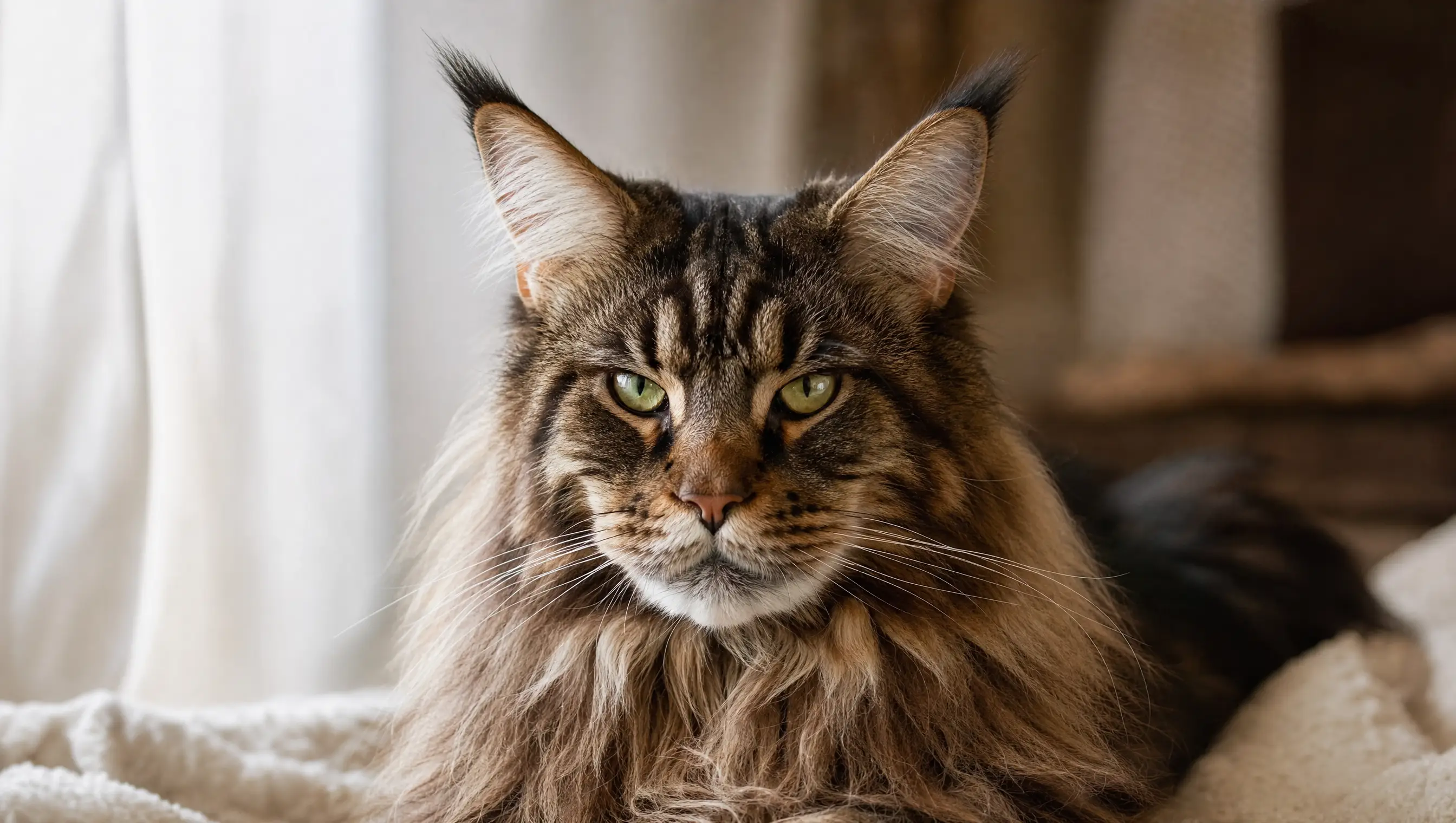
Plenty of cats will pee in a tray they'll no longer poop in, which is why "peeing fine, pooping on the floor" is such a common report. Defecation takes longer, needs a more vulnerable position, and many cats prefer a separate tray for it — one reason the rule of thumb is one tray per cat plus one spare, in different quiet locations rather than lined up in a row. Beyond count, run the standard audit: a tray cleaned less than daily, a litter the cat dislikes underfoot, a scented litter chosen for your nose rather than the cat's, a covered tray that traps smell and blocks the exit, a spot with too much traffic. Size is the quietly common one — a tray should be half again as long as the cat, which for a Maine Coon rules out most of what pet shops sell as standard. The full setup logic is in the cat litter guide.
Middening and stress: when it really is a message
Cats do use faeces as territorial signage — behaviourists call it middening — but it's the rarest item on this page, and it has a recognisable signature: a single unburied deposit in a prominent, socially loaded spot such as a doorway, a hallway junction, or the bed, from a cat whose toilet habits are otherwise normal. It belongs to the same contested-territory family as urine spraying, and it responds to the same work: find what's making the territory feel unsafe and fix that, not the symptom. Far more often, though, poop in odd places is ordinary stress leaking out — a move, building work, a new arrival, or a housemate cat that guards the tray corridor so the anxious one goes elsewhere. The stress-signs guide helps you audit the household, and if one cat is policing the other, treat it as the relationship problem it is rather than a toileting one.
The clean-up and the retraining plan
Whatever the cause, the response at the scene is the same. Clean with an enzymatic cleaner so no scent invitation survives, and skip the punishment entirely — rubbing a cat's nose in it teaches fear of you and of the location, not tray use, and a scared cat gets less continent, not more. Then make the right answer easy: put a tray at the scene of repeated accidents, let the cat rebuild the habit there, and migrate the tray to a better spot a metre every few days once it sticks. Kittens get the benefit of the doubt and a shortcut — most just need the setup fixed, as covered in litter training a kitten. And set a deadline: if two weeks of a clean, right-sized, well-placed tray hasn't moved the problem, or the stool itself ever looks wrong, the answer is at the vet's, and after that, if needed, a referral to a behaviourist — in that order.
Common questions
Why is my cat pooping outside the litter box all of a sudden?
A sudden change in an adult cat points first at a medical cause — diarrhoea creating urgency, constipation making the tray painful, or arthritis making it hard to reach or climb into — so the first call is the vet, not a training plan. If the vet clears the cat, audit the tray next: cleanliness, size, location and count.
Why is my cat pooping on the floor but peeing in the litter box?
Because defecation is fussier than urination: it takes longer, needs a more vulnerable position, and many cats want a separate tray for it. A tray a cat still pees in can fail the poop test on cleanliness, size or exposure — and painful defecation from constipation teaches a cat to avoid the tray specifically for poop.
How do I stop my cat from pooping on the floor?
Rule out a medical cause first, then fix the setup: one tray per cat plus a spare in separate quiet spots, cleaned daily, uncovered, big enough, with a litter the cat likes. Clean accidents with an enzymatic cleaner, never punish, and put a tray at the accident site temporarily so the habit rebuilds where the problem was.
Why does my cat poop on my bed?
The bed is either the safest-smelling place in the house to an anxious cat or, more rarely, a deliberately prominent message board for a territorial one. Both versions mean the cat feels insecure — a new arrival, an absent owner, tension with another cat — and the fix is finding that stressor, plus a vet check to rule out urgency it simply couldn't schedule.
Do cats poop on the floor out of spite?
No. Spite isn't in the feline repertoire — what looks like revenge is urgency, pain, fear of the tray, or territorial anxiety, all of which have the bad luck of leaving evidence in places you care about. Reading it as spite leads to punishment, which reliably makes every real cause worse.
When should I take my cat to the vet for pooping outside the box?
Straight away if the change is sudden in a previously reliable cat, if the stool is loose, bloody or unusually hard, if the cat strains, cries or produces nothing, or if it's a senior showing other slowing-down signs. Book the same visit if two weeks of a clean, well-placed, right-sized tray hasn't fixed things — at that point you're guessing without bloodwork.
More in Cats
Why is my cat peeing outside the litter box? Causes and when to see a vet
It can be a litter-tray dislike or stress — but it can also be a urinary problem, and in male cats a blockage that kills within hours. How to tell, and what to do.
Cystitis in cats: why it's usually not an infection
Most feline cystitis isn't bacterial — it's a stress disease of the bladder, which is why antibiotics often aren't the answer. The signs, the one true emergency, and what actually prevents the next flare.
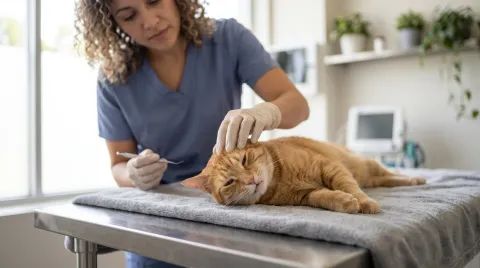
Tooth resorption in cats: the painful disease hiding below the gumline
A third or more of adult cats have teeth being dissolved from the inside — and almost all of them eat normally and say nothing. What resorption is, why only dental X-rays find it, and why extraction is good news.
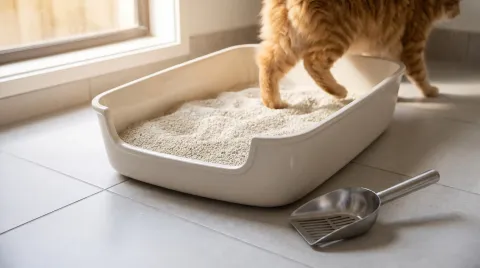
A litter box routine that actually works
Daily, weekly and monthly, plus the placement and the n+1 rule. How to keep a box a cat will keep using, and get rid of the smell without scented litter.

Autumn dangers for dogs: acorns, conkers and mushrooms
Autumn puts three scavenging hazards on the ground — acorns, conkers and wild mushrooms — plus rat bait and fermenting fruit. What's toxic, what the warning signs are, and when to call the vet.

Winter pet dangers: antifreeze, road salt and chocolate season
Antifreeze is the winter emergency — sweet, deadly and quick. Plus gritted-salt paws, the festive-food gauntlet and cats sheltering in warm car engines. What to watch and when it's urgent.