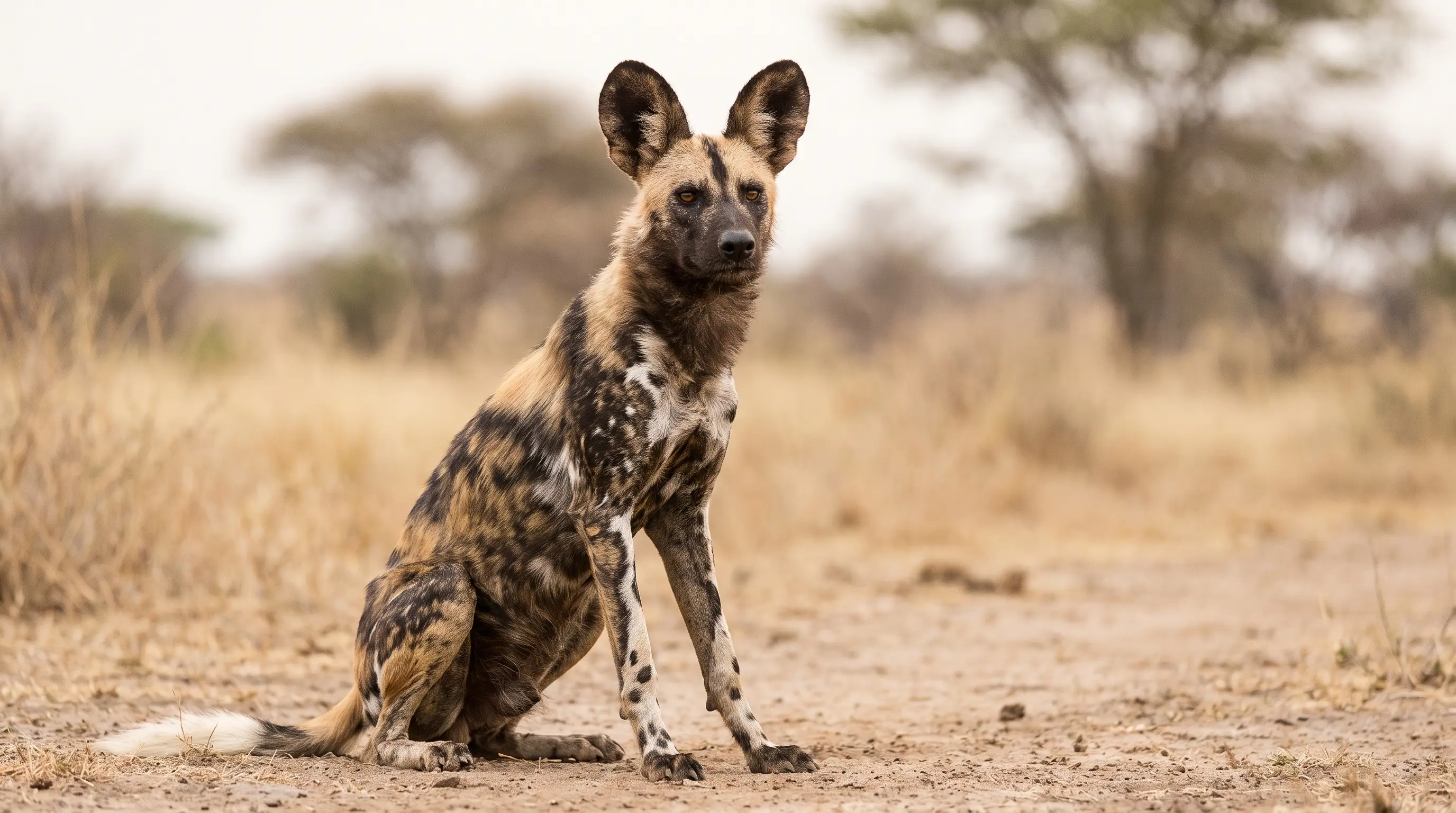
African Hunting Dog
The painted wolf — Africa's wild endurance hunter, no two coats alike.
Vital stats
| Size | Medium-large · 60–75 cm |
| Weight | 18–36 kg |
| Life expectancy | About 10 years in the wild |
| Energy | Extreme — ranges many kilometres daily |
| Shedding | Sparse, bristly coat |
| Coat | Mottled black, tan and white · unique to each animal |
| Group | Wild species · not a registered breed |
| Origin | Sub-Saharan Africa |
Breed traits
Friendliness
Care
Mind
The African Hunting Dog by the numbers
The African Hunting Dog facts owners search for most — price, lifespan, weight, shedding and colours, in one place.
Less common, so expect a waitlist and some travel to a reputable breeder — which pushes the price up. Ongoing costs run high — more food, bigger doses at the vet, and pricier insurance.
We don't quote a single figure: the real price swings with breeder, region, bloodline and health testing — and a rescue costs a fraction of a breeder's litter. Adopting is almost always the cheapest route.
Temperament
Nothing here was bred; everything evolved. Packs live by cooperation — hunting in relay, feeding their pups first, caring for injured members — and communicate in twittering chirps rather than barks. Wary of humans and never domesticated, the species shows what canine society looks like without us in it.
Habits & quirks
The sneeze vote
Packs decide when to set off hunting by sneezing — enough sneezes, and the hunt is on.
Pups eat first
Adults stand back at a kill while the young feed — rare manners among carnivores.
Relay running
Wears prey down over kilometres at a relentless, shared pace rather than ambushing it.
Painted identity
Each mottled coat is one of a kind — researchers tell individuals apart by pattern alone.
Care
| Ownership | None — keeping one is illegal, dangerous and unworkable; the species has never been domesticated. |
| Conservation | Endangered, with habitat loss and snaring among its greatest threats — support reputable wildlife charities. |
| Where to see one | Protected reserves across southern and eastern Africa, or accredited conservation zoos. |
| Not a hybrid | Despite the name, it cannot interbreed with domestic dogs — it belongs to a separate genus, Lycaon. |
Life expectancy
This breed has a typical life expectancy of About 10 years in the wild.
Similar breeds
Breeds with a similar build and background — worth a look if this one isn't quite the fit.
Breeds that look like this
Common questions
Can you keep an African Hunting Dog as a pet?
No — it is a wild, endangered species protected by law, and it has never been domesticated. Even hand-raised individuals remain wild animals unsuited to any home.
Is the African Hunting Dog related to domestic dogs?
They share the canid family but sit in a separate genus, Lycaon, and the two cannot interbreed. It is a cousin, not an ancestor or a breed.
Why is it called the painted wolf?
Its scientific name, Lycaon pictus, means 'painted wolf-like animal', after the blotched black, tan and white coat. Every individual's pattern is unique.
Does the African Hunting Dog shed a lot?
Moderately. The African Hunting Dog sheds a fair amount, steadily through the year with heavier seasonal patches. A weekly brush keeps most of the loose hair off your floors and clothes.
Is the African Hunting Dog hypoallergenic?
Not really. No dog is truly hypoallergenic, and the African Hunting Dog's shedding coat releases plenty of the dander that sets off allergies. If someone at home is allergic, this isn't the easiest breed to live with — spend time around one first.
Is the African Hunting Dog good with children?
It depends. The African Hunting Dog tends to be more reserved, so it suits older, calmer children better than boisterous toddlers. Early socialisation and careful, supervised introductions matter more with this breed.
Is the African Hunting Dog easy to train?
They can be a challenge. The African Hunting Dog is intelligent but independent, and would rather make its own decisions than take orders. Reward-based training and patience work best; expect recall in particular to take time.