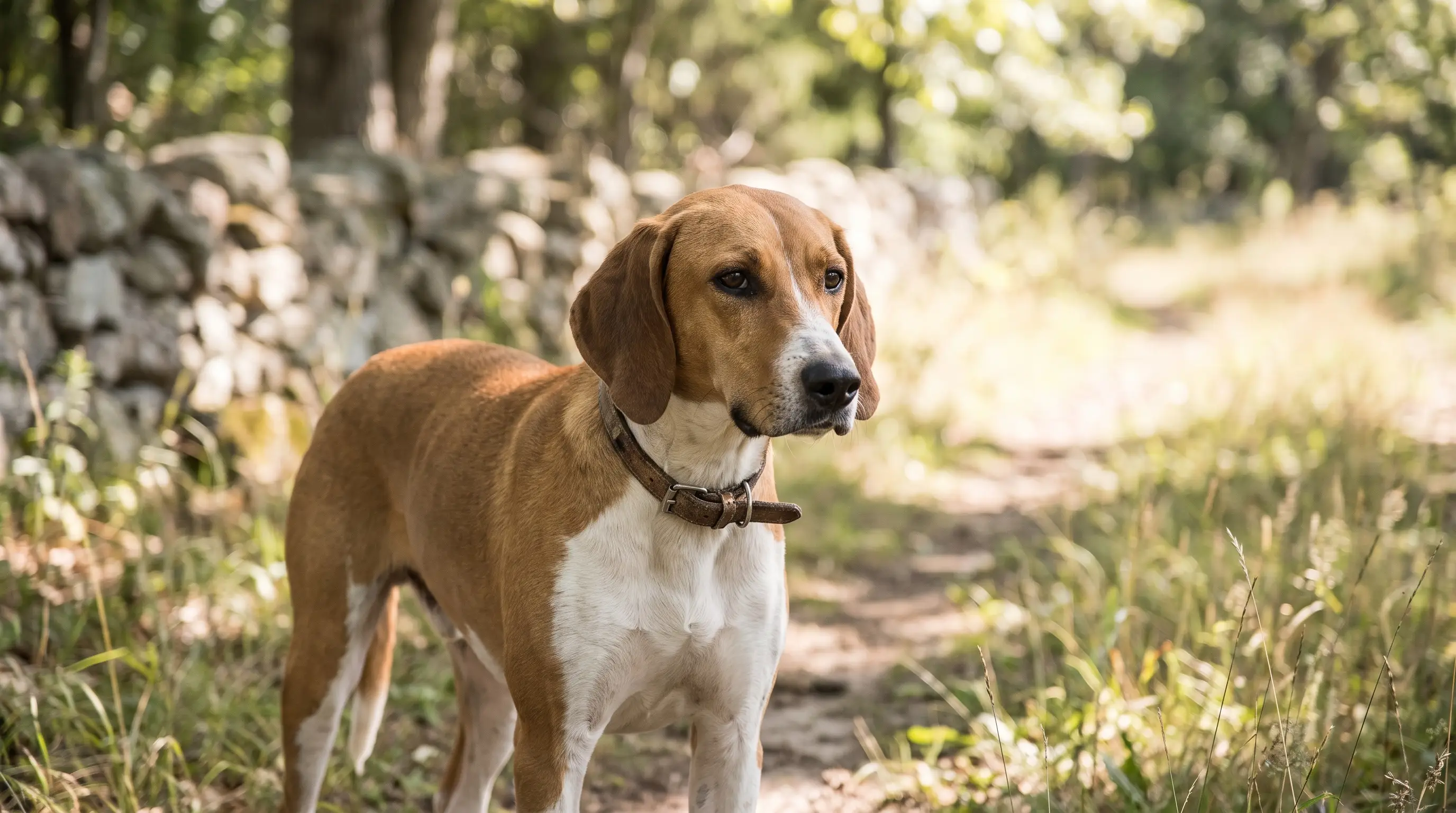
American Foxhound
The founding father's hound — bred at Mount Vernon, born to run.
Vital stats
| Size | Large · 53–64 cm |
| Weight | 20–34 kg |
| Life expectancy | 11–13 years |
| Energy | Very high — 90+ min/day |
| Shedding | Moderate, year-round |
| Coat | Short hard coat · classically tricolour |
| Group | Hound · FCI / AKC |
| Origin | Virginia / Maryland, USA |
| FCI group | 6 — Scent hounds and related breeds · FCI 303 |
Breed traits
Friendliness
Care
Mind
The American Foxhound by the numbers
The American Foxhound facts owners search for most — price, lifespan, weight, shedding and colours, in one place.
Less common, so expect a waitlist and some travel to a reputable breeder — which pushes the price up. Ongoing costs run high — more food, bigger doses at the vet, and pricier insurance.
We don't quote a single figure: the real price swings with breeder, region, bloodline and health testing — and a rescue costs a fraction of a breeder's litter. Adopting is almost always the cheapest route.
Temperament
Bred for the long chase over Virginia's open country, and kept in packs for centuries, the American Foxhound is agreeable with dogs, mellow with people and single-minded on a scent — three facts in strict priority order. At home it is soft-eyed and undemanding, right up until its nose finds employment.
Habits & quirks
Pack manners
Centuries of kennel life made it effortlessly polite with other dogs.
Scent trance
Head down, tail up, ears off — the trail owns it until the trail ends.
The hound chorus
Its bay is genuinely musical, carries impressively far, and arrives unrequested.
Marathon idle
Between runs it's a champion sofa dog — provided the runs actually happen.
Health
The American Foxhound is one of the hardier, healthier breeds for its size, with no long list of inherited problems — kept fit, it is a genuinely sound dog. The care that matters is mostly management. Keep the weight down: this is a lean, athletic frame, and extra pounds steal the stamina the whole breed is built around. Clean the long hanging ears regularly, since ears that fold over the canal trap moisture and invite infection. And treat the nose as a safety matter — a foxhound on a scent will run through a weak fence and onto a road, so secure containment protects its health as much as any vet visit.
Nutrition
| Exercise | Ninety minutes daily, some of it at speed — a cyclist or runner makes the ideal partner. |
| Containment | Fences, always; a caught scent beats every recall ever taught. |
| Feeding | A hound's appetite on a lean frame — measure meals and judge by ribs, not the bowl. |
| Health | Hardy and long-lived for its size; keep the hanging ears clean and the weight down. |
A foxhound has a big appetite on a lean frame, which is a combination that catches owners out. Feed for the athlete, not the beggar: measure the meals, fold treats into the total, and judge condition by running your hands over the ribs rather than trusting the empty bowl or the hopeful eyes. The right weight is one where the ribs are easy to feel and the waist is clear — on this breed that is not thin, it is fit. Match the ration to the week's real mileage, because a hound resting between hunts needs less than one running daily.
Puppy guide
A foxhound puppy is gentle, easy-going and sociable, and it grows into a lot of dog that needs a lot of running, so plan for that from the start. Build recall early as a happy, well-paid game, and know that the nose will eventually compete with it — a long line and a secure garden are non-negotiable while the training sets in. Keep the young joints in mind: let the puppy build fitness gradually rather than pounding a growing frame. Socialize widely and let it meet other dogs, because this is a pack breed, at its easiest and happiest in company.
Training
Train a foxhound with patience and generosity, and keep your expectations honest. This is an agreeable, biddable dog at home, but it was bred to work a scent independently for centuries, so obedience always competes with the trail. Start recall early, reward it richly every time, and never assume it will hold against a fresh line — manage that risk with fencing and a long line rather than faith. Keep sessions short and food-driven, work with the pack-friendly, people-pleasing side of the breed, and accept that on a scent, the nose wins. That isn't a training failure; it's the breed doing its job.
Life expectancy
American Foxhounds live 11–13 years. The American Foxhound is hardy and long-lived for its size, and it stays that way on simple, consistent care: a lean, fit weight, ears kept clean and dry, a secure garden, and enough hard exercise to satisfy a dog built for the long chase. Give it the mileage it needs and keep it trim, and a foxhound ages well.
Similar breeds
Breeds with a similar build and background — worth a look if this one isn't quite the fit.
Breeds that look like this
Common questions
Why are American Foxhounds so rare as pets?
Most still live as working pack hounds, and their exercise, voice and fencing needs defeat typical homes. Committed active owners find them gentle, healthy companions.
Are American Foxhounds good family dogs?
With children and other dogs they're gentle and tolerant, yes. The challenge is meeting their mileage and managing the baying, not their temperament.
What's the difference between American and English Foxhounds?
The American hound is taller, lighter-boned and faster, refined for the wide-open American chase. The English is stockier and steadier, built for dense country and disciplined pack work.
Does the American Foxhound shed a lot?
Moderately. The American Foxhound sheds a fair amount, steadily through the year with heavier seasonal patches. A weekly brush keeps most of the loose hair off your floors and clothes.
Is the American Foxhound hypoallergenic?
Not really. No dog is truly hypoallergenic, and the American Foxhound's shedding coat releases plenty of the dander that sets off allergies. If someone at home is allergic, this isn't the easiest breed to live with — spend time around one first.
Is the American Foxhound easy to train?
They can be a challenge. The American Foxhound is intelligent but independent, and would rather make its own decisions than take orders. Reward-based training and patience work best; expect recall in particular to take time.