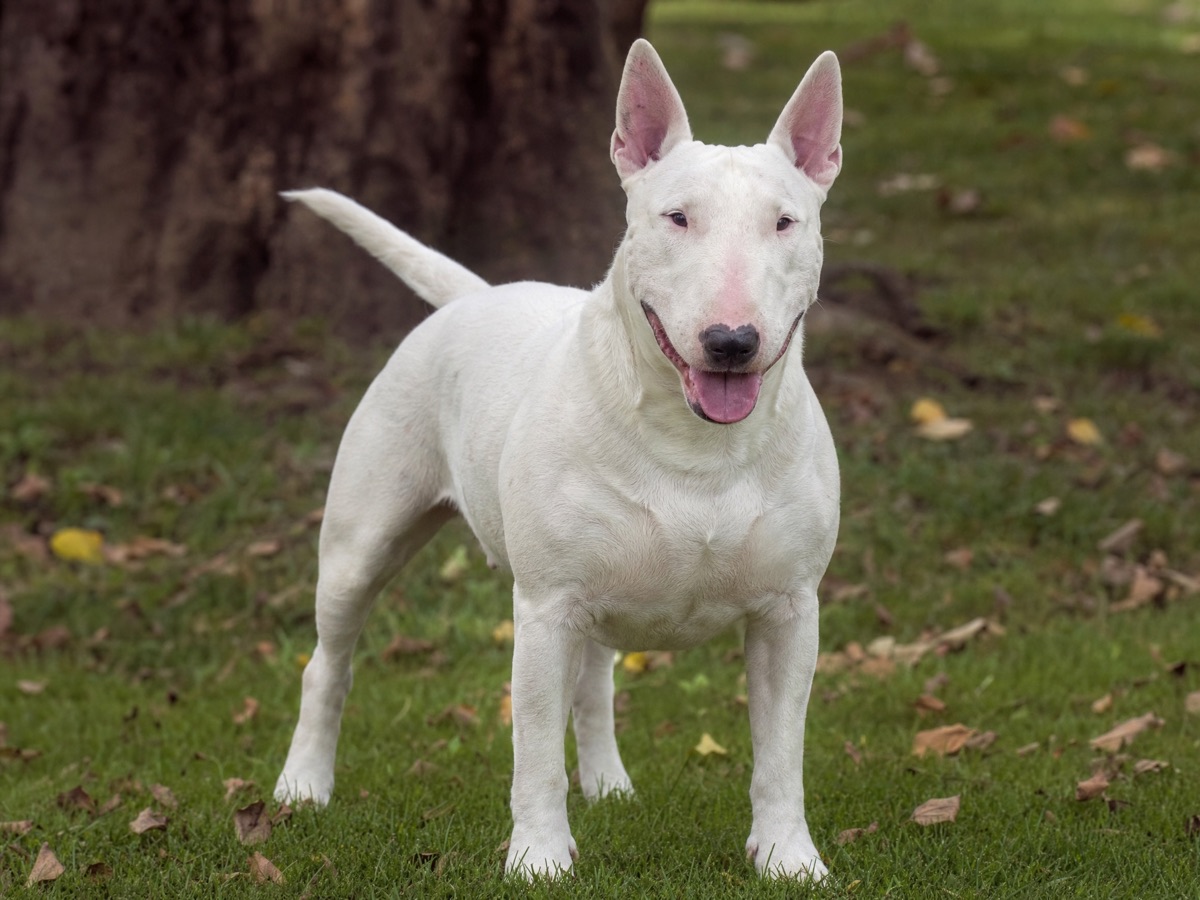
Bull Terrier
The egg-headed clown — goofy, muscular and hopelessly devoted.
Vital stats
| Size | Medium · 45–55 cm |
| Weight | 22–32 kg |
| Life expectancy | 11–13 years |
| Energy | High — 60+ min/day |
| Shedding | Moderate, heavier in season |
| Coat | Short, flat · white or coloured |
| Group | Terrier · FCI №11 / AKC |
| Origin | Birmingham, England |
| FCI group | 3 — Terriers · FCI 11 |
Breed traits
Friendliness
Care
Mind
The Bull Terrier by the numbers
The Bull Terrier facts owners search for most — price, lifespan, weight, shedding and colours, in one place.
Widely bred, so you can usually find a litter from a registered breeder without a long wait. Ongoing costs run high — more food, bigger doses at the vet, and pricier insurance.
We don't quote a single figure: the real price swings with breeder, region, bloodline and health testing — and a rescue costs a fraction of a breeder's litter. Adopting is almost always the cheapest route.
Temperament
James Hinks bred it in 1860s Birmingham as a fashionable 'gentleman's companion', and the fighting past washed out into pure theatre: this is a muscle-bound comedian that adores people, plays hard and takes instruction as a starting point for negotiation. Under-occupied, that intensity curdles into spinning and chewing — keep the joker busy.
Habits & quirks
The hucklebutt
Sudden joyful wall-of-death sprints around the furniture — owners have a name for it.
The lean
It greets you by applying its full muscled weight to your legs, slowly.
Toy triage
Indestructible toys only; everything else has a life expectancy of minutes.
Under the covers
A committed blanket burrower — expect a warm lump at your feet.
Health
The Bull Terrier is a robust, powerful dog, and the health picture is one where a careful breeder counts for a great deal. White puppies should be BAER-tested for deafness before they go home — it's a simple hearing check, and worth insisting on. Ask the breeder too about kidney and heart screening in their lines. Day to day, the pale skin under that short coat is prone to allergies and sunburn, so watch for itching and don't leave a white dog out in strong sun. A well-bred, well-exercised Bull Terrier is a hardy companion.
Nutrition
| Exercise | An hour or more of walks and hard play daily, plus puzzle work — a tired Bull Terrier is a good one. |
| Training | Start young, stay consistent and keep it fun; this breed out-stubborns half-hearted owners. |
| Health | Have white puppies BAER-tested for deafness, and ask breeders about kidney and heart screening. |
| Skin | The short coat is easy, but pale skin is prone to allergies and sunburn — watch for itching. |
This is a muscular, athletic dog with an appetite to match, so feed a measured amount that holds lean muscle rather than fat — count the treats, weigh the meals, and keep the ribs findable under the muscle. A lean Bull Terrier moves better and stays sounder. Because kidney trouble turns up in the breed, keep fresh water always within reach and mention any change in drinking or appetite to your vet.
Puppy guide
A Bull Terrier puppy is all clown and muscle, and the habits you set now are the ones you keep. Start training young and make it consistent and fun, socialize thoroughly — especially with other dogs, since this breed can be pushy with its own kind — and busy the mind as hard as the body, because an under-occupied Bull Terrier invents obsessive habits. Go easy on high-impact exercise while the joints are still forming, and if you have a white pup, make sure its hearing has been BAER-tested.
Training
Start young, stay consistent, and above all keep it fun — the Bull Terrier takes every instruction as an opening offer in a negotiation, and it will cheerfully out-stubborn a half-hearted owner. Short, upbeat, reward-based sessions work; nagging and harsh corrections don't. Channel that intensity into games, tricks and puzzles, or the dog will find its own hobbies, and they are never the ones you'd have chosen.
Life expectancy
Bull Terriers live 11–13 years. The Bull Terrier is a strong, generally sturdy breed, and you keep one at the top of its range with steady basics: a lean weight, a genuinely tiring hour or more of exercise a day, sun sense for that pale skin, and a breeder who has screened for deafness, heart and kidney health. Keep the body and the busy mind occupied, and a Bull Terrier stays a clown well into its later years.
Similar breeds
Breeds with a similar build and background — worth a look if this one isn't quite the fit.
Breeds that look like this
Common questions
Are Bull Terriers aggressive?
Not by nature toward people — they're clownish and affectionate. They can be pushy with other dogs, so early socialisation and training matter.
Do Bull Terriers need much exercise?
Yes — an hour or more daily of play and walks, plus mental stimulation. An under-exercised Bull Terrier becomes obsessive and destructive.
Are Bull Terriers good family dogs?
For active families with dog-savvy children, wonderfully — they're playful, sturdy and devoted. They're strong and boisterous, though, so supervise around small kids and invest in training early.
Does the Bull Terrier shed a lot?
Moderately. The Bull Terrier sheds a fair amount, steadily through the year with heavier seasonal patches. A weekly brush keeps most of the loose hair off your floors and clothes.
Is the Bull Terrier hypoallergenic?
Not really. No dog is truly hypoallergenic, and the Bull Terrier's shedding coat releases plenty of the dander that sets off allergies. If someone at home is allergic, this isn't the easiest breed to live with — spend time around one first.
Is the Bull Terrier easy to train?
Reasonably. The Bull Terrier is trainable with consistency and rewards, though it isn't the quickest study. Keep sessions short and positive, and be patient with the basics like recall.