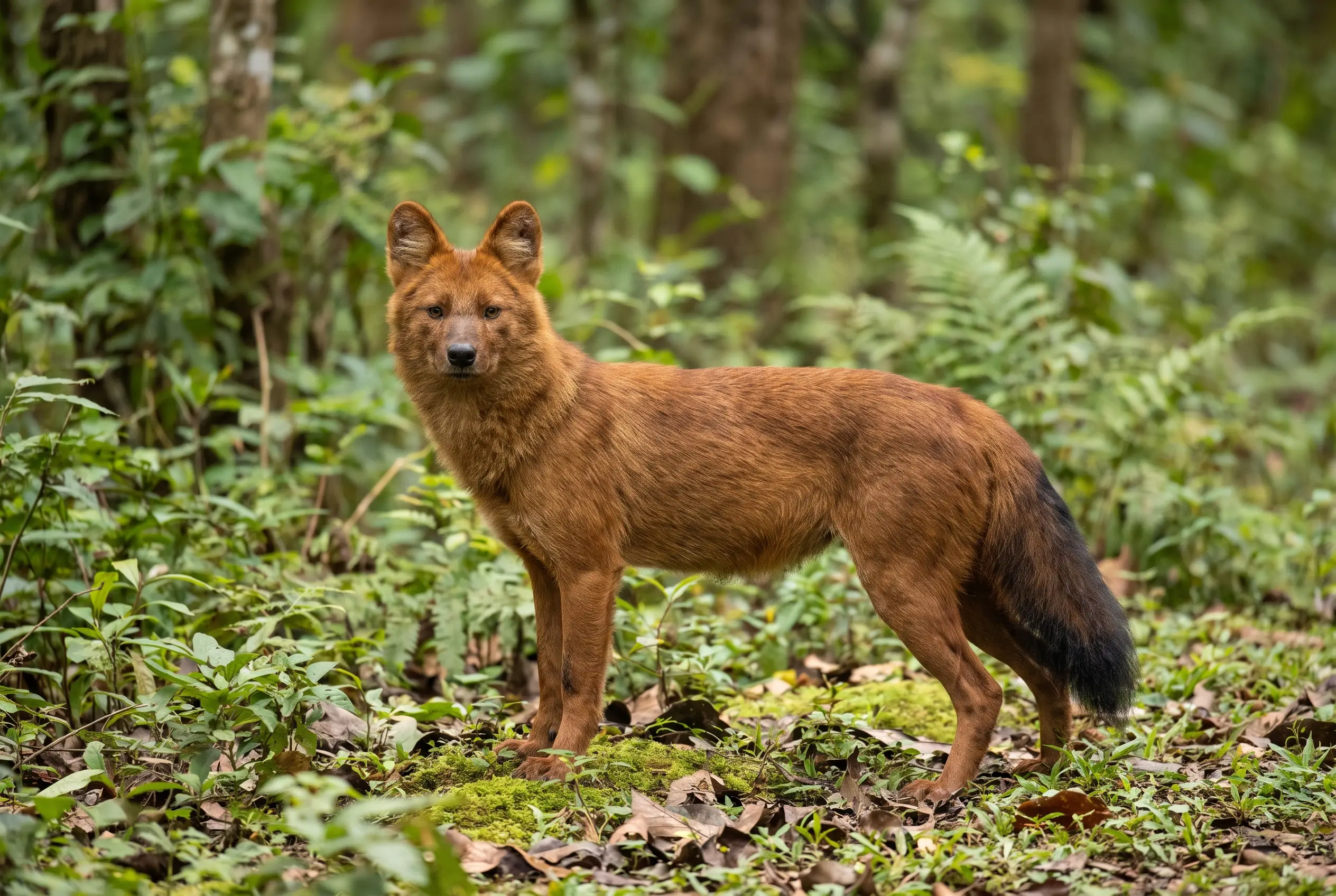
Dhole
The whistling dog of Asia's forests — wild, red, and running out of room.
Vital stats
| Size | Medium · ~50 cm at the shoulder |
| Weight | 10–21 kg |
| Life expectancy | Up to ~15 years in captivity |
| Energy | Extreme — wild pack hunter |
| Shedding | Heavy, seasonal |
| Coat | Dense rusty red · pale chest, dark brush tail |
| Group | Wild canid · Cuon alpinus (not FCI/AKC) |
| Origin | South & East Asia |
Breed traits
Friendliness
Care
Mind
The Dhole by the numbers
The Dhole facts owners search for most — price, lifespan, weight, shedding and colours, in one place.
Less common, so expect a waitlist and some travel to a reputable breeder — which pushes the price up. Plan for steady ongoing costs — mid-range food, routine vet care and insurance.
We don't quote a single figure: the real price swings with breeder, region, bloodline and health testing — and a rescue costs a fraction of a breeder's litter. Adopting is almost always the cheapest route.
Temperament
Nothing about the dhole was bred — it is wild through and through, an endangered Asian pack hunter that runs deer to water and shares its kills peaceably. Social, whistling and cooperative within its own clan, it remains untameable and legally protected: admire it in the forest, never the living room.
Habits & quirks
The whistle
Pack members keep contact through thick forest with high, birdlike whistles.
Team dining
Unusually among canids, dholes let their pups eat first at a kill.
Water runners
Packs often drive deer into water, where the dhole holds the advantage.
The red clan
A dozen or more live, hunt and babysit together — the pack raises every pup.
Care
| Legality | An endangered, internationally protected species — private ownership is illegal almost everywhere. |
| Habitat | Wild dholes range across vast forest territories; even zoos keep them in large social packs. |
| Diet | A cooperative hunter of deer and boar — there is no kibble equivalent to a wild carnivore's life. |
| Conservation | Habitat loss and shrinking prey have left only a few thousand mature dholes in the wild. |
Life expectancy
This breed has a typical life expectancy of Up to ~15 years in captivity.
Similar breeds
Breeds with a similar build and background — worth a look if this one isn't quite the fit.
Breeds that look like this
Common questions
Can you keep a dhole as a pet?
No — it's an endangered wild species protected by law across its range and internationally. It also remains genuinely wild: even hand-raised dholes do not domesticate.
Is a dhole a dog?
It's a canid, but from a separate genus (Cuon) to domestic dogs and wolves, and it can't interbreed with them. Think of it as a cousin, not a breed.
Why is the dhole endangered?
Habitat loss, dwindling deer prey and past persecution have shrunk its range dramatically. Only a few thousand mature adults are thought to survive in the wild.
Does the Dhole shed a lot?
Yes — the Dhole is a heavy shedder, dropping hair year-round or in big seasonal moults. Brush it several times a week and expect regular vacuuming; it isn't the coat for you if loose fur is a dealbreaker.
Is the Dhole hypoallergenic?
Not really. No dog is truly hypoallergenic, and the Dhole's shedding coat releases plenty of the dander that sets off allergies. If someone at home is allergic, this isn't the easiest breed to live with — spend time around one first.
Is the Dhole good with children?
It depends. The Dhole tends to be more reserved, so it suits older, calmer children better than boisterous toddlers. Early socialisation and careful, supervised introductions matter more with this breed.
Is the Dhole easy to train?
They can be a challenge. The Dhole is intelligent but independent, and would rather make its own decisions than take orders. Reward-based training and patience work best; expect recall in particular to take time.