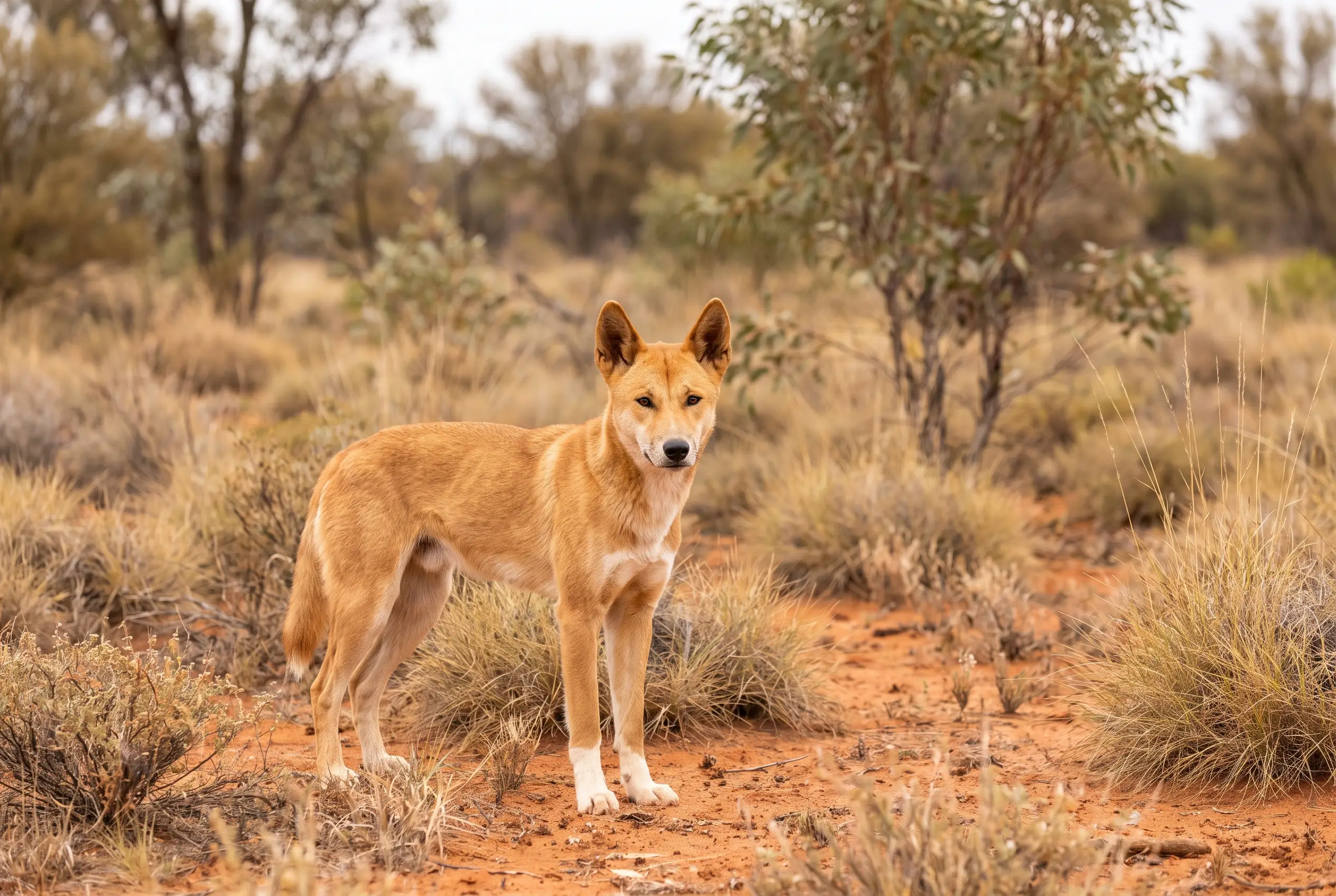
Dingo
Australia's ancient wild dog — golden, silent, and never quite tamed.
Vital stats
| Size | Medium · 52–60 cm |
| Weight | 13–20 kg |
| Life expectancy | 10–13 years |
| Energy | Very high — wild forager |
| Shedding | Moderate, seasonal |
| Coat | Short double coat · ginger with white points |
| Group | Primitive canid · not FCI/AKC recognised |
| Origin | Australia |
Breed traits
Friendliness
Care
Mind
The Dingo by the numbers
The Dingo facts owners search for most — price, lifespan, weight, shedding and colours, in one place.
Genuinely rare — finding one means a serious search, often abroad, and a price to match. Plan for steady ongoing costs — mid-range food, routine vet care and insurance.
We don't quote a single figure: the real price swings with breeder, region, bloodline and health testing — and a rescue costs a fraction of a breeder's litter. Adopting is almost always the cheapest route.
Temperament
The dingo answers to no breeder — thousands of years in the Australian bush shaped a cautious, quick-thinking survivor that hunts alone or in loose family packs. Even sanctuary-raised dingoes stay watchful, escape-minded and seasonally wilful; affection is earned on their terms, never commanded on yours.
Habits & quirks
The silent type
Barks are rare and brief; the repertoire is howls, yips and eerie group choruses.
Escape engineering
Rotating wrists and a cat's agility — fences are puzzles, not barriers.
One-family loyalty
A hand-raised dingo may bond deeply with its people and trust no one else.
Seasonal wildness
Come breeding season, even the tamest dingo rediscovers its inner wolf.
Care
| Legality | Rules vary across Australia — from permits to outright bans; check before you dream. |
| Containment | A dingo climbs, digs and problem-solves; enclosures need roofs and buried mesh. |
| Socialisation | Sanctuary dingoes bond through early, patient handling — and stay wary of everyone else. |
| Exercise | Hours of roaming and foraging enrichment daily; a bored dingo dismantles things beautifully. |
Life expectancy
This breed has a typical life expectancy of 10–13 years.
Similar breeds
Breeds with a similar build and background — worth a look if this one isn't quite the fit.
Breeds that look like this
Common questions
Can you keep a dingo as a pet?
Only in parts of Australia, and the rules range from permits to outright bans. Even where legal, a dingo is a high-maintenance wild animal, not a family dog.
Do dingoes bark?
Rarely, and only in short bursts — their main language is the howl, from solo calls to haunting group choruses. It's one of many traits separating them from domestic dogs.
Are dingoes dangerous?
Wild dingoes generally avoid people and attacks are rare, but they are capable predators and should never be fed or approached. Habituated dingoes cause nearly all incidents.
Does the Dingo shed a lot?
Moderately. The Dingo sheds a fair amount, steadily through the year with heavier seasonal patches. A weekly brush keeps most of the loose hair off your floors and clothes.
Is the Dingo hypoallergenic?
Not really. No dog is truly hypoallergenic, and the Dingo's shedding coat releases plenty of the dander that sets off allergies. If someone at home is allergic, this isn't the easiest breed to live with — spend time around one first.
Is the Dingo good with children?
It depends. The Dingo tends to be more reserved, so it suits older, calmer children better than boisterous toddlers. Early socialisation and careful, supervised introductions matter more with this breed.
Is the Dingo easy to train?
They can be a challenge. The Dingo is intelligent but independent, and would rather make its own decisions than take orders. Reward-based training and patience work best; expect recall in particular to take time.
Stories featuring this breed
All stories →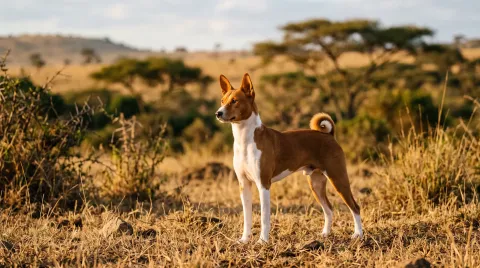
Which dog breeds are actually ancient?
Genetics keeps naming the same handful of breeds as “ancient” — but that word means isolated from the Victorian breed factory, not unchanged since antiquity.
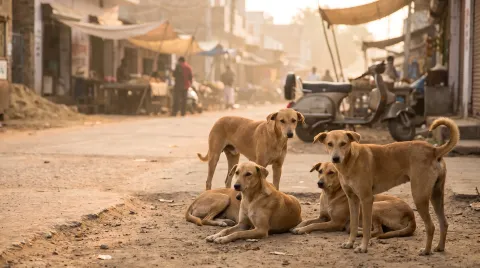
The village dog: the real default, and why your breed is the odd one out
Most dogs on Earth are free-ranging scavengers, not purebred pets. The breed is the recent human invention sitting on top of a much older, stabler kind of dog.

The dog breeds that vanished — and the one a 2023 genome brought back into focus
A woolly dog from the Pacific Northwest, a spit-turning kitchen worker, and the working landrace behind every retriever: what killed them, and what modern DNA can and cannot recover.