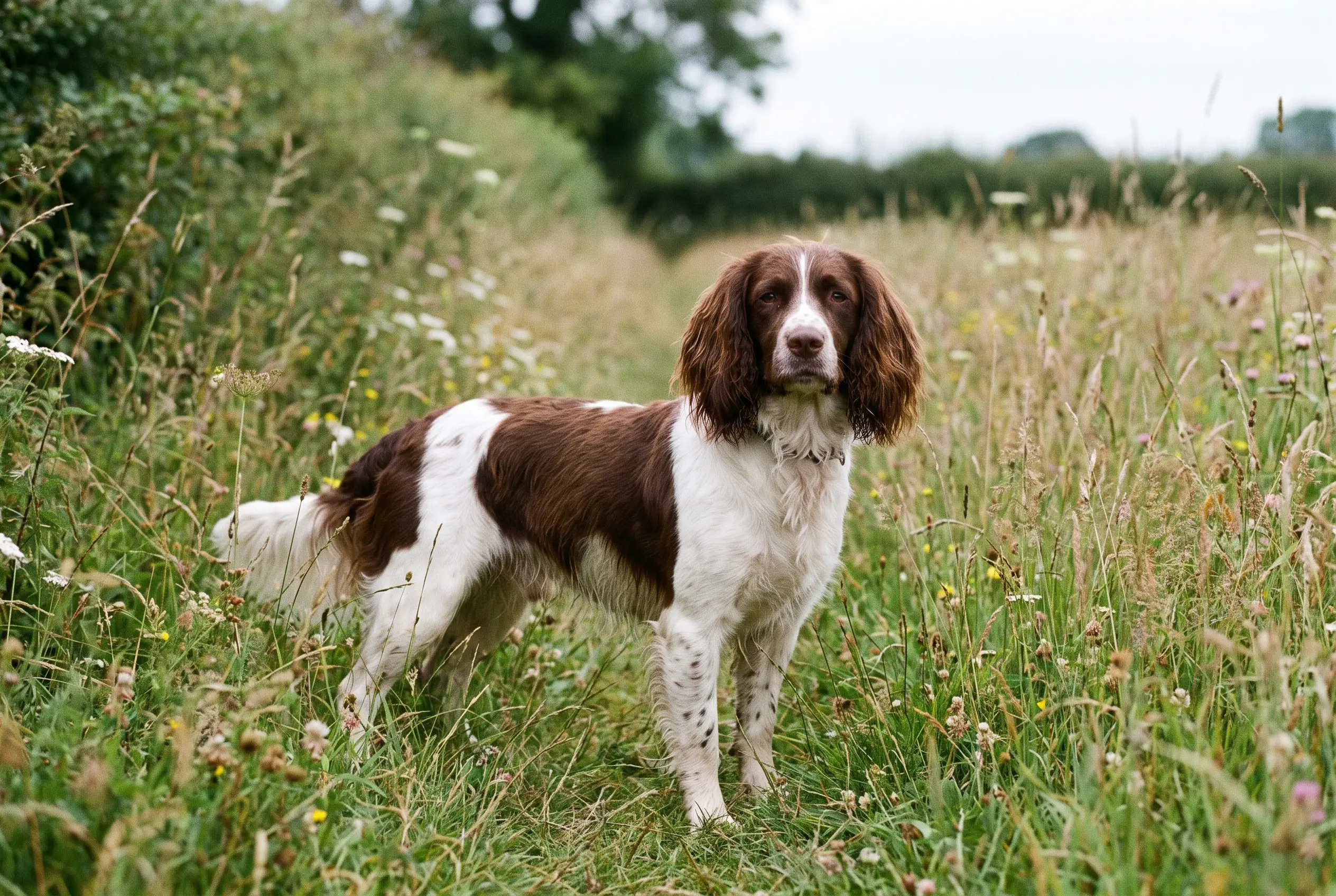
English Springer Spaniel
A merry engine of a gundog — sprung tail, busy nose, heart entirely yours.
On these lists: Family dogs · Dogs for hunting · Truffle-hunting dogs
Vital stats
| Size | Medium · 46–56 cm |
| Weight | 18–25 kg |
| Life expectancy | 12–14 years |
| Energy | High — 90+ min/day |
| Shedding | Moderate, year-round |
| Coat | Medium, feathered · liver & white, black & white |
| Group | Sporting · FCI №125 / AKC |
| Origin | England |
| FCI group | 8 — Retrievers, Flushing Dogs and Water Dogs · FCI 125 |
Breed traits
Friendliness
Care
Mind
The English Springer Spaniel by the numbers
The English Springer Spaniel facts owners search for most — price, lifespan, weight, shedding and colours, in one place.
Widely bred, so you can usually find a litter from a registered breeder without a long wait. Plan for steady ongoing costs — mid-range food, routine vet care and insurance. Its coat also needs a professional groom every few weeks — a real line in the budget.
We don't quote a single figure: the real price swings with breeder, region, bloodline and health testing — and a rescue costs a fraction of a breeder's litter. Adopting is almost always the cheapest route.
Temperament
Bred to quarter cover tirelessly and flush — 'spring' — game for the gun, the Springer brings that busy optimism into everyday life. It learns fast, forgives faster, and wants nothing more than to be doing something with you. Under-occupied, all that drive reroutes into digging, barking and freelance laundry retrieval.
Habits & quirks
The full-body wag
The docked-or-not tail is only the start; a happy Springer wags from the shoulders back.
Cover diver
No bush, ditch or bramble patch goes uninspected — mud is considered a bonus.
Velcro spaniel
It will follow you to the kitchen, the garden and, given the chance, the bathroom.
The gift economy
Slippers, socks, cushions: expect to be greeted with something, anything, in its mouth.
Health
The Springer is a robust, generally healthy gundog, and the part of it that needs the most attention is also the most obvious: those long, warm, floppy ears. Their design traps moisture and shuts out air, which is exactly what an ear infection wants, so check and dry them every week — especially after a swim or a session in wet cover. Beyond that, keep him lean and fit for the active life he's built for, and buy from a breeder who health-tests their dogs. A well-bred, well-exercised Springer is a sound one.
Nutrition
| Exercise | Ninety minutes or more daily, mixing running with nose work — scent games tire a Springer faster than miles do. |
| Grooming | Brush the feathering weekly and trim around feet and ears; field lines carry less coat than show lines. |
| Health | Check those long ears weekly — the warm, floppy design is a standing invitation to infection. |
| Training | A dream student that thrives on gundog-style work; channel the flushing instinct early or it will self-employ. |
Feed a Springer to the work it actually does — a dog getting its full 90 minutes of running and nose games burns real fuel, and a quieter week means smaller meals. Weigh the food rather than eyeballing it, count training treats into the daily total, and aim for a waist you can see and ribs you can feel under the coat. Keeping him lean protects the joints and keeps that busy engine running well for years.
Puppy guide
A Springer puppy is friendly, quick and desperate to join in, which makes early training a joy and early boredom a problem. Start the grooming routine now — handle the ears, brush the feathering, touch the feet — so a lifetime of coat care is something he enjoys rather than endures. Socialize him widely, start short lessons early to channel that flushing instinct into games you choose, and give the busy nose real work every day. A Springer who learns young that there's always a job coming stays calm; one left to invent his own entertainment takes up digging and laundry theft.
Training
The Springer is one of the easiest dogs to train there is — quick to learn, quick to forgive, and happiest when it's working with you. Reward-based sessions suit it perfectly, and gundog-style tasks that use the nose and the flushing instinct land better than dry obedience drills. Channel that drive early with retrieves, scent games and a proper daily walk, because a Springer that isn't given a job will find one, and its choices — digging, barking, redistributing the washing — are rarely yours. Train the instinct, don't fight it.
Known health issues
No breed is problem-free. These are the conditions most worth knowing about for this breed — with what a good breeder screens for and what an owner watches. General guidance, not a substitute for your vet.
Hip dysplasia
A poorly fitting hip joint that wears early and can cause pain and arthritis, most common in larger breeds. Good breeders screen: Hip-scored parents (BVA/OFA/FCI). Watch for: Stiffness, a bunny-hop run, or reluctance on stairs.
Inherited eye disease
Progressive retinal atrophy and cataracts run in several breeds and can dim or take sight over time. Good breeders screen: Eye-tested parents and, where available, a DNA test for PRA. Watch for: Night-time bumping, cloudy eyes, or hesitation in dim light.
Life expectancy
English Springer Spaniels live 12–14 years. The Springer is a fairly long-lived, hardy breed, and you help it reach the top of that range the same way you keep it happy: a lean weight, plenty of real exercise, and ears kept clean and dry so small infections never become a lifelong nuisance. Buy from a breeder who health-tests, keep the vaccinations and dental care on schedule, and a fit, well-bred Springer will stay a merry, active companion well into old age.
Popular English mixes
Sproodle
A cross bred for a curlier, lower-shedding coat and a friendly, active nature. Coat type varies from pup to pup and needs regular grooming; expect a busy, people-focused dog that wants a real walk.
Sprocker
A working-spaniel cross with drive to spare, popular in the shooting field. Merry and biddable, but built for a busy life — lots of exercise and a job for the nose.
Springador
A friendly, high-energy family mix with the Springer's nose and the Labrador's easy nature. Loves people, water and food — active homes and measured meals suit it best.
Similar breeds
Breeds with a similar build and background — worth a look if this one isn't quite the fit.
Breeds that look like this
Common questions
Are Springer Spaniels good family dogs?
Excellent ones — affectionate, playful and patient with children. They repay active households richly but struggle in homes where exercise is an afterthought.
What's the difference between show and working Springers?
Working (field) lines are lighter, less feathered and markedly more driven; show lines are calmer and heavier-coated. For a family pet, the distinction matters more than the breed name.
Can Springer Spaniels be left alone?
Briefly, once trained — but this is a people-centred breed that can develop separation anxiety if routinely left for long days. Build alone-time up gradually.
Does the English Springer Spaniel shed a lot?
Moderately. The English Springer Spaniel sheds a fair amount, steadily through the year with heavier seasonal patches. A weekly brush keeps most of the loose hair off your floors and clothes.
Is the English Springer Spaniel hypoallergenic?
Not really. No dog is truly hypoallergenic, and the English Springer Spaniel's shedding coat releases plenty of the dander that sets off allergies. If someone at home is allergic, this isn't the easiest breed to live with — spend time around one first.
Is the English Springer Spaniel easy to train?
Yes. The English Springer Spaniel is one of the more trainable breeds — quick to learn and keen to work with you, which makes reward-based training straightforward. Start early, keep it positive, and it picks things up fast.