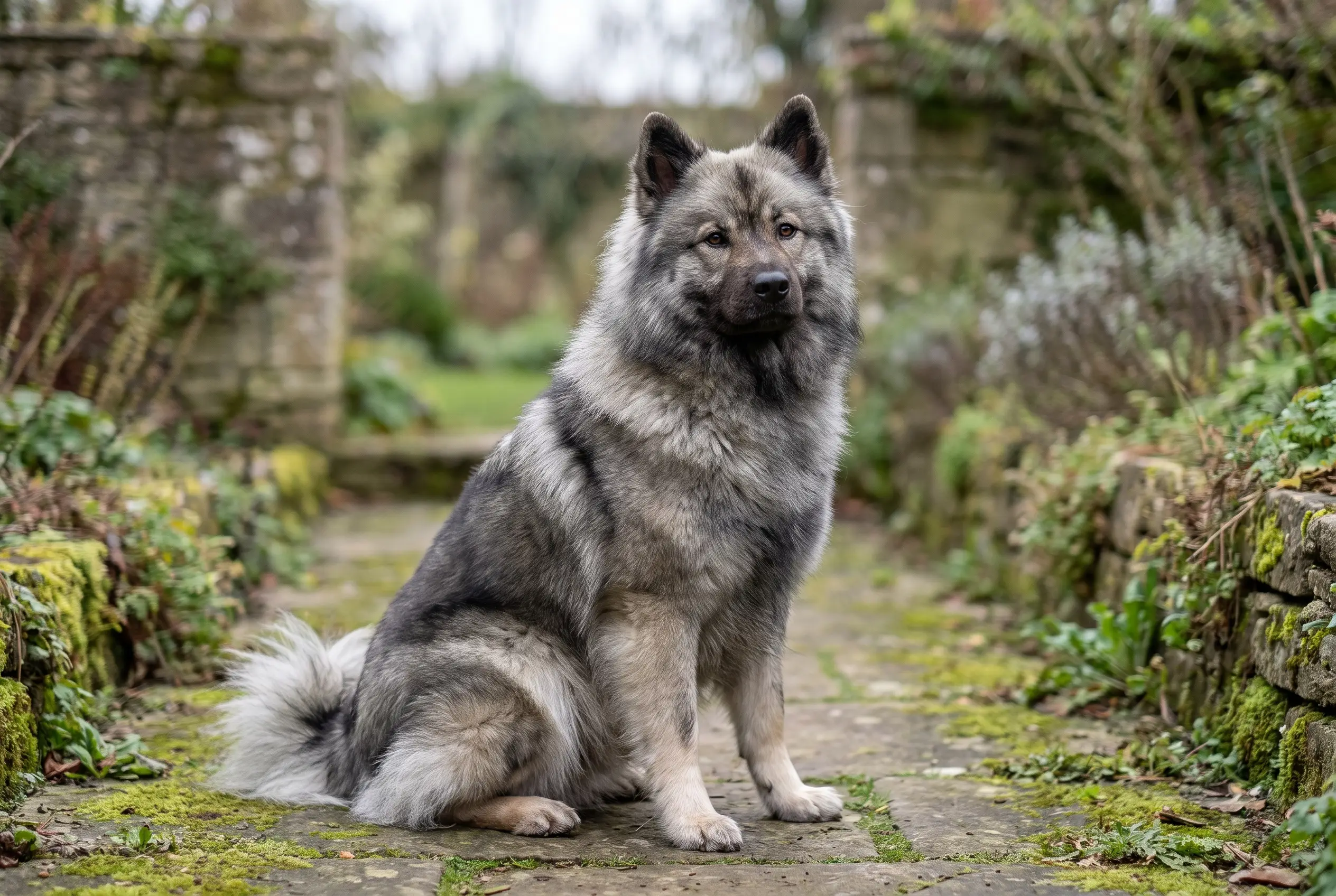
Eurasier
Part Wolfsspitz, part Chow Chow, all family dog.
Vital stats
| Size | Medium · 48–60 cm |
| Weight | 18–32 kg |
| Life expectancy | 12–14 years |
| Energy | Moderate — daily walks with its people, no job required |
| Shedding | Moderate — steady, with two heavy seasonal moults |
| Coat | Thick double coat, medium length · every colour except pure white, white patches and liver |
| Group | Non-Sporting · Asian Spitz (FCI №291, Group 5) |
| Origin | Germany |
| FCI group | 5 — Spitz and primitive types · FCI 291 |
Breed traits
Friendliness
Care
Mind
The Eurasier by the numbers
The Eurasier facts owners search for most — price, lifespan, weight, shedding and colours, in one place.
Widely bred, so you can usually find a litter from a registered breeder without a long wait. Ongoing costs run high — more food, bigger doses at the vet, and pricier insurance. Its coat also needs a professional groom every few weeks — a real line in the budget.
We don't quote a single figure: the real price swings with breeder, region, bloodline and health testing — and a rescue costs a fraction of a breeder's litter. Adopting is almost always the cheapest route.
Temperament
The Eurasier is calm, steady and quietly confident, bred from the first litter to live inside a family rather than work outside one. With its own people it is affectionate and constantly present; with strangers it is reserved — it neither seeks their attention nor minds their company, and the standard is explicit that this reserve is neither shyness nor aggression. It learns willingly for a handler it trusts, but the Chow ancestry shows: it thinks an order over before following it, and heavy-handed training makes it dig in. Its hunting drive is low and its voice rarely used, which makes it an easy neighbour — as long as it is never made to live apart from its people.
Habits & quirks
Family or nothing
It was bred to live indoors as part of the household, and it holds you to that. Kennel life and long hours alone are the one thing this breed cannot do.
The polite wall
Guests get a glance and a measured distance, not a greeting. Give it time in the same room and it decides on its own when to come over.
Quiet by default
It barks rarely and only with reason. Days can pass without hearing its voice, which surprises people expecting spitz chatter.
Two blizzards a year
For most of the year the coat asks for little; twice a year the undercoat lets go all at once and fills the brush for weeks.
Health
The Eurasier is a generally sound breed, and the responsible breed clubs have kept it that way by testing. Ask a breeder for hip and eye screening, and check the line for hypothyroidism and patella luxation — the clubs test for both, so results should be there for the asking. Beyond the paperwork this is an easy dog to keep well: a thick double coat that needs brushing rather than vet visits, a low hunting drive, and a temperament that stays steady once its one real need is met — living with its family rather than apart from it.
Nutrition
| Exercise | An hour of daily walks with the family covers it — this spitz has no working past to burn off. Its hunting drive is low, so relaxed off-lead time is realistic with basic training. |
| Grooming | Brush once a week for most of the year, daily during the two seasonal moults. The coat is thick but resists matting and needs no trimming. |
| Training | It learns readily for someone it trusts and shuts down under pressure. Keep sessions short, calm and reward-based from puppyhood, and skip the drill-yard tone. |
| Health | A generally sound breed. Ask breeders for hip and eye screening, and check the line for hypothyroidism and patella luxation — the breed clubs test for both. |
This is a moderate dog with no working past to burn off, so it is easy to overfeed. Feed to a calm daily routine of walks rather than to an athlete's appetite, weigh the meals, and count treats into the total. Keep him lean — you want to feel the ribs under that thick double coat, which hides weight gain well until it's a problem. Nothing exotic is required; a steady diet and an honest eye on the waistline do the job.
Puppy guide
A Eurasier puppy is bred to bond deeply with its household, and the first year is about earning and keeping that trust. Socialise him gently and widely so the breed's natural reserve with strangers settles into calm politeness, not worry. Train in short, kind, reward-based sessions from the start — press too hard and a Eurasier simply shuts down, and the Chow in him will think an order over before obeying it. Above all, teach time alone in small, patient steps: this is a breed that cannot be left to a kennel or an empty house, and the habit of coping with a few hours solo is built young.
Training
A Eurasier learns willingly for a person it trusts and shuts down under pressure, so the tone matters more than the technique. Keep sessions short, calm and reward-based from puppyhood, and skip the drill-yard voice entirely — heavy-handed correction makes this dog dig in rather than comply. Expect it to think an order over before following it; that's the Chow ancestry, not defiance. Patience and consistency get you a beautifully mannered companion; force gets you a wall.
Life expectancy
Eurasiers live 12–14 years. The Eurasier is a generally sound, long-lived breed, and you keep one at the top of its range much as you keep it happy: lean weight, parents screened for hips and eyes and checked for hypothyroidism and patella luxation, regular brushing, and — the non-negotiable one — a life spent with its family rather than shut away from it. This is a dog that pays for isolation in stress, so company is part of its health, not just its happiness.
Similar breeds
Breeds with a similar build and background — worth a look if this one isn't quite the fit.
Breeds that look like this
Common questions
Is the Eurasier just a Chow Chow mix?
It started as a planned cross — Julius Wipfel's circle in 1960s Germany bred Wolfsspitz to Chow Chow and later added Samoyed — but it has bred true under club control for decades. The FCI recognised it in 1973 as standard No. 291, which makes it one of the youngest fully recognised breeds.
Can a Eurasier be left alone all day?
No. The breed was created to live with its family and reacts badly to kennels and long separations — the standard itself says so. A few hours alone, built up with training, is workable for many; a house that stands empty all day is not.
Are Eurasiers friendly with strangers?
Reserved, not unfriendly. A well-bred Eurasier neither fears visitors nor challenges them; it simply keeps its warmth for its own people. Expect polite distance at the door rather than a tail-wagging welcome — and no drama either way.
Does the Eurasier shed a lot?
Yes — the Eurasier is a heavy shedder, dropping hair year-round or in big seasonal moults. Brush it several times a week and expect regular vacuuming; it isn't the coat for you if loose fur is a dealbreaker.
Is the Eurasier hypoallergenic?
Not really. No dog is truly hypoallergenic, and the Eurasier's shedding coat releases plenty of the dander that sets off allergies. If someone at home is allergic, this isn't the easiest breed to live with — spend time around one first.
Is the Eurasier good with children?
They can be. The Eurasier is reasonably sociable and can be good with children in the right home, especially when socialised early. Supervise around young kids and teach dog and child to respect each other.
Is the Eurasier easy to train?
Reasonably. The Eurasier is trainable with consistency and rewards, though it isn't the quickest study. Keep sessions short and positive, and be patient with the basics like recall.