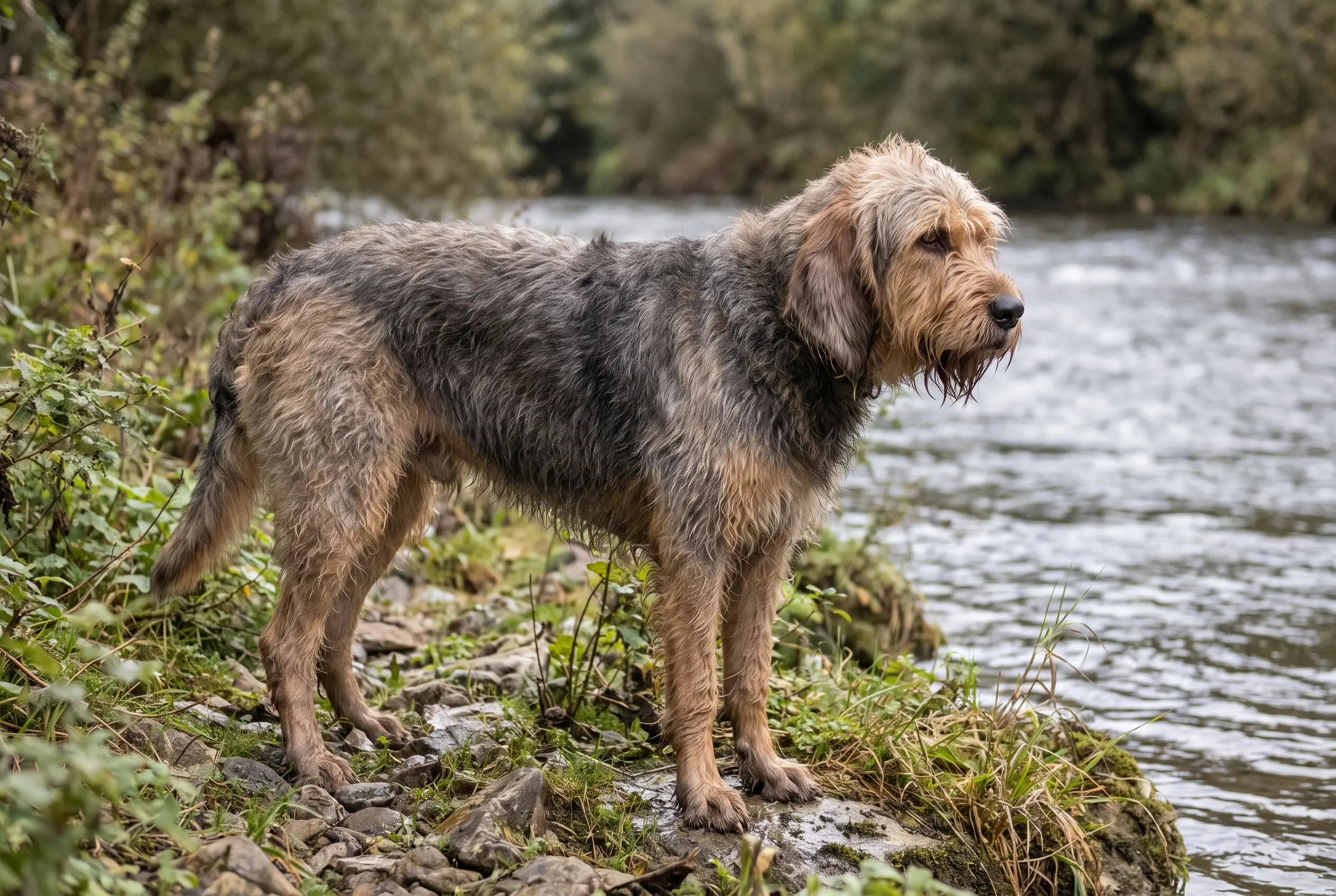
Otterhound
Britain's rarest hound — a shaggy, web-footed swimmer left over from a vanished job.
Vital stats
| Size | Large · 61–69 cm |
| Weight | 36–52 kg |
| Life expectancy | 10–13 years |
| Energy | Moderate–high — 60–90 min/day |
| Shedding | Moderate, year-round |
| Coat | Rough, oily double coat · grizzle, wheaten, black & tan |
| Group | Hound · FCI №294 / AKC |
| Origin | England |
| FCI group | 6 — Scent hounds and related breeds · FCI 294 |
Breed traits
Friendliness
Care
Mind
The Otterhound by the numbers
The Otterhound facts owners search for most — price, lifespan, weight, shedding and colours, in one place.
Less common, so expect a waitlist and some travel to a reputable breeder — which pushes the price up. Ongoing costs run high — more food, bigger doses at the vet, and pricier insurance. Its coat also needs a professional groom every few weeks — a real line in the budget.
We don't quote a single figure: the real price swings with breeder, region, bloodline and health testing — and a rescue costs a fraction of a breeder's litter. Adopting is almost always the cheapest route.
Temperament
Bred to swim after otters through winter rivers, the Otterhound is cheerful, independent and entirely nose-led — recall becomes a polite suggestion once a scent takes hold. At home it's an easy-going, slightly clumsy companion that loves company, water in any form, and an occasional good bay at the sky.
Habits & quirks
Beard dunking
It drinks by submerging half its face, then generously shares the water with your floors.
The big bay
A deep, melodious voice it enjoys using — your neighbours will come to know it too.
Water radar
Puddle, pond or bath — if it's wet, the Otterhound is already in it.
Nose-first walks
It reads the ground like a newspaper; every walk is slower and smellier than planned.
Care
| Exercise | An hour or more of rambling, sniff-heavy walks daily, with safe swimming as the ultimate treat. |
| Containment | A determined scent-follower — secure fencing and a lead anywhere near roads are essential. |
| Grooming | Brush the harsh, oily coat weekly and rinse the beard often; check the heavy ears for infection. |
| Health | Buy from breeders who screen hips and elbows, and watch weight on those big swimming-built joints. |
Life expectancy
This breed has a typical life expectancy of 10–13 years.
Similar breeds
Breeds with a similar build and background — worth a look if this one isn't quite the fit.
Breeds that look like this
Common questions
Why are Otterhounds so rare?
Otter hunting was banned in England in 1978, and the breed lost its only job. It never caught on as a pet, so only a small dedicated community keeps it going.
Are Otterhounds good family dogs?
They're affectionate, tolerant and fun, but big, boisterous and slow to mature. Sturdy children and easy-going owners suit them best.
Do Otterhounds smell?
More than most — the oily, waterproof coat and perpetually damp beard carry a distinctly doggy aroma. Regular beard washing helps; expecting a show-fresh dog doesn't.
Does the Otterhound shed a lot?
Moderately. The Otterhound sheds a fair amount, steadily through the year with heavier seasonal patches. A weekly brush keeps most of the loose hair off your floors and clothes.
Is the Otterhound hypoallergenic?
Not really. No dog is truly hypoallergenic, and the Otterhound's shedding coat releases plenty of the dander that sets off allergies. If someone at home is allergic, this isn't the easiest breed to live with — spend time around one first.
Is the Otterhound easy to train?
They can be a challenge. The Otterhound is intelligent but independent, and would rather make its own decisions than take orders. Reward-based training and patience work best; expect recall in particular to take time.