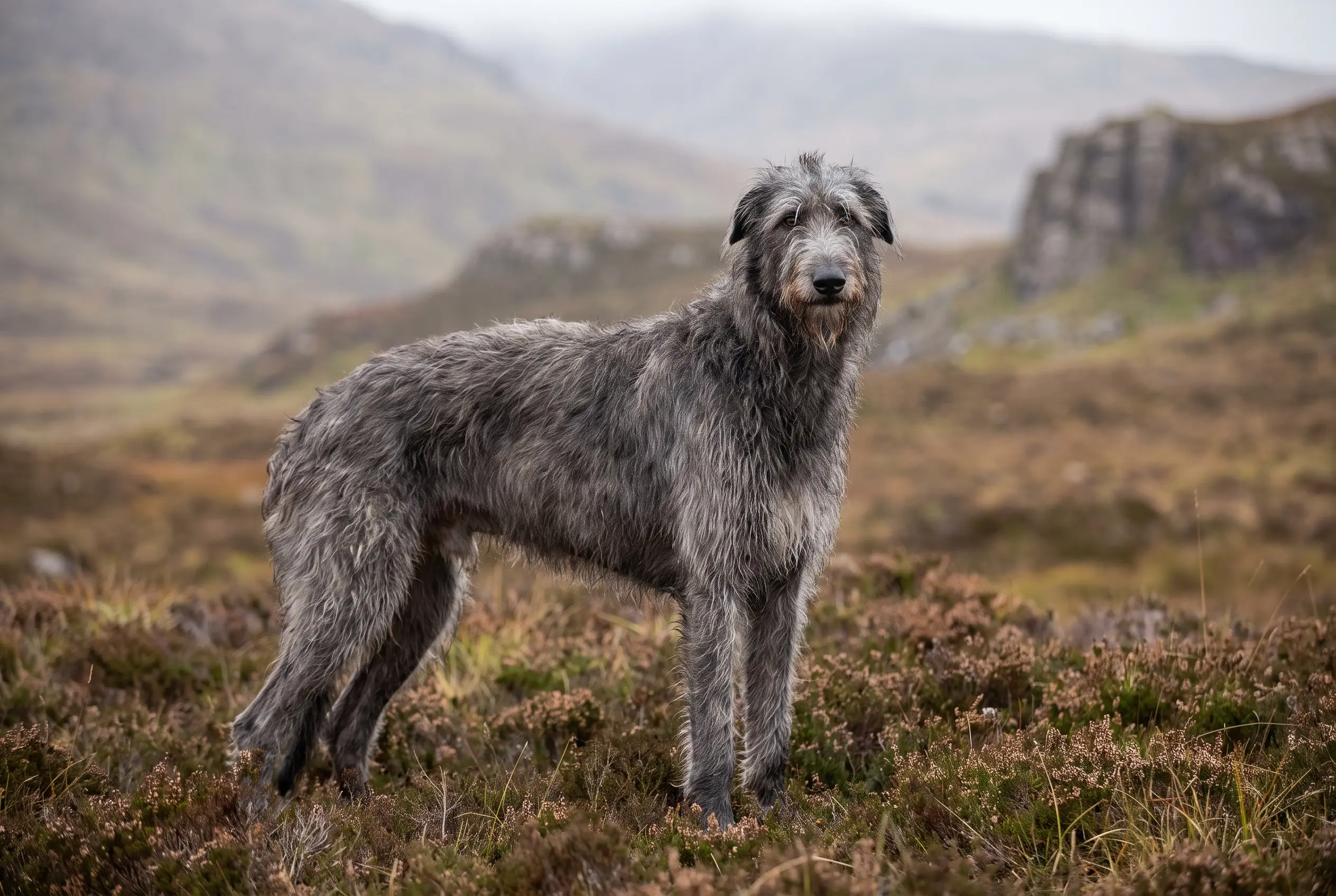
Scottish Deerhound
The Royal Dog of Scotland — built for the gallop, born for the fireside.
Vital stats
| Size | Giant · 71–81 cm |
| Weight | 34–50 kg |
| Life expectancy | 8–11 years |
| Energy | Moderate — a daily gallop, then profound rest |
| Shedding | Low-moderate |
| Coat | Harsh wiry coat · blue-grey, brindle, sandy |
| Group | Hound · FCI №164 / AKC |
| Origin | Highlands, Scotland |
| FCI group | 10 — Sighthounds · FCI 164 |
Breed traits
Friendliness
Care
Mind
The Scottish Deerhound by the numbers
The Scottish Deerhound facts owners search for most — price, lifespan, weight, shedding and colours, in one place.
Less common, so expect a waitlist and some travel to a reputable breeder — which pushes the price up. Ongoing costs run high — more food, bigger doses at the vet, and pricier insurance.
We don't quote a single figure: the real price swings with breeder, region, bloodline and health testing — and a rescue costs a fraction of a breeder's litter. Adopting is almost always the cheapest route.
Temperament
Coursing red deer across rough Highland ground called for speed, courage and a level head — and left the modern Deerhound with the manners of a country gentleman. It is gentle with everyone, quiet to the point of silence, mildly stubborn about pointless obedience, and transformed into something ancient the instant prey moves.
Habits & quirks
The dignified flop
Claims the largest soft surface in the house and drapes across it like a duchess.
Chase first, apologise later
A running rabbit suspends all prior agreements, instantly.
The gallop hour
Five minutes of breathtaking full-speed circles, then sleep for the rest of the day.
Leans in
Affection is delivered by resting forty kilos gently against your side.
Care
| Exercise | A long daily walk plus regular free galloping in a large, securely fenced area. |
| Feeding | Split meals and enforce rest around eating — deep-chested giants are prone to bloat. |
| Health | Heart disease and bone cancer shadow the breed; choose health-tested lines and screen regularly. |
| Grooming | A weekly once-over with brush and comb keeps the wiry coat tidy; little else needed. |
Life expectancy
This breed has a typical life expectancy of 8–11 years.
Similar breeds
Breeds with a similar build and background — worth a look if this one isn't quite the fit.
Breeds that look like this
Common questions
Are Scottish Deerhounds good family dogs?
Wonderfully gentle and patient ones, for families with room — they are quiet, tolerant and undemanding indoors. Small children mainly need protecting from accidental knocks by sheer size.
How much exercise does a Deerhound need?
A good daily walk and a few chances a week to gallop flat-out somewhere safely fenced. Between outings it is one of the laziest large breeds imaginable.
Can a Deerhound be let off the lead?
Only in securely enclosed spaces — a glimpse of running prey overrides recall completely. Near roads or livestock, the lead is non-negotiable.
Does the Scottish Deerhound shed a lot?
Moderately. The Scottish Deerhound sheds a fair amount, steadily through the year with heavier seasonal patches. A weekly brush keeps most of the loose hair off your floors and clothes.
Is the Scottish Deerhound hypoallergenic?
Not really. No dog is truly hypoallergenic, and the Scottish Deerhound's shedding coat releases plenty of the dander that sets off allergies. If someone at home is allergic, this isn't the easiest breed to live with — spend time around one first.
Is the Scottish Deerhound easy to train?
Reasonably. The Scottish Deerhound is trainable with consistency and rewards, though it isn't the quickest study. Keep sessions short and positive, and be patient with the basics like recall.