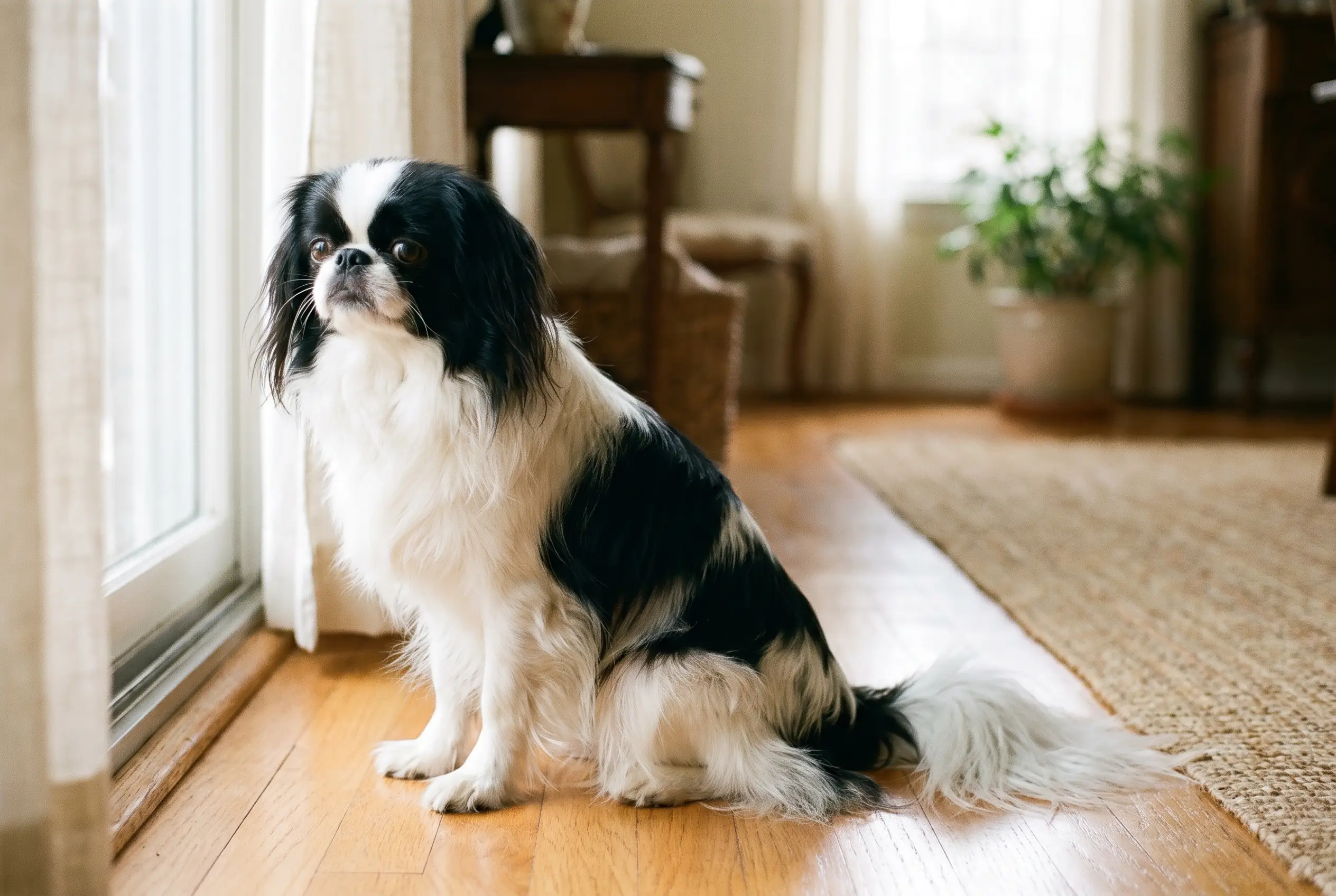
Japanese Chin
A silk-robed courtier that thinks it might be a cat.
On these lists: Dogs for apartments · Dogs for seniors
Vital stats
| Size | Toy · 20–27 cm |
| Weight | 3–5 kg |
| Life expectancy | 10–14 years |
| Energy | Low — 20–30 min/day |
| Shedding | Moderate, seasonal |
| Coat | Long, silky, single · white with black or red patches |
| Group | Toy · FCI №206 / AKC |
| Origin | Japan |
| FCI group | 9 — Companion and Toy Dogs · FCI 206 |
Breed traits
Friendliness
Care
Mind
The Japanese Chin by the numbers
The Japanese Chin facts owners search for most — price, lifespan, weight, shedding and colours, in one place.
Widely bred, so you can usually find a litter from a registered breeder without a long wait. Ongoing costs stay modest — it eats little and routine vet care sits at the lower end.
We don't quote a single figure: the real price swings with breeder, region, bloodline and health testing — and a rescue costs a fraction of a breeder's litter. Adopting is almost always the cheapest route.
Temperament
Bred for centuries as a treasured companion of Japanese nobility, the Chin's only job was to be exquisite — and it took the brief seriously. Expect a quiet, graceful, slightly aloof charmer that chooses its people, entertains with sudden bursts of comedy, and observes the household from the highest cushion available.
Habits & quirks
The Chin spin
When delighted, it pirouettes on the spot in quick, tidy circles.
High ground
Sofa backs and armchair arms are lookout posts; this dog likes altitude.
Paw wash
Face-cleaning with a licked forepaw, performed with total feline seriousness.
Selective hearing
It knows its name perfectly well; it is simply deciding whether the summons is worthy.
Care
| Heat | The short muzzle makes hot, humid weather genuinely risky — keep summer exercise early, shaded and brief. |
| Grooming | The silky single coat is low-maintenance for its length: a thorough brush twice a week prevents tangles. |
| Eyes | The large, prominent eyes scratch easily; check them daily and keep hazards at face height in mind. |
| Exercise | Two short walks and some indoor play cover it — this is a companion, not an athlete. |
Life expectancy
This breed has a typical life expectancy of 10–14 years.
Similar breeds
Breeds with a similar build and background — worth a look if this one isn't quite the fit.
Breeds that look like this
Common questions
Are Japanese Chins really cat-like?
Yes, famously — they wash their faces with their paws, perch on furniture and bestow affection selectively. Many cat lovers find them the perfect dog.
Do Japanese Chins bark a lot?
No — they're among the quieter toy breeds, more likely to observe than announce. A well-socialised Chin makes a serene flat-mate.
Can Japanese Chins handle hot weather?
Poorly — the flattened face limits their ability to cool by panting. Keep them indoors during heat and never leave them in warm cars, even briefly.
Does the Japanese Chin shed a lot?
Moderately. The Japanese Chin sheds a fair amount, steadily through the year with heavier seasonal patches. A weekly brush keeps most of the loose hair off your floors and clothes.
Is the Japanese Chin hypoallergenic?
Not really. No dog is truly hypoallergenic, and the Japanese Chin's shedding coat releases plenty of the dander that sets off allergies. If someone at home is allergic, this isn't the easiest breed to live with — spend time around one first.
Is the Japanese Chin good with children?
They can be. The Japanese Chin is reasonably sociable and can be good with children in the right home, especially when socialised early. Supervise around young kids and teach dog and child to respect each other.
Is the Japanese Chin easy to train?
Reasonably. The Japanese Chin is trainable with consistency and rewards, though it isn't the quickest study. Keep sessions short and positive, and be patient with the basics like recall.