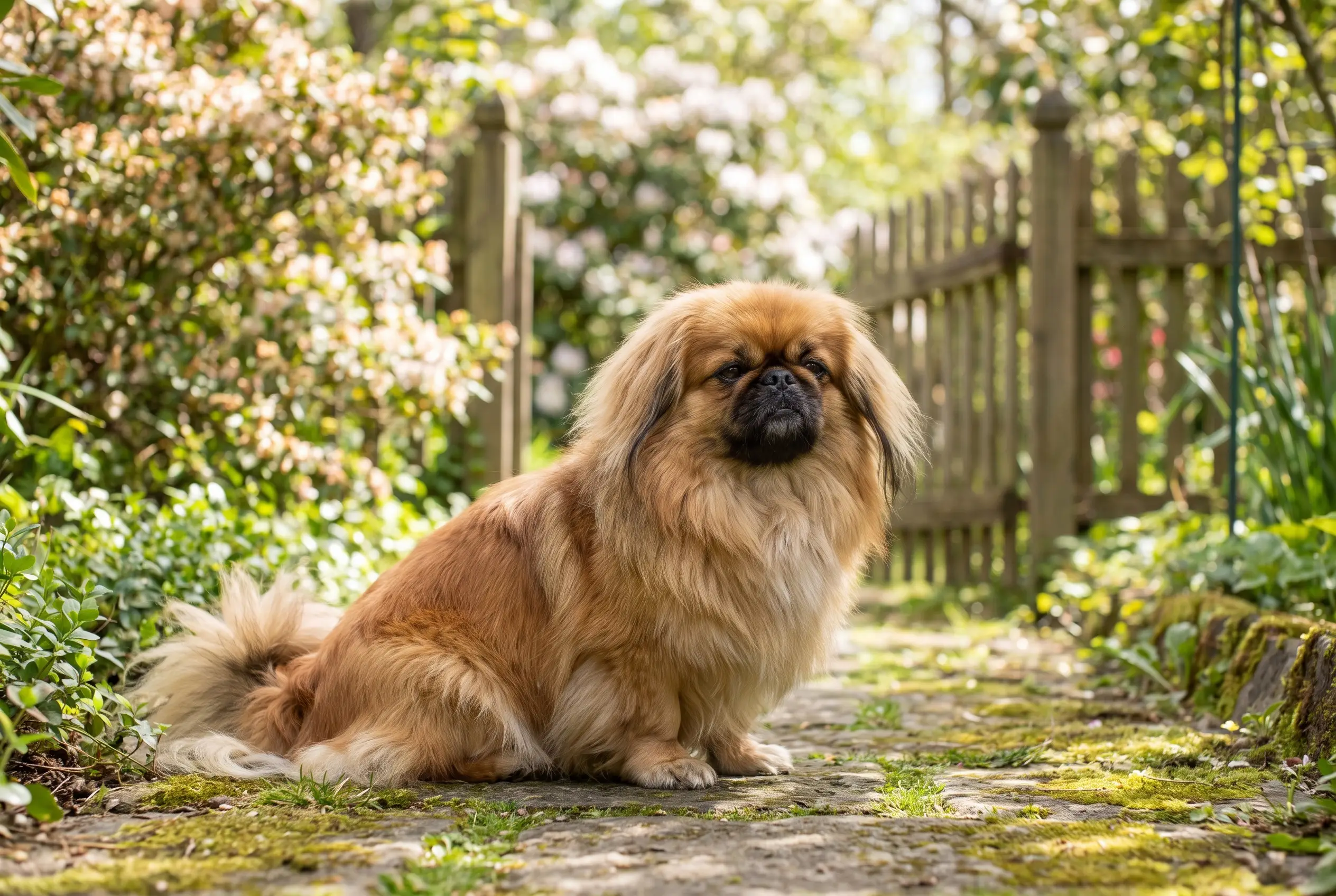
Pekingese
A lion in miniature — the emperor's sleeve dog, still entirely sure of its rank.
Vital stats
| Size | Toy · 15–23 cm |
| Weight | 3–6 kg |
| Life expectancy | 12–14 years |
| Energy | Low — short gentle walks |
| Shedding | Moderate–heavy, seasonal |
| Coat | Long double coat with mane · many colours, often black-masked |
| Group | Toy · FCI №207 / AKC |
| Origin | Peking (Beijing), China |
| FCI group | 9 — Companion and Toy Dogs · FCI 207 |
Breed traits
Friendliness
Care
Mind
The Pekingese by the numbers
The Pekingese facts owners search for most — price, lifespan, weight, shedding and colours, in one place.
Widely bred, so you can usually find a litter from a registered breeder without a long wait. Ongoing costs stay modest — it eats little and routine vet care sits at the lower end. Its coat also needs a professional groom every few weeks — a real line in the budget.
We don't quote a single figure: the real price swings with breeder, region, bloodline and health testing — and a rescue costs a fraction of a breeder's litter. Adopting is almost always the cheapest route.
Temperament
Bred for centuries to do nothing at the Chinese court but be magnificent, the Pekingese is self-possessed, loyal to its own, and stubborn in a way that feels almost principled. It is affectionate strictly on its own schedule — less a pet than a small resident aristocrat.
Habits & quirks
The rolling march
That slow, shoulder-swinging gait is bred in — a Pekingese does not hurry for anyone.
Selective hearing
It heard you perfectly; it is simply considering whether the request is reasonable.
Cool-tile seeking
A heavy coat and flat face mean it reliably finds the coldest floor in every room.
Lap by appointment
Affection is granted rather than demanded — earn it, and the loyalty runs deep.
Health
The Pekingese lives behind a flat face, and that shapes its health more than anything: heat, humidity and exertion are real hazards, and many Pekes snore, tolerate warmth poorly, and some have genuine airway trouble. Walk in the cool of the day, never let it overheat, and choose a breeder who prioritises open nostrils and easy breathing. The large, prominent eyes sit forward and exposed, so keep them clean and watch for injury, and support the long, low back — lift with both ends and discourage big jumps off the furniture. Keep the facial folds clean and dry.
Nutrition
| Health | The flat face means heat, humidity and exertion are genuine hazards — walk in the cool of the day and keep the prominent eyes protected. |
| Grooming | Brush the mane and skirts every day or two, and keep the facial folds clean and dry. |
| Exercise | Short, unhurried walks and indoor play are plenty; avoid stairs marathons and hot afternoons. |
| Training | Patient, reward-based and short — this breed cooperates when convinced, never when commanded. |
A Pekingese needs very little food to hold its weight, and a fat Peke pays for every extra gram in its breathing and its joints. Portion strictly, weigh the tiny meals, and count treats into the day's total — on a 3-to-6-kilo dog a couple of biscuits is a real meal. Keep ribs you can feel under that heavy coat, because with a flat face and a long back, lean is not cosmetic: it is how the dog stays comfortable.
Puppy guide
A Pekingese puppy is small, an aristocrat in the making, and more fragile than it looks — those big eyes and that long back need gentle, careful handling from the start. Keep it cool and never let a pup overheat, start cleaning the facial folds and brushing the coat early so both become routine, and support the back when you lift. Socialise gently and let it meet the world at its own pace; a Peke raised with respect grows into a confident, loyal little character. Keep play soft and off the high furniture.
Training
The Pekingese was bred for centuries to be admired, not to obey, and it trains accordingly: it cooperates when convinced and ignores you when commanded. Keep sessions short, patient and reward-based, make the thing you want look like the Peke's own idea, and never drill. It is bright enough to learn plenty, and stubborn enough to pretend otherwise. Protect the flat face and never work it hard in the heat, and end while you're both still enjoying it.
Life expectancy
Pekingese live 12–14 years. A Pekingese can reach a good age, and how it gets there is mostly about managing the flat face and the weight. Keep your dog lean, cool and out of the midday heat, protect the prominent eyes, keep the folds clean and dry, and choose a breeder who breeds for open nostrils and a freer airway. Mind the long back, stay ahead of trouble with regular vet checks, and a well-kept Peke spends its years comfortable and thoroughly in charge.
Popular Pekingese mixes
Peekapoo
A small, affectionate companion cross with a lower-shedding coat and often a slightly longer muzzle than a Pekingese, which can mean easier breathing. Coat and face vary from puppy to puppy; keep an eye on the heat regardless.
Similar breeds
Breeds with a similar build and background — worth a look if this one isn't quite the fit.
Breeds that look like this
Common questions
Do Pekingese have breathing problems?
Many do — the flat face brings snoring, heat intolerance and, in some dogs, real airway trouble. Choose breeders prioritising open nostrils and easy breathing, and manage heat carefully.
Are Pekingese good with children?
Best with calm older children who respect its dignity. It won't tolerate rough handling, and its prominent eyes make careless play genuinely risky for the dog.
How much grooming does a Pekingese need?
A thorough brush every day or two, with regular attention to face folds, ears and trousers. Many pet owners keep a shorter clip to lighten the load.
Does the Pekingese shed a lot?
Yes — the Pekingese is a heavy shedder, dropping hair year-round or in big seasonal moults. Brush it several times a week and expect regular vacuuming; it isn't the coat for you if loose fur is a dealbreaker.
Is the Pekingese hypoallergenic?
Not really. No dog is truly hypoallergenic, and the Pekingese's shedding coat releases plenty of the dander that sets off allergies. If someone at home is allergic, this isn't the easiest breed to live with — spend time around one first.
Is the Pekingese easy to train?
They can be a challenge. The Pekingese is intelligent but independent, and would rather make its own decisions than take orders. Reward-based training and patience work best; expect recall in particular to take time.