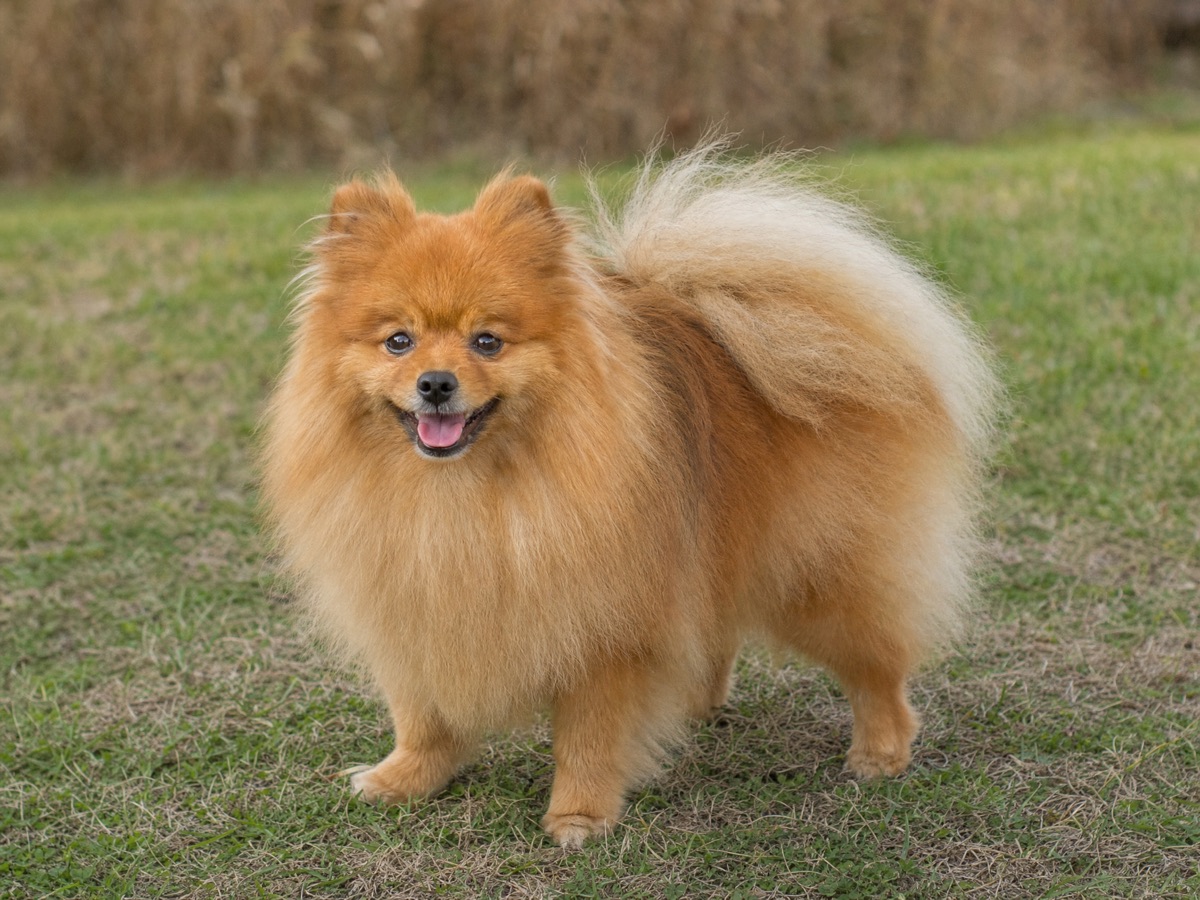
Pomeranian
A fox-faced pom-pom — a tiny spitz with a huge, bossy personality.
On these lists: Small dogs
Vital stats
| Size | Toy · 18–30 cm |
| Weight | 2–3 kg |
| Life expectancy | 12–16 years |
| Energy | Moderate — 30–45 min/day |
| Shedding | Moderate, with seasonal blows |
| Coat | Profuse double coat · orange, black, cream & more |
| Group | Spitz · FCI №97 / AKC |
| Origin | Pomerania, Germany / Poland |
| FCI group | 5 — Spitz and primitive types · FCI 97 |
Breed traits
Friendliness
Care
Mind
The Pomeranian by the numbers
The Pomeranian facts owners search for most — price, lifespan, weight, shedding and colours, in one place.
Widely bred, so you can usually find a litter from a registered breeder without a long wait. Ongoing costs stay modest — it eats little and routine vet care sits at the lower end. Its coat also needs a professional groom every few weeks — a real line in the budget.
We don't quote a single figure: the real price swings with breeder, region, bloodline and health testing — and a rescue costs a fraction of a breeder's litter. Adopting is almost always the cheapest route.
Temperament
Underneath the pouf is a sled-spitz in miniature — Pomeranians descend from hefty Arctic haulers, and the confidence never shrank with the body. Expect a bright, alert companion that appoints itself doorbell, keeps tabs on the entire household, and trains beautifully as long as lessons stay fun.
Habits & quirks
Big-dog swagger
Two kilos of Arctic self-belief — it will absolutely address the Alsatian across the road.
Town crier
Every arrival, delivery and passing cat is announced promptly and in full.
Tiptoe twirls
Excitement comes out as pirouettes — a small dance before dinner is standard.
The satellite nap
It sleeps near you rather than on you — spitz independence in miniature.
Health
For all its size, the Pomeranian has a few things to watch. The knees can slip (patellar luxation), the heart can develop mitral valve disease with age, and small-dog dental crowding means the teeth need real care. The windpipe is delicate too, so walk a Pom on a harness rather than a collar. Buy from a breeder who screens knees and hearts, and keep up the dental care from the start.
Nutrition
| Grooming | Brush the double coat two or three times a week and never shave it — the coat may not recover. |
| Health | Small-dog priorities: daily dental care, sound knees, and a harness instead of a collar to protect the delicate windpipe. |
| Exercise | Thirty to forty-five minutes of walks and lively play daily — small, not sedentary. |
| Training | Socialise early and teach a quiet cue from puppyhood, or the watchdog enthusiasm runs the house. |
A Pomeranian eats little, so quality matters more than quantity — measure the meals and don't let a tiny dog talk you into topping up the bowl. Keep it lean; even a little extra weight is a lot on a dog this small, and it's harder on the knees. Small-dog teeth crowd and suffer, so daily dental care belongs in the routine from the start.
Puppy guide
A Pomeranian puppy is bold and busy and thinks it's a big dog, so socialise it early and widely before that confidence hardens into bossiness. Teach a quiet cue from the start, or the breed's watchdog enthusiasm will run the house. Walk it on a harness to protect the delicate windpipe, and get it used to gentle brushing early — that double coat needs regular care for life.
Training
Pomeranians are bright, bold little extroverts that learn fast in short, upbeat, reward-based sessions. The main job is teaching calm: this is an enthusiastic watchdog in a small body, so a reliable quiet cue and early, wide socialisation keep the barking in check. Treat it like the clever dog it is rather than a lapdog, and it'll surprise you with how much it can learn.
Known health issues
No breed is problem-free. These are the conditions most worth knowing about for this breed — with what a good breeder screens for and what an owner watches. General guidance, not a substitute for your vet.
Slipping kneecap
A kneecap that slips out of place, common in small breeds and usually manageable. Good breeders screen: Vet-checked knees on the parents. Watch for: An occasional skip or hop on a back leg.
Heart murmur (mitral valve)
A leaky heart valve that becomes common with age, especially in small breeds and the Cavalier. Good breeders screen: Heart-tested parents, ideally cardiologist-cleared. Watch for: A cough, tiring on walks, or faster breathing at rest.
Life expectancy
Pomeranians live 12–16 years. Pomeranians are long-lived little dogs, and steady small-dog care keeps them there: daily dental care, a lean weight that spares the knees, and vet checks that catch heart changes early. Brush the double coat rather than shaving it — a shaved Pom's coat may never come back the same — and protect the windpipe with a harness.
Popular Pomeranian mixes
Pomsky
A striking, energetic cross with a thick coat, a loud voice and plenty of drive for its size. It needs real exercise, early training and a lot of brushing.
Pomchi
A tiny, bold, devoted cross with a big personality and a watchful streak. Loves its people; socialise early and watch the knees and teeth.
Pomapoo
A small, clever, often lower-shedding cross with a soft, wavy coat. Bright and affectionate; the coat needs regular brushing and the teeth need care.
Peekapom
A small, affectionate lapdog cross with a long, heavy coat and a stubborn streak. It feels the heat and needs regular grooming, so keep it cool and brushed.
Pomeagle
A lively, friendly, scent-driven cross with a good nose and a good appetite. Fun and sociable; keep it lean, give it walks, and expect some barking.
Similar breeds
Breeds with a similar build and background — worth a look if this one isn't quite the fit.
Breeds that look like this
Common questions
Do Pomeranians bark a lot?
They can — they're alert, vocal little watchdogs. Early training to a 'quiet' cue and good socialisation keep it in check.
Are Pomeranians high-maintenance?
Moderately — brush the double coat two or three times a week, never shave it, and take care with the fragile bones and teeth of such a small dog.
How much exercise does a Pomeranian need?
Around 30–45 minutes a day of short walks and play, topped up with training games for that busy mind. Small doesn't mean sedentary — a bored Pom gets loud.
Does the Pomeranian shed a lot?
Moderately. The Pomeranian sheds a fair amount, steadily through the year with heavier seasonal patches. A weekly brush keeps most of the loose hair off your floors and clothes.
Is the Pomeranian hypoallergenic?
Not really. No dog is truly hypoallergenic, and the Pomeranian's shedding coat releases plenty of the dander that sets off allergies. If someone at home is allergic, this isn't the easiest breed to live with — spend time around one first.
Is the Pomeranian good with children?
They can be. The Pomeranian is reasonably sociable and can be good with children in the right home, especially when socialised early. Supervise around young kids and teach dog and child to respect each other.
Is the Pomeranian easy to train?
Reasonably. The Pomeranian is trainable with consistency and rewards, though it isn't the quickest study. Keep sessions short and positive, and be patient with the basics like recall.