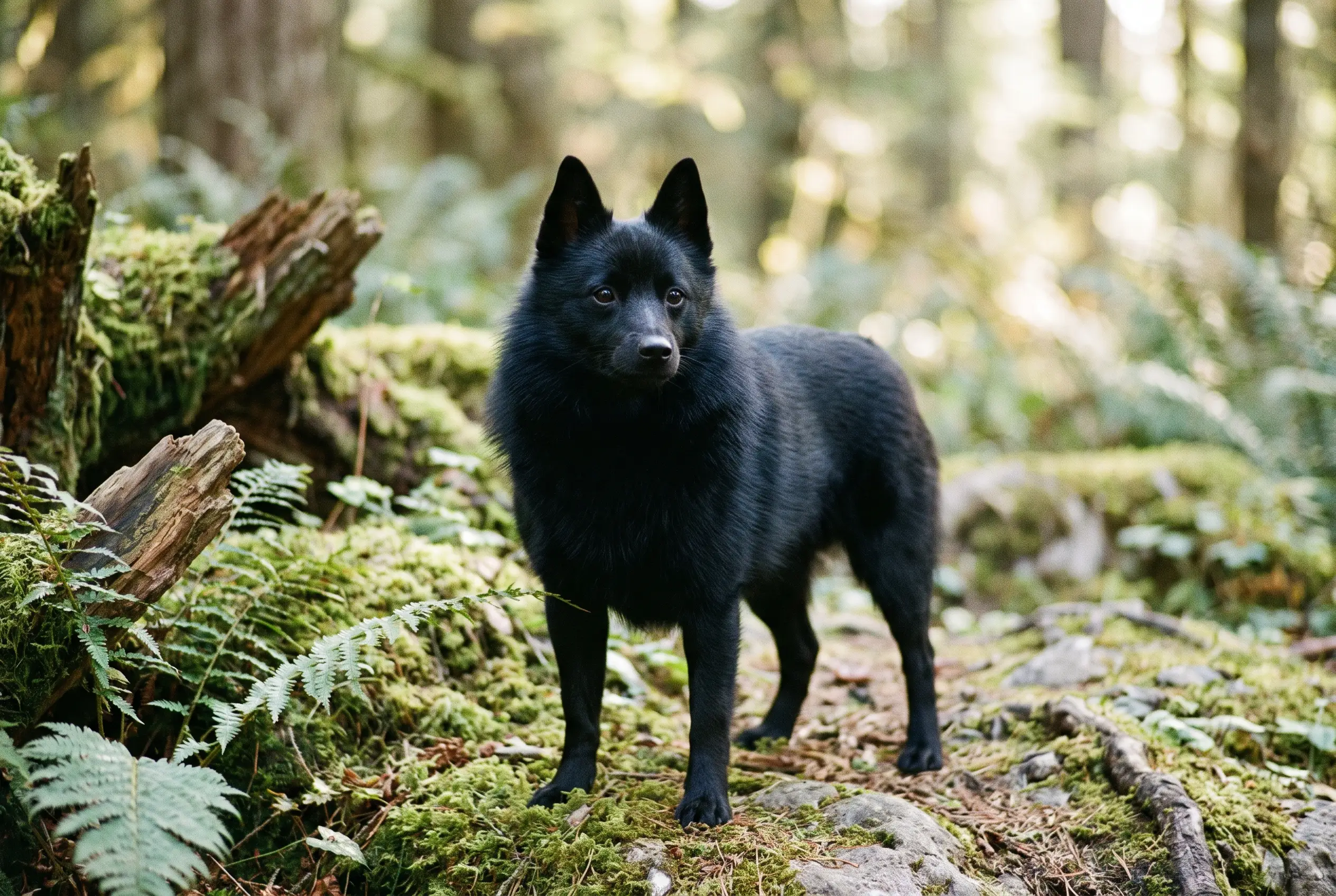
Schipperke
A little black fox with a captain's swagger and a pirate's curiosity.
Vital stats
| Size | Small · 25–33 cm |
| Weight | 3–9 kg |
| Life expectancy | 13–15 years |
| Energy | High — 45–60 min/day plus games |
| Shedding | Moderate, with heavy seasonal blows |
| Coat | Black double coat with mane and culottes |
| Group | Non-sporting · FCI №83 / AKC |
| Origin | Flanders, Belgium |
| FCI group | 1 — Sheepdogs and Cattledogs · FCI 83 |
Breed traits
Friendliness
Care
Mind
The Schipperke by the numbers
The Schipperke facts owners search for most — price, lifespan, weight, shedding and colours, in one place.
Widely bred, so you can usually find a litter from a registered breeder without a long wait. Ongoing costs stay modest — it eats little and routine vet care sits at the lower end.
We don't quote a single figure: the real price swings with breeder, region, bloodline and health testing — and a rescue costs a fraction of a breeder's litter. Adopting is almost always the cheapest route.
Temperament
A barge needs a dog that misses nothing, and the Schipperke still runs that watch: every visitor logged, every cupboard inspected, every oddity announced. Behind the vigilance sits a playful, devoted companion — clever, wilful, long-lived and convinced that small print about 'small dog' does not apply to it.
Habits & quirks
Harbour patrol
Perimeter checks are conducted hourly; discrepancies will be barked in.
The cupboard inspector
Anything opened, delivered or dropped must be personally investigated.
Houdini gene
Gaps in fences and doors left ajar are treated as formal invitations.
Full-tilt zoomies
Bursts of laps around the house, ideally ending on the back of the sofa.
Care
| Exercise | Under an hour of walking daily, but the brain needs as much work as the legs — games, puzzles, jobs. |
| Training | Clever and quick, but independent; keep sessions short, rewarding and one step ahead of boredom. |
| Containment | A secure garden and a lead near roads — curiosity plus speed makes a bolter. |
| Grooming | Weekly brushing suffices until the undercoat blows, then brush daily for a fortnight. |
Life expectancy
This breed has a typical life expectancy of 13–15 years.
Similar breeds
Breeds with a similar build and background — worth a look if this one isn't quite the fit.
Breeds that look like this
Common questions
Do Schipperkes bark a lot?
Yes — they were bred to be tiny alarm systems and take the job seriously. Early training to a 'quiet' cue, plenty of activity and rewarding calm all help.
Are Schipperkes good apartment dogs?
Size-wise, perfectly; noise-wise, only with committed training and daily exercise. A bored Schipperke will narrate the corridor's every footstep.
Are Schipperkes easy to train?
They learn fast and love to work, but they have an independent streak and their own agenda. Short, playful, consistent sessions get far better results than drilling.
Does the Schipperke shed a lot?
Yes — the Schipperke is a heavy shedder, dropping hair year-round or in big seasonal moults. Brush it several times a week and expect regular vacuuming; it isn't the coat for you if loose fur is a dealbreaker.
Is the Schipperke hypoallergenic?
Not really. No dog is truly hypoallergenic, and the Schipperke's shedding coat releases plenty of the dander that sets off allergies. If someone at home is allergic, this isn't the easiest breed to live with — spend time around one first.
Is the Schipperke good with children?
They can be. The Schipperke is reasonably sociable and can be good with children in the right home, especially when socialised early. Supervise around young kids and teach dog and child to respect each other.