Bichon Frisé
A cheerful powder-puff — low-shedding, people-loving and endlessly merry.
On these lists: Dogs for apartments · Dogs for first-time owners · Low-shedding dogs · Therapy dogs · Dogs for seniors · Dogs for allergies · Dogs for anxiety
Vital stats
| Size | Small · 23–30 cm |
| Weight | 5–8 kg |
| Life expectancy | 14–15 years |
| Energy | Moderate — 30–45 min/day |
| Shedding | Minimal — loose hair stays in the coat |
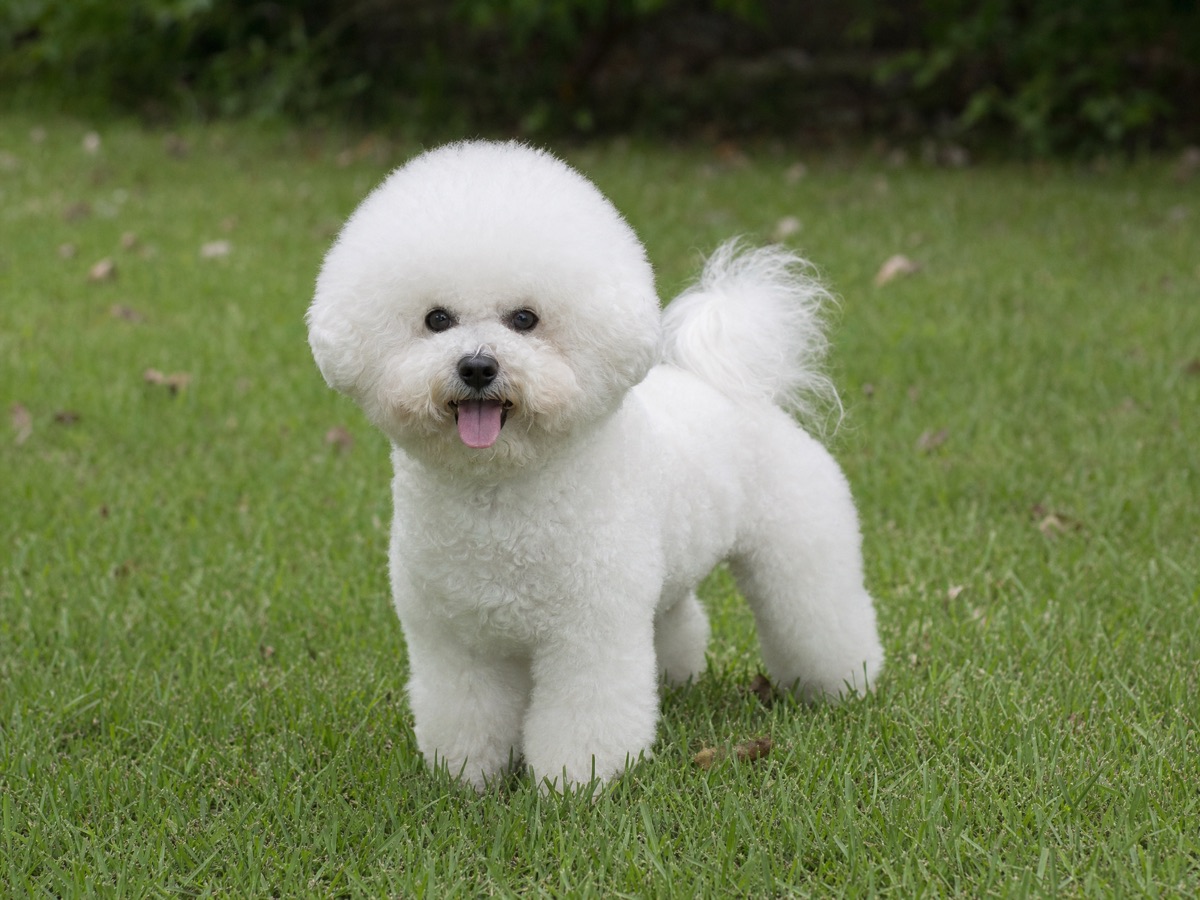
| Coat | Soft, curly double coat · white |
| Group | Non-Sporting · FCI №215 / AKC |
| Origin | Mediterranean / France |
| FCI group | 9 — Companion and Toy Dogs · FCI 215 |
Breed traits
Friendliness
Care
Mind
The Bichon Frisé by the numbers
The Bichon Frisé facts owners search for most — price, lifespan, weight, shedding and colours, in one place.
Widely bred, so you can usually find a litter from a registered breeder without a long wait. Ongoing costs stay modest — it eats little and routine vet care sits at the lower end. Its coat also needs a professional groom every few weeks — a real line in the budget.
We don't quote a single figure: the real price swings with breeder, region, bloodline and health testing — and a rescue costs a fraction of a breeder's litter. Adopting is almost always the cheapest route.
Temperament
Centuries as a sailors' trade good, a royal lapdog and a circus performer bred one thing into the Bichon: professional charm. It is merry, gentle and genuinely funny, learns tricks with delight, and assumes every visitor came specifically to meet it. The flip side of all that people-focus is real distress when left alone too long.
Habits & quirks
The Bichon blitz
Sudden joyful sprints around the house at full speed, ending as abruptly as they began.
Professional greeter
Every arrival at the door is treated as the best thing to happen all week.
Lap radar
The moment anyone sits down, a small white cloud materialises on their knees.
Showing off
Bred for the circus, it learns tricks fast and performs them for anyone who'll watch.
Health
The Bichon Frise is a sturdy little dog for its size, with a few things worth checking. Patellar luxation — a kneecap that slips — is common in small breeds, and eye conditions including progressive retinal atrophy (PRA) run in some lines, so buy from a breeder who tests and can show you the parents' results. Like most small dogs, Bichons also need real attention paid to their teeth: small mouths crowd, and dental disease is one of the most common and most preventable problems the breed faces. Keep the knees light, the eyes checked and the teeth brushed, and a Bichon is a hardy companion.
Nutrition
| Grooming | Brush every day or two to stop mats, with a professional trim every 4–6 weeks — this is the breed's biggest commitment. |
| Company | A true companion breed — build up alone-time tolerance early and don't plan long empty days. |
| Eyes & face | Wipe the face regularly; the white coat shows tear staining quickly. |
| Training | Cheerful and quick to learn, though housetraining small breeds takes patience — stay consistent. |
A Bichon needs very little food to stay in trim, so measure it out rather than eyeing it — on a dog this small, a few extra treats a day add up fast and press on those knees. Feed set meals, count anything you hand over for training into the day's total, and keep a light, clear outline under all that coat, where a little weight gain hides easily. Pay attention to the teeth too: small-breed mouths are prone to dental trouble, so daily brushing and the odd dental chew earn their place in the routine.
Puppy guide
A Bichon puppy is cheerful, affectionate and quick to bond, and the most important lesson of that first year is one owners often skip: learning to be alone. This is a true companion breed that would spend every waking minute with you, so teach short, calm separations early and build them up, rather than being together constantly and facing a distraught dog the first long day out. Socialise him widely, start gentle grooming from the beginning so a lifetime of trims is easy, and be patient with housetraining — small breeds simply take longer, and steady routine beats frustration every time.
Training
Bichons are bright, willing little dogs that genuinely enjoy learning, especially when there is a reward and a bit of fun in it. Keep training positive and upbeat — this is a sensitive, people-pleasing breed, and harsh corrections just worry them — and use short sessions to teach manners, tricks and calm behaviour. The one place to be patient is housetraining, which takes longer in small breeds than owners expect; stay consistent and don't cut corners. Reward the behaviour you want and a Bichon is a delight to teach.
Known health issues
No breed is problem-free. These are the conditions most worth knowing about for this breed — with what a good breeder screens for and what an owner watches. General guidance, not a substitute for your vet.
Slipping kneecap
A kneecap that slips out of place, common in small breeds and usually manageable. Good breeders screen: Vet-checked knees on the parents. Watch for: An occasional skip or hop on a back leg.
Inherited eye disease
Progressive retinal atrophy and cataracts run in several breeds and can dim or take sight over time. Good breeders screen: Eye-tested parents and, where available, a DNA test for PRA. Watch for: Night-time bumping, cloudy eyes, or hesitation in dim light.
Life expectancy
Bichons Frises live 14–15 years. Bichons are a long-lived breed, and the things that keep one at the top of that range are the everyday ones: a lean weight to spare the knees, parents tested for the eyes and the knees, and — easy to forget in a small dog — teeth that are brushed and checked. Keep up the coat care and the yearly vet visit, and a well-kept Bichon stays a bright, bouncy companion for a very long time.
Popular Bichon mixes
Poochon
Two low-shedding breeds combined into a small, cheerful, clever companion; often a good fit for allergy-conscious homes.
Cavachon
A gentle, affectionate lap dog with an easy temperament; friendly with everyone and happiest in company.
Shichon
A soft, sociable little companion with a low-shedding coat; sometimes called the Teddy Bear for good reason.
Maltichon
Two white companion breeds combined: small, affectionate and devoted, with a coat that needs regular care.
Cockachon
The Cocker's warmth in a smaller, lower-shedding package; friendly, playful and eager for company.
Similar breeds
Breeds with a similar build and background — worth a look if this one isn't quite the fit.
Breeds that look like this
Common questions
Are Bichons hypoallergenic?
No dog truly is, but the Bichon's low-shedding curly coat makes it one of the more allergy-friendly breeds.
Do Bichons need a lot of grooming?
Yes — brush every day or two to prevent mats and book a professional groom every 4–6 weeks. The white coat also needs face and eye cleaning.
Can Bichons be left alone all day?
Not happily — this is a companion breed prone to separation anxiety. Half-days with company, a dog walker or daycare are far kinder arrangements.
Does the Bichon Frisé shed a lot?
Not much. The Bichon Frisé is a low-shedding breed, so loose hair around the home stays minimal. It still needs regular grooming, but you won't be fighting drifts of fur.
Is the Bichon Frisé good with children?
Generally yes. The Bichon Frisé is a friendly, people-loving breed that usually does well with children when raised and socialised well. As with any dog, teach children to be gentle and supervise around toddlers.
Is the Bichon Frisé easy to train?
Reasonably. The Bichon Frisé is trainable with consistency and rewards, though it isn't the quickest study. Keep sessions short and positive, and be patient with the basics like recall.