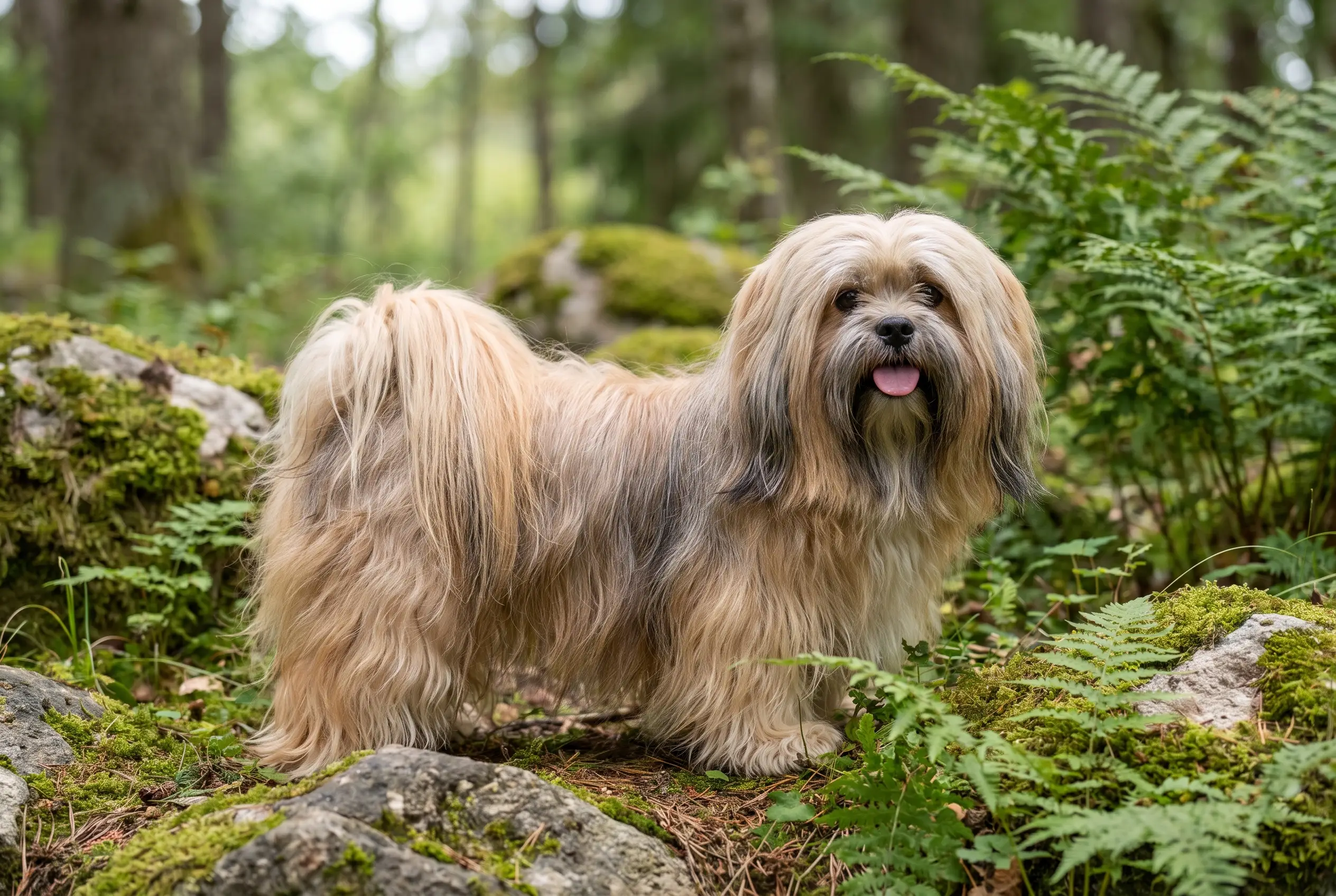
Lhasa Apso
A palace sentinel in a floor-length coat — small dog, thousand-year soul.
Vital stats
| Size | Small · 25–28 cm |
| Weight | 5–8 kg |
| Life expectancy | 12–15 years |
| Energy | Low-moderate — 30–45 min/day |
| Shedding | Low, but the coat mats |
| Coat | Long, heavy, straight · golden, sable, grizzle and more |
| Group | Non-sporting · FCI №227 / AKC |
| Origin | Tibet |
| FCI group | 9 — Companion and Toy Dogs · FCI 227 |
Breed traits
Friendliness
Care
Mind
The Lhasa Apso by the numbers
The Lhasa Apso facts owners search for most — price, lifespan, weight, shedding and colours, in one place.
Widely bred, so you can usually find a litter from a registered breeder without a long wait. Ongoing costs stay modest — it eats little and routine vet care sits at the lower end. Its coat also needs a professional groom every few weeks — a real line in the budget.
We don't quote a single figure: the real price swings with breeder, region, bloodline and health testing — and a rescue costs a fraction of a breeder's litter. Adopting is almost always the cheapest route.
Temperament
For centuries the Lhasa worked as an indoor sentinel in Tibetan monasteries and noble houses, sounding the alarm at anything the courtyard mastiffs missed. That job built a small dog with an old soul: alert, self-possessed, wary of strangers and deeply loyal to its chosen few — affection on its terms, never on demand.
Habits & quirks
High-ground patrol
Claims the sofa back or stair landing — the best vantage point for sentry duty.
The appraisal
Strangers are studied at length before any greeting is granted. It's not rude; it's protocol.
Cat mode
Entertains itself happily, naps elegantly, and comes for cuddles when it decides the time is right.
Sudden comedy
Between long spells of dignity: unprovoked zoomies and clowning, strictly for the inner circle.
Health
The Lhasa is a genuinely tough, long-lived little dog, so there's less to watch than that floor-length coat suggests. The one breed-specific point is the eyes, hidden under all that hair: keep them clean, watch for irritation, and ask breeders about eye testing in the line. Beyond that it's standard small-dog care — daily dental attention and a lean weight — from a breeder who health-tests their dogs.
Nutrition
| Grooming | The floor-length coat needs daily brushing to the skin — or choose a shorter pet clip and groom monthly. |
| Training | Independent, not dim: keep sessions short, rewarding and free of drilling, and start socialising early. |
| Exercise | A couple of unhurried walks and some indoor play cover it — this is a companion, not an athlete. |
| Health | A tough, long-lived little breed; keep eyes clean under all that hair and ask breeders about eye testing. |
A Lhasa eats very little, so quality matters more than quantity: measure the meals and don't let a small, opinionated dog talk you into topping up the bowl. Keep it lean — a little extra weight is a lot on a dog this size. Small-dog teeth crowd and suffer, so make daily dental care part of the routine from the start.
Puppy guide
A Lhasa puppy is confident and watchful and forms strong views early, so socialise it widely before that turns into suspicion of everything new. Get it used to daily brushing while it's young — that long coat needs handling for life, and a puppy that enjoys grooming saves you years of battles. Start training with humour and patience; this is an independent dog, not a pushover.
Training
Independent is not the same as unintelligent. Keep sessions short, rewarding and free of repetitive drilling, and the Lhasa will surprise you with what it chooses to learn. Socialise early to soften the natural wariness of strangers, and accept the barking as heritage: you can teach a quieter alert, but a dog bred for a thousand years to announce visitors won't give it up entirely.
Life expectancy
Lhasa Apsos live 12–15 years. Lhasa Apsos are long-lived little dogs, and steady small-dog care keeps them there: a lean weight, daily dental care, and a coat kept brushed out or clipped so it never turns into painful mats. Keep the eyes clean under the hair and let the vet catch small problems early.
Popular Lhasa mixes
Lhasapoo
A small, clever, often lower-shedding cross with a soft, wavy coat. Bright and affectionate; the coat still needs regular brushing and the teeth need daily care.
Shih-Apso
A small, sturdy companion cross with a long coat and a big personality. Devoted and playful; expect real grooming and regular dental care.
La-Chon
A small, cheerful, fluffy cross that's often lower-shedding, with a soft, curling coat. Friendly and people-loving; the coat mats easily, so brush often and keep up the dental care.
Similar breeds
Breeds with a similar build and background — worth a look if this one isn't quite the fit.
Breeds that look like this
Common questions
Do Lhasa Apsos shed?
Very little — the long coat holds loose hair until you brush it out. The trade-off is mats, so brushing or regular clipping isn't optional.
Are Lhasa Apsos good for first-time owners?
Yes, if you want a characterful housemate rather than an obedient shadow. They're clean, quiet-bodied and undemanding to exercise, but training takes humour and patience.
Why does my Lhasa Apso bark at the door?
Because that was its job for a thousand years — announcing arrivals is the breed's whole heritage. You can train a quieter alert, but you won't train it away entirely.
Is the Lhasa Apso hypoallergenic?
No dog is truly hypoallergenic, but the Lhasa Apso comes closer than most: its low-shedding coat releases less of the dander that triggers allergies. Many allergy sufferers manage well with this breed, but spend time around one before committing.
Is the Lhasa Apso good with children?
They can be. The Lhasa Apso is reasonably sociable and can be good with children in the right home, especially when socialised early. Supervise around young kids and teach dog and child to respect each other.
Is the Lhasa Apso easy to train?
Reasonably. The Lhasa Apso is trainable with consistency and rewards, though it isn't the quickest study. Keep sessions short and positive, and be patient with the basics like recall.