
Mordeduras de serpiente en perros: primeros auxilios, síntomas y prevención
Una mordedura de serpiente es siempre una urgencia, fuera o no venenosa la serpiente. La mayoría de los perros se recupera bien de la mordedura de una víbora europea si llega pronto al veterinario, y lo que más pesa en ese desenlace es cómo actúas en los primeros minutos, no ningún remedio casero. Esto es lo que hay que hacer en cuanto sospechas una mordedura, los remedios populares que solo hacen perder tiempo y qué serpientes conviene conocer de verdad donde vives.
Si muerden a tu perro: qué hacer ahora mismo

Actúa rápido, pero no dejes que tu perro se mueva por su propio pie. Mantenlo lo más tranquilo y quieto que puedas: un corazón que late más deprisa empuja el veneno por el cuerpo más rápido, así que a un perro que va en brazos le va realmente mejor que a uno que camina o corre. Coge en brazos a un perro pequeño o mediano y llévalo al coche; con un perro grande, mantenlo lo más quieto y sujeto posible en vez de dejar que trote hasta allí.
Anota la hora de la mordedura si puedes y, si viste la serpiente, recuerda su color y su dibujo desde una distancia segura: no vuelvas a mirarla de cerca ni intentes atraparla o matarla. Después ve directo al veterinario o a la clínica de urgencias más cercana, llamando por el camino si te es posible, para que estén preparados cuando llegues. Hazlo aunque tu perro parezca estar bien: la hinchazón importante y los síntomas pueden tardar horas en aparecer, y el tratamiento funciona mejor cuando empieza pronto, antes de que eso ocurra.
Lo que no hay que hacer: los mitos que cuestan tiempo
Abrir la mordedura con un corte, succionar el veneno y poner un torniquete son consejos heredados de las películas antiguas, y ninguno ayuda a un perro. Cortar añade una herida sin retirar veneno, que para cuando adviertes la mordedura ya ha empezado a extenderse por el tejido. Succionar tampoco lo saca, y además acerca el veneno a tu propia boca sin ningún beneficio. El torniquete no impide que el veneno circule: solo corta el riego sanguíneo del miembro, lo que provoca daños graves por sí mismo, y aflojarlo después puede lanzar de golpe una dosis concentrada a la circulación.
El hielo también conviene evitarlo: no neutraliza el veneno, y apretar una bolsa fría sobre un tejido que ya se está hinchando añade una lesión por frío encima de la mordedura. Los únicos primeros auxilios que sirven de verdad son mantener quieto al perro y conseguir que lo vean. Todo lo demás es una decisión de tu veterinario, no de la cuneta.
Reconocer una mordedura
Los perros investigan con el hocico y las patas delanteras, así que la mayoría de las mordeduras cae en la cara, el hocico o una pata delantera más que en el cuerpo. La primera señal suele ser un aullido o un respingo repentino, seguido de dos pequeños orificios que bajo el pelo cuestan de ver y rara vez sangran mucho. La hinchazón suele llegar entre veinte minutos y unas pocas horas después y puede ser espectacular: un hocico mordido puede duplicar su tamaño, algo que asusta incluso cuando la vía respiratoria no está bloqueada.
Más allá de la hinchazón local, vigila el babeo, los vómitos, los temblores, la debilidad, un andar inestable o un perro que de pronto solo quiere tumbarse y no moverse. En un perro pequeño, o con una mordedura cerca de la vía respiratoria, estas señales pueden agravarse rápido. No hace falta haber visto la serpiente ni los orificios para actuar: dolor e hinchazón repentinos después de estar entre hierba alta o matorral, sobre todo en primavera o verano, bastan para tratarlo como una posible mordedura.
Qué serpientes importan de verdad en Europa
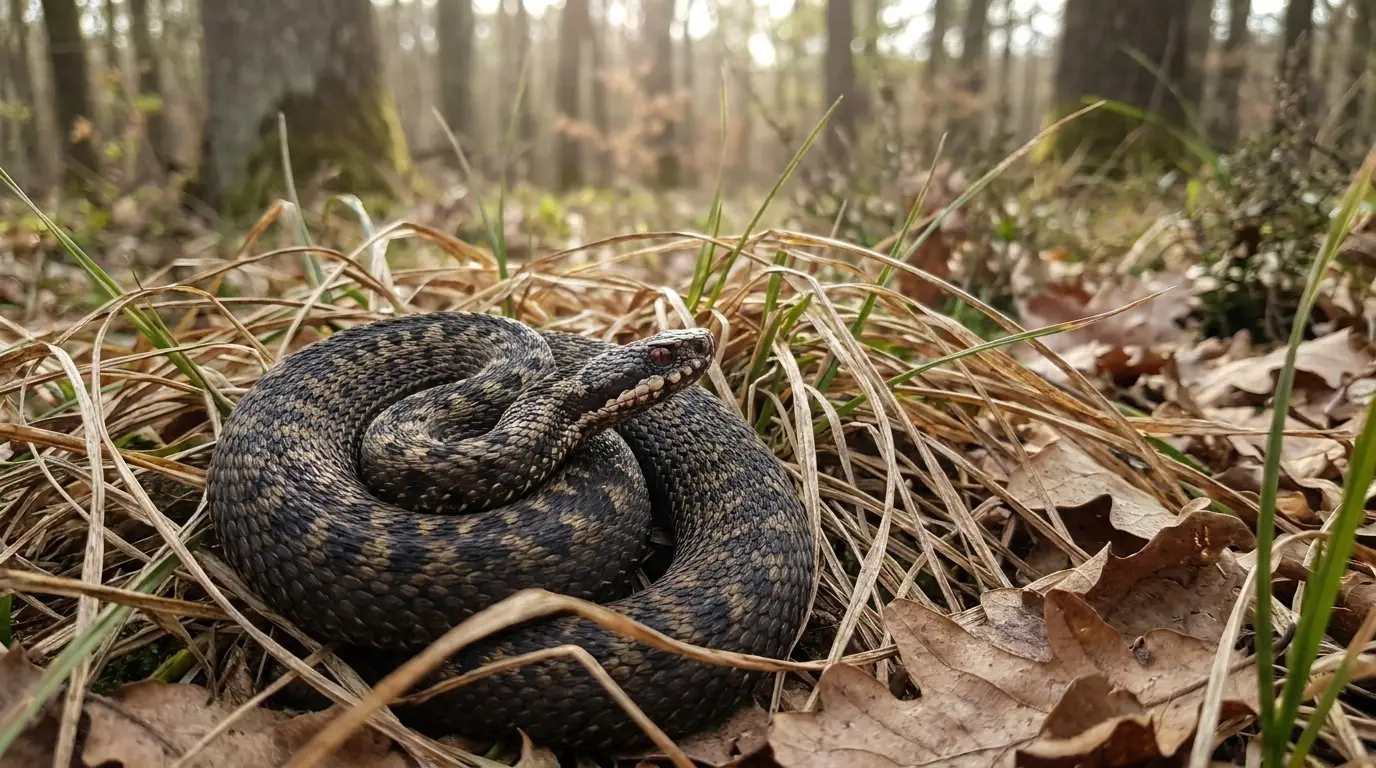
Gran Bretaña tiene una sola serpiente venenosa, la víbora europea (Vipera berus), y es la que un veterinario británico da por supuesta salvo que se le diga otra cosa. Más adentro en la Europa continental hay más que conocer: la víbora áspid (Vipera aspis) en Francia, Italia y Suiza; la víbora cornuda (Vipera ammodytes) en los Balcanes y en partes de Austria y del noreste de Italia, considerada por lo general la más peligrosa del grupo; y la víbora hocicuda (Vipera latastei) en la península ibérica. Todas son esquivas y muerden para defenderse, normalmente cuando se las pisa, se las olfatea o se las acorrala, no por agresividad.
Una víbora tiene el cuerpo grueso, la cabeza triangular bien marcada y la pupila vertical, con un zigzag oscuro recorriéndole el dorso en la mayoría de las especies europeas. Las culebras y otras serpientes no venenosas comparten el mismo matorral, pero son más esbeltas, de pupila redonda y, en el caso de la culebra de collar, con un collar claro detrás de la cabeza. En el momento, sin embargo, nada de esto importa demasiado: no vas a identificar una serpiente a toda prisa entre la hierba alta, y toda mordedura recibe la misma respuesta: mantener la calma e ir al veterinario.
Prevención: dónde y cuándo importa
Las serpientes están más activas los días cálidos desde la primavera hasta comienzos del otoño, y las víboras europeas en particular suelen tomar el sol por la mañana y retirarse cuando aprieta el calor, así que un paseo temprano por un hábitat conocido de serpientes tiene más riesgo que una vuelta al mediodía en un día caluroso. Brezales, pastizales secos, sistemas dunares, montones de leña y rocas calentadas por el sol son los sitios clásicos: cualquier lugar donde una serpiente pueda asolearse y desaparecer deprisa.
Lleva a los perros con correa por zonas con serpientes conocidas, sobre todo a un Jack Russell Terrier u otro perro criado para meterse de cabeza en agujeros y matorrales, y quédate en los senderos despejados en lugar de abrirte paso entre la hierba alta. Si oyes un siseo o ves una serpiente, llama a tu perro con calma en vez de acercarte: si se le deja espacio, una serpiente casi siempre se retira sola. En Europa no existe una vacuna antiofídica de uso extendido para perros, así que lo que de verdad protege a tu perro es evitarlas y reaccionar rápido ante una mordedura.
Los gatos, y la misma regla de urgencia
A los gatos los muerden menos que a los perros, sobre todo porque cazan y exploran con más cautela, pero ocurre, normalmente en la cara o en una pata delantera mientras investigan o cazan. Los gatos además disimulan muy bien el dolor y la enfermedad, así que un gato mordido puede simplemente quedarse callado, esconderse o dejar de querer moverse en lugar de mostrar un malestar evidente, y eso puede retrasar que alguien note que algo va mal.
La respuesta es idéntica a la de un perro: mantén al gato quieto, llévalo en brazos en vez de dejarlo andar y ve al veterinario de inmediato. No esperes a ver si aparecen síntomas. Si tu gato vuelve a casa con la cara anormalmente hinchada, babeando o reacio a moverse tras estar fuera en los meses cálidos, trátalo como una posible mordedura y llama a tu veterinario enseguida. Para los demás parásitos y peligros de la misma temporada, mira pulgas, garrapatas y gusanos y el calendario de peligros.
Preguntas frecuentes
¿Qué debo hacer si a mi perro le muerde una serpiente?
Mantén a tu perro lo más quieto y tranquilo posible —llévalo en brazos en vez de dejarlo andar—, anota la hora y, si puedes, cómo era la serpiente vista desde una distancia segura, y ve de inmediato al veterinario o a una clínica de urgencias, aunque tu perro parezca estar bien. La hinchazón y los síntomas graves pueden desarrollarse a lo largo de horas, y el tratamiento funciona mejor cuando empieza pronto.
¿Son peligrosas las mordeduras de serpiente para los perros en Europa?
Sí, aunque la mayoría de los perros se recupera bien de la mordedura de una víbora si llega pronto al veterinario. Las mordeduras causan dolor e hinchazón local importante, y el riesgo es mayor en un perro pequeño o con una mordedura cerca de la vía respiratoria. Los veterinarios las tratan con analgesia, fluidos intravenosos y, cuando hace falta, suero antiofídico; con tratamiento rápido las muertes son poco frecuentes, pero el desenlace depende mucho de lo pronto que se atienda al perro.
¿Debo cortar la herida o succionar el veneno tras una mordedura?
No. Cortar la mordedura e intentar succionar el veneno son mitos antiguos que no retiran veneno y solo añaden lesión y retraso. El torniquete es igual de dañino: no impide que el veneno se extienda por el cuerpo y puede causar daños graves en el miembro. Los únicos primeros auxilios eficaces son mantener quieto al perro y llegar rápido al veterinario.
¿Cómo sé si a mi perro le ha mordido una serpiente?
Busca un aullido o un respingo repentino seguido de hinchazón rápida, casi siempre en la cara, el hocico o una pata delantera, que es donde el perro suele hacer contacto. Puede que se vean dos pequeños orificios, pero pasan fácilmente desapercibidos bajo el pelo. Después pueden aparecer babeo, vómitos, debilidad o un andar inestable. No hace falta haber visto la serpiente para tratarlo como una urgencia.
¿Cuál es la única serpiente venenosa del Reino Unido?
La víbora europea (Vipera berus) es la única serpiente venenosa de Gran Bretaña, y es la que un veterinario británico da por supuesta. Es esquiva y muerde para defenderse cuando se la pisa o se la molesta, normalmente en días cálidos desde la primavera hasta comienzos del otoño.
¿También pueden morder las serpientes a los gatos?
Sí, aunque se notifica menos que en perros porque los gatos suelen ser más cautos. Las mordeduras caen normalmente en la cara o en una pata delantera. Los gatos disimulan bien los síntomas, así que un gato mordido puede limitarse a quedarse callado o a dejar de moverse en lugar de mostrar un malestar evidente: se aplica la misma regla, mantenlo quieto y ve al veterinario de inmediato.
Más en Perros

Peligros de otoño para el perro: bellotas, castañas de Indias y setas
El otoño deja en el suelo tres peligros para un perro rebuscador — bellotas, castañas de Indias y setas silvestres — más el veneno para ratas y la fruta caída en fermentación. Qué es tóxico, cuáles son las señales de alarma y cuándo llamar al veterinario.

Peligros del invierno para tu mascota: anticongelante, sal de deshielo y temporada de chocolate
El anticongelante es la urgencia del invierno: dulce, mortal y rápido. Además, las almohadillas castigadas por la sal, la carrera de obstáculos de la comida navideña y los gatos que se refugian en los motores aún calientes. Qué vigilar y cuándo corre prisa.

El calendario de peligros para tu mascota: qué vigilar, mes a mes
La mayoría de los peligros para perros y gatos son estacionales y muchos son regionales. Aquí tienes el año trazado: cuándo alcanzan de verdad su punto álgido el golpe de calor, las espigas, las procesionarias, el anticongelante y lo demás, y cuáles de ellos existen siquiera en tu zona.
Oruga procesionaria y perro: qué hacer ya y cuándo hay riesgo
La procesionaria del pino puede costarle al perro parte de la lengua, y lo que decide es la rapidez. Aquí tienes los gestos de los primeros minutos, cómo reconocerla y el calendario de riesgo por zonas.

Leishmaniosis en perros: qué la previene de verdad (y el calendario)
La leishmaniosis la transmite el flebotomo, un mosquito que pica en silencio al atardecer. El error que más cuesta es creer que la pipeta antiparásitos ya cubre esto. Aquí tienes qué protege al perro y cuándo empieza la temporada.

Golpe de calor en perros: primeros auxilios, señales y prevención
El perro se refresca jadeando, no sudando, por eso el calor lo supera enseguida. Aquí tienes qué hacer en los minutos que cuentan, cómo detectarlo y cuándo hay más riesgo.