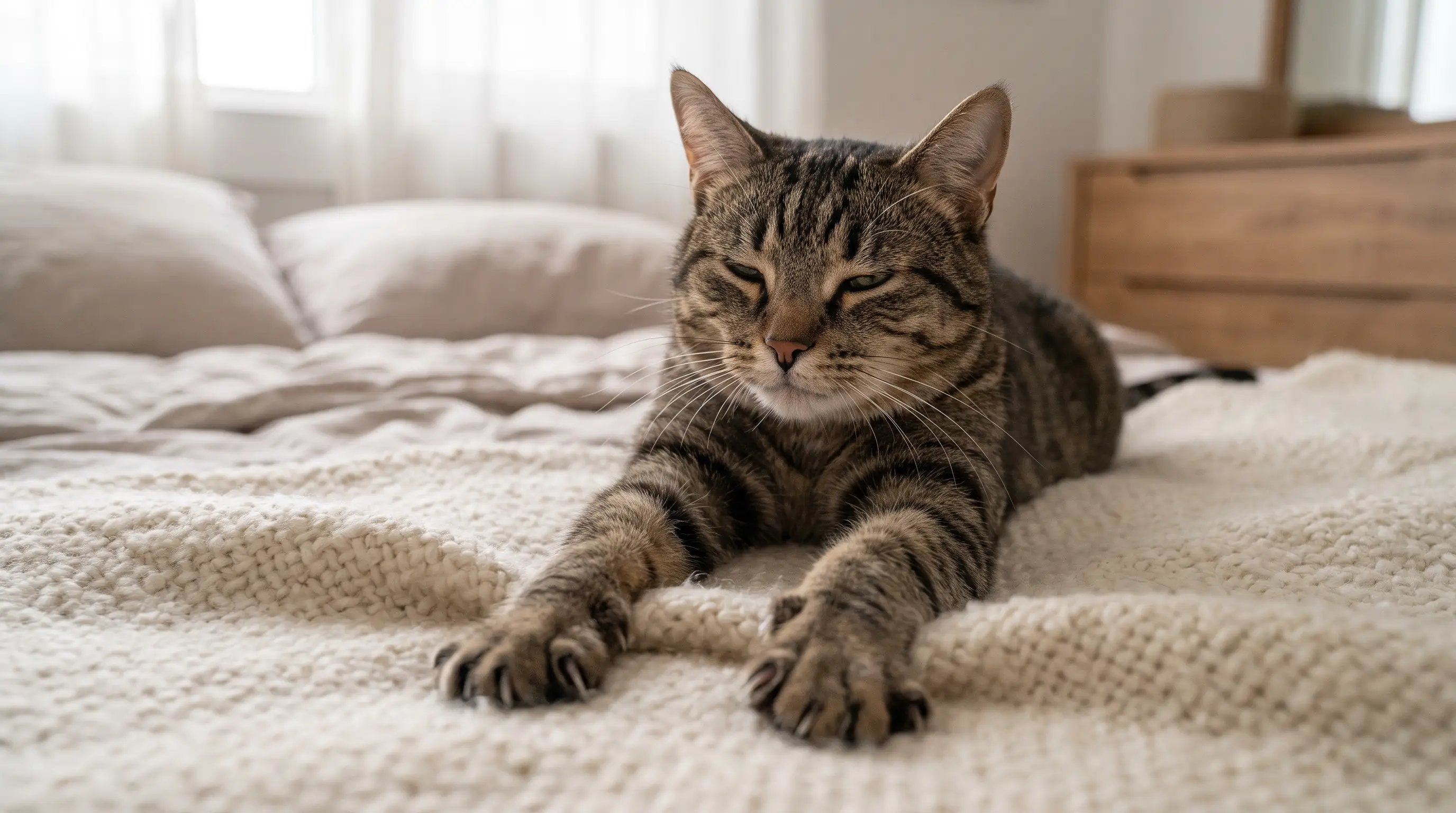
Why do cats knead? The biscuit-making instinct
Kneading — the slow push-and-pull of the front paws that owners call making biscuits — begins in kittenhood and never fully leaves. A nursing kitten kneads its mother to bring the milk down, and the grown cat keeps the motion because it still links that soft pressure with warmth, milk and safety. It is one of the clearest signs a cat is relaxed with you. Here is where the habit comes from, why some cats drool or suckle while they do it, and what to do about the claws.
It starts at the milk bar
Kneading is a nursing behaviour first. A newborn kitten presses and pushes at its mother's belly with alternating paws to stimulate the mammary glands and get the milk flowing, and it does this every time it feeds for the first weeks of life. During those same feeds the kitten is warm, full and safe, pressed against its mother and littermates.
That is the association that sticks. The motion gets wired together with comfort and security so tightly that the cat carries it into adulthood, long after there is any milk to bring down. When your cat kneads a cushion or your lap, it is running the oldest, most reassuring routine it knows.
Why grown cats still do it
In an adult, kneading is mostly a contentment signal. Cats knead when they are settling somewhere soft, often just before they curl up, usually purring while they do it. It is a self-soothing, happy behaviour, and a cat that chooses to knead on you rather than the sofa is paying you a real compliment — you have been filed under warm, safe and mother-adjacent.
Which is also why it tends to be selective. Plenty of cats knead only certain laps, or only a particular blanket, or only at particular times of day when they are winding down. If your cat kneads you, it is not a random tic; it is choosing the spot where it feels most secure.
There's scent in those paws
Kneading is not only about how the cat feels — it is also a quiet act of claiming. Cats have scent glands in the pads of their paws, and pressing them repeatedly into a surface leaves behind a personal scent-mark that other cats can read. When your cat kneads its bed, the sofa arm or your legs, it is stamping the spot as familiar and its own.
This is worth knowing because it reframes the behaviour. A cat kneading you is comforting itself and, at the same time, gently labelling you as part of its territory. It is affection and ownership in the same gesture, which is about as cat as a gesture gets.
The nest-building theory
There is a third, older explanation that probably plays a part. Wild cats are thought to have patted down grass, leaves and undergrowth to build a soft, level place to sleep or give birth — flattening the surface, and perhaps flushing out anything unpleasant hiding in it before settling down. Kneading a cushion into shape echoes that nest-making.
This one is more inference than proof, so it belongs alongside the nursing explanation rather than in place of it. The kittenhood link is the best-supported reason a cat kneads; the scent-marking and nest-building instincts are likely contributors layered on top. Most real behaviours have more than one cause, and kneading looks like one of them.
Drooling, suckling and the claws
Some cats take kneading further and suckle on a blanket, a jumper or an earlobe while they do it, sometimes drooling. This shows up most in cats that were weaned early, and it is usually a harmless comfort habit — the cat has simply kept the whole nursing routine, not just the paws. Only worry if the suckling tips into eating fabric, which can be a form of pica worth raising with your vet.
The one genuine downside is claws in your thighs. Do not punish it — kneading is an involuntary comfort behaviour, and telling a cat off for feeling safe only confuses it. Instead, keep the claws trimmed, lay a thick folded blanket over your lap before the cat arrives, and gently move it onto a soft throw if the biscuit-making gets sharp. The behaviour is a compliment; you just want to take the edge off it.
Common questions
Why do cats knead?
Kneading starts as a nursing behaviour — kittens push at their mother's belly to bring the milk down — and the motion becomes linked with the warmth and safety of feeding. Adult cats keep it as a way to self-soothe and signal contentment, and they also deposit scent from glands in their paw pads, marking the spot as their own. A kneading cat is almost always a relaxed, happy one.
Why do cats knead blankets and soft things?
Soft surfaces are closest to the feel of a mother's belly, so they trigger the old nursing routine most strongly, along with the comfort and safety that go with it. Kneading a blanket may also tap into an instinct to pat down a soft, safe nest to sleep in. Either way, a cat kneading a blanket is settling itself and getting comfortable, usually just before it lies down.
Why does my cat knead on me?
Because it feels safe and content with you. Kneading is a leftover kittenhood comfort behaviour, so a cat that chooses your lap is treating you as a source of warmth and security — mother-adjacent, in effect. It is also laying down its scent from glands in its paws, gently marking you as part of its territory. It is one of the clearest signs a cat trusts you.
Do cats knead when they are happy?
Almost always, yes. Kneading in an adult cat is a contentment and self-soothing behaviour, usually done while purring and while settling into a comfortable spot. A cat that kneads your lap or its bed is signalling that it feels relaxed and secure. It is very rarely a sign of distress, though a tense body or lashing tail alongside it would be worth reading more carefully.
Why does my cat drool when kneading?
Drooling while kneading is usually a sign of deep relaxation, often in cats that also suckle a blanket or jumper as they knead. It tends to appear in cats weaned early, which kept the full nursing routine — paws, mouth and all — into adulthood. It is normally harmless. Only mention it to your vet if the drooling is heavy and constant, or the cat starts actually eating fabric.
How do I stop my cat kneading me painfully?
Do not punish it — kneading is an involuntary comfort behaviour, and telling the cat off only confuses it. Instead, keep its claws trimmed, put a thick folded blanket over your lap before it settles, and calmly move it onto a soft throw if the claws start to dig in. You are cushioning the behaviour rather than stopping it, because a cat kneading you is showing that it feels safe.
More in Cats
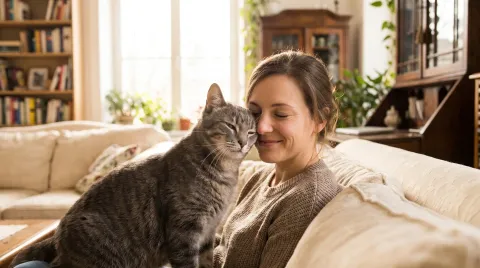
Do cats love their owners? The kidnap experiment says yes
Science ran the same attachment test on cats that it runs on human infants, and 64% passed. What the secure-base test found, why one earlier study disagreed, and how a cat actually says it.
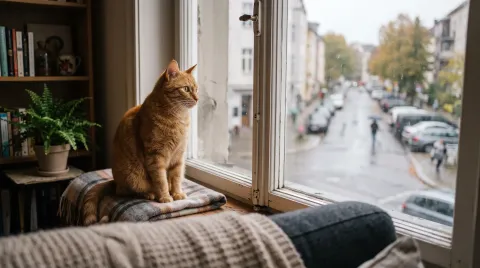
Do cats miss their owners? They even track the clock
Cats greet you harder after four hours away than after thirty minutes — they know how long you were gone. What missing looks like in a cat, when it tips into separation anxiety, and how to leave well.
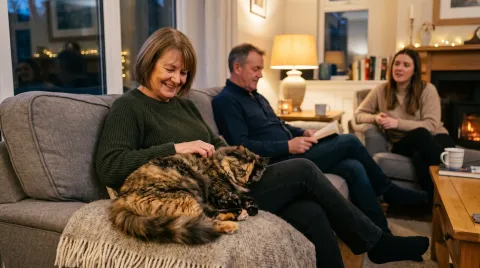
How cats choose their favourite person
It isn't whoever fills the bowl. The Swiss living-room study found one habit that predicts a cat's favourite better than food ever did — and the person who ignores cats has it by accident.
Cats know their names. They've decided not to answer
A Tokyo lab proved cats pick their own name out of a string of similar words — even from a stranger's mouth. What cats actually understand of what you say, and why the response is optional.
Zoomies: why your cat sprints through the house at 3am
The wall-of-death lap around the living room has a name, a mechanism, and a fix for the 3am edition. Why a predator that sleeps sixteen hours a day sometimes has to spend the surplus all at once.
Headbutts and ankle rubs: what your cat marks you with
The forehead slam is called bunting, it comes with a chemical payload, and it's one of the biggest compliments a cat pays. What the glands are doing, what the group scent means, and when a rub is really an invoice.