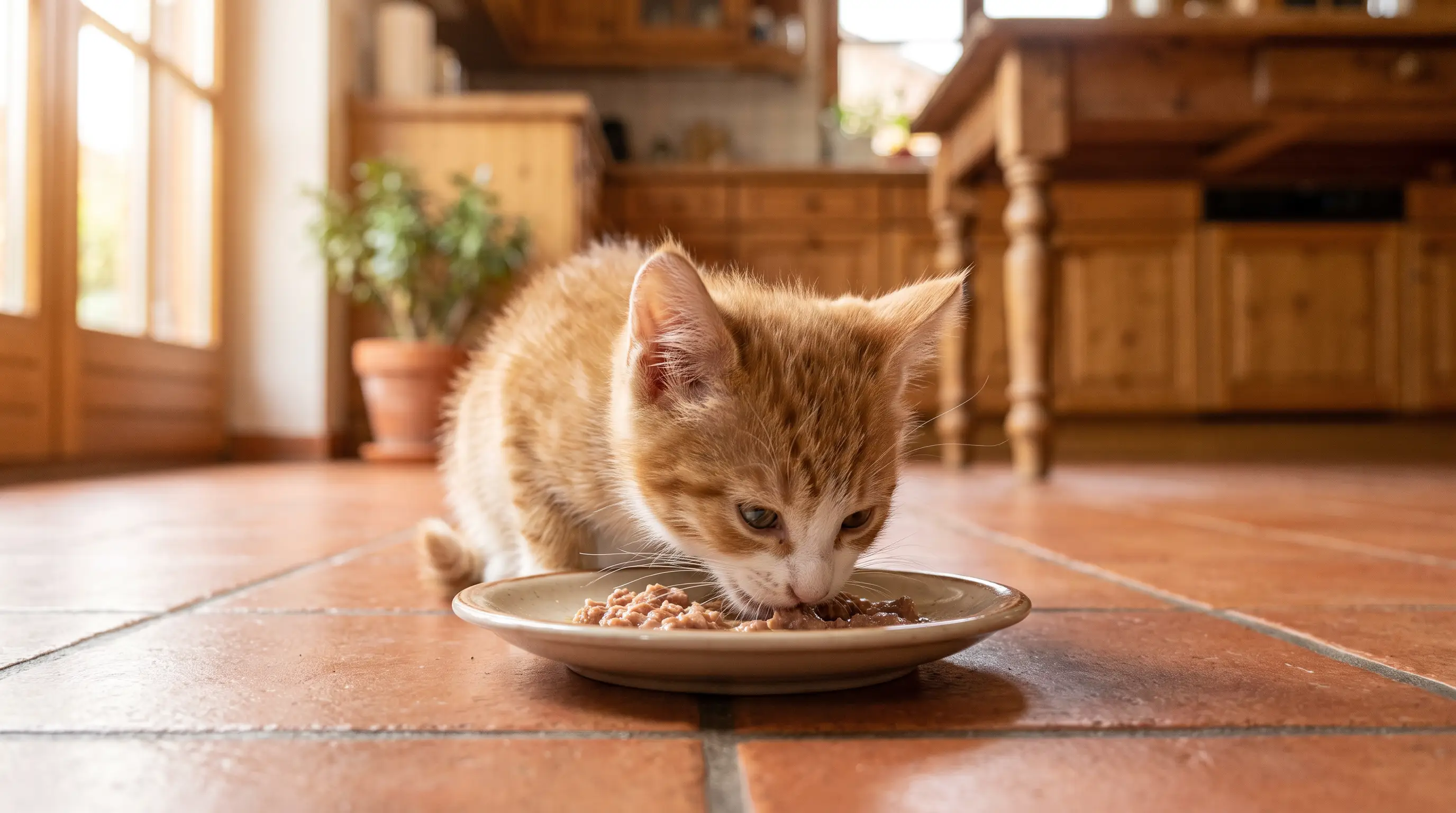
How much to feed a kitten, and how often
A kitten needs a lot of food for its size, delivered in small, frequent meals, because it is building a whole cat on a tiny stomach. The feeding guide on a good kitten food sets the daily amount from age and weight, and unlike an adult cat a growing kitten can carry a bit more freedom around meals because it burns what it eats. The things that catch owners out are the food itself and the famous saucer of milk. Here is how much to feed a kitten, how often, and what to skip.
Kittens need a lot of food, little and often
Growth is expensive, and a kitten packs an enormous amount of building into a few months, so pound for pound it needs far more energy than an adult cat. It cannot take that in one or two large meals, both because its stomach is tiny and because a growing body does better with a steady supply, so kittens eat little and often. Start from the feeding guide on the kitten food, which sets a daily amount from your kitten's age and weight, and divide it across the day.
Because kittens burn energy so readily, they tolerate a more relaxed approach than adults — leaving good kitten food available across the day suits many of them without leading to the weight gain that free-feeding causes in grown cats. That said, set meals have their own advantage: they let you see what your kitten actually eats, so a suddenly picky or off-colour kitten does not go unnoticed. Either way, feed to a growing, healthy weight, not to an empty bowl.
How often: four meals down to two
A simple schedule fits most kittens. From weaning at around eight weeks, offer about four small meals a day, dropping to three meals by around six months, and settling towards two meals a day as the kitten approaches its first birthday. The exact timing is flexible and follows the kitten's appetite rather than a strict clock.
Frequent meals suit a kitten's fast metabolism and small stomach, and they double as a routine that helps a new kitten settle. As with puppies, spacing food through the day rather than leaving a permanent buffet makes it far easier to notice the day your kitten goes off its food — which in a small animal is worth catching early rather than late.
It has to be kitten food
Feed a food made for kittens — labelled complete and balanced for growth, or for all life stages — not an adult cat food. Cats are obligate carnivores with high protein needs at every age, and a growing kitten needs even more energy and protein per mouthful than an adult, along with the right balance of nutrients to build a healthy body. A kitten food, wet or dry or a mix of both, is formulated for exactly that; adult food is not, and dog food never is.
The label is where you confirm you have the right thing, so it helps to know how to read one — start with the complete-and-balanced statement. Wet food deserves a place in the bowl too, because it helps a species that drinks too little take in water, a point our wet versus dry comparison weighs in full.
The milk mistake, and other things to skip
Skip the saucer of cow's milk. It is the classic image of feeding a kitten and it is a mistake: most kittens past weaning are lactose intolerant, and cow's milk gives them stomach upset and diarrhoea rather than nourishment. A weaned kitten needs no milk at all — fresh water alongside its food is what it should drink. If you are hand-rearing a very young, unweaned kitten, that is a special case needing a proper kitten milk replacer, never cow's milk, and ideally your vet's guidance.
The same "no" applies to feeding a kitten on scraps, dog food or an adult cat food as its main diet, all of which leave a growing kitten short on something it needs. A complete kitten food plus water covers the job. Treats are fine in moderation once the kitten is established, kept to a small share of the day's intake.
Watch the weight, and know when to switch
Let body condition guide the amount. A well-fed kitten grows steadily and stays lean-but-covered — you should be able to feel its ribs under a light layer without them being sharp. A kitten carrying too much is worth easing back, because an overweight kitten sets up an overweight adult cat, and feline obesity is far easier to prevent now than to fix later.
Get the amount right: our food calculator turns your kitten's weight and age into a daily portion in seconds — a better starting point than guessing from the bag, then adjusted by how your kitten grows.
Most kittens move onto adult cat food at around twelve months, when growth is largely done, though big slow-maturing breeds like the Maine Coon stay on kitten food longer. From there the needs keep changing across life, right through to feeding a senior cat at the far end.
Common questions
How much should I feed my kitten?
Start with the feeding guide on a complete kitten food, which sets a daily amount from your kitten's age and weight, and divide it into several small meals. Kittens need far more energy for their size than adult cats because they are growing fast. Then adjust to your individual kitten by body condition — it should grow steadily and stay lean, with ribs you can feel under a light layer.
How often should a kitten eat?
Kittens do best with frequent small meals: around four a day from weaning at eight weeks, dropping to three by about six months, and settling to two a day as they approach their first birthday. Their small stomachs and fast metabolism suit little and often, and spacing meals through the day makes it easier to notice quickly if a kitten goes off its food.
What food is best for a kitten?
A food labelled complete and balanced for growth or for all life stages, made specifically for kittens — wet, dry or a mix. Kittens are obligate carnivores that need more protein and energy per mouthful than adult cats, which kitten food provides and adult cat food does not. Check the complete-and-balanced statement on the label to be sure the food can support growth.
Can kittens eat adult cat food?
Not as their main diet while growing. Kittens need more energy and protein and a nutrient balance tuned for growth, which adult maintenance food is not designed to provide, so a kitten on adult food can fall short on what it needs. Feed a proper kitten or all-life-stages food until around twelve months, then transition to adult food gradually.
Can I give my kitten cow's milk?
No. Most kittens past weaning are lactose intolerant, so cow's milk causes stomach upset and diarrhoea rather than doing any good. A weaned kitten needs only its food and fresh water — no milk at all. A very young, unweaned kitten being hand-reared needs a proper kitten milk replacer, never cow's milk, ideally under your vet's guidance.
When should a kitten switch to adult cat food?
Most kittens move to adult food at around twelve months, when growth is largely complete. Large slow-maturing breeds such as the Maine Coon keep growing longer and stay on kitten food accordingly. Make the change gradually over about a week by mixing increasing amounts of the new food in, to avoid upsetting the kitten's stomach.
See also
More in Cats
Feeding a neutered cat without the weight gain
Neutering drops a cat's calorie needs by up to a third while its appetite climbs. Here's how to feed the same cat and keep it lean.
Wet vs dry cat food: what actually matters
Moisture, cost, convenience, and two stubborn myths, sorted by a simple rule that beats every marketing claim on the bag.

How to read a pet food label
The one line that matters most, why the first ingredient lies, and how to spot marketing words that mean nothing.

Treats without the weight gain: the 10% rule
The vet rule that stops treats making your cat or dog fat, and how to run the numbers in about a minute.

Organic, natural, holistic: which pet food claims are real
Only one of these words is backed by law. Here's what organic, natural, holistic, premium and gourmet actually guarantee on a bag of dog or cat food.
Single-protein and limited-ingredient dog food: when it helps
Limited-ingredient and single-protein diets have one real job — investigating food allergies with your vet. Here's when they help and when it's just marketing.