
Feeding a dog or cat, without the marketing
How much, how often, what the label actually says and which human foods are safe — portion guides and straight answers, with no brand to sell you.
Start here

Everything in this collection

How much to feed a kitten, and how often
Kittens burn energy fast and need feeding little and often. How much a growing kitten really needs, why it must be kitten food, and the milk mistake to avoid.

How much to feed a dog: portions and the lean years
Feed to your dog's ideal weight, not its current weight. The food-pack number is a start, then adjust by ribs, waist and tuck.

Feeding a senior dog: what actually changes after 7
Most older dogs need fewer calories, not a special 'senior diet' — and they should not have their protein cut. What changes, what doesn't, and when a change in appetite is a vet visit.
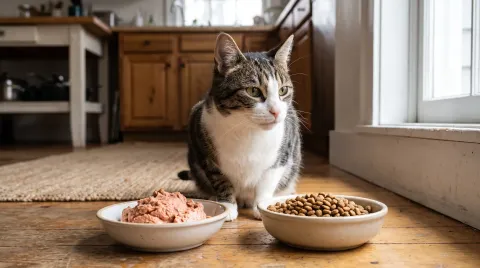
Wet vs dry cat food: what actually matters
Moisture, cost, convenience, and two stubborn myths, sorted by a simple rule that beats every marketing claim on the bag.

How to read a pet food label
The one line that matters most, why the first ingredient lies, and how to spot marketing words that mean nothing.

Treats without the weight gain: the 10% rule
The vet rule that stops treats making your cat or dog fat, and how to run the numbers in about a minute.

Feeding a neutered cat without the weight gain
Neutering drops a cat's calorie needs by up to a third while its appetite climbs. Here's how to feed the same cat and keep it lean.
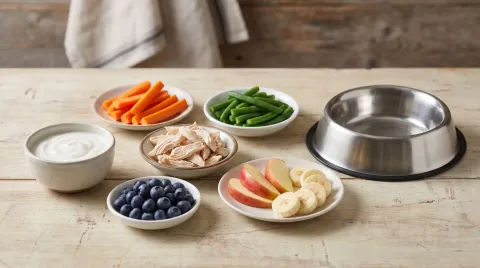
Human foods dogs can eat safely (and how much)
The yes-list of human foods that are safe for dogs, with real portions, the catches, and the one 10 percent rule that keeps treats from doing harm.

Foods dogs must never eat: the toxic list
The vet-checkable list of foods that poison dogs, ranked by real danger, plus exactly what to do in the first ten minutes.
Most feeding advice is an advert
The pet food aisle is built to make the expensive bag feel like the caring choice, and the ingredient list is designed to help. Grain-free is a marketing position, not a health claim. A named meat at the top of the list tells you less than it looks, because ingredients are ranked by weight before cooking and fresh meat is mostly water. What matters more is the small print almost nobody reads: the nutritional adequacy statement, which says whether the food is complete for your animal's life stage or only meant as a topper.
The other half of the problem is quantity, not quality. Portion guides on the bag are generous — they assume an intact, active adult, and most pets are neither. Weigh the food rather than scooping it, keep treats under a tenth of the daily total, and read the animal rather than the number on the packet: you should be able to feel ribs under a thin layer without pressing, and see a waist from above. Adjust from that.