
How to train a cat to walk on a harness
Harness training lets an indoor cat explore the outdoors safely, and for the right cat it is genuinely enriching. But two honest caveats come first: not every cat is suited to it, and the whole thing depends on going slowly enough that the cat never feels trapped. Buy the right harness, spend real time letting the cat get used to wearing it indoors before you ever go out, and let the cat set the pace outside. Rushed, it just produces a frozen, miserable cat. Done right, it opens up the garden.
Is your cat a harness candidate?
Start honest: harness walking suits some cats and not others, and that is fine. Confident, curious, people-oriented cats — often younger ones — tend to take to it, while nervous, older or very timid cats may find the outdoors frightening rather than fun, and for them a secure garden or a catio is kinder. There is no failure in a cat deciding this is not for it. Forcing a scared cat outside on a lead does not build confidence; it just teaches the cat that the harness predicts fear. Naturally bold, high-energy breeds such as the Bengal or the Abyssinian often take to it fastest, while a quieter, lower-energy breed such as the Persian is frequently happier exploring a secure garden at its own pace instead.
A cat that already enjoys clicker training has a head start, because the same reward-based method drives harness work. Whatever the cat's temperament, harness time should be an addition to a happy indoor life, not a substitute for it, and it should always be on the cat's terms — you cannot march a cat the way you walk a dog.
The gear: why a cat harness is not a dog one
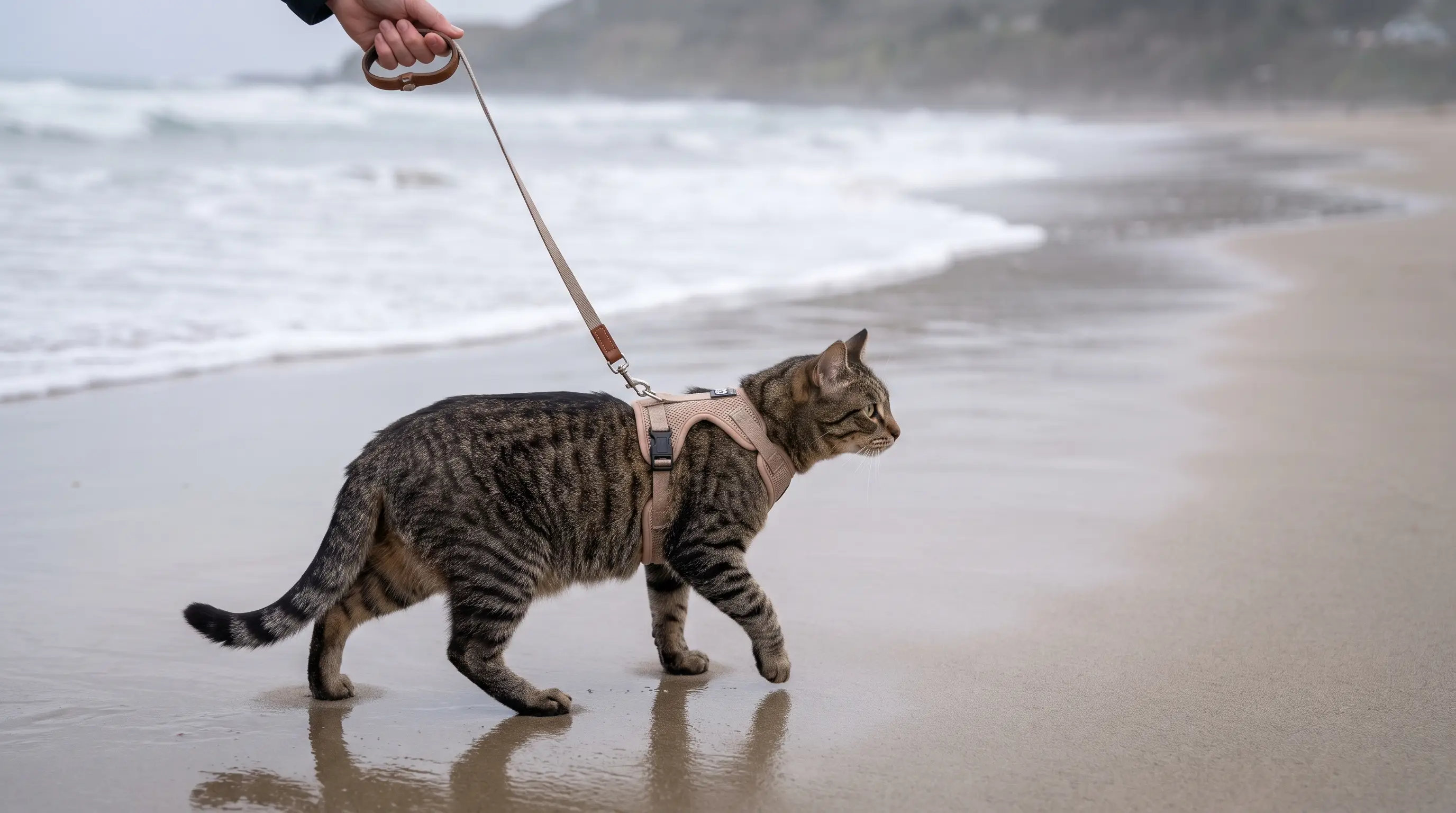
Cats are escape artists and can twist and reverse out of anything loose, so the harness has to fit well and suit their shape. Look for an H-style or a soft vest harness designed specifically for cats, which spreads pressure across the chest and shoulders rather than pulling on the throat — never a collar, which a cat can choke against or slip. Fit it snugly enough that you can slide only a finger or two underneath; any looser and a startled cat will be out of it in a second.
Use a light, fixed lead, not a heavy or retractable one, and never attach the lead to a collar. The point of the harness is that if the cat bolts, the pressure is spread safely across the body. Get the fit right indoors first, because the moment you discover a harness is too loose should not be in the middle of a road.
Indoors first: let the cat get used to the harness
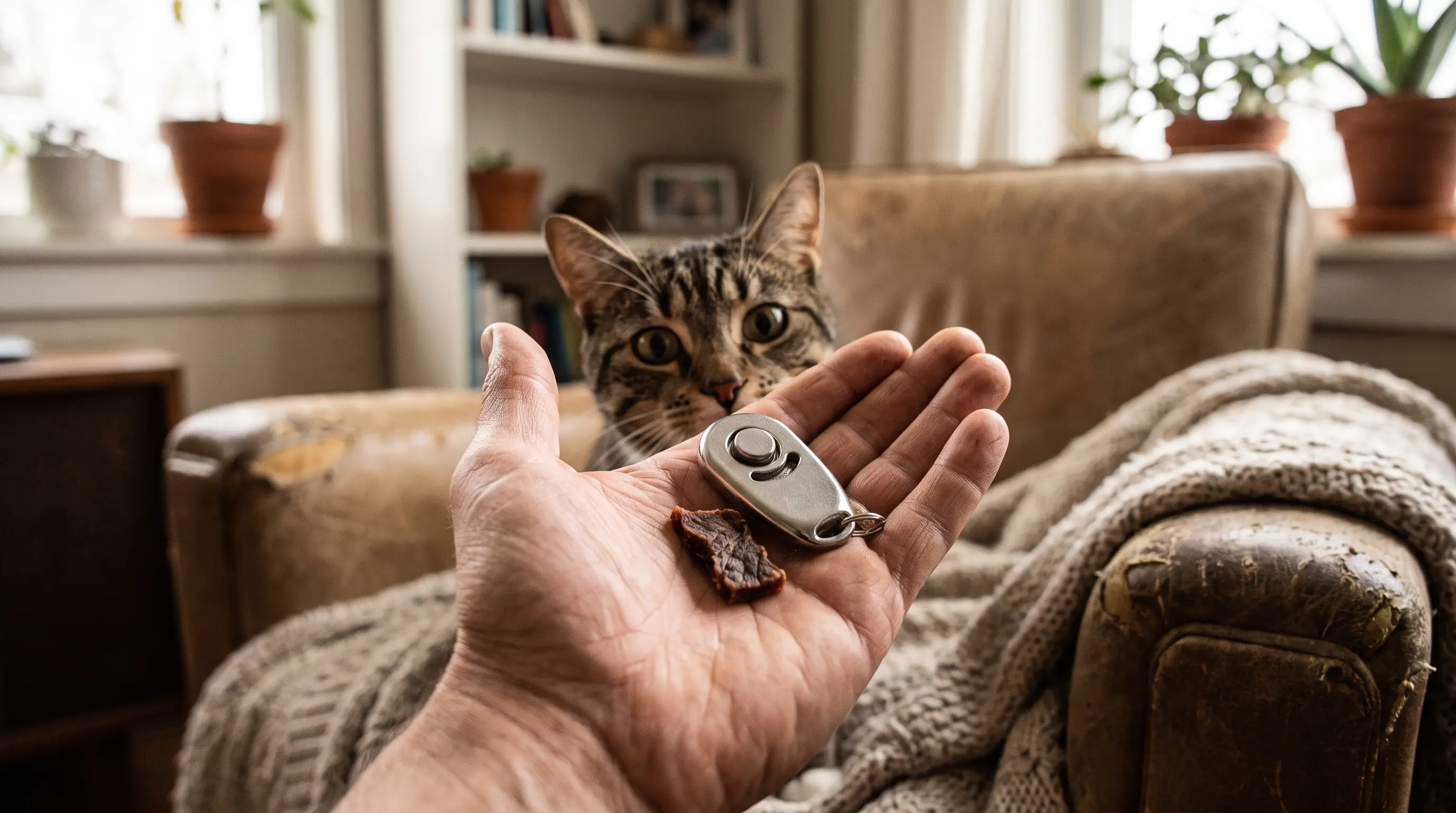
This is the step everyone rushes and the one that decides whether it works. For days before you go anywhere, let the harness become normal indoors. Leave it near the cat's food so it smells familiar, reward the cat for sniffing it, then drape it on without doing it up and give treats. Build up to fastening it for a minute, then a few minutes, then longer, always paired with food or play, and take it off before the cat gets fed up. This is desensitisation and counter-conditioning: the harness reliably predicts good things, so the cat stops minding it.
Expect the classic flop. Many cats freeze or fall over sideways the first time a harness is fastened, walking as if the floor has turned to ice. That is normal; keep sessions short and happy and it passes as the cat learns it can still move. Only once the cat wears the harness comfortably and walks around the house in it, ideally with a light lead trailing indoors, are you anywhere near ready for the door.
Going outside — slowly, and on the cat’s terms

Choose a quiet, enclosed spot for the first outings — your own garden, not a busy street — and pick a calm time of day. Carry the cat out rather than letting it learn to bolt through the door, set it down, and simply let it explore at its own pace while you follow with a loose lead. Do not pull or steer; a harnessed cat sniffs, sits, watches and wanders, and a good walk is one led entirely by the cat. Keep the first sessions to a few minutes and bring treats.
Mind the real risks. An outdoor cat needs to be up to date on vaccinations and parasite prevention, because it will meet things an indoor cat does not — the same hazards we cover for fleas, ticks and worms. Watch for signs of stress — flattened ears, crouching, a puffed tail, a bid to hide — and cut the session short if you see them. Never leave a harnessed cat tied up and unattended, which is a strangulation risk, and never force a cat that plants itself and clearly wants to go back in.
Realistic expectations
Set your sights right and harness training is rewarding; set them like dog-walking and you will both be frustrated. A cat on a harness is not going to heel down the pavement for a brisk half-hour. It is going to potter around a small area, investigate smells, and decide when it has had enough, and that pottering is exactly the point — safe access to grass, sun and fresh air for a cat that would otherwise only watch through glass. Some days it will want ten minutes; some days it will want to sit by the door and go no further.
If your cat simply never settles into it after patient, positive introduction, let it go and enrich its indoor world instead — vertical space, window perches, play and, if you can, a secure garden or catio. Harness walking is one good option for an indoor cat, not an obligation. For cats that do take to it, the clicker skills in our cat clicker-training guide make the whole process quicker and clearer.
Common questions
Can you train any cat to walk on a harness?
No. Confident, curious cats often take to a harness, while nervous, older or very timid cats may find the outdoors frightening, and for them a secure garden or catio is kinder. Harness walking should always be on the cat's terms, and there is no harm in a cat deciding it is not for it.
What kind of harness is best for a cat?
An H-style or soft vest harness made specifically for cats, which spreads pressure across the chest rather than the throat. Fit it so only a finger or two slides underneath, because cats easily back out of a loose harness. Never walk a cat on a collar, and use a light fixed lead rather than a retractable one.
How long does it take to harness train a cat?
Usually a few weeks of short, positive sessions, most of it spent getting the cat comfortable wearing the harness indoors before going out at all. The indoor acclimation is the part people rush; taking it slowly is what decides whether the cat accepts the harness or freezes in it.
Why does my cat freeze or flop when I put a harness on?
It is a very common first reaction — many cats fall sideways or walk as if the floor is ice when a harness is first fastened. Keep sessions short and paired with treats and play, and it usually passes within a few sessions as the cat learns it can still move freely.
Is it safe to walk a cat outside on a harness?
It can be, with the right harness, a slow introduction and sensible precautions: a quiet enclosed space, up-to-date vaccinations and parasite prevention, and never leaving a harnessed cat tied up or unattended. Watch for stress signs like flattened ears or hiding, and let the cat set the pace.
More in Cats
Teaching your cat tricks: the first five
Target, sit, high five, spin and a reliable recall — in the order that actually works, five minutes at a time. Cats train beautifully; they just do not work for praise.

How to help a cat that is terrified of fireworks
A safe room for the night itself, and a graded sound protocol to run in the months before it. What actually works, and what makes a frightened cat worse.

How to stop a cat scratching the furniture
Scratching is a normal, necessary cat behaviour, not misbehaviour, so the fix is redirection rather than punishment. The setup that actually gets a cat choosing the post over the sofa.

How to litter train a kitten (and fix accidents)
Kittens come pre-wired to use a tray. Set the box up right, let instinct do the work, and know what to check the day it goes wrong.
Clicker training a cat: the honest beginner's guide
Cats are far more trainable than their reputation suggests. With a clicker, tiny treats, and short sessions, almost any cat will learn.
Why is my cat spraying? What it means and how to stop it
Spraying isn't a litter-box failure — it's a message about territory, written in urine. How to tell it from peeing, what's behind it, and the fixes that hold.