How to help a cat that is terrified of fireworks
A cat hears about two octaves higher than we do, and cannot see a firework coming or get away from it — so what reads to you as a loud evening reads to a cat as something closer to real fear. Almost everything that helps has to be in place before the evening starts, and the part that changes how the cat actually feels takes months rather than days. Here is the room to set up on the night, and the sound protocol to run long before it.
Why fireworks hit cats so hard
A cat hears roughly two octaves above us, into ultrasound, and a firework is loud across that whole range — so the bang you find startling is bigger, sharper and closer to a cat than it is to you. It is also unpredictable, which matters more than the volume. An animal that cannot see the source, cannot predict the next one and cannot get away from it has every ingredient of real fear rather than annoyance.
That is why the usual advice to comfort a frightened cat misses. Cats do not seek reassurance under threat the way dogs often do; they seek cover. A cat that has bolted under the bed is not being dramatic and is not asking to be coaxed out — it has found the one thing that helps, and pulling it out to stroke it takes that away. Your job on the night is to make sure the cover it wants is the cover you would have chosen.
The one thing that works on the night
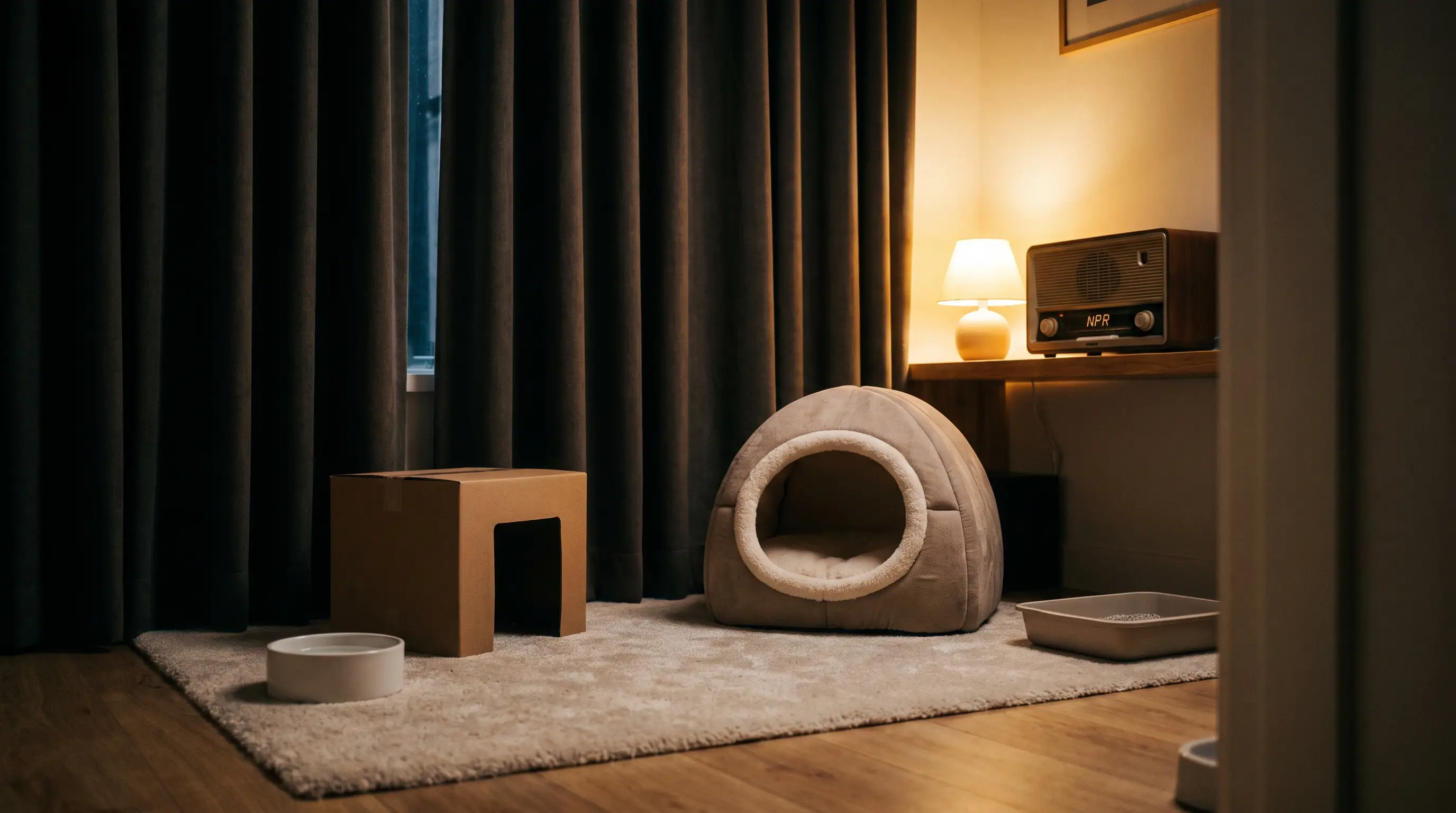
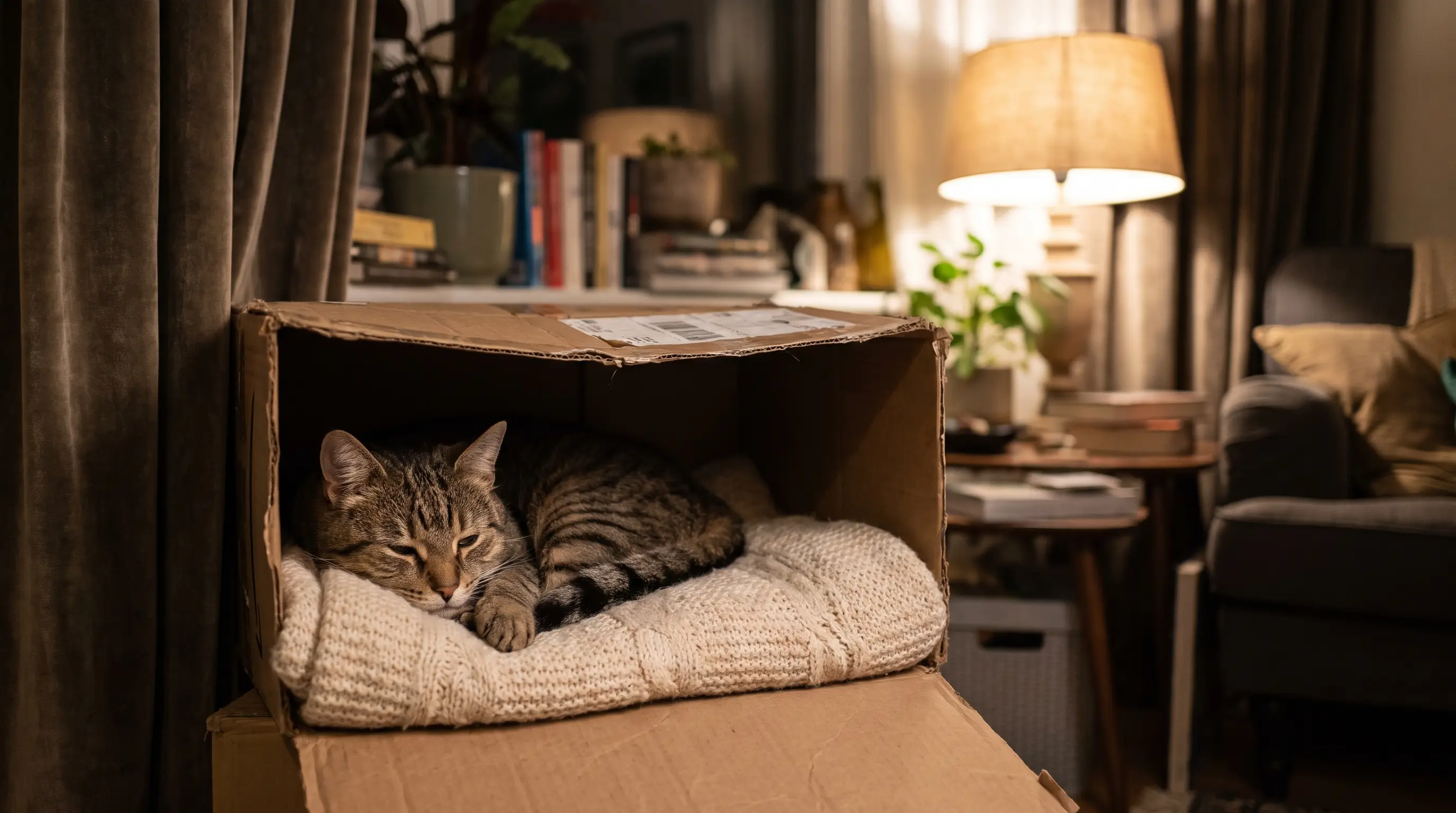
Set up a safe room before the evening starts, not once it has. Pick the quietest room in the house, ideally an internal one away from the street, and put in it everything the cat needs for the night: water, a litter tray, and at least two covered places to hide — a cardboard box on its side with a blanket in it beats anything you can buy. Close the windows, draw heavy curtains, and leave a lamp on so the flashes do not strobe against a dark room.
Then add sound, but the right kind. Steady, familiar noise at a normal volume — a radio talk station, a film you have on often — gives the bangs something to sit inside instead of arriving into silence. Do not crank the volume to drown them out; a loud unfamiliar sound is another thing to be frightened of. Let the cat in before dark, keep the door shut, and leave it alone. Check on it quietly. It may not come out until morning, and that is fine.
Start the sound work months early
Everything above manages one night. Changing how the cat feels takes desensitisation, and it only works if you start long before the season — three months is a reasonable run-up, and it is the single most common reason this fails: people begin in the last week of December.
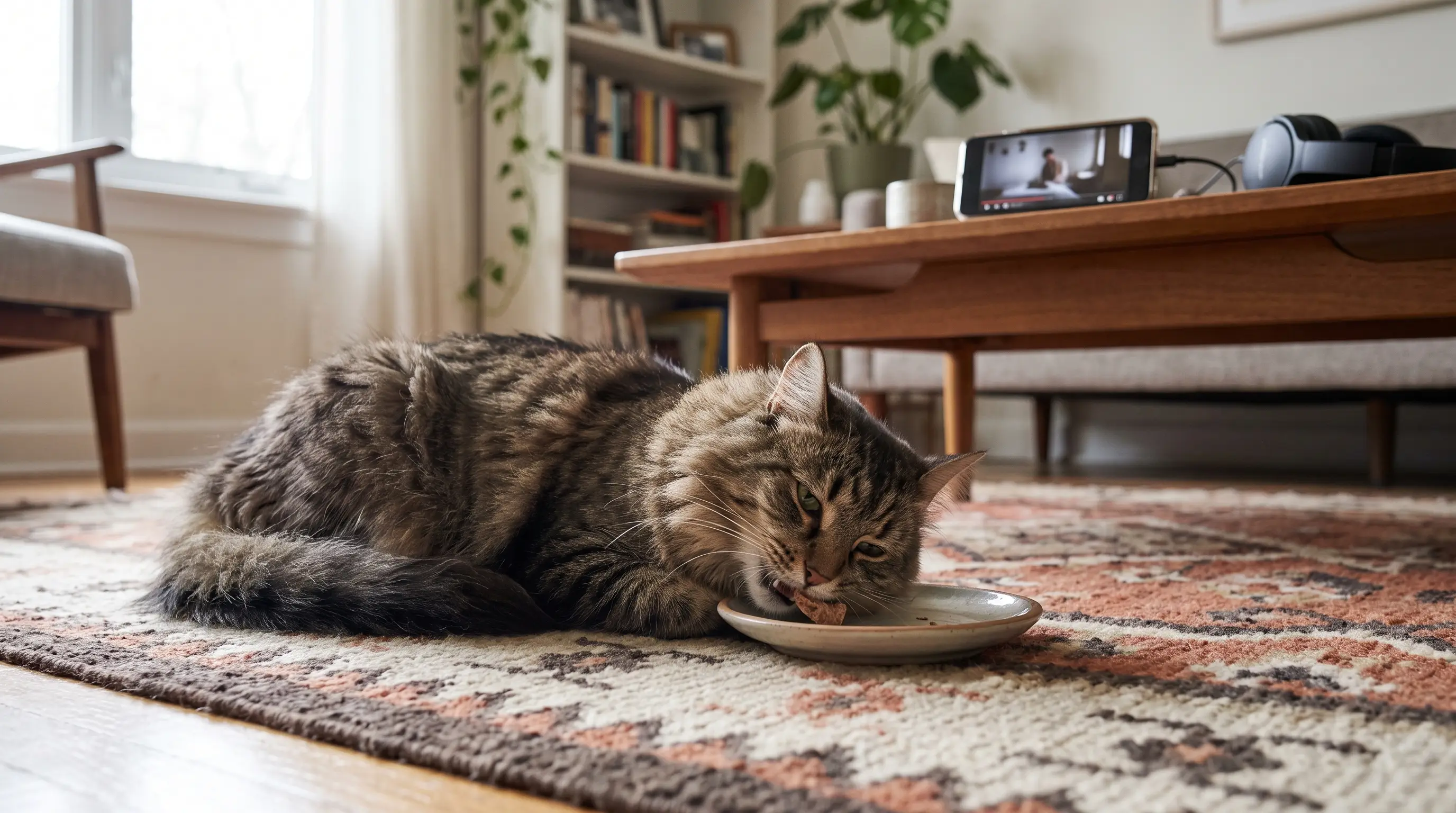
Find a firework sound recording and play it at a volume so low you can barely hear it yourself. That is not an exaggeration: the starting volume should produce no reaction at all. While it plays, do something the cat likes — feed a meal, scatter treats, run a wand toy. Play for a minute or two, stop, and go back to normal. The lesson is that the noise predicts good things and then stops mattering.
Raise the volume only when nothing happens
Repeat the session most days, and raise the volume by a fraction only when the last level has become genuinely boring — the cat eating, grooming or sleeping straight through it. If it stops eating, freezes, flattens its ears, stares at the speaker or leaves the room, you have gone too loud: drop back to the last volume it ignored and stay there for several more sessions.
There is no schedule to keep to. A cat that needs six weeks at one volume needs six weeks at that volume, and pushing to a number on a plan is how you teach the opposite of what you want. Sound alone is also not the whole of it — real fireworks come with flashes and vibration that a recording cannot reproduce, so expect the finished result to be a calmer cat rather than an indifferent one.
Pair the sound with the safe room
Once the recording is playing at a moderate volume with no reaction, start running the sessions in the room you plan to use on the night, with the den already set up. Feed there, play there, let the cat nap there. You are building the association you actually need: this room, these boxes, that noise, and nothing bad happens.
Do that for a few weeks and the safe room stops being somewhere the cat is shut into on a frightening evening and becomes somewhere it already likes. On the night itself the difference is obvious — a cat that walks in by itself rather than one you have to carry.
What not to do
Do not let the cat outside on the evening, or on the surrounding evenings — frightened cats bolt, and firework nights are when cats go missing. Make sure it is microchipped and the registration details are current, which is the single most useful five minutes you can spend in advance. Do not punish or scold hiding, ever, and do not haul the cat out from under the bed to comfort it.
Do not sedate on your own initiative either. Some sedatives immobilise an animal without touching its fear, which is a worse experience rather than a better one, and anything given to a cat is a veterinary decision. For a cat whose fear is severe — one that hurts itself trying to escape, or refuses food for a day afterwards — that conversation is worth having well before the season, because the things that help most need weeks to work.
When it is more than fireworks
If your cat reacts the same way to the vacuum cleaner, to thunder, to the doorbell, to a dropped pan, then fireworks are one symptom of a generally noise-fearful cat rather than the problem itself. The protocol above is the same, but run it on the sounds it actually meets — a recording of your own doorbell is more useful than a firework track.
Watch for the quieter signs too, because a cat that has stopped bolting has not necessarily stopped being afraid. Eating less, using the tray less, over-grooming a patch, hiding for longer than the noise lasted: those are the things to read, and the signs of stress owners miss covers them properly. If a normally sociable cat is still hiding two days later, that is a vet visit rather than a training problem.
Common questions
How can I calm my cat during fireworks?
Give it a quiet room set up before the evening starts, with water, a litter tray and at least two covered places to hide, curtains drawn and a lamp on so the flashes do not strobe. Add steady familiar sound at normal volume — a radio or a film — so the bangs arrive into something rather than into silence, then leave the cat alone to use the cover it has chosen.
Should I comfort a cat that is hiding from fireworks?
No. Cats seek cover rather than reassurance when frightened, so a cat under the bed has already found what helps. Pulling it out to stroke it removes the one thing working. Check on it quietly and let it stay put — it may not come out until morning, which is normal.
Does sound desensitisation actually work for cats?
Yes, if you start months rather than days ahead and go slowly. Play a firework recording at a volume so low it produces no reaction while something good happens — a meal, treats, a toy — and raise it by a fraction only once the current level has become boring. Starting in late December is the most common reason it fails.
Can I give my cat something to calm it down?
Only on veterinary advice. Some sedatives immobilise an animal without reducing its fear, which makes the experience worse rather than better, and anything given to a cat is a vet decision. If your cat's fear is severe, have that conversation weeks before the season, because the treatments that help most need time to work.
Should I let my cat outside on firework night?
No, and keep it in on the surrounding evenings too. Frightened cats bolt, and firework nights are when cats go missing. Check the microchip registration details are current while you are at it — it is the most useful five minutes you can spend in advance.
My cat is scared of other loud noises too. Is that the same thing?
Usually it is one generally noise-fearful cat rather than a firework-specific problem. The protocol is the same but run it on the sounds it actually meets, like your own doorbell or vacuum. Watch the quiet signs as well as the bolting — eating less, hiding longer than the noise lasted, over-grooming a patch.
More in Cats

How to stop a cat scratching the furniture
Scratching is a normal, necessary cat behaviour, not misbehaviour, so the fix is redirection rather than punishment. The setup that actually gets a cat choosing the post over the sofa.
Teaching your cat tricks: the first five
Target, sit, high five, spin and a reliable recall — in the order that actually works, five minutes at a time. Cats train beautifully; they just do not work for praise.
How to train a cat to walk on a harness
Some cats take to a harness and some never will — and forcing it backfires. How to introduce one properly, the gear that matters, and the honest limits.

How to litter train a kitten (and fix accidents)
Kittens come pre-wired to use a tray. Set the box up right, let instinct do the work, and know what to check the day it goes wrong.
Clicker training a cat: the honest beginner's guide
Cats are far more trainable than their reputation suggests. With a clicker, tiny treats, and short sessions, almost any cat will learn.
Why is my cat spraying? What it means and how to stop it
Spraying isn't a litter-box failure — it's a message about territory, written in urine. How to tell it from peeing, what's behind it, and the fixes that hold.