Dog ear infections: signs, causes and when to see a vet
Head-shaking, scratching at an ear, a bad smell or a brown discharge are the classic signs of an ear infection, one of the most common reasons dogs visit the vet. They are painful, they tend to come back if the underlying cause is missed, and the first one really does need a vet — some ear medicines are unsafe if the eardrum is damaged, which only an examination can check.
Signs of an ear problem
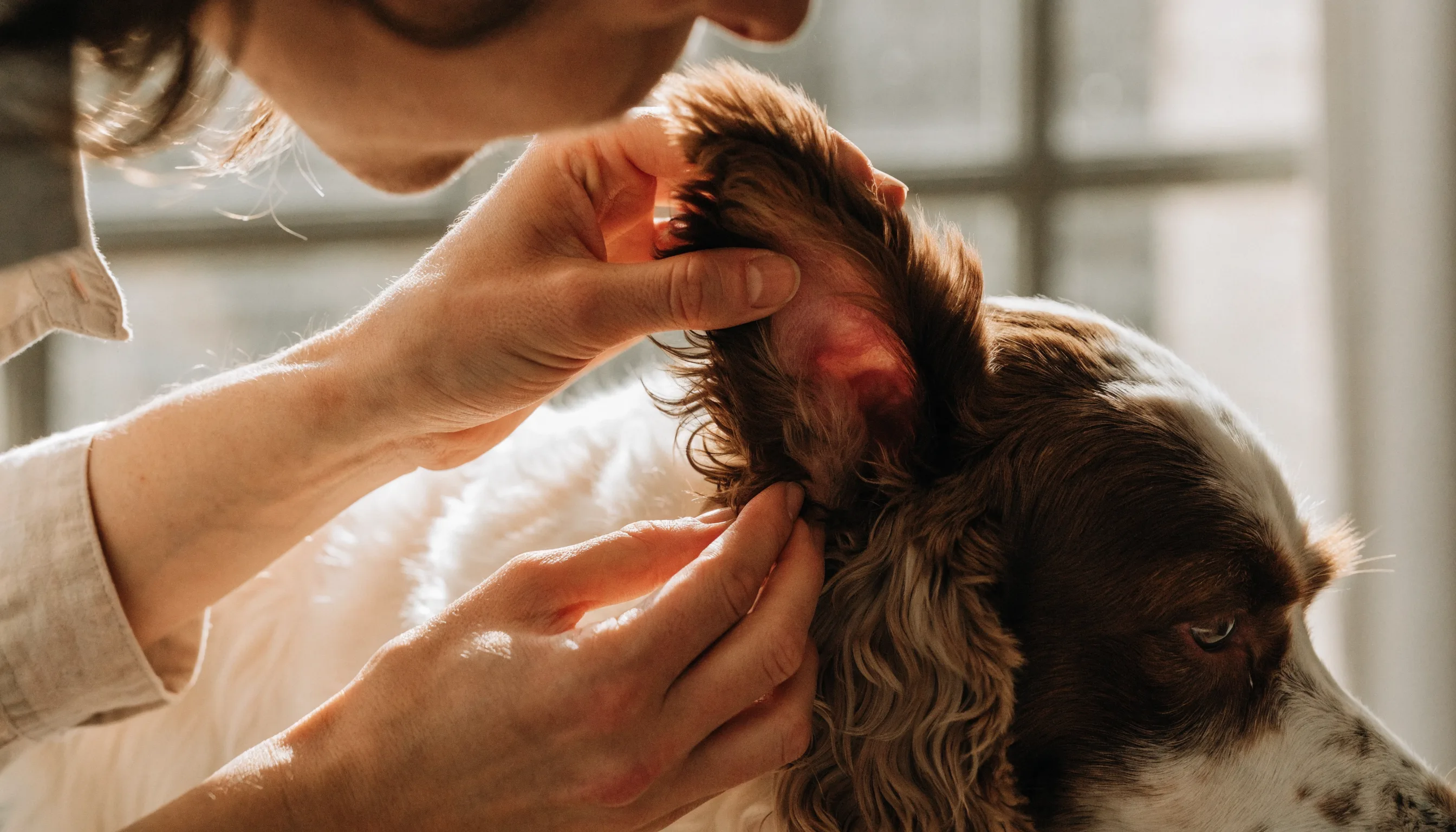
A dog with sore ears will usually shake its head, scratch or rub the ear, or tilt the head towards the painful side. Look for redness inside the ear flap, brown, yellow or waxy discharge, a yeasty or unpleasant smell, and heat or swelling. Some dogs go quiet, or flinch and pull away when you reach for the head. An ear that has become a hot, fluid-filled swelling on the flap itself is an aural haematoma, caused by all the head-shaking bursting a blood vessel, and needs veterinary treatment.
Why they happen
Most ear infections are not the root problem but a consequence of one. The commonest underlying cause is allergic skin disease, which inflames the ear canal and lets bacteria and yeast overgrow. Ears that stay damp after swimming or bathing are prone to infection, and breeds with long, floppy or hairy ears such as the Cocker Spaniel and the Poodle trap warmth and moisture. Other causes are ear mites (more often in puppies), a grass seed or foreign body in the canal, and excess wax. Because infections keep returning until the underlying cause is addressed, recurring ear trouble is itself a reason to dig deeper with your vet.
What you can safely do at home
Prevention is where home care helps most. Dry your dog's ears gently after swimming or a bath, and if your dog is prone to ear trouble, ask your vet to show you how to use a suitable ear cleaner correctly. Never push cotton buds down into the ear canal — they pack debris deeper and can damage the eardrum — and do not use leftover ear drops from a previous infection or another pet, because the wrong medicine on a damaged eardrum can harm hearing and balance. For an ear that is already sore, red or smelly, the right home step is to book the vet rather than to treat it blind.
See a vet if you notice any of these
Book a vet if your dog: has a painful ear, cries or pulls away when it is touched, or holds its head to one side; has redness, swelling, or a smelly or coloured discharge; is shaking its head a lot, especially suddenly after a walk in long grass, which can mean a grass seed lodged in the canal; or keeps getting ear infections. Treat a head tilt, circling, loss of balance, or flicking eyes as urgent — that suggests the middle or inner ear is involved. A swollen, ballooned ear flap also needs to be seen.
Common questions
What are the signs of an ear infection in dogs?
Head-shaking, scratching or rubbing at the ear, a head tilt towards the sore side, redness inside the ear, a brown, yellow or waxy discharge, a yeasty or bad smell, and heat, swelling or pain when the ear is touched. Some dogs simply go quiet or flinch from having their head handled.
Can I treat my dog's ear infection at home?
The first infection should be seen by a vet, because some ear medicines are unsafe if the eardrum is damaged, and only an examination can check that and identify the cause. Home care is mainly prevention — drying ears after swimming and cleaning correctly if your vet advises it. Never use leftover or another pet's ear drops, or push cotton buds into the canal.
Why does my dog keep getting ear infections?
Recurring ear infections usually mean an underlying cause is being missed — most often allergic skin disease, but also trapped moisture, a foreign body like a grass seed, or ear anatomy in floppy or hairy-eared breeds. Treating each infection without addressing the cause lets it return, so persistent ear trouble is worth investigating properly with your vet.
Is a dog ear infection an emergency?
Most are urgent-ish rather than a true emergency — painful and worth a prompt appointment. But a head tilt, circling, loss of balance or rapidly flicking eyes suggests the middle or inner ear is involved and should be seen quickly. Sudden, violent head-shaking after a walk in long grass can mean a grass seed in the canal, which also needs prompt attention.
How do I clean my dog's ears safely?
Only if your vet has advised it and shown you how, and never on an ear that's already sore or infected. Use a proper dog ear cleaner, fill the canal, massage the base of the ear, then let the dog shake and wipe the visible part with cotton wool. Never push cotton buds down into the canal, which packs debris deeper and risks the eardrum.
More in Dogs
Why is my dog peeing in the house? Causes and how to stop it
An adult dog that starts having accidents isn't being defiant — it's giving you a symptom. The medical checklist, the marking-vs-emptying distinction, and the retraining plan that works.

Autumn dangers for dogs: acorns, conkers and mushrooms
Autumn puts three scavenging hazards on the ground — acorns, conkers and wild mushrooms — plus rat bait and fermenting fruit. What's toxic, what the warning signs are, and when to call the vet.

Winter pet dangers: antifreeze, road salt and chocolate season
Antifreeze is the winter emergency — sweet, deadly and quick. Plus gritted-salt paws, the festive-food gauntlet and cats sheltering in warm car engines. What to watch and when it's urgent.
The pet danger calendar: what to watch, month by month
Most pet hazards are seasonal and many are regional. Here's the year mapped out — when heatstroke, grass seeds, processionary caterpillars, antifreeze and the rest actually peak, and which ones your area even has.

Snake bites in dogs: first aid, symptoms and prevention
A calm, fast response is what actually saves a bitten dog. What to do in the first minutes, the myths that cost time, and which snakes matter across Europe.
Why is my dog vomiting? Causes and when to see a vet
The common reasons dogs are sick, what you can safely do at home for a one-off, and the warning signs that mean call the vet now rather than wait.