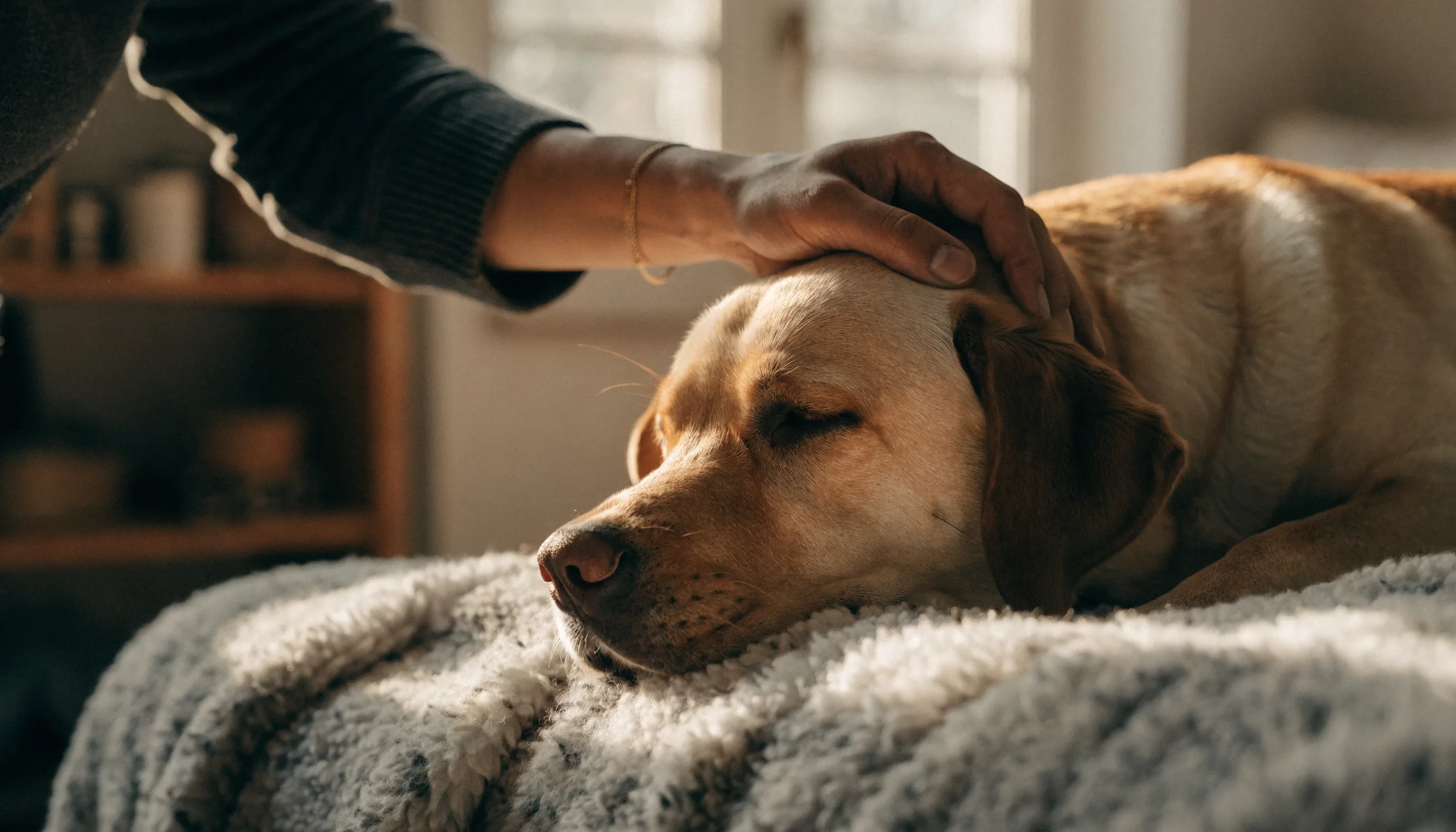
Why is my dog vomiting? Causes and when to see a vet
A single vomit from an otherwise bright, playful dog is common and usually passes on its own. Repeated vomiting, or vomiting in a dog that is flat, in pain or trying to be sick and bringing nothing up, is a different matter and needs a vet. This guide covers the usual causes, what is safe to try at home for a mild one-off, and the specific signs that should send you to the phone.
First, is it vomiting or regurgitation?
It is worth telling these two apart, because your vet will ask. Vomiting is active: the belly heaves, the dog looks nauseous first, and what comes up is partly digested and often yellow with bile. Regurgitation is passive: food comes back up almost undigested, in a tube shape, with no heaving, usually soon after eating. Regurgitation points more towards the gullet than the stomach. If you can, note which one you are seeing, how many times, and what came up.
The likely causes
Most one-off vomiting is simple dietary indiscretion — the dog ate something it shouldn't, bolted its food, scavenged on a walk, or had a sudden change of diet. Other common causes are mild stomach upset (gastritis), intestinal worms, eating grass, and travel sickness. More serious causes exist and are the reason repeated vomiting is never ignored: a swallowed object blocking the gut, a swallowed toxic food or plant, pancreatitis, and kidney or liver disease. In an unvaccinated puppy, repeated vomiting can signal parvovirus, which is an emergency. These are possibilities to have a vet weigh up, not a diagnosis to make at home.
What you can safely do at home
This is only for a single vomit in an adult dog that is otherwise bright, drinking, and behaving normally. Rest the stomach: take food away for a few hours, but leave water down so the dog can drink small amounts. If there is no more vomiting, offer a small, plain, low-fat meal — a little boiled white chicken or white fish with plain rice — and build back to the normal food over a day or two. Do not give any human anti-sickness or pain medicines; several are poisonous to dogs. If the vomiting comes back, or your dog is not clearly improving within a few hours, stop home care and call your vet.
See a vet now if you notice any of these
Call your vet, or the nearest out-of-hours clinic, straight away if your dog: is vomiting repeatedly or cannot keep water down; has blood in the vomit, whether fresh red or like coffee grounds; has a swollen, hard or painful belly, especially with unproductive retching — in a deep-chested dog like a Great Dane this can be bloat (GDV), a true emergency where minutes count; is flat, weak or collapsed; might have eaten something poisonous or a foreign object; is a puppy, a small breed, or a known diabetic; or is also having diarrhoea and going downhill. When in doubt, phone — a five-minute call to your vet is always the safe move.
Common questions
My dog vomited once but seems fine — should I worry?
Probably not. A single vomit in a dog that is otherwise bright, drinking and behaving normally is common and often just a mild tummy upset. Rest the stomach for a few hours, offer water, then a small bland meal. Keep an eye on it, and call your vet if the vomiting comes back, becomes repeated, or your dog turns flat or off its food.
When is dog vomiting an emergency?
Treat it as an emergency if your dog vomits repeatedly, can't keep water down, has blood in the vomit, has a swollen or painful belly, is retching without bringing anything up, is weak or collapsed, or may have swallowed a poison or an object. A bloated, unproductive-retching deep-chested dog needs a vet immediately — it can be a life-threatening stomach twist.
Should I withhold food from a vomiting dog?
For a single vomit in an otherwise well adult dog, a short rest from food for a few hours can help settle the stomach, with water still available. Then reintroduce small, plain, low-fat meals. Do not starve a dog for a long time, and do not withhold food from puppies, small breeds or diabetic dogs — call your vet for those instead.
What is the difference between vomiting and regurgitation in dogs?
Vomiting is active — the dog heaves and looks nauseous, and brings up partly digested food, often with yellow bile. Regurgitation is passive — undigested food comes back up with no effort, usually soon after eating. They point to different problems, so noting which you saw helps your vet.
Can I give my dog anything for vomiting at home?
Only plain supportive care: a few hours of rest from food, water in small amounts, then a bland low-fat meal. Never give human anti-sickness tablets or painkillers — medicines like ibuprofen and paracetamol are toxic to dogs. If your dog needs medication to stop vomiting, that is a decision for your vet after examining it.
More in Dogs
Why is my dog peeing in the house? Causes and how to stop it
An adult dog that starts having accidents isn't being defiant — it's giving you a symptom. The medical checklist, the marking-vs-emptying distinction, and the retraining plan that works.
Autumn dangers for dogs: acorns, conkers and mushrooms
Autumn puts three scavenging hazards on the ground — acorns, conkers and wild mushrooms — plus rat bait and fermenting fruit. What's toxic, what the warning signs are, and when to call the vet.

Winter pet dangers: antifreeze, road salt and chocolate season
Antifreeze is the winter emergency — sweet, deadly and quick. Plus gritted-salt paws, the festive-food gauntlet and cats sheltering in warm car engines. What to watch and when it's urgent.
The pet danger calendar: what to watch, month by month
Most pet hazards are seasonal and many are regional. Here's the year mapped out — when heatstroke, grass seeds, processionary caterpillars, antifreeze and the rest actually peak, and which ones your area even has.

Snake bites in dogs: first aid, symptoms and prevention
A calm, fast response is what actually saves a bitten dog. What to do in the first minutes, the myths that cost time, and which snakes matter across Europe.

Why is my dog limping? Causes and when to see a vet
From a stone in the paw to a cruciate injury — the common reasons dogs go lame, what rest can and cannot fix, and the signs that mean see a vet.