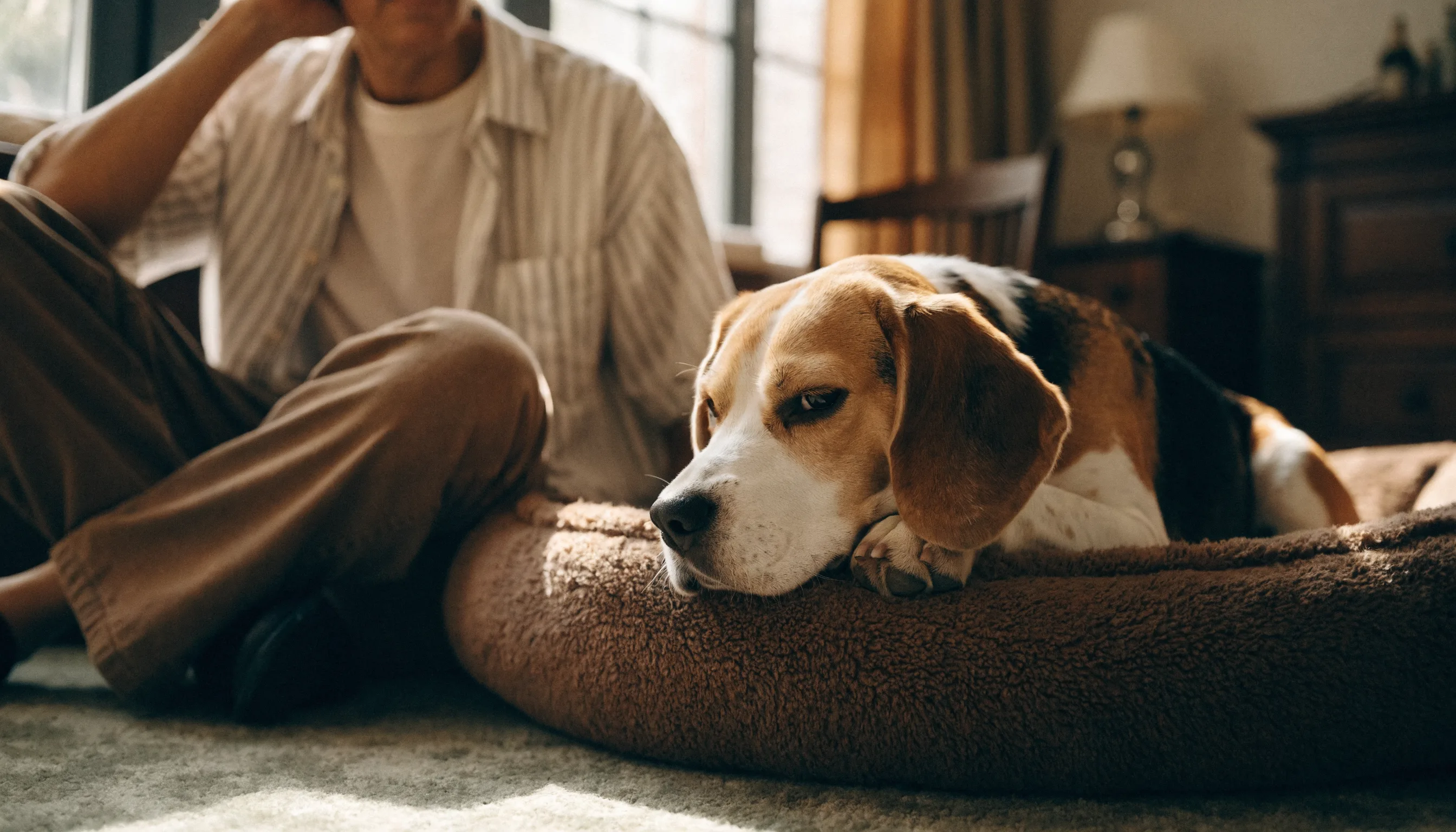
Why does my dog have diarrhoea? Causes and when to see a vet
Loose stools are one of the most common reasons owners phone a vet, and most cases in a bright, well adult dog settle within a day or two with simple care. The judgement calls are how the dog is in itself, whether there is blood, and how long it lasts. Puppies, small breeds and older dogs dehydrate faster and get less leeway.
The likely causes
By far the most common trigger is the gut reacting to something it met: scavenged food, a sudden change of diet, a rich treat, or stress — a kennel stay or a house move can loosen stools all by itself ("stress colitis"). Intestinal worms and other parasites such as giardia are common causes too, especially in puppies. More serious causes include swallowed toxic foods, a foreign object partly blocking the gut, infections such as parvovirus in unvaccinated puppies, and underlying disease. Frequent, watery diarrhoea together with vomiting is the combination most likely to dehydrate a dog quickly.
What you can safely do at home
For a bright adult dog with mild diarrhoea and no other signs, the aim is to keep it hydrated and rest the gut. Make sure fresh water is always available. Feed small, frequent, bland low-fat meals — plain boiled white chicken or white fish with white rice, or a vet-recommended bland diet — and reintroduce the normal food gradually over two to three days once stools firm up. A vet-suitable probiotic paste can help. Do not fast a dog for a long stretch, and never use human anti-diarrhoea medicines, some of which are not safe for dogs. If things are not improving within about 24 to 48 hours, call your vet.
Watching for dehydration
Dehydration is the real risk with diarrhoea, and it can creep up. Signs to watch for are a dog that is drinking far less or far more than usual, gums that feel tacky rather than wet, sunken-looking eyes, and low energy. A rough home check is to lift the skin over the shoulders gently — in a well-hydrated dog it springs straight back. If it is slow to fall, the dog is getting dry and needs a vet. Puppies and small dogs can dehydrate within hours, so give them far less rope than a big adult.
See a vet now if you notice any of these
Contact your vet promptly if your dog: has diarrhoea lasting more than about 48 hours, or that keeps returning; passes blood, or black, tarry stools; is also vomiting repeatedly, especially with watery diarrhoea; is flat, weak or collapsed, or has a painful belly; is a puppy, an unvaccinated dog, a small breed or an older dog; or might have eaten something toxic. Straining to pass diarrhoea and producing little, or signs of dehydration, also warrant a call. If your dog is otherwise bright but you are simply unsure, a phone call to the practice is the right first step.
Common questions
What can I give my dog for diarrhoea at home?
Keep fresh water available and feed small, frequent bland meals — plain boiled chicken or white fish with white rice, or a vet bland diet — then reintroduce the normal food gradually. A vet-suitable probiotic can help. Avoid long fasting and never give human anti-diarrhoea medicines. If it hasn't settled in a day or two, call your vet.
How long is too long for dog diarrhoea?
In a bright, well adult dog, mild diarrhoea that is settling within 24 to 48 hours is usually fine to manage at home. Beyond about 48 hours, or if it keeps returning, it warrants a vet check. Puppies, small breeds and older dogs, or any dog that is also unwell, should be seen much sooner.
When is dog diarrhoea serious?
It is serious if there is blood or black tarry stool, if the dog is also vomiting a lot, if it is flat, weak or collapsed, if the belly is painful, or if the dog is a young puppy or unvaccinated. Watery diarrhoea plus vomiting dehydrates dogs quickly, so that combination needs prompt veterinary attention.
Should I stop feeding my dog if it has diarrhoea?
Don't withhold food for long. A short rest from food followed by small bland low-fat meals is fine for a well adult dog, but prolonged fasting is unhelpful and is unsafe for puppies, small breeds and diabetic dogs. Keep water available throughout, and if the dog won't eat at all or is unwell, see your vet.
Why does my dog have diarrhoea but is acting normal?
Often it's a simple upset — scavenged food, a diet change, a rich treat or stress — and a bright dog will usually come right with a day or two of bland food and water. Keep watching for blood, vomiting, low energy or signs of dehydration, and get it checked if the diarrhoea lasts beyond a couple of days or the dog stops seeming itself.
More in Dogs
Why is my dog peeing in the house? Causes and how to stop it
An adult dog that starts having accidents isn't being defiant — it's giving you a symptom. The medical checklist, the marking-vs-emptying distinction, and the retraining plan that works.
Autumn dangers for dogs: acorns, conkers and mushrooms
Autumn puts three scavenging hazards on the ground — acorns, conkers and wild mushrooms — plus rat bait and fermenting fruit. What's toxic, what the warning signs are, and when to call the vet.
Winter pet dangers: antifreeze, road salt and chocolate season
Antifreeze is the winter emergency — sweet, deadly and quick. Plus gritted-salt paws, the festive-food gauntlet and cats sheltering in warm car engines. What to watch and when it's urgent.
The pet danger calendar: what to watch, month by month
Most pet hazards are seasonal and many are regional. Here's the year mapped out — when heatstroke, grass seeds, processionary caterpillars, antifreeze and the rest actually peak, and which ones your area even has.
Snake bites in dogs: first aid, symptoms and prevention
A calm, fast response is what actually saves a bitten dog. What to do in the first minutes, the myths that cost time, and which snakes matter across Europe.
Why is my dog vomiting? Causes and when to see a vet
The common reasons dogs are sick, what you can safely do at home for a one-off, and the warning signs that mean call the vet now rather than wait.