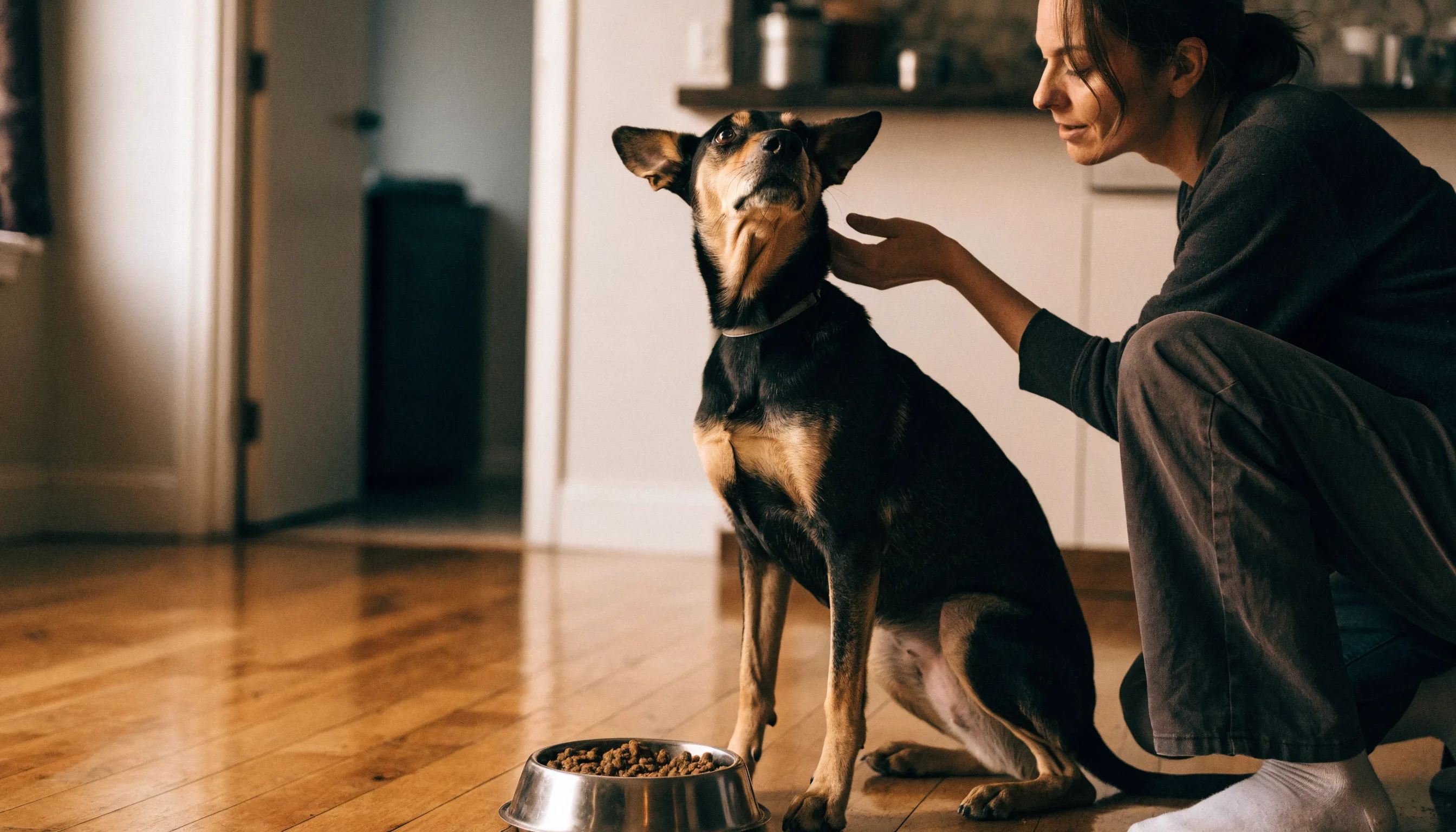
Why is my dog not eating? Causes and when to see a vet
A dog that skips one meal but is bright, playful and drinking is usually fine, and a day of warm weather or a recent vaccination can be enough to explain it. A dog that genuinely goes off its food, especially with any other change, is often telling you it feels unwell — loss of appetite is one of the first signs of many illnesses. How long it has lasted, and how the dog is otherwise, decide how urgent it is.
The everyday reasons
Plenty of causes are minor. Dogs eat less in hot weather, after a vaccination, when a new food has been introduced, or when they are unsettled by a change at home, a new pet, or being left alone. Some dogs learn to hold out for something tastier if meals have been topped with treats. A single missed meal in a dog that is otherwise its normal self usually falls into this group, and the appetite comes back within a day.
When a lost appetite is a warning sign
A real, lasting drop in appetite is different, because so many problems show up first at the food bowl. Dental pain is common — a dog with a sore mouth may approach the bowl keen, then back off, drop food, chew on one side or drool. Nausea from a stomach upset, pain anywhere in the body, infections, and organ disease such as kidney or liver problems all suppress appetite. So can a swallowed object. Because dogs cannot tell us what hurts, a genuine change in eating, particularly alongside low energy, is worth taking seriously rather than simply switching foods.
What you can safely do at home
For one skipped meal in a bright dog, keep it simple. Lift the uneaten food after 15 to 20 minutes rather than leaving it down all day, and offer the normal food again at the next mealtime. Gently warming food or adding a little of its usual wet food can make it more tempting. Make sure fresh water is available, and remove any obvious stressor. What you should not do is let it drift for days, tempt a fussy dog with an endless parade of rich human food, or ignore a dog that is also flat, being sick, or losing weight — those need a vet, not a new recipe.
See a vet if you notice any of these
Call your vet if your dog: has not eaten for more than about 24 hours (sooner for a puppy, a small or toy breed, or a diabetic dog on insulin, where a missed meal matters and needs prompt advice); is off its food and also vomiting, having diarrhoea, flat or feverish; seems hungry but drops food, chews gingerly, paws at its mouth or drools (a sign of dental or mouth pain, or something stuck); or is losing weight. A diabetic dog that will not eat should be discussed with your vet the same day, because it affects its insulin.
Common questions
How long can a dog go without eating before I worry?
A healthy adult dog that skips a meal or two but is otherwise bright, playful and drinking is usually fine, and the appetite often returns within a day. If a dog hasn't eaten for more than about 24 hours, or is also unwell, see your vet. Puppies, small and toy breeds, and diabetic dogs need advice much sooner.
My dog won't eat but is drinking and acting normal — is that ok?
It's reassuring that the dog is bright and drinking, and a single skipped meal in that state is often just hot weather, a recent jab, a diet change or mild fussiness. Lift the food and offer it again at the next mealtime, and make it a little more appealing. If the poor appetite lasts beyond a day, or any other sign appears, get it checked.
Why is my dog interested in food but won't eat it?
A dog that comes to the bowl keen, then backs off, drops food, chews on one side or drools is often telling you its mouth hurts — dental disease is common — or that something is stuck. Nausea can do the same. This pattern is worth a vet visit to look in the mouth and work out why, rather than just changing the food.
Should I force-feed my dog if it won't eat?
No. Don't force food into a dog. Instead make the normal food more tempting by warming it or adding a little of its usual wet food, and remove stressors. If the dog still won't eat, the answer is a vet visit to find out why, not force-feeding, which can be dangerous and doesn't address the cause.
Can stress make a dog stop eating?
Yes. A house move, a new pet or baby, being rehomed, kennel stays or being left alone can all put a dog off its food for a short while. If the dog is otherwise well and the appetite returns within a day or so as it settles, that's usually stress. A lasting loss of appetite, or one with other signs of illness, needs a vet rather than being assumed to be nerves.
More in Dogs
Why is my dog peeing in the house? Causes and how to stop it
An adult dog that starts having accidents isn't being defiant — it's giving you a symptom. The medical checklist, the marking-vs-emptying distinction, and the retraining plan that works.
Autumn dangers for dogs: acorns, conkers and mushrooms
Autumn puts three scavenging hazards on the ground — acorns, conkers and wild mushrooms — plus rat bait and fermenting fruit. What's toxic, what the warning signs are, and when to call the vet.

Winter pet dangers: antifreeze, road salt and chocolate season
Antifreeze is the winter emergency — sweet, deadly and quick. Plus gritted-salt paws, the festive-food gauntlet and cats sheltering in warm car engines. What to watch and when it's urgent.
The pet danger calendar: what to watch, month by month
Most pet hazards are seasonal and many are regional. Here's the year mapped out — when heatstroke, grass seeds, processionary caterpillars, antifreeze and the rest actually peak, and which ones your area even has.

Snake bites in dogs: first aid, symptoms and prevention
A calm, fast response is what actually saves a bitten dog. What to do in the first minutes, the myths that cost time, and which snakes matter across Europe.
Why is my dog vomiting? Causes and when to see a vet
The common reasons dogs are sick, what you can safely do at home for a one-off, and the warning signs that mean call the vet now rather than wait.