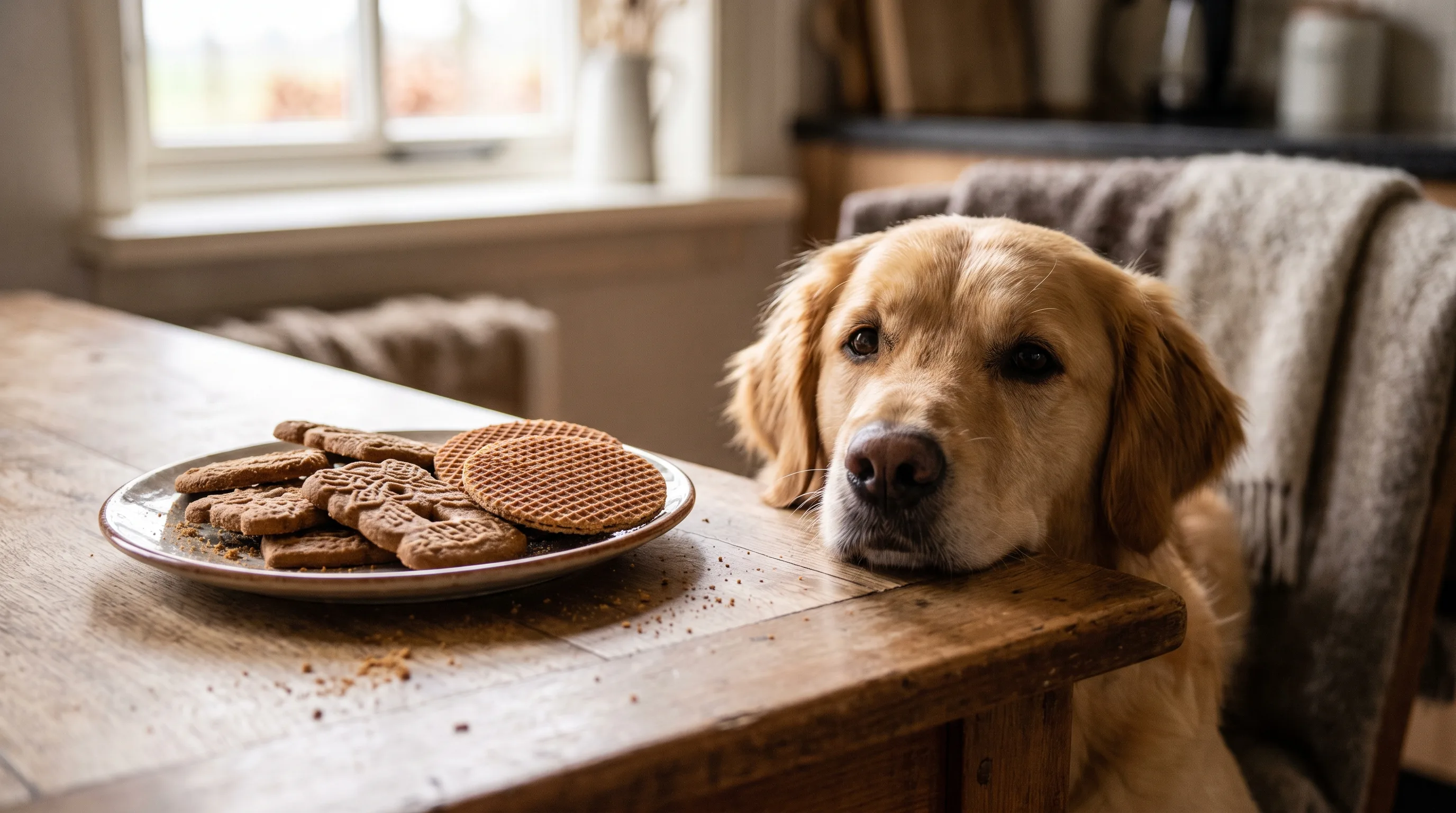
Can dogs eat speculaas? Dutch treats, checked
Most Dutch treats a dog begs for are either a firm no or simply pointless, and it's almost never the base that's the problem — it's what's added. Raisins, salt, licorice and chocolate are the real culprits, and they hide in exactly the snacks dogs love the smell of. Here's the honest verdict on the classics, and why the answer is usually 'don't', not because a crumb will kill your dog, but because the good ones do nothing and the bad ones genuinely hurt.
The hard nos: drop, oliebollen, chocolate hagelslag
A few Dutch favourites are genuine dangers, not just junk. Drop (Dutch licorice) is the clearest: real licorice contains glycyrrhizin, which in dogs can raise blood pressure and disturb potassium, and salty zoute drop piles ammonium-chloride salt on top. Keep the whole tin away.
Oliebollen are a triple problem: most carry raisins or currants, which can trigger sudden kidney failure in dogs even in small amounts; they're deep-fried, so the fat can set off pancreatitis; and if a dog reaches raw oliebollen batter, the yeast keeps fermenting in the warm stomach, producing alcohol and painful bloating. And chocolate hagelslag is exactly what it sounds like — chocolate sprinkles — so the theobromine that makes chocolate toxic to dogs is right there on the bread.
If your dog gets into any of these in more than a lick, call your vet or a pet poison line rather than waiting to see what happens. Our full list of foods dogs must never eat covers the why in depth.
Pointless but not poison: stroopwafel, poffertjes, kibbeling
Some Dutch treats won't poison a dog but do nothing good either. A stroopwafel has no toxic ingredient — it's just sugar, caramel and butter — so a stolen corner won't hurt, but it's pure sugar and fat a dog has no use for. Same story with poffertjes and plain pannenkoek: a tiny plain bite is harmless, the butter and syrup are not doing your dog any favours.
Kibbeling is a near-miss. The white fish inside is fine for dogs, but the deep-fried, salted batter and the garlicky remoulade sauce are not — so a plain unbattered piece of the cod is a treat, the takeaway version is a greasy, salty skip.
The rule with all of these: if it's plain and tiny, it's harmless; if it's the whole snack, it's just sugar, salt and fat your dog doesn't need.
The sneaky one: speculaas and its spices
Speculaas sits in the middle and catches people out. There's no single deadly ingredient in a plain biscuit, but the speculaaskruiden spice mix contains nutmeg, and nutmeg carries myristicin, which is toxic to dogs in larger amounts — plus the biscuits are heavy on sugar. A single crumb off the floor is not an emergency; a dog that eats a whole packet of spiced biscuits is worth a call to the vet.
The cinnamon in speculaas, for what it's worth, is not toxic to dogs in these amounts — it's the nutmeg and the sheer sugar that make it a poor choice. Treat speculaas as a no, not because one crumb is dangerous, but because there's no version of 'a biscuit made for people' that's actually good for a dog.
If you want to give your dog something at koffietijd, a piece of plain carrot or a bit of their own food does the job without the risk.
Common questions
Can dogs eat speculaas?
Better not. A single crumb won't poison a dog, but speculaas spice mix contains nutmeg, which is toxic to dogs in larger amounts, and the biscuits are very high in sugar. A dog that eats a whole packet of spiced biscuits should see a vet; as an everyday treat, skip it.
Is Dutch licorice (drop) toxic to dogs?
Yes, treat licorice as off-limits. Real drop contains glycyrrhizin, which can raise a dog's blood pressure and disturb its potassium levels, and salty zoute drop adds a lot of ammonium-chloride salt. Keep the tin out of reach and call your vet if your dog eats a quantity.
Can dogs eat oliebollen?
No. Oliebollen usually contain raisins or currants, which can cause sudden kidney failure in dogs; they're deep-fried, which risks pancreatitis; and raw oliebollen dough ferments in the stomach into alcohol. If your dog eats one, contact your vet, especially over the raisins.
Can dogs eat chocolate hagelslag?
No. Chocolate hagelslag is chocolate, and chocolate contains theobromine, which dogs can't process safely. Dark and plain chocolate are the most dangerous. Contact your vet or a pet poison line with your dog's weight and how much it ate.
Can dogs eat a stroopwafel?
It's not poisonous, but it's pointless. A stroopwafel is sugar, caramel and butter with nothing toxic in it, so a small stolen bite won't harm a healthy dog. It offers no benefit and the sugar and fat aren't good for them, so it shouldn't be a regular treat.
Which Dutch treats are safe for dogs?
The safest answer is none of the classic sweets — the harmless ones (stroopwafel, plain poffertjes) are just sugar and fat, and the rest hide raisins, licorice, salt or chocolate. A plain piece of the fish from kibbeling, or plain carrot, is a better everyday treat.
See also
More in Dogs
Can dogs eat panettone? Italian foods, put to the test
Panettone, gorgonzola, prosciutto, gelato — which Italian classics are dangerous for dogs and which are just a salty, sugary no. Honest verdicts with the reason.
Can dogs eat Brezel? German classics, checked
Brezel, Stollen, Wurst, Käsespätzle — which German staples are dangerous for dogs and which are just too salty or fatty. Honest verdicts, with the reason.

Can dogs eat cheese? French classics, put to the test
Fromage, foie gras, saucisson, pain au chocolat — which French classics are dangerous for dogs and which are just too rich. Honest verdicts, with the reason.

Can dogs eat turrón? Spanish classics, put to the test
Turrón, jamón, churros, tortilla — which Spanish classics are dangerous for dogs and which are just salty or sugary. Honest verdicts, with the reason.

How much to feed a puppy, by age and size
The bag's chart is a starting point, not an answer. How much a puppy really needs, how meals drop from four a day to two, and the large-breed rule that matters more than the amount.
Feeding a senior dog: what actually changes after 7
Most older dogs need fewer calories, not a special 'senior diet' — and they should not have their protein cut. What changes, what doesn't, and when a change in appetite is a vet visit.