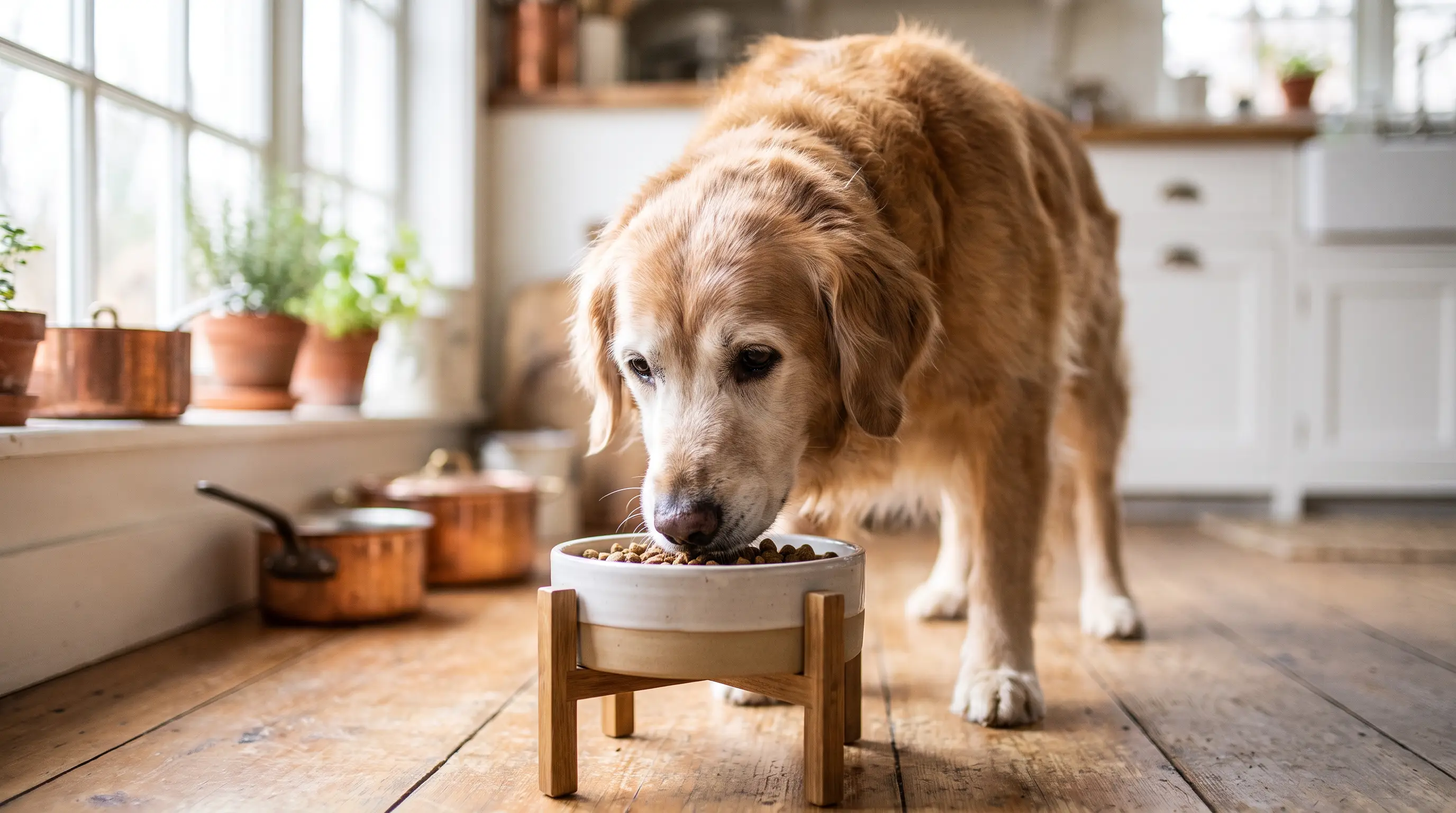
Feeding a senior dog: what actually changes after 7
The main change in feeding an older dog is usually the amount, not the food. As dogs age their metabolism slows and they move less, so the biggest risk becomes carrying too much weight — which is the opposite of the danger in old cats, and worth getting right, because excess weight shortens a dog's life and makes everything from arthritis to breathing worse. Two other things matter: the old advice to cut a senior dog's protein is outdated, and a real change in appetite is a reason to see the vet, not to switch brands.
Most senior dogs need fewer calories, not a 'senior diet'
The single most useful change for many older dogs is a smaller portion. A slowing metabolism and a quieter life mean an ageing dog burns less than it did, so the amount that kept it trim at four can gradually make it heavy at nine. Since obesity is one of the biggest threats to a dog's health and lifespan — worsening arthritis, straining the heart, raising the risk of several diseases — keeping an older dog lean is one of the kindest things you can do for it.
That usually means trimming the portion of a good adult food rather than rushing to a bag labelled "senior". Senior diets can help, and some concentrate useful things like joint support or easier digestion, but the word "senior" on a pack is not a regulated guarantee of anything in particular. Judge the food on what it contains and what it does to your dog's waistline, not on the label's life-stage claim.
Don't cut the protein
Ignore the old rule that senior dogs need low-protein food to protect their kidneys. That advice is outdated for healthy dogs: an older dog actually needs enough good-quality protein to hold on to muscle, which it loses more easily with age, and cutting protein in a healthy senior works against exactly that. Lean muscle keeps an old dog mobile, and you do not want to sacrifice it to a myth.
The genuine exception is a dog diagnosed with kidney disease, where your vet may prescribe a controlled-protein renal diet as part of treatment. That is a specific medical decision made on test results, not a general precaution to take with every grey muzzle. Unless your vet has diagnosed a reason to restrict it, feed your senior dog a normal, good level of protein.
What actually changes with age
Beyond the calorie count, a few real adjustments help. Many older dogs do well with their food split into smaller, more frequent meals, which is gentler on digestion. Dental disease is common in older dogs and can make hard biscuit uncomfortable, so softer or wetter food, or soaking the kibble, often helps a dog that has started eating cautiously. Joint support — whether through keeping the dog lean, an omega-3-rich food, or supplements your vet suggests — earns its place as stiffness creeps in, a topic our guide to senior dog care covers alongside the rest.
There is also a turning point late in life to watch for. In a very old dog the risk can flip from too much weight to too little, with muscle and condition slipping away — so if a senior dog starts losing weight rather than gaining it, that is a change to act on rather than welcome.
When appetite is a symptom
A clear change in how an older dog eats is medical information, not fussiness to feed around. A dog that goes off its food, suddenly becomes ravenous, loses weight despite eating, or starts eating oddly on one side of its mouth is telling you something — dental pain, kidney or other organ disease, and several other conditions common in older dogs all show up first at the food bowl.
So resist the instinct to simply rotate brands until something is accepted. Note what has changed and for how long, and book a vet check rather than troubleshooting it with food alone; pain and appetite changes can also be early signs worth reading, which we cover in the signs a senior dog is in pain. Catching the cause early is worth far more than finding a food the dog will tolerate around it.
Portion to the dog in front of you
As at every age, body condition beats the chart. Feel along your older dog's ribs and look for a waist: you want to feel the ribs easily under a thin layer, not to see them jutting and not to hunt for them under padding. Weigh your dog regularly, because slow change in either direction is easy to miss under a familiar coat, and adjust the amount to hold a lean, steady condition.
Right-size the bowl: our food calculator turns your dog's weight and activity into a daily amount in seconds — a better starting point than the bag's range, which you then fine-tune to keep an older dog lean.
The rest of the adult feeding basics still apply, and our guide to how much to feed a dog covers them. For the wider picture of caring for a dog in its later years, feeding is one piece of the senior dog care guide.
Common questions
What should I feed my senior dog?
For most healthy older dogs, a good-quality complete adult food in a smaller portion is the main change, since ageing dogs burn fewer calories and gain weight easily. Senior-labelled diets can help — some add joint support or easier digestion — but 'senior' on a pack is not a regulated guarantee. Judge a food by what it contains and how it keeps your dog's weight, and don't cut protein unless your vet prescribes it.
Do senior dogs need less protein?
No — that advice is outdated for healthy dogs. Older dogs need enough good-quality protein to preserve muscle, which they lose more easily with age, so cutting it works against keeping them mobile. Protein is only restricted for a dog diagnosed with kidney disease, where a vet may prescribe a renal diet on the basis of test results. For a healthy senior, feed a normal, good level of protein.
How much should I feed my older dog?
Usually a little less than in its prime, because a slower metabolism and less activity mean an older dog burns fewer calories. Start from a good adult food's guide, then adjust by body condition — you should feel the ribs easily under a thin layer and see a waist. Weigh your dog regularly and trim or increase the amount to keep it lean, since excess weight worsens arthritis and shortens life.
Why is my senior dog not eating?
A real change in an older dog's appetite is a medical signal, not simple fussiness. Dental pain, kidney or other organ disease, and various conditions common in older dogs often show up first at the food bowl, sometimes as eating on one side or going off food entirely. Note what has changed and how long it has lasted and see your vet, rather than trying to fix it by switching foods.
At what age is a dog considered senior?
It depends on size: small breeds are often considered senior from around ten to twelve, medium breeds from about eight to ten, and large and giant breeds as early as six or seven, because bigger dogs age faster. The number matters less than the changes — slowing down, gaining or losing weight, stiffness — which is when it's worth reviewing the portion and the vet check-up schedule.
Should I give my senior dog wet or soft food?
Softer or wetter food can genuinely help an older dog with dental disease or a cautious appetite, and soaking dry food is an easy middle ground. It is not essential for every senior dog — many keep eating dry food comfortably — but if your dog has started chewing gingerly or eating on one side, a softer texture plus a dental check with your vet is worth trying.
See also
More in Dogs
How much to feed a puppy, by age and size
The bag's chart is a starting point, not an answer. How much a puppy really needs, how meals drop from four a day to two, and the large-breed rule that matters more than the amount.
Foods dogs must never eat: the toxic list
The vet-checkable list of foods that poison dogs, ranked by real danger, plus exactly what to do in the first ten minutes.
How much to feed a dog: portions and the lean years
Feed to your dog's ideal weight, not its current weight. The food-pack number is a start, then adjust by ribs, waist and tuck.
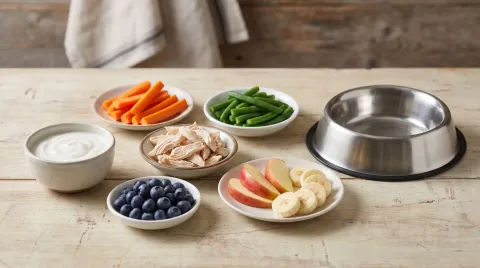
Human foods dogs can eat safely (and how much)
The yes-list of human foods that are safe for dogs, with real portions, the catches, and the one 10 percent rule that keeps treats from doing harm.
How to read a pet food label
The one line that matters most, why the first ingredient lies, and how to spot marketing words that mean nothing.
Treats without the weight gain: the 10% rule
The vet rule that stops treats making your cat or dog fat, and how to run the numbers in about a minute.