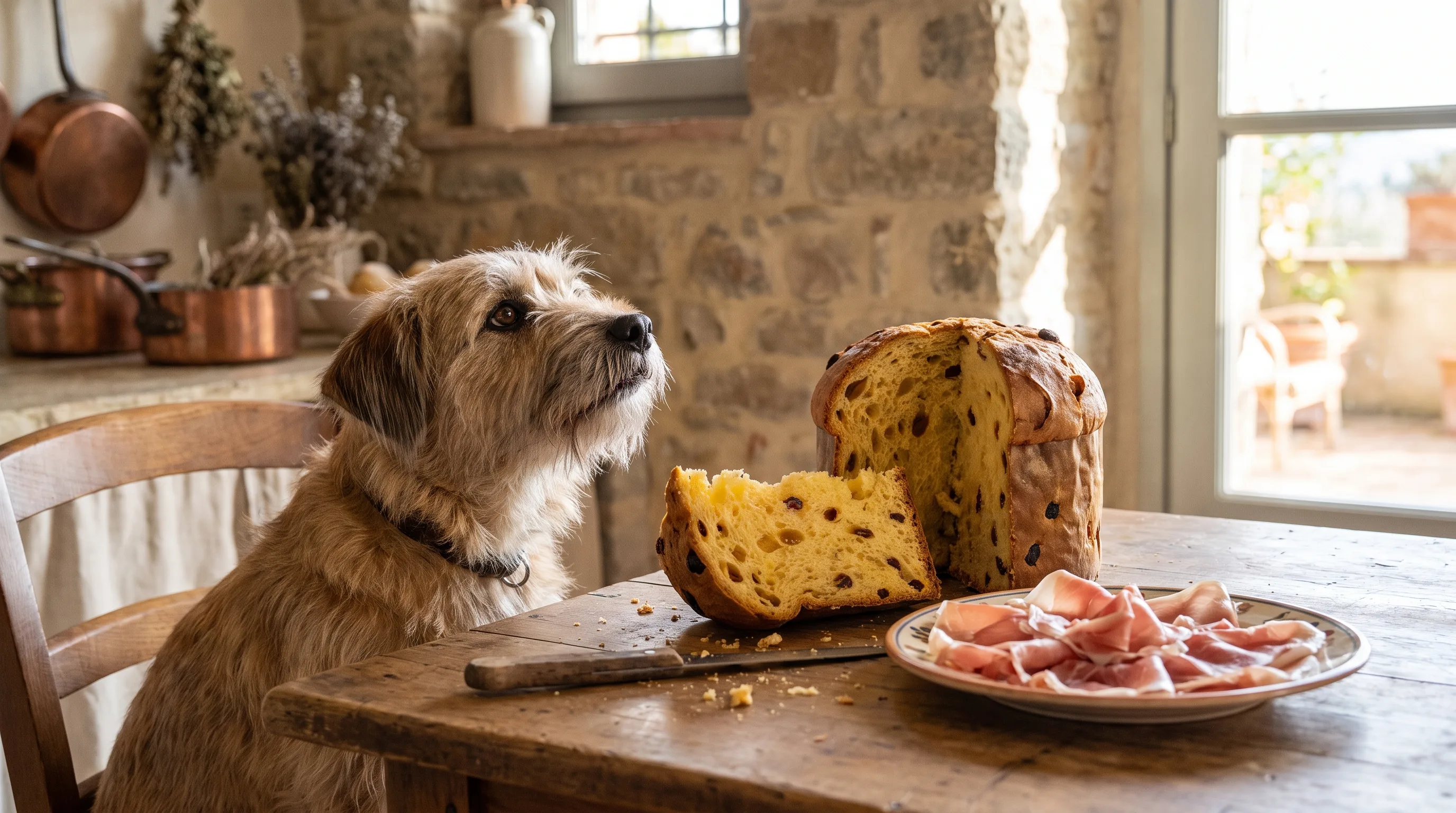
Can dogs eat panettone? Italian foods, put to the test
The Italian foods a dog wants most are, awkwardly, some of the worst for it — and Christmas is the danger zone. It's rarely the flour or the meat that's the problem; it's the raisins in the panettone, the salt in the prosciutto, the mould in the gorgonzola and the garlic in the sauce. Here's the honest verdict on the classics, with the specific reason each one is a yes, a no, or a rare plain scrap.
The Christmas danger: panettone, and why raisins matter
Panettone and pandoro are the ones to guard hardest, because they land in the house exactly when everyone's slipping the dog treats. Panettone is full of raisins (uvetta) and candied peel, and raisins can cause sudden kidney failure in dogs even in small amounts, by a mechanism vets still don't fully understand. The chocolate-chip versions add theobromine on top, and chocolate is separately toxic to dogs.
So a dog that eats a slice of panettone is not a wait-and-see situation — it's a call to your vet or a pet poison line, because of the raisins above all. This is one of the most common festive poisonings, and it's entirely avoidable by keeping the panettone off the low table. The full picture is in our list of foods dogs must never eat.
The savoury nos: gorgonzola, prosciutto, sauced pasta
Gorgonzola and other blue cheeses are a genuine no: the Penicillium mould that veins them produces roquefortine C, which can cause tremors and seizures in dogs, on top of the usual cheese problems of fat and salt. Prosciutto, speck and salame are cured meats built on salt — enough sodium to be a real problem in a small dog — so at most a tiny rare scrap, ideally none.
Pasta itself is the interesting case: plain, cooked, unsalted pasta is a bland carb a dog can have a little of, but the sauce is where it goes wrong. Most Italian sauces start with garlic and onion, and both belong to the allium family that damages dogs' red blood cells and causes anaemia. So plain pasta, occasionally, yes; anything with sugo, ragù or aglio e olio, no.
Pizza crust follows the same logic: a plain baked corner is mostly harmless, but pizza is usually salty, oily and garlicky, and raw pizza dough is dangerous because it ferments.
A crumb at most: gelato, parmigiano, grissini
A few Italian staples are fine in the smallest amounts. A crumb of parmigiano or grana works as a training treat — hard aged cheese is very low in lactose, so many dogs tolerate a little — but it's salty, so keep it to a crumb. Grissini are harmless but pointless: plain breadsticks are just carbs and salt.
Gelato is a no in its usual form: it's high in sugar and dairy that most adult dogs can't digest well, and the chocolate, coffee and any sugar-free (xylitol-sweetened) flavours are outright toxic. If you want the moment, there are gelati made for dogs, or let them lick a spoon of plain unsweetened yoghurt instead.
The theme across all of it: the base ingredient is rarely the danger. It's the salt, the sugar, the raisins, the garlic and the mould — so 'made for people' almost always means 'not for the dog'.
Common questions
Can dogs eat panettone?
No. Panettone contains raisins and candied peel, and raisins can cause sudden kidney failure in dogs even in small amounts; the chocolate-chip versions add toxic theobromine. If your dog eats panettone, call your vet or a pet poison line rather than waiting.
Can dogs eat gorgonzola?
No. The mould in gorgonzola and other blue cheeses produces roquefortine C, which can cause tremors and seizures in dogs, and cheese is also high in fat and salt. Plain, non-blue cheeses are less risky but still not a good regular treat.
Can dogs eat pasta?
Plain, cooked, unsalted pasta in small amounts is usually fine as a bland carb. The problem is the sauce: most Italian sauces contain garlic and onion, which are toxic to dogs and damage their red blood cells. So plain pasta occasionally, yes; sauced pasta, no.
Can dogs eat prosciutto?
Better not. Prosciutto and other cured meats are very high in salt and fat, which is a real problem in small dogs and risks stomach upset or worse. A tiny scrap now and then won't poison a dog, but it shouldn't be a regular treat.
Can dogs eat gelato?
No, not the normal kind. Gelato is high in sugar and in dairy most adult dogs can't digest, and chocolate, coffee and sugar-free (xylitol) flavours are toxic. A lick of plain unsweetened yoghurt, or a gelato made for dogs, is the safe alternative.
Can dogs eat parmesan?
A crumb, occasionally. Hard aged cheeses like parmigiano are very low in lactose, so many dogs tolerate a tiny piece, and it works well as a training reward. It's salty, though, so keep it to a crumb rather than a chunk.
See also
More in Dogs
Can dogs eat speculaas? Dutch treats, checked
Speculaas, drop, oliebollen, hagelslag — which Dutch classics are a hard no for dogs and which are just pointless. Honest verdicts, with the reason.
Can dogs eat Brezel? German classics, checked
Brezel, Stollen, Wurst, Käsespätzle — which German staples are dangerous for dogs and which are just too salty or fatty. Honest verdicts, with the reason.
Can dogs eat cheese? French classics, put to the test
Fromage, foie gras, saucisson, pain au chocolat — which French classics are dangerous for dogs and which are just too rich. Honest verdicts, with the reason.
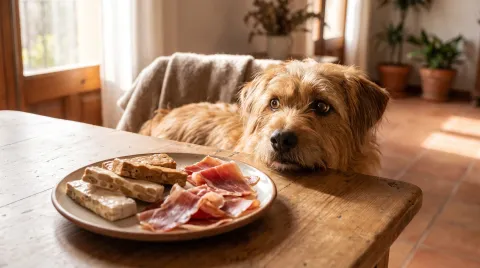
Can dogs eat turrón? Spanish classics, put to the test
Turrón, jamón, churros, tortilla — which Spanish classics are dangerous for dogs and which are just salty or sugary. Honest verdicts, with the reason.
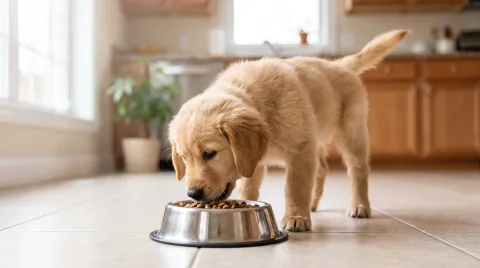
How much to feed a puppy, by age and size
The bag's chart is a starting point, not an answer. How much a puppy really needs, how meals drop from four a day to two, and the large-breed rule that matters more than the amount.
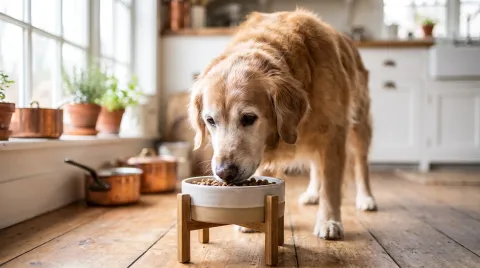
Feeding a senior dog: what actually changes after 7
Most older dogs need fewer calories, not a special 'senior diet' — and they should not have their protein cut. What changes, what doesn't, and when a change in appetite is a vet visit.