Feeding your dog, honestly
What to feed, how much, and what's toxic — straight nutrition guides for cats and dogs, with no brand spin.
Articles
Reading the pet food ingredient list: meat, meal and by-product
'Chicken' first isn't the win it looks like, and 'by-product' isn't the villain. How to read an ingredient panel the way the people who write it do.
Human-grade vs feed-grade pet food, decoded
'Human-grade' is one of the few pet-food terms with a legal meaning — and one of the most stretched. Here's what it really requires, and whether it's worth paying for.

Pet food quality words, decoded: what the label really promises
Human-grade, holistic, natural, premium, single protein. Most of it is marketing, some of it is law. Here's what each word actually guarantees — and the one claim that really matters.
Organic, natural, holistic: which pet food claims are real
Only one of these words is backed by law. Here's what organic, natural, holistic, premium and gourmet actually guarantee on a bag of dog or cat food.
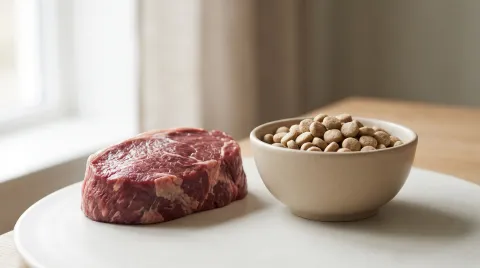
Single-protein and limited-ingredient dog food: when it helps
Limited-ingredient and single-protein diets have one real job — investigating food allergies with your vet. Here's when they help and when it's just marketing.

'Complete and balanced': the only pet food claim that matters
One small line on the bag decides whether a food can actually feed your pet. Here's how to find the AAFCO/FEDIAF adequacy statement and read it properly.
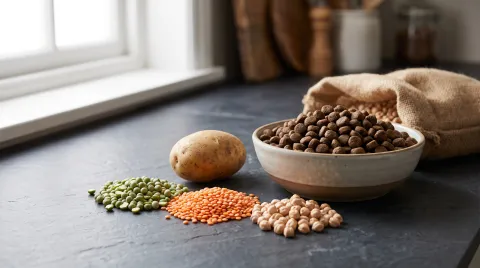
Grain-free dog food and DCM: the honest state of the science
The FDA linked some grain-free, legume-heavy diets to heart disease — but never proved cause, and never cleared them. Here's the honest, non-alarmist picture.

Foods dogs must never eat: the toxic list
The vet-checkable list of foods that poison dogs, ranked by real danger, plus exactly what to do in the first ten minutes.

How much to feed a dog: portions and the lean years
Feed to your dog's ideal weight, not its current weight. The food-pack number is a start, then adjust by ribs, waist and tuck.
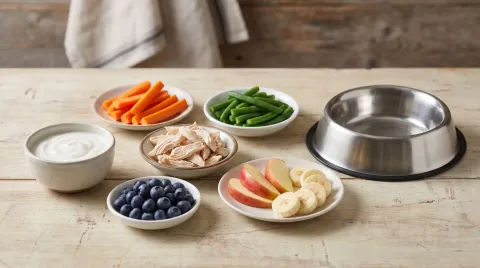
Human foods dogs can eat safely (and how much)
The yes-list of human foods that are safe for dogs, with real portions, the catches, and the one 10 percent rule that keeps treats from doing harm.
How to read a pet food label
The one line that matters most, why the first ingredient lies, and how to spot marketing words that mean nothing.

Treats without the weight gain: the 10% rule
The vet rule that stops treats making your cat or dog fat, and how to run the numbers in about a minute.

How much to feed a puppy, by age and size
The bag's chart is a starting point, not an answer. How much a puppy really needs, how meals drop from four a day to two, and the large-breed rule that matters more than the amount.

Feeding a senior dog: what actually changes after 7
Most older dogs need fewer calories, not a special 'senior diet' — and they should not have their protein cut. What changes, what doesn't, and when a change in appetite is a vet visit.

Can dogs eat speculaas? Dutch treats, checked
Speculaas, drop, oliebollen, hagelslag — which Dutch classics are a hard no for dogs and which are just pointless. Honest verdicts, with the reason.

Can dogs eat panettone? Italian foods, put to the test
Panettone, gorgonzola, prosciutto, gelato — which Italian classics are dangerous for dogs and which are just a salty, sugary no. Honest verdicts with the reason.

Can dogs eat Brezel? German classics, checked
Brezel, Stollen, Wurst, Käsespätzle — which German staples are dangerous for dogs and which are just too salty or fatty. Honest verdicts, with the reason.

Can dogs eat cheese? French classics, put to the test
Fromage, foie gras, saucisson, pain au chocolat — which French classics are dangerous for dogs and which are just too rich. Honest verdicts, with the reason.

Can dogs eat turrón? Spanish classics, put to the test
Turrón, jamón, churros, tortilla — which Spanish classics are dangerous for dogs and which are just salty or sugary. Honest verdicts, with the reason.