How to stop a puppy biting and mouthing
Almost every puppy bites — hands, sleeves, ankles, everything — and it is normal play and exploration, not a sign of a mean dog. But it genuinely hurts, and the goal is not to punish it out of the puppy but to teach a soft mouth and redirect the biting onto things it is allowed to chew. Get this right in the first few months, while the puppy is learning bite inhibition, and it fades. Get it wrong, with punishment or rough games, and it can harden. Here is what works.
Why puppies bite — and why it matters now
Puppies explore the world with their mouths the way babies use their hands, so mouthing is how they investigate, play and interact. On top of that they teethe from around three to six months, when sore gums make chewing feel good, and they bite in play because that is exactly how they played with their littermates. None of it is aggression; it is a normal stage. The reason to work on it now rather than wait is a narrow window called bite inhibition.
Bite inhibition is a dog learning to control the force of its jaws. A puppy learns it first from its mother and littermates: bite too hard in a game and the other puppy yelps and stops playing, so the biter learns to soften up to keep the fun going. Your job is to continue that lesson. A dog that learned good bite inhibition as a puppy will, even if it ever mouths in fright as an adult, do so without causing real damage, which is why teaching a soft mouth young matters far beyond the puppy stage.
Yelp, pause, redirect: the core method
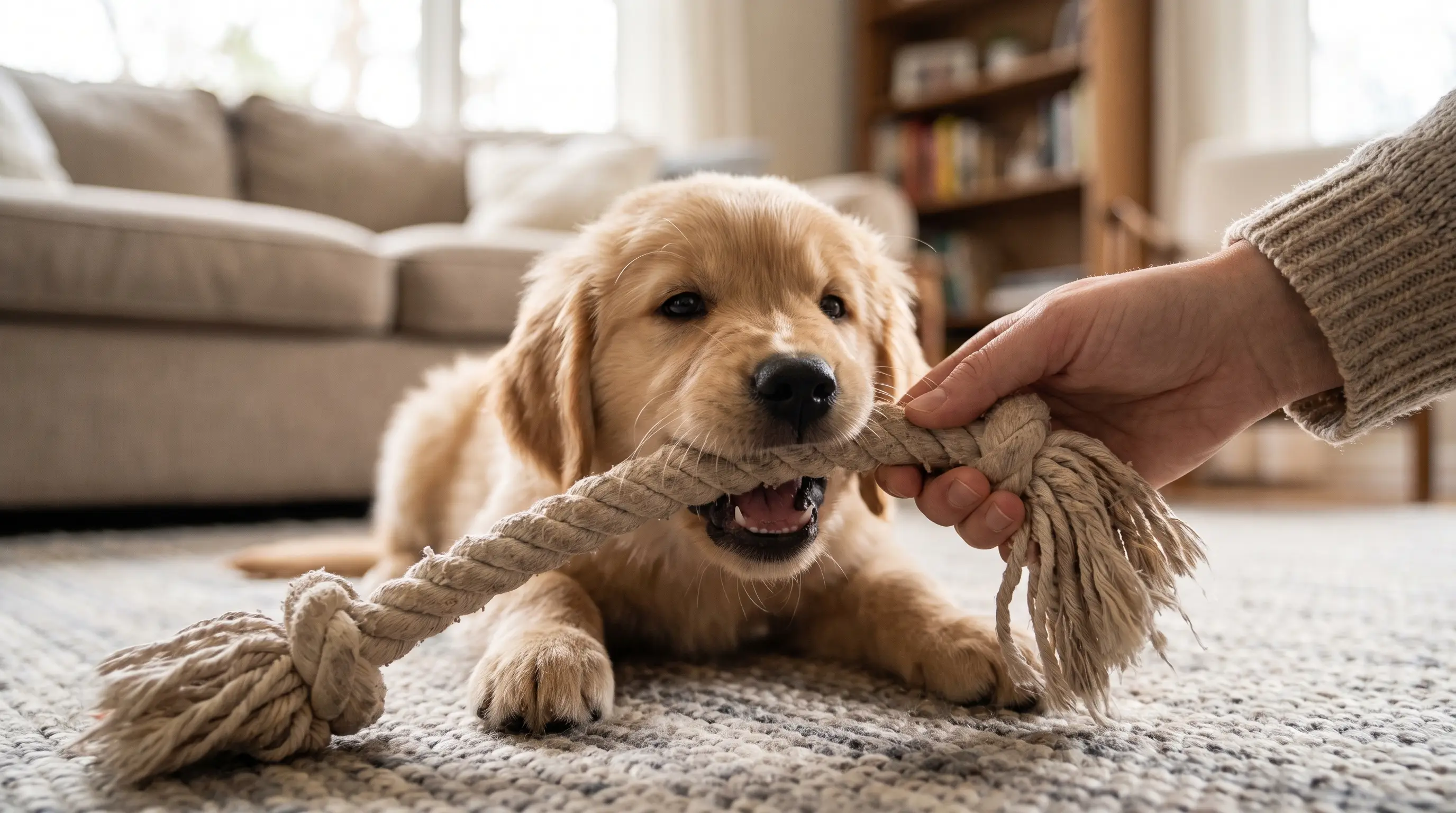
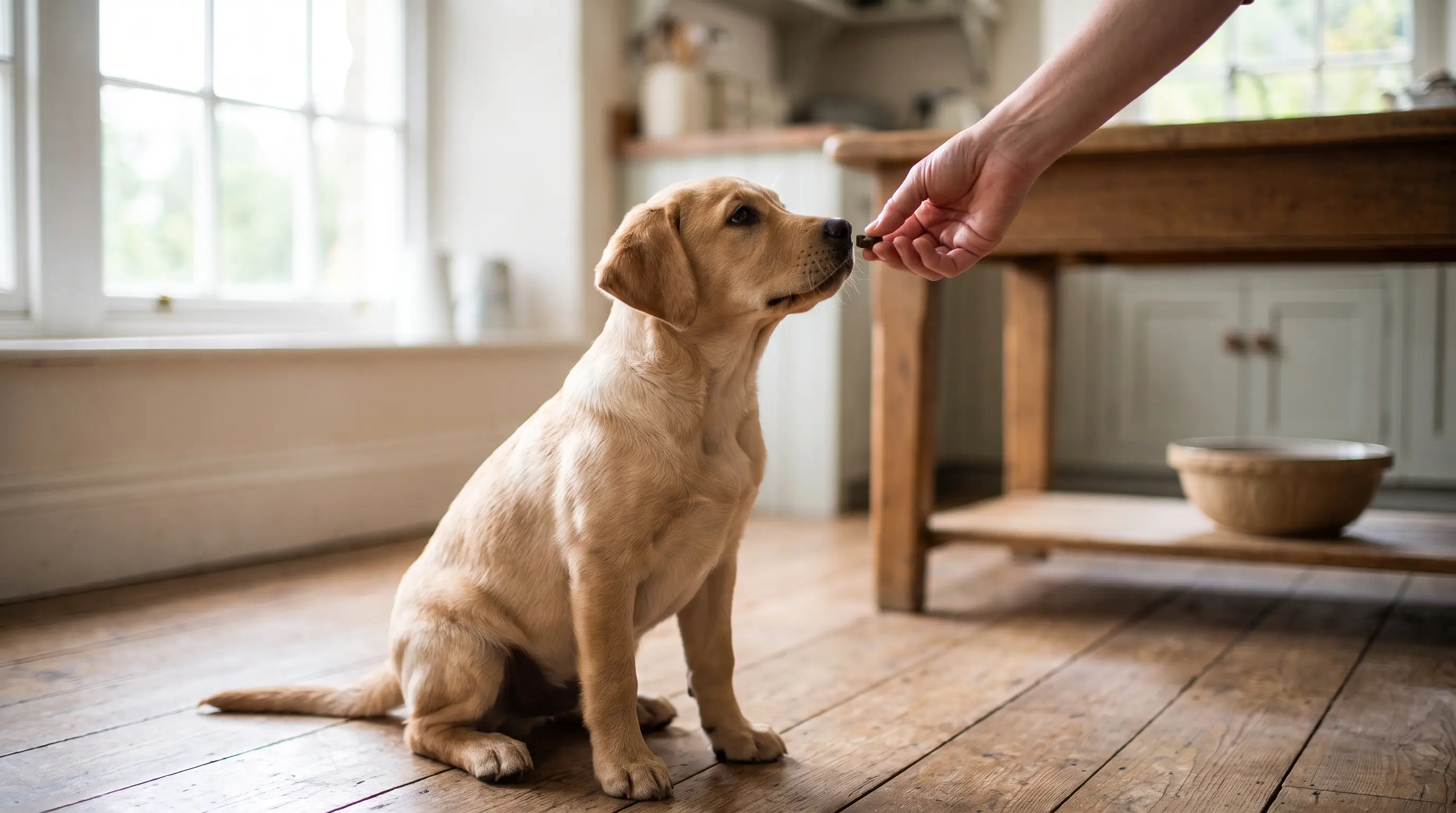
The most reliable response has three beats. When the puppy bites too hard, give a short, high-pitched "ow", then immediately stop the game — stand up, fold your arms, look away, and go still and boring for ten to twenty seconds. This mimics the littermate yelping and quitting, and it teaches the puppy that teeth on skin end the fun. Then redirect: offer a toy or a chew and praise the puppy for biting that instead. The lesson the puppy takes away is simple — mouth on skin stops everything, mouth on toy keeps the game going.
Always keep a chew toy within reach so you have something to swap in, and reward the puppy warmly the instant it chooses the toy. This is the same positive reinforcement that runs through all modern training: you are making the behaviour you want more rewarding than the one you don't. Consistency across everyone in the house matters more than any single technique, because a puppy cannot learn a rule that only half the family enforces.
What not to do — the responses that backfire
Skip the punishments, because they mostly make biting worse. Do not hold the puppy's mouth shut, tap its nose, or pin it down; these frighten a puppy, can hurt, and often ramp up the very arousal that drives the biting, or teach the puppy that hands are threatening. Do not shout, because to a wound-up puppy a loud reaction can look like an exciting part of the game. And do not play rough hand-wrestling games that invite the puppy to bite skin, then tell it off for doing exactly that; you cannot have it both ways.
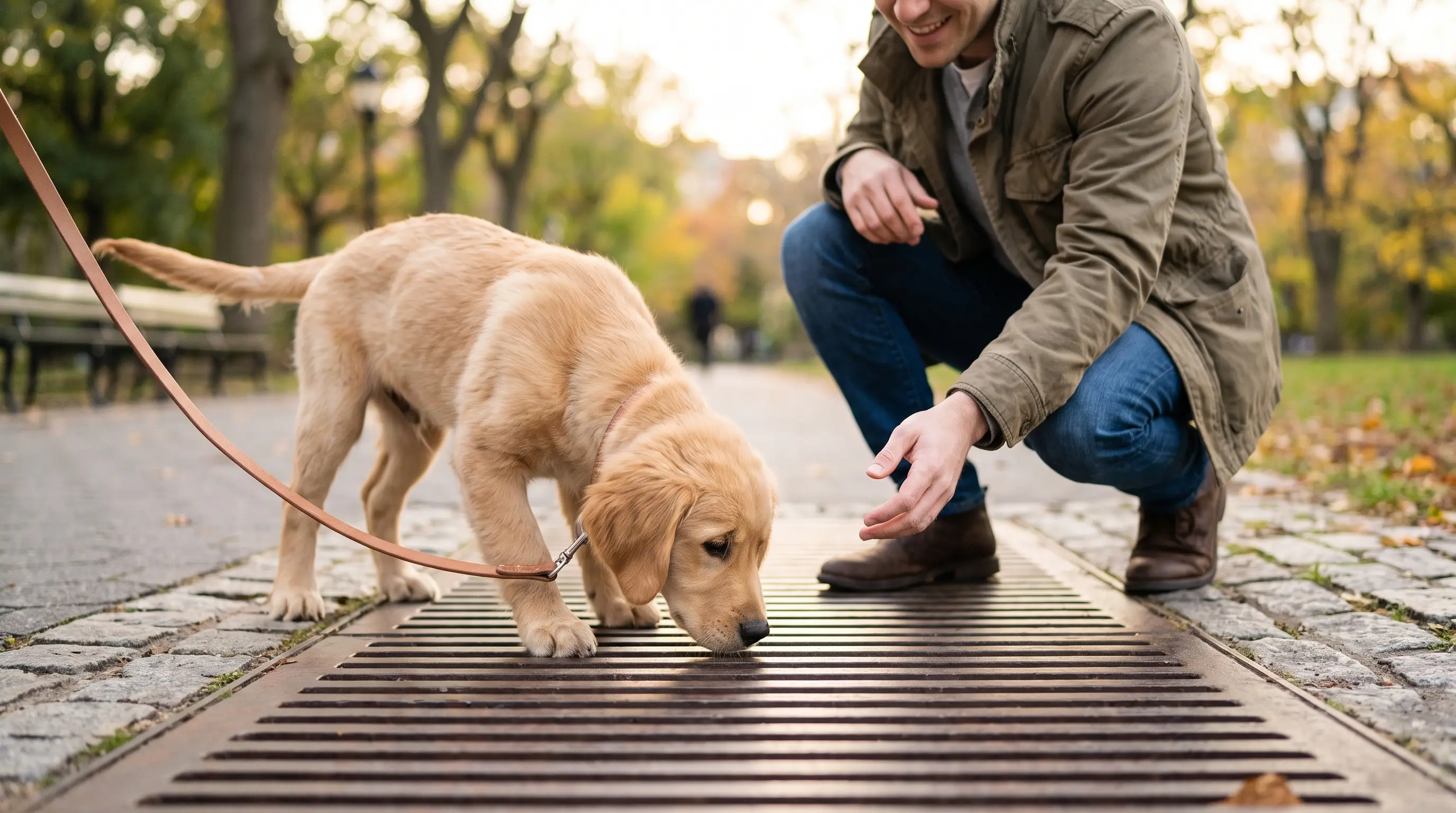
Two practical traps catch tired owners. Biting spikes when a puppy is overtired or overstimulated, much like a cranky toddler, so a puppy that suddenly turns into a piranha at 9pm usually needs a nap in its crate, not more play. And ankle-biting during walks is often herding-type chase behaviour, best handled by stopping dead and redirecting onto a toy rather than by running, which only makes the chase more fun.
Teething, energy and setting the puppy up to win
Give the mouth legal outlets. Provide a range of chew toys with different textures, and a cool or frozen teething toy can soothe sore gums during the worst of teething. Rotate the toys so they stay interesting. Much biting is also simple unspent energy and boredom, so a puppy that gets enough gentle exercise, sniffing, short training games and, crucially, enough sleep bites far less than one that is under-stimulated and overtired in equal measure. High-energy retrievers and working breeds such as the Labrador Retriever or the Border Collie tend to need noticeably more outlets and mental work than a naturally lower-energy breed before the mouthiness settles.
Socialisation helps too. A puppy that keeps playing with other vaccinated, friendly puppies and gentle adult dogs during its socialisation window gets constant practice at bite inhibition from other dogs, who are far better teachers of it than we are. Puppy classes run by reward-based trainers are worth it partly for this. You are not trying to stamp biting out overnight; you are steering a normal instinct onto acceptable targets while the puppy learns to control its jaws.
When it is more than normal puppy biting
Most puppy biting is play and teething and fades over the first several months with the steps above. A few signs are worth a professional eye rather than patience. Biting that comes with a stiff body, a hard stare, growling that sounds threatening rather than playful, snapping when someone approaches food, toys or a resting spot, or bites that break skin from real intent rather than over-excited play — these are different from ordinary mouthing and warrant advice from a vet or a qualified behaviourist.
For everyday puppy mouthing, though, hold your nerve and stay consistent: yelp, pause, redirect, reward the toy, avoid punishment and rough games, and make sure the puppy is rested and exercised. It is one of the most common things new owners worry about, and one of the most reliably fixable. Our wider first-month training guide sets it alongside the other skills a young puppy is learning at the same time.
Common questions
At what age do puppies stop biting?
Most puppies bite most between about 8 weeks and 5 months, easing as adult teeth come in and bite inhibition develops, and largely settling by around 6 to 7 months with consistent training. Teething from roughly 3 to 6 months is often the peak, so patience plus the right responses matter.
Is puppy biting a sign of aggression?
Almost never. Puppy mouthing is normal play, exploration and teething, not aggression. Warning signs that are different include a stiff body, hard stare, threatening growl, or snapping when approached near food or resting spots — those warrant advice from a vet or behaviourist.
Should you punish a puppy for biting?
No. Holding the mouth shut, tapping the nose, shouting or pinning a puppy tends to frighten it, can hurt, and often increases the arousal that drives biting or teaches it that hands are threatening. Reward-based redirection onto a toy works far better.
How do I get my puppy to stop biting my hands?
Give a short 'ow', stop the game and go still and boring for ten to twenty seconds, then redirect the puppy onto a chew toy and praise it for biting that instead. Keep a toy handy, be consistent across the whole household, and avoid rough hand games.
Why does my puppy bite more in the evening?
Biting usually spikes when a puppy is overtired or overstimulated, much like an overtired toddler. An evening piranha phase is often a sign the puppy needs a nap in a quiet spot or crate rather than more play, which tends to wind it up further.
More in Dogs

How to stop a dog barking too much
Barking is communication, not defiance, and the fix depends entirely on which of four reasons is driving it. The reward-based method for each, and why shouting or a bark collar usually makes it worse.
House training a puppy: the schedule that actually works
Most house-training failures are a supervision problem, not a stubborn puppy. The realistic age-based schedule, the signals to watch for, and how to recover from a setback.
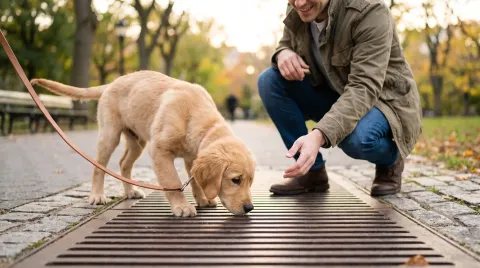
How to socialize a puppy: the critical window, done right
A puppy's sensitive period for accepting new things as normal narrows sharply by around 16 weeks. What to expose it to, why every single experience has to end well, and where more is not automatically better.
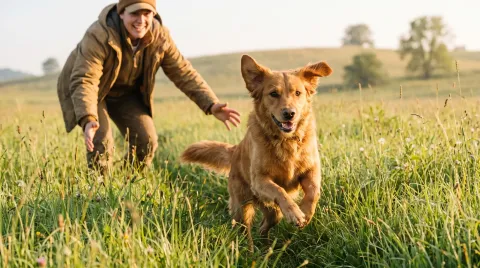
Dog recall training: build a come that actually works
A recall you can trust in a real emergency, plus the everyday habits that quietly poison the word "come" until your dog ignores it.
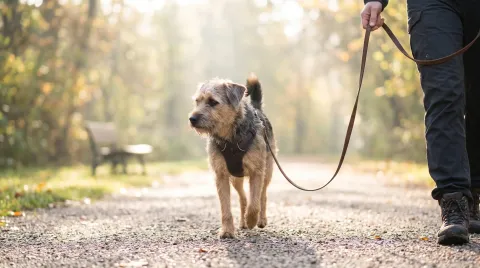
Stop the pulling: loose-lead walking that works
Dogs pull because it pays off. Reward the side, stop dead the second the lead goes tight, skip the pain tools — the kind method that actually sticks.

How to crate train a puppy, step by step
Done right, a crate becomes the one place a puppy feels safest — not a cage. The reward-based method, the timing, and the mistakes that make a puppy hate it.