How to socialize a puppy: the critical window, done right
Socialisation is not the same as exposure. Dragging a puppy past every dog in the park does not build confidence; it can just as easily teach it that new things are overwhelming. Real socialisation is a puppy meeting new people, animals, sounds, surfaces and handling in a way that ends well every time, during the narrow window when its brain is primed to file new things as normal rather than dangerous. Get the breadth and the pace right in the first few months, and you are shaping the adult dog you will have for the next decade.
What socialisation actually means, and the window that matters
A puppy's sensitive period for socialisation runs roughly from three to fourteen weeks, narrowing sharply by around sixteen, and it is the stretch when a puppy's brain is unusually open to filing new experiences as ordinary rather than threatening. Everything it meets calmly and positively in this window tends to stay unremarkable for life; everything it never meets, or meets badly, is more likely to trigger fear or reactivity as an adult. The window softens gradually rather than slamming shut, so gentle work after sixteen weeks still helps, but it takes more repetition to achieve the same ease.
This overlaps awkwardly with the vaccination schedule, since the window is often still open before a puppy's core vaccine course finishes. Our puppy vaccination guide covers that safety timing in detail — the short version is that carried outings and controlled meetings with healthy, vaccinated animals let socialisation continue before public ground is fully safe.
Make a list, and go for breadth over intensity
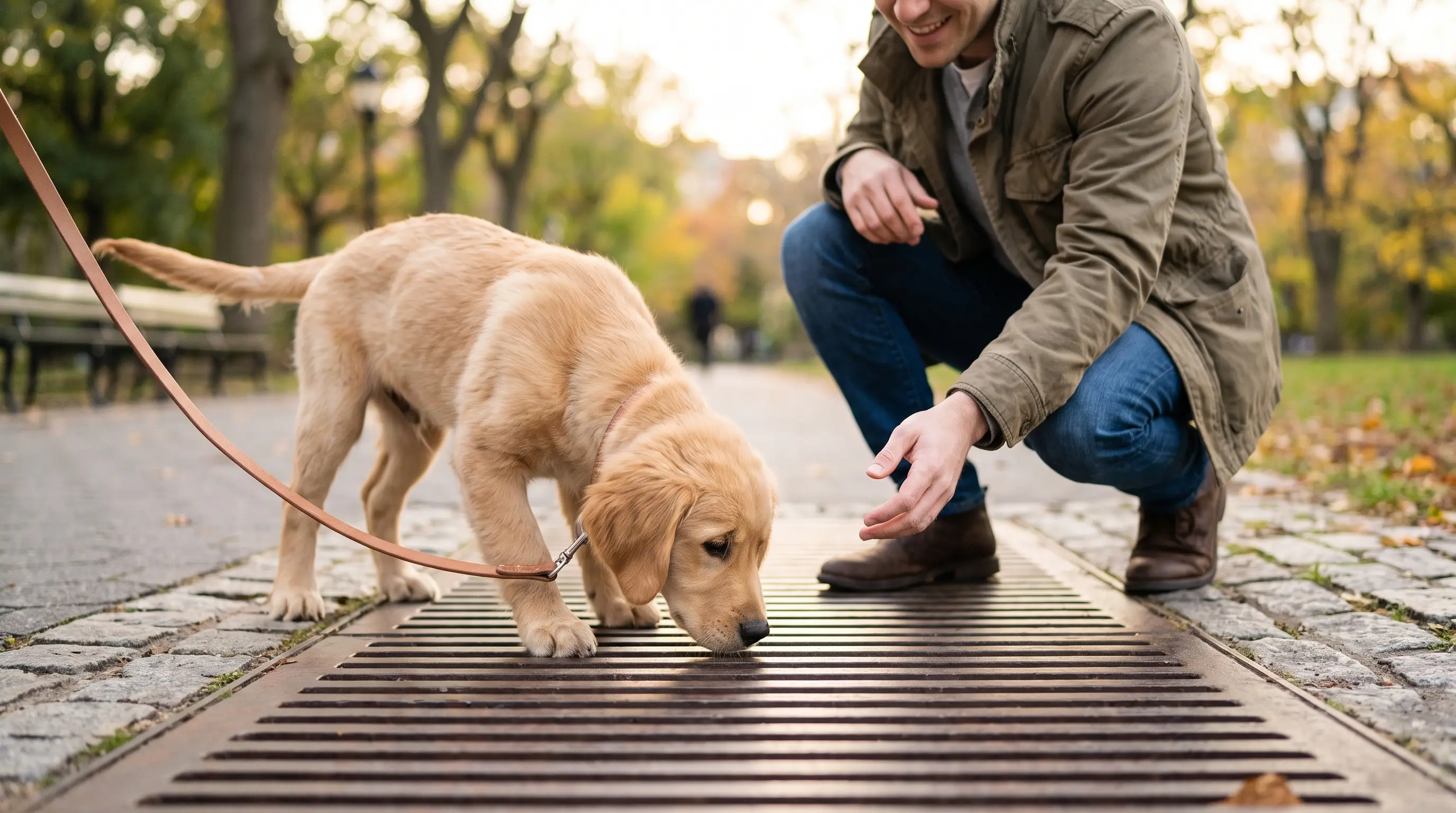
Work through categories rather than hoping exposure happens by accident: people of different ages, heights and appearances, including hats, beards, uniforms and wheelchairs; other calm, healthy, vaccinated animals; surfaces such as grass, tile, metal grates and gravel; everyday sounds like a vacuum, traffic and a doorbell, started quiet and built up; gentle handling of ears, paws, mouth and a light hold, which pays off enormously at the vet and groomer later; and everyday objects like umbrellas, bikes, stairs and short car rides.
Aim for several short outings a week rather than one long, overwhelming trip. A ten-minute visit to a quiet garden centre that goes well teaches more than an hour at a crowded street market that ends with a shut-down, exhausted puppy.
Keep every exposure ending positive — that is the entire rule
Pair new things with treats, play or calm praise, and let your puppy approach at its own pace rather than being carried or dragged toward something it is unsure about. Watch for calming signals — lip licking, yawning, looking away, a tucked tail or a lowered body — because these mean "this is too much" well before a puppy growls or bolts, and the skill is backing off at the first signal rather than pushing through to see what happens. One bad experience, like a frightening encounter with an out-of-control dog, can outweigh weeks of good ones at this age.
If your puppy seems worried, increase distance rather than insisting it "faces its fear" up close — confidence at this age is built by success, not by being overwhelmed and coping. Ending a session early on a good note beats pushing five more minutes and ending on a bad one.
Puppy classes done right
A good puppy class is run by a reward-based, force-free instructor and steers well clear of anything built around "dominance", corrections, or physical handling to make a puppy comply — those methods have no place at this age and can do real damage to a young dog's confidence. Every attending puppy should have at least its first vaccines and a vet's clearance to attend, and a class worth paying for keeps play groups matched by size and play style, so one boisterous puppy is not allowed to overwhelm a shy one.
The controlled, supervised play matters as much as the structured exercises. A well-run puppy class is often the single richest source of safe dog-to-dog socialisation a puppy gets, precisely because a good instructor is watching for the early signs of overwhelm and steps in before anyone has a bad experience.
Breed nuance: some puppies need more deliberate work
Guardian and protection-bred breeds are often naturally more reserved with strangers as adults — that is a working trait bred in on purpose, not a temperament flaw to train out. The Cane Corso scores notably low for openness to strangers among common breeds, and a Great Pyrenees is watchful by design. Puppies of breeds like these benefit from extra, unhurried, deliberately positive exposure during the window rather than an assumption that they will simply grow out of wariness — the socialisation matters more for them, not less.
Naturally outgoing breeds such as the Labrador Retriever or Golden Retriever usually socialise easily and score near the top for openness to strangers, but "usually friendly" is not the same as "does not need the work." Every puppy, whatever its breed's baseline, needs real, positive exposure during this window to become the confident adult you want.
Common questions
What is the socialisation period for puppies?
A puppy's main sensitive period for socialisation runs roughly from three to fourteen weeks old, narrowing sharply by around sixteen weeks. Experiences during this window are unusually likely to be filed as normal for life, which is why concentrated, positive exposure matters most in the first few months.
How do I socialise my puppy before vaccinations are finished?
Carry your puppy on outings so it can see, hear and smell the world from a safe height, and arrange controlled meetings with animals you know are healthy and fully vaccinated on ground you trust, rather than public parks. Full public access usually waits until roughly two weeks after the final core vaccine dose.
How many new things should I introduce a puppy to per week?
There is no fixed number, but several short, varied outings a week generally work better than one long, intense trip. Prioritise breadth across people, animals, sounds, surfaces and handling over repeating the same easy experience, and always stop while your puppy is still enjoying itself.
What if my puppy seems scared during socialisation?
Increase distance from whatever is worrying it rather than pushing closer, and let your puppy set the pace back toward calm. Watch for calming signals like lip licking, yawning or looking away, and treat them as your cue to back off, since ending on a good note matters more than finishing the plan.
Is it too late to socialise an older puppy or adult dog?
The window narrows rather than closing outright, so gentle, positive exposure still helps an older puppy or adult dog, it just takes more patience and repetition to get the same ease a young puppy picks up quickly. A qualified force-free trainer or behaviourist is worth involving for a noticeably fearful adult dog.
See also
More in Dogs
How to stop a puppy biting and mouthing
Puppy biting is normal, not aggression — and how you respond in the first months decides whether it fades or hardens. The reward-based fixes that actually work.

How to stop a dog barking too much
Barking is communication, not defiance, and the fix depends entirely on which of four reasons is driving it. The reward-based method for each, and why shouting or a bark collar usually makes it worse.
House training a puppy: the schedule that actually works
Most house-training failures are a supervision problem, not a stubborn puppy. The realistic age-based schedule, the signals to watch for, and how to recover from a setback.
Dog recall training: build a come that actually works
A recall you can trust in a real emergency, plus the everyday habits that quietly poison the word "come" until your dog ignores it.
Stop the pulling: loose-lead walking that works
Dogs pull because it pays off. Reward the side, stop dead the second the lead goes tight, skip the pain tools — the kind method that actually sticks.

How to crate train a puppy, step by step
Done right, a crate becomes the one place a puppy feels safest — not a cage. The reward-based method, the timing, and the mistakes that make a puppy hate it.