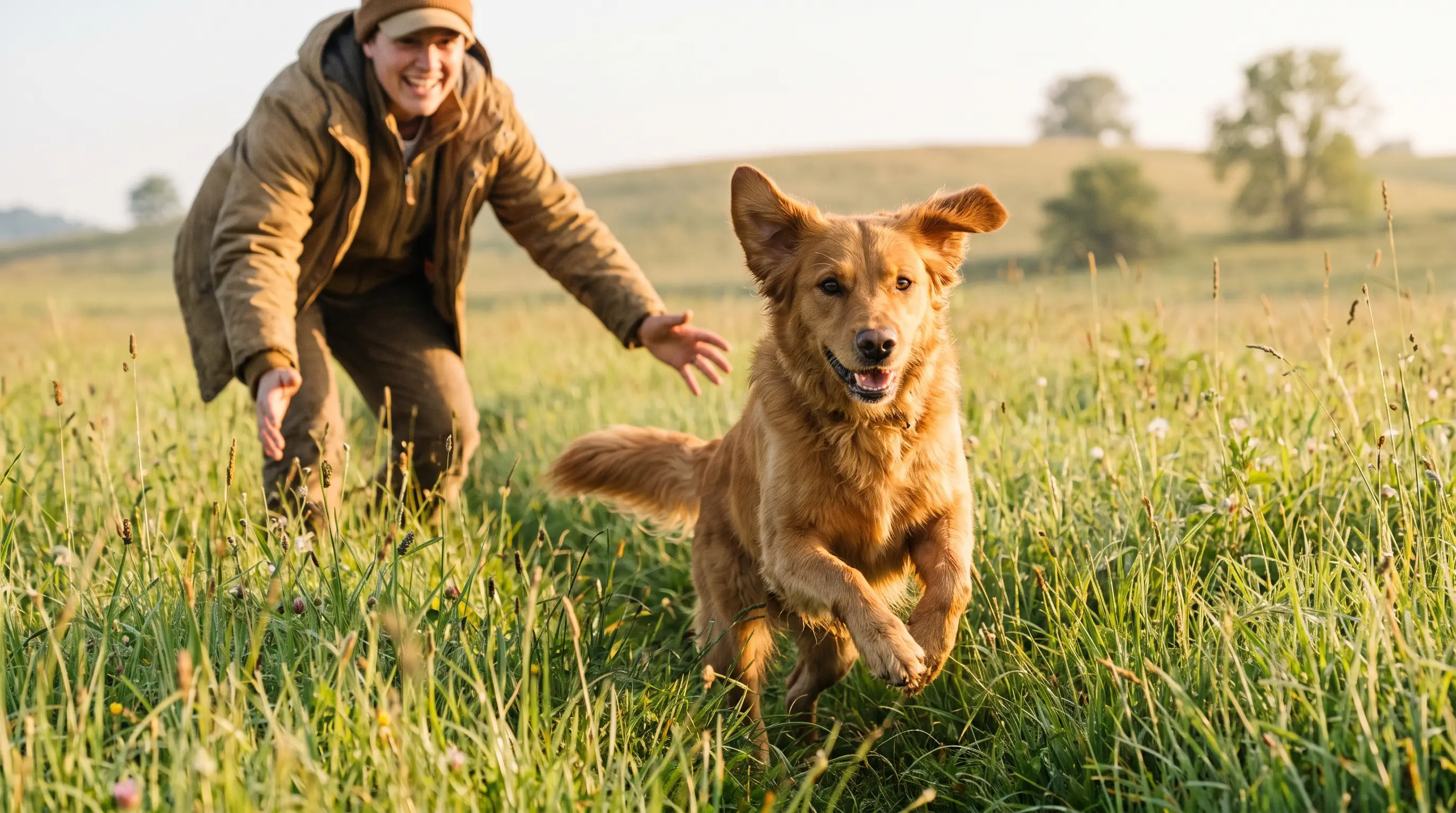
Training that works, for dogs and cats
Recall, loose-lead walking, litter habits and clicker work — reward-based methods, and why the dominance advice you keep being given is wrong.
Start here

Everything in this collection
Dog recall training: build a come that actually works
A recall you can trust in a real emergency, plus the everyday habits that quietly poison the word "come" until your dog ignores it.
Stop the pulling: loose-lead walking that works
Dogs pull because it pays off. Reward the side, stop dead the second the lead goes tight, skip the pain tools — the kind method that actually sticks.

Clicker training a cat: the honest beginner's guide
Cats are far more trainable than their reputation suggests. With a clicker, tiny treats, and short sessions, almost any cat will learn.

How to litter train a kitten (and fix accidents)
Kittens come pre-wired to use a tray. Set the box up right, let instinct do the work, and know what to check the day it goes wrong.
Dominance is not why your dog pulls
The alpha model came from a 1940s study of unrelated wolves penned together in a zoo, and David Mech, the researcher who popularised it, spent later decades trying to retract it. Wild wolf packs are families, and the alpha is a parent. None of it ever transferred to dogs, yet it still shapes most of the advice strangers hand you in the park. A dog pulls on the lead because pulling reliably moves it towards what it wants. That is the whole mechanism.
Reward-based training works because it answers the only question the animal is actually asking, which is what pays. Mark the behaviour the instant it happens, pay it, and keep sessions short enough that you stop while the animal still wants more. Cats learn the same way, which surprises people who have been told they are untrainable — a clicker and a few pieces of chicken will get a cat onto a scale or into a carrier. Punishment can suppress a behaviour, but it never teaches the replacement, and with a frightened animal it usually costs more than it buys.