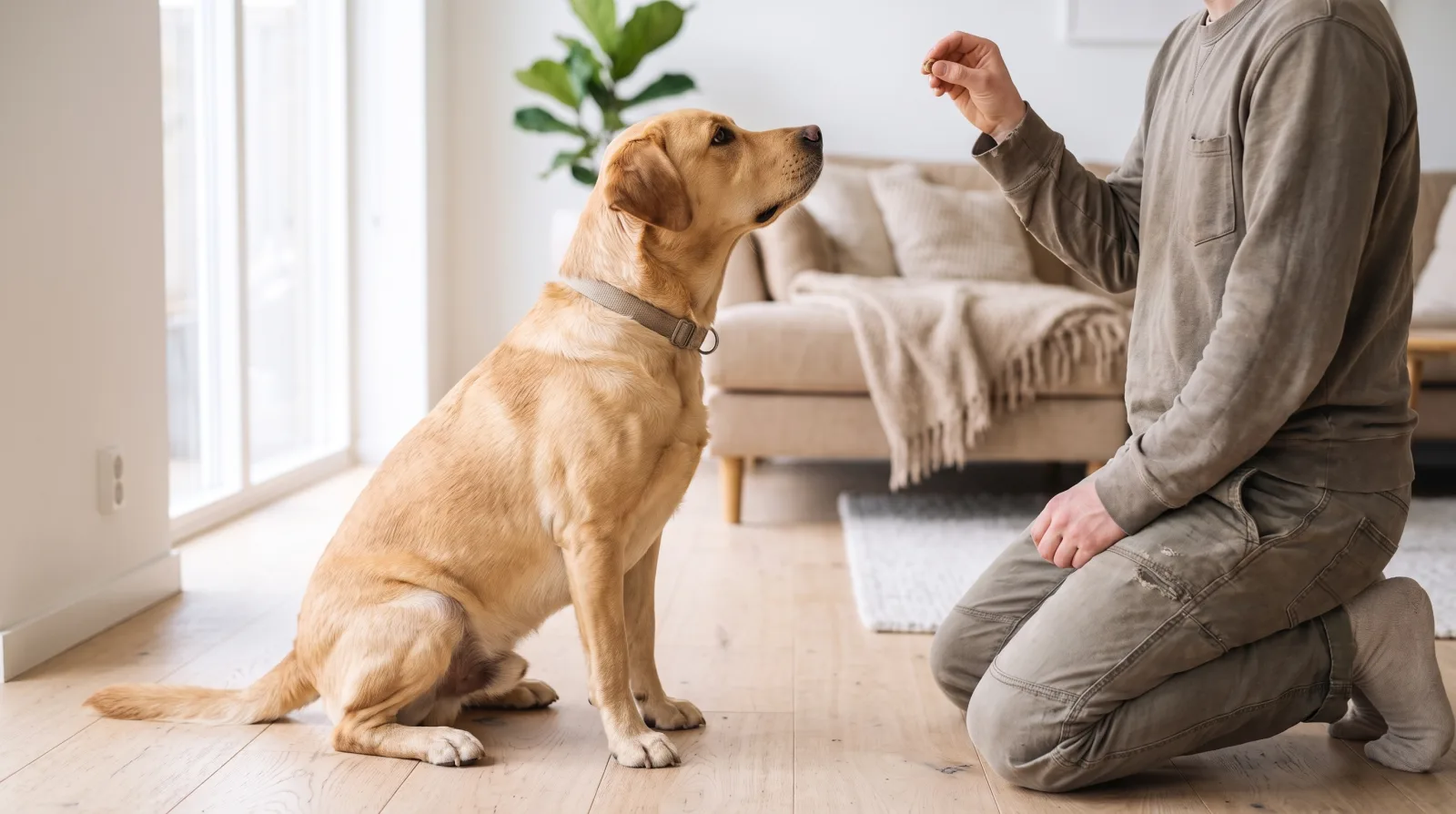
10 things every dog should know
Ten cues cover almost everything a dog needs to get along in a human house: its name, sit, down, stay, come, leave it, drop it, settle, a loose lead, and waiting at doors. None of them take long. Five minutes a day, one cue at a time, is faster than an hour on Sunday, and every one of them is taught by paying for the behaviour you want rather than correcting the one you don't. Two on this list — leave it and waiting at doors — are the ones that stop a vet bill or a road accident, so if you only ever teach two, teach those.
Start with the name, not a command
A dog's name is not a command, and treating it as one is the most common early mistake. It is the question that comes before every other cue: it means look at me, something follows. If the name has been used mostly to interrupt — shouted across a park, said sharply when the dog is on the sofa — it stops meaning attention and starts meaning trouble, and the dog learns to tune it out.
Teach it the dull way. Say the name once, in a normal voice, when the dog is near and not already doing something interesting. The instant it looks at you, mark the moment with a short word like “yes” and pay. Twenty of those over a few days, and the name becomes a reflex rather than a warning. If your dog already ignores its name, you have two options: rebuild it carefully with the same drill, or pick a second attention word and protect that one properly.
Sit, down, and stay
These three are one family, and they are easier in this order. Sit comes from a lure: hold a treat at the dog's nose, lift it slowly up and back over the head, and the nose follows it up while the bottom goes down on its own. Never push a dog's bottom down — it teaches nothing, and it hurts an older dog or one with sore hips. Down follows from the sit: lure straight to the floor between the front paws, slowly, and wait. Down is genuinely harder than sit for most dogs because it is a vulnerable position, so expect it to take longer and do not rush it.
Stay is a duration skill, which makes it different from the other two. You build it, you never test it. Start at one second, pay, release. Then two seconds. Then three. The moment you find yourself wondering how long the dog can hold it, you have switched from building to testing, and the dog will break — which is exactly the rep you did not want to practise. Add duration first, then distance, then distraction, and only one of those three at a time.
Add the word only once the body already knows the movement. If you say “sit” while the dog is still working out what you want, the word attaches to the confusion rather than the behaviour.
Come, and the two cues that stop a vet bill
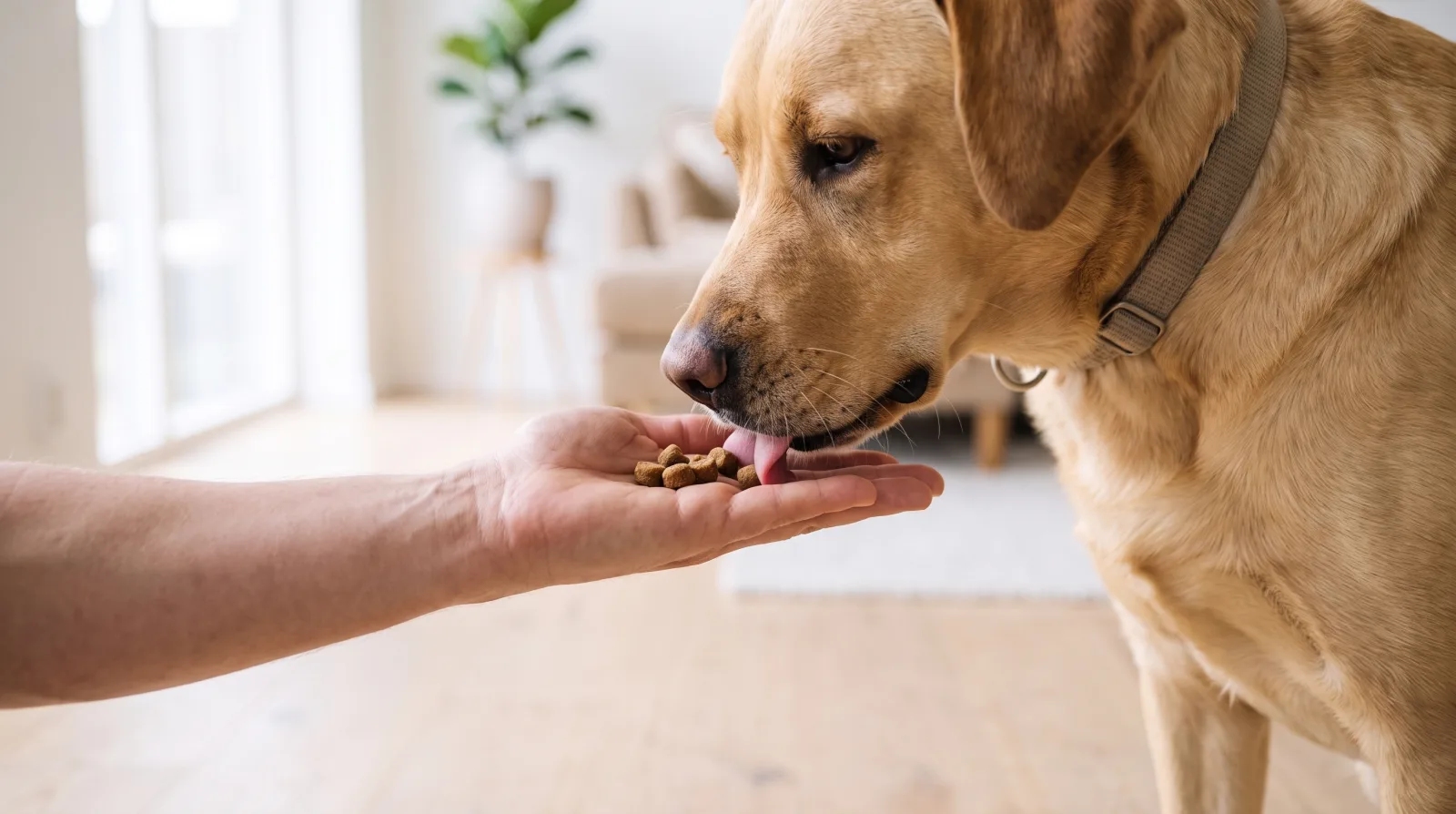
Come has one rule behind it: it must always be worth running to. Never call a dog to do something it dislikes, and never tell it off when it finally arrives, because from the dog's side you just punished the coming, not the leaving. Our full recall guide covers how to build one you can trust off lead.
Leave it means don't touch that, and it is the cue most likely to save your dog's life at a cost of nothing. It covers the chicken bone on the pavement, the dropped ibuprofen, the chocolate under the Christmas tree. Teach it with a treat in a closed fist: the dog sniffs, licks, paws, and the instant it backs off even slightly, you mark and pay from the other hand. The lesson is that leaving the thing alone produces something better, every time. Pay this one generously and keep paying it for life, because the day you need it is the day it has to beat a dog's own judgement.
Drop it is the companion cue, for when the thing is already in the mouth. Trade, never take. A hand that grabs teaches a dog to swallow fast or to guard, and both of those are much harder to fix than the original problem. Offer something clearly better, let the dog spit the first thing out, and pay. If your dog already stiffens or growls over objects, stop and get a behaviourist involved rather than practising a confrontation.
Settle, the loose lead, and waiting at doors
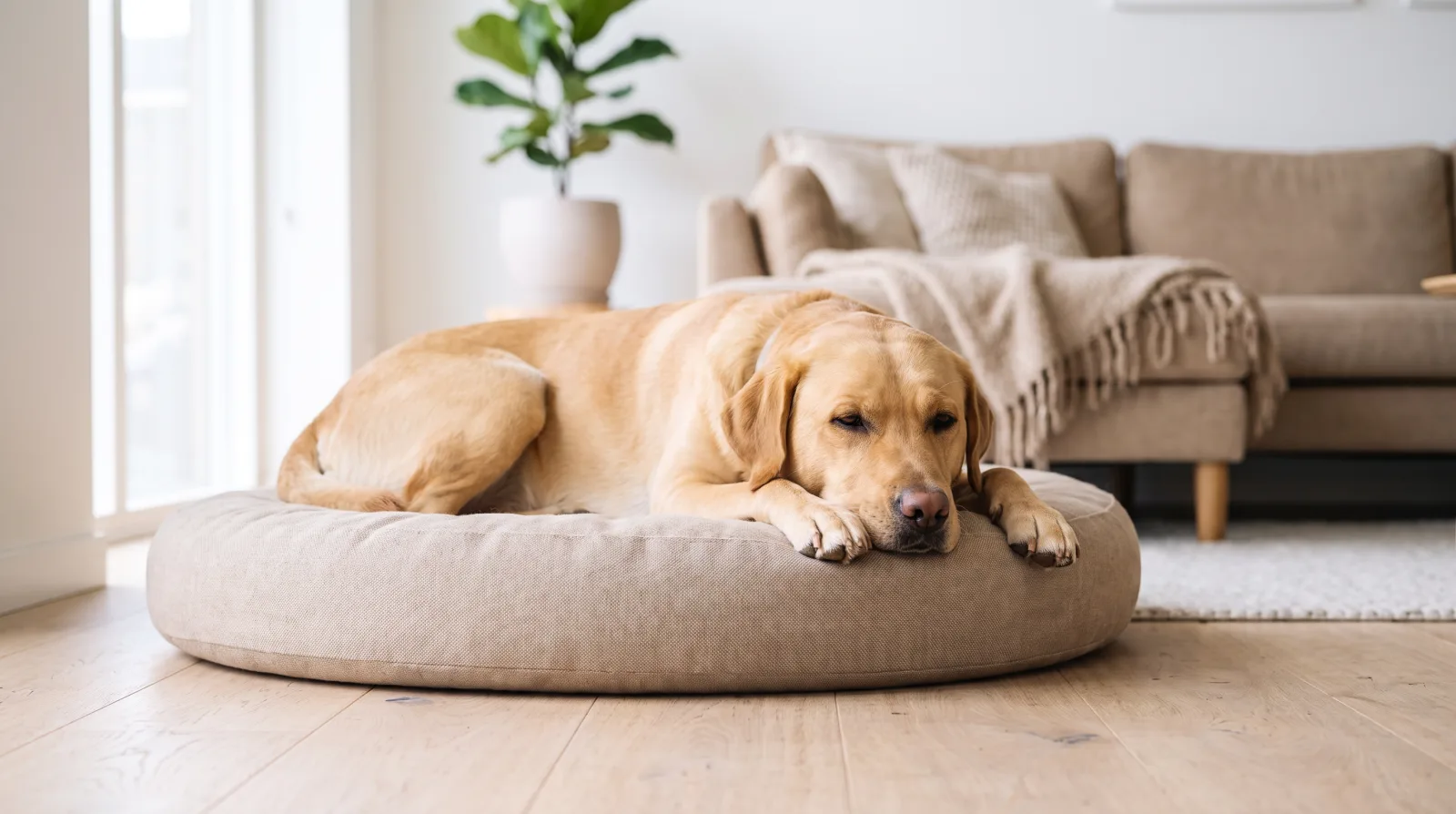
Settle is a place to switch off — usually a bed or a mat — and it is a bed, never a punishment. A dog sent to its bed in anger learns the bed predicts trouble. Build it the opposite way: feed meals there, drop treats on it while the dog is already lying down, and let the mat become the most boring, safest spot in the house. For a lot of busy dogs this is the single most useful thing on the list, because it teaches an off switch rather than another thing to do.
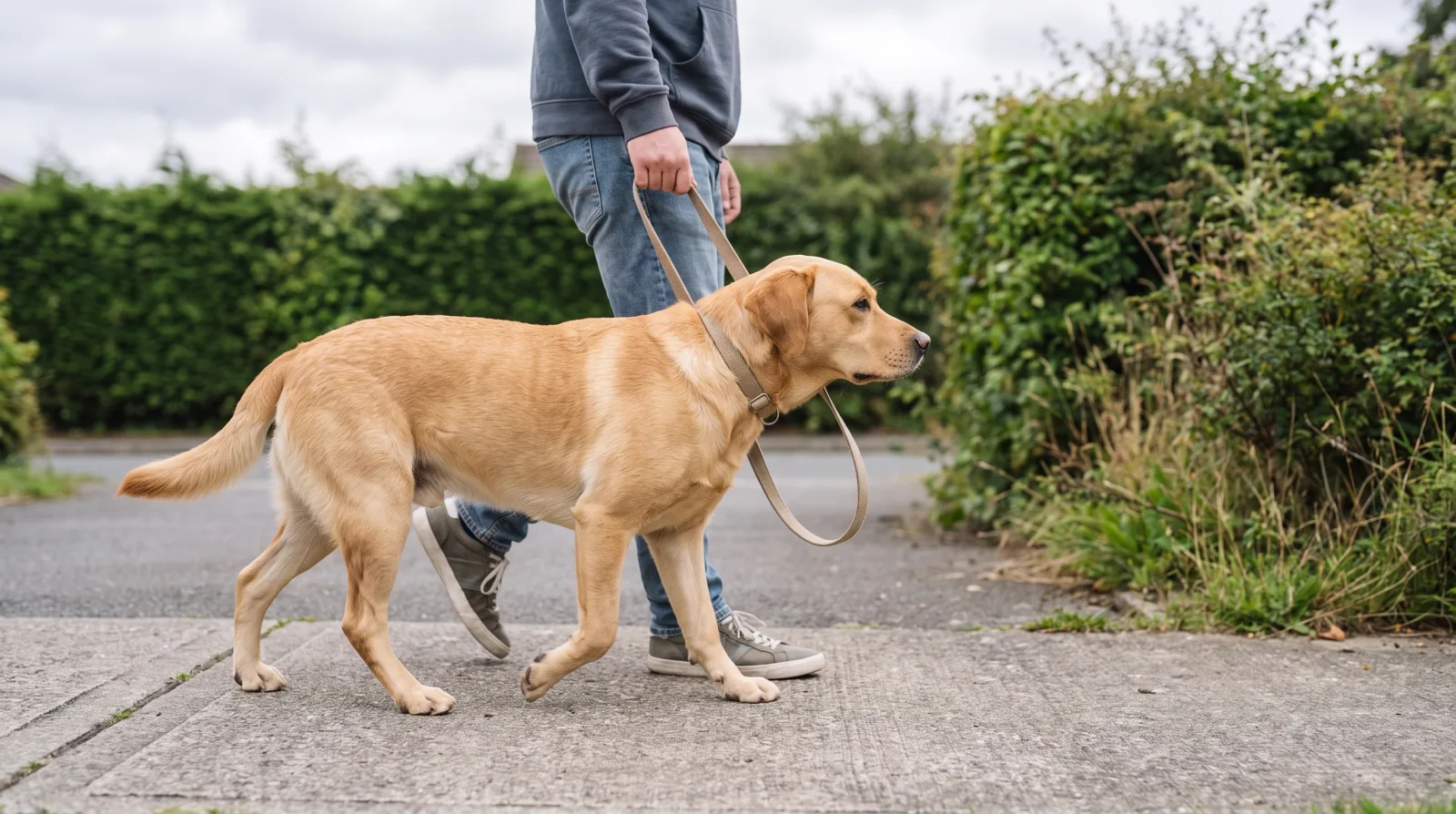
Loose lead walking is one sentence: stop when the lead tightens, walk when it slackens. That is the whole lesson, and it is tedious rather than difficult. The first few walks will cover about forty metres. A dog pulls because pulling has always worked, so the only thing that changes the maths is that it reliably stops working.
Waiting at doors is two seconds of patience that can stop a dog meeting a road. Open the front door a crack; if the dog surges, close it, with no telling off. Open again. The door opening becomes the cue to pause rather than the cue to launch. Do it at the car boot and the garden gate too, because those are the other places a dog can get out in front of traffic.
How to actually fit this into a week
Five minutes a day beats an hour on Sunday, and stopping while the dog still wants more is what makes it keen tomorrow. Short sessions suit how dogs consolidate learning, and a tired, frustrated dog at minute forty is practising failure.
Work on one cue at a time rather than cycling through all ten. A reasonable pace is a few days per cue in a quiet room, then the same cue again in the hallway, the garden, and finally somewhere with other people and dogs. Dogs do not generalise the way we assume: a dog with a perfect sit in the kitchen genuinely does not know what the word means at the park yet, and that is not stubbornness.
Pay with something worth having. Dry kibble works at home and loses badly to a squirrel outdoors, so keep chicken or cheese for the hard settings. And if a session is going wrong, end it on something the dog can definitely do, then stop. The next session will be better for it.
When to stop and ask for help
Reward-based training handles the ten cues above, but it is not the answer to everything, and a few things need a professional rather than another week of practice. Growling, snapping, or stiffening over food, toys, or a spot on the sofa is resource guarding, and rehearsing it at home usually makes it worse — that one needs a qualified behaviourist, not a video. The same goes for real fear of people or dogs, and for separation distress severe enough that the dog hurts itself or cannot be left at all.
A dog that suddenly cannot do something it used to do easily is a medical question first. A dog that stops sitting, or sits crookedly and shifts onto one hip, may be telling you its hips, knees, or back hurt. Sudden irritability, a dog that stops responding to its name, or one that seems to have forgotten its training can point to pain, hearing loss, or in an older dog cognitive decline. Rule out the body before you re-train the behaviour.
Avoid anyone who sells you dominance, pack leadership, or alpha rolls. The approach is based on a long-retracted reading of wolf behaviour, and the current position of veterinary behaviour bodies is that aversive methods raise the risk of fear and aggression rather than reducing it.
Common questions
What are the basic commands every dog should know?
The usual core list is the dog's name, sit, down, stay, come, leave it, drop it, settle, loose lead walking, and waiting at doors. Those ten cover almost everything a dog needs to live easily in a house and to stay safe outside it, and leave it and waiting at doors are the two that most often prevent an emergency.
In what order should I teach my dog commands?
Start with the name, because every other cue depends on getting the dog's attention first. Then sit, because it is the easiest win, then down and stay, then come. Leave it, drop it, settle, loose lead and waiting at doors can be worked on alongside the rest, in whatever order fits your dog's actual problems.
How long does it take to train a dog the basics?
Most dogs pick up a cue in a quiet room within a few days of short sessions, but using it reliably outdoors takes weeks. Dogs do not generalise automatically, so a dog with a perfect sit in the kitchen still has to learn the same cue in the garden, on the pavement, and at the park.
How many minutes a day should I train my dog?
Five minutes a day is enough for the basics, and several short sessions beat one long one. Stopping while your dog still wants more is what keeps it keen for the next session, and a frustrated dog at minute forty is practising failure rather than learning.
Is it too late to train an older dog?
No. Adult and senior dogs learn the same way puppies do, and often concentrate better. The one difference is that a dog which suddenly cannot do something it used to do easily should see a vet first, because pain, hearing loss or cognitive decline look a lot like disobedience.
Should I use treats to train my dog?
Yes, food is the simplest and most effective reward for teaching new behaviour, and you fade it once the cue is solid. Use small soft treats so you can pay several in a row, and keep something genuinely good like chicken or cheese for outdoors, where dry kibble loses to every distraction.
More in Dogs

How to crate train a puppy, step by step
Done right, a crate becomes the one place a puppy feels safest — not a cage. The reward-based method, the timing, and the mistakes that make a puppy hate it.
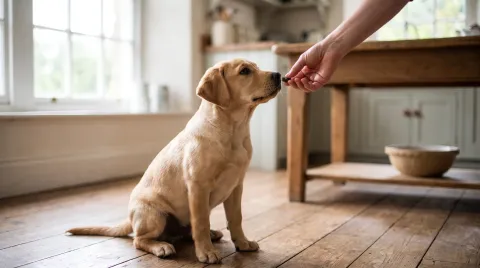
How to stop a puppy biting and mouthing
Puppy biting is normal, not aggression — and how you respond in the first months decides whether it fades or hardens. The reward-based fixes that actually work.

How to stop a dog barking too much
Barking is communication, not defiance, and the fix depends entirely on which of four reasons is driving it. The reward-based method for each, and why shouting or a bark collar usually makes it worse.
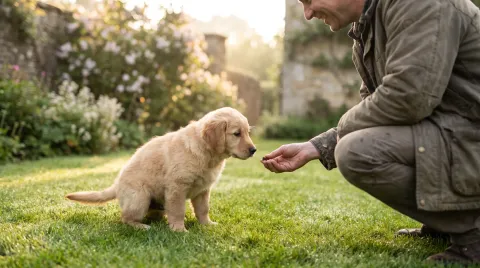
House training a puppy: the schedule that actually works
Most house-training failures are a supervision problem, not a stubborn puppy. The realistic age-based schedule, the signals to watch for, and how to recover from a setback.
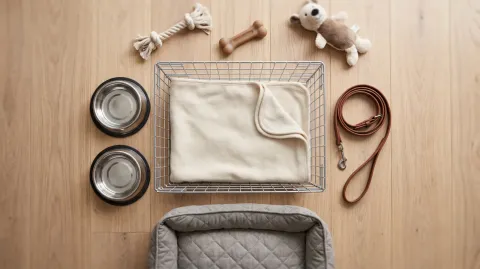
Leash training a puppy, from first steps to real walks
A puppy's first collar and lead should feel like nothing at all. The gentle, reward-based route from wearing the gear indoors to a calm walk outside, and what to do differently for a natural puller.
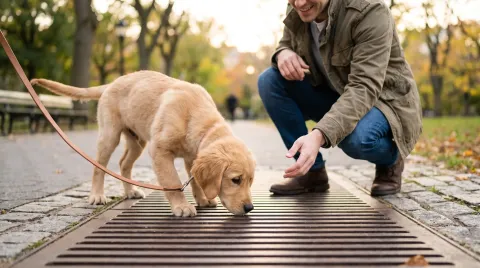
How to socialize a puppy: the critical window, done right
A puppy's sensitive period for accepting new things as normal narrows sharply by around 16 weeks. What to expose it to, why every single experience has to end well, and where more is not automatically better.