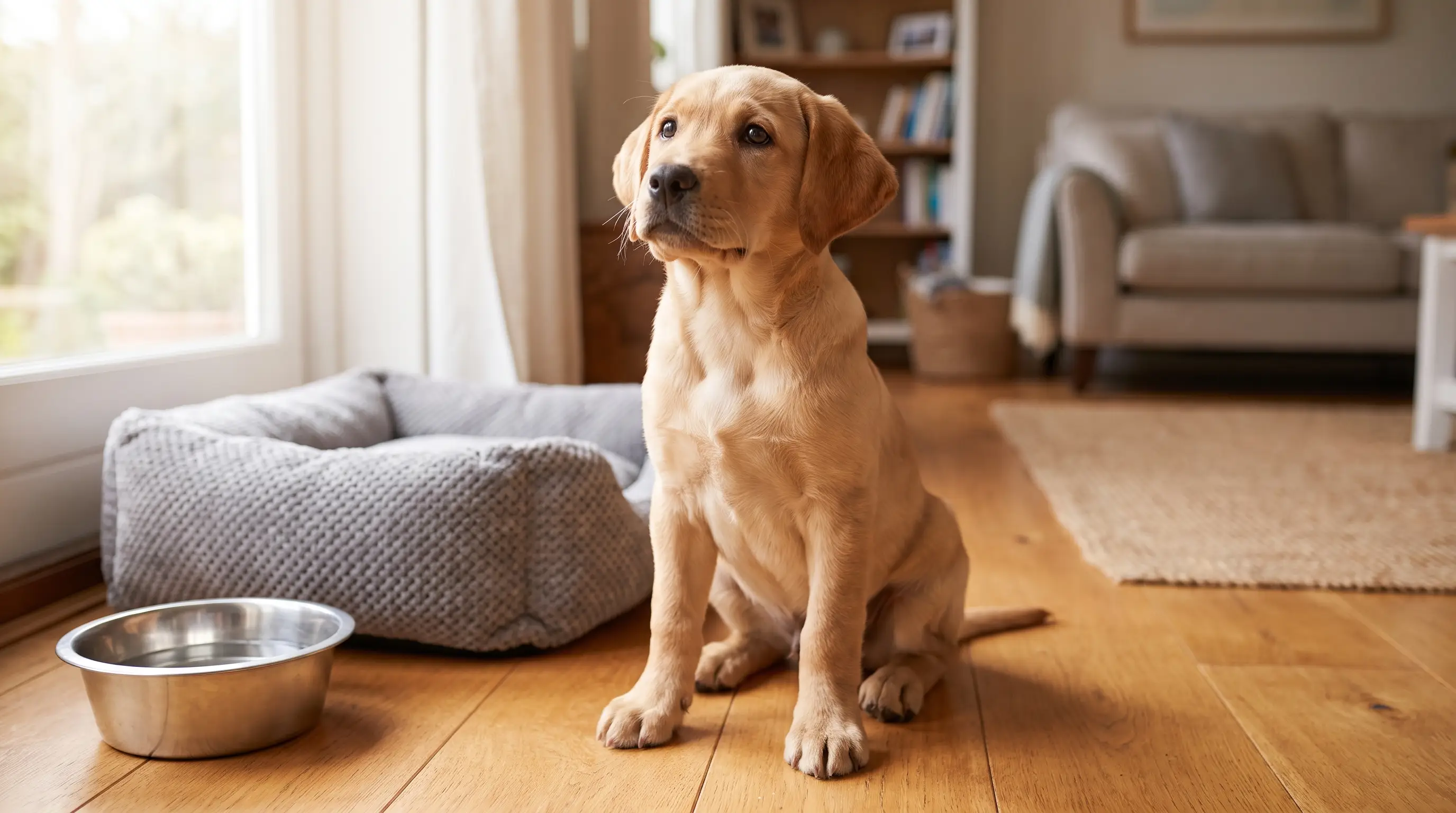
How to crate train a puppy, step by step
A crate is not a cage or a punishment — trained well, it becomes the place your puppy chooses to sleep and retreat to, and it makes house-training far easier along the way. The trick is to build the association slowly and only ever with good things, so the puppy walks in on its own. Rush it, or use it to shut a puppy away when it is bored, and you get the opposite: a dog that panics behind a closed door. Here is the calm, reward-based way to do it.
Why a crate helps — when it is a den, not a cage
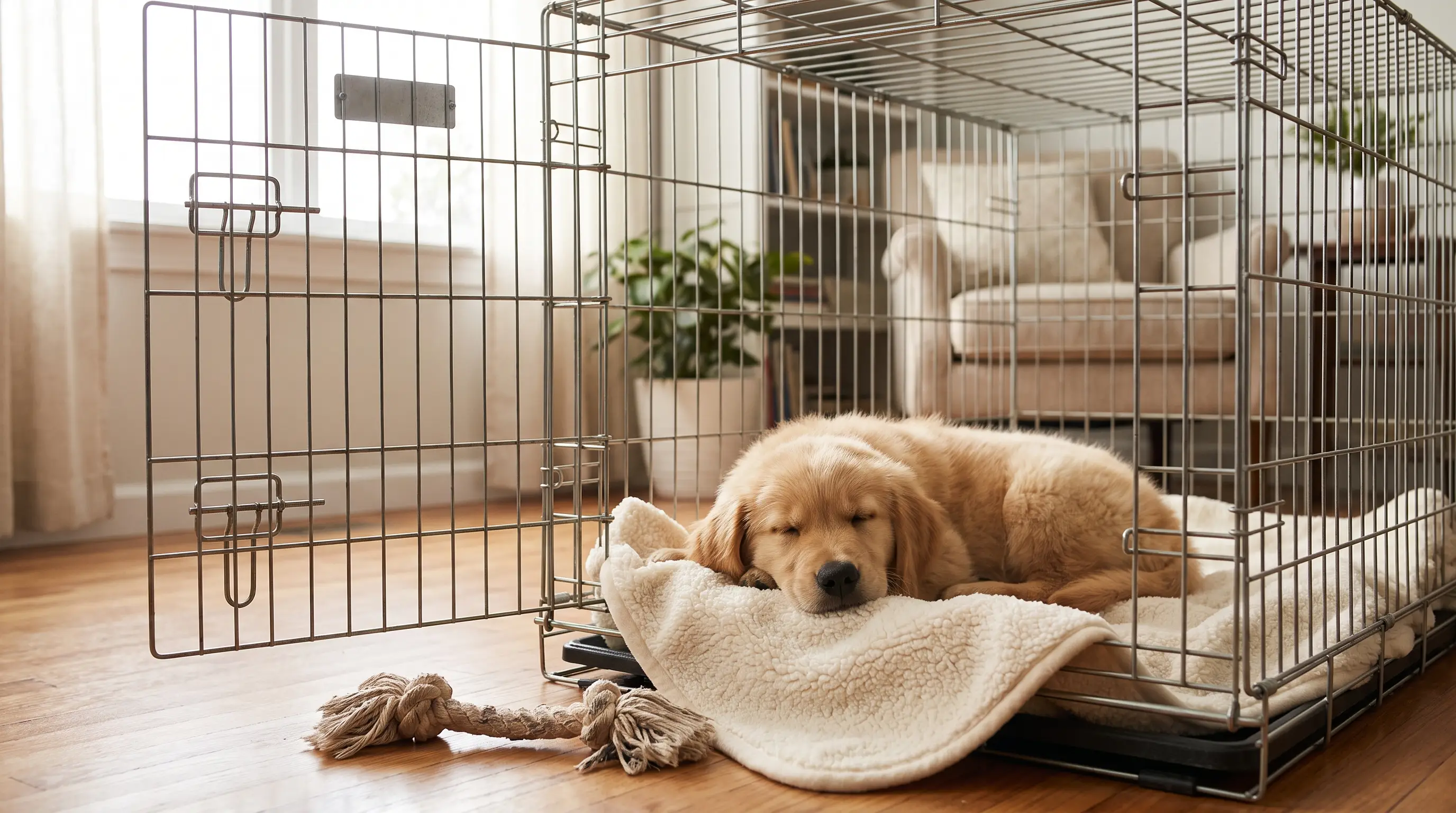
Dogs are den animals, and a crate taps into an old instinct to rest somewhere small, enclosed and safe. A puppy with a crate it likes has a bolt-hole when the house gets loud, a secure place to sleep, and somewhere to settle when you cannot watch it. The crate also does a lot of quiet work for house-training, because a puppy will try hard not to soil the place it sleeps, which builds bladder control and a toileting routine.
All of that only holds if the crate stays a good place. The single rule that governs everything below is that the crate is never used as punishment. Shut a puppy in there after it chews a shoe and you have taught it that the crate is where bad things happen, and no amount of blankets will undo that. The crate is for rest and safety, full stop.
Get the size and setup right first
Buy a crate sized for the adult dog, not the puppy — big enough for the grown dog to stand up, turn around and lie flat, and no bigger. Too much space is the most common setup mistake, because a puppy will happily toilet in one end and sleep in the other, which defeats the house-training benefit. Many crates come with a divider panel so you can shrink the usable space while the puppy grows, then open it out; that is the neat solution.
Line it with a soft, washable blanket and put it somewhere the family is, like a corner of the living room or kitchen, not shut away in a distant room where the puppy feels isolated. A crate cover or a blanket over the top makes it darker and more den-like, which many puppies prefer. Leave the door open from day one so the puppy can wander in and out freely before any training starts.
Build the association: food, toys, and no pressure
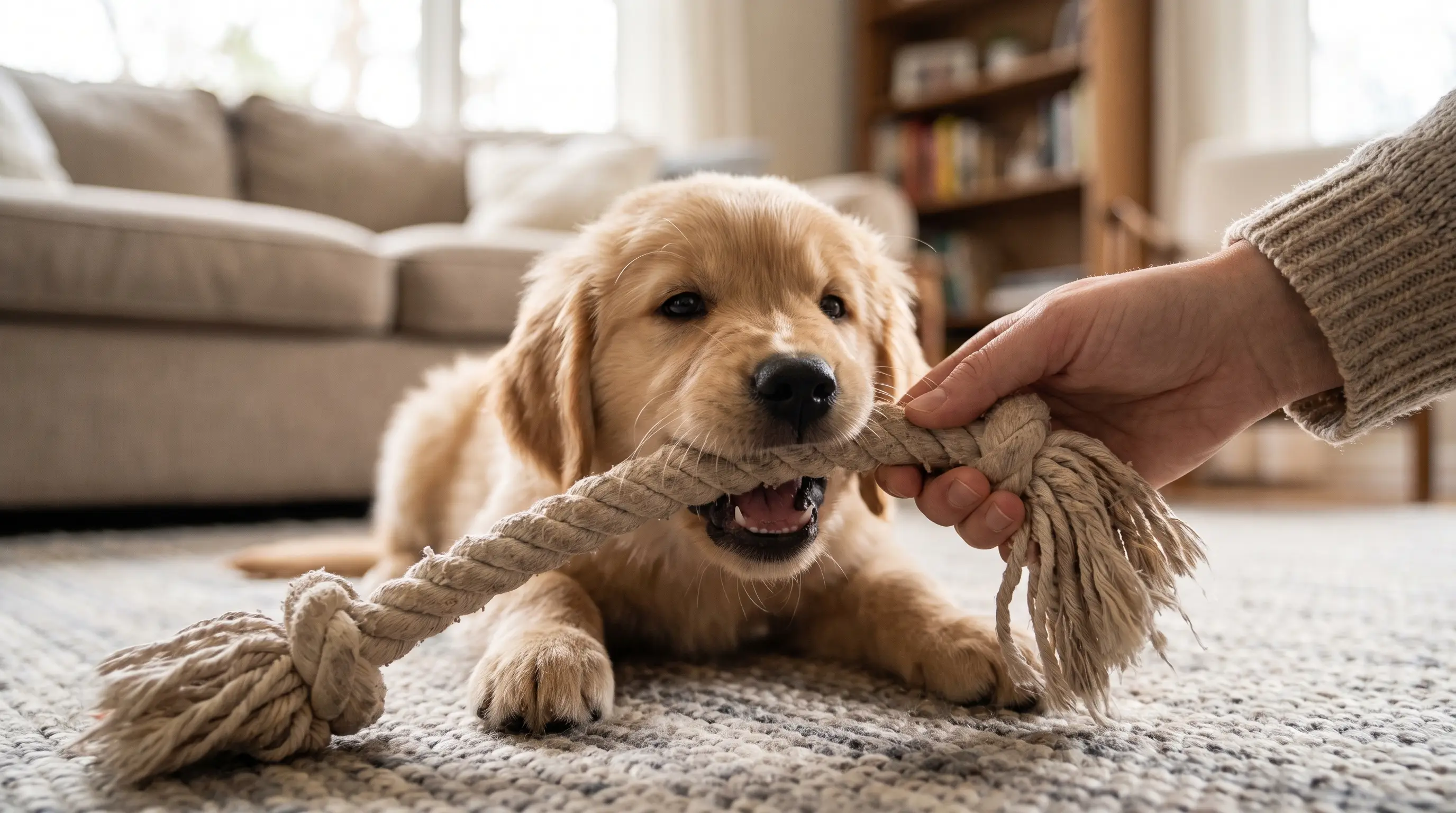
Start by making the crate the best place in the house, with the door open and no attempt to close it. Toss a few treats just inside and let the puppy walk in to get them, then further back, so going in always pays. Feed every meal inside the crate. Put a favourite chew or a stuffed toy in there. At this stage you are not asking the puppy to stay; you are teaching it that good things live in the crate and that walking in is its own idea. This is ordinary positive reinforcement, and it does the heavy lifting.
Once the puppy trots in happily, add a cue word like "crate" or "bed" as it goes in, and reward. Only then start closing the door for a few seconds while it eats, opening it again before it finishes. Build the closed-door time in small steps — a few seconds, then a minute, then a few minutes — always while something good is happening inside. If the puppy panics, you have gone too fast; back up to a duration it was comfortable with and move slower. Some breeds make this quicker than others: a highly trainable retriever like the Labrador Retriever often settles into the routine within days, while an independent-minded hound such as the Basset Hound may need smaller steps and more patience at every stage.
Nights, alone-time and the one-hour rule
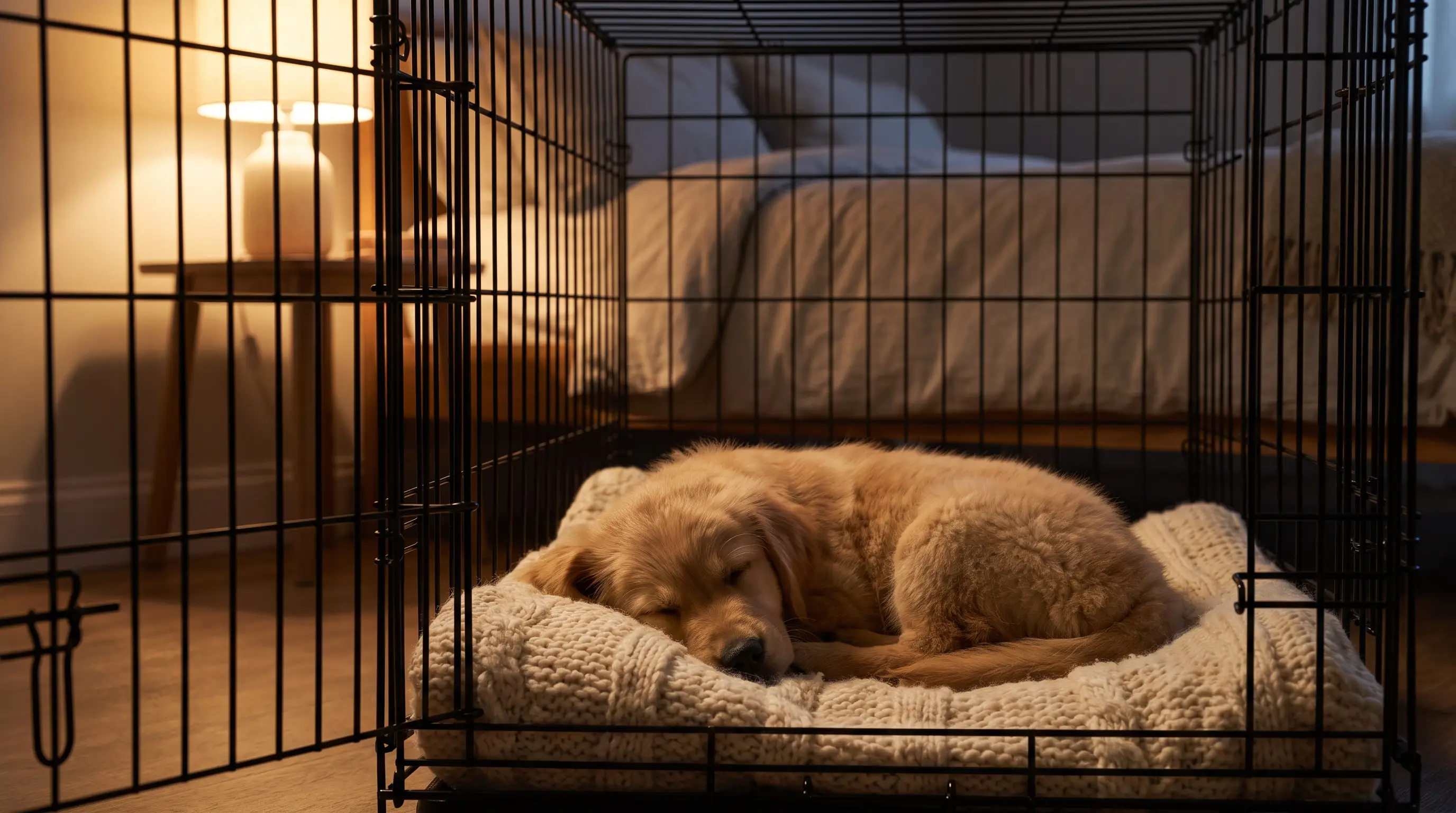
For the first nights, put the crate right next to your bed so the puppy can hear and smell you; being close cuts the crying and lets you hear when it needs the toilet. Expect to get up in the night, because a young puppy cannot last until morning. A useful guide for daytime alone-time is roughly one hour per month of age, so a two-month-old puppy should not be crated and left more than about two hours, and never for a full working day. The crate manages a puppy for short, reasonable stretches; it is not a way to leave a dog alone for eight hours.
Take the puppy straight out to toilet before crating and the moment it comes out, especially after meals and naps. If it cries, learn the difference between a genuine toilet need, which you answer calmly, and a settling grumble, which usually fades. What you must not do is only ever let the puppy out the instant it barks, because that teaches barking as the way to open the door. Wait for a pause, then release.
Common mistakes, and when to get help
Most crate training that goes wrong shares a few causes: a crate so big the puppy toilets in it, too much time locked in too soon, using it as a time-out for bad behaviour, or pushing the closed-door duration up too fast so the puppy learns the door means abandonment. Go slower than feels necessary, keep every session ending on a calm note, and never open the door to frantic barking. If a puppy has toileted in the crate, clean it with an enzyme cleaner and reduce the space rather than telling the puppy off.
A minority of dogs are genuinely distressed by confinement, and forcing it makes things worse. If your puppy screams, drools, or hurts itself trying to escape the crate despite slow, positive training, stop and talk to a vet or a qualified reward-based trainer, because that can be a sign of separation anxiety that needs a proper plan rather than more crate time. For the wider first-month picture, our guide to a puppy's first month puts crate work in context with everything else you are teaching.
Common questions
How long does it take to crate train a puppy?
Most puppies accept a crate within one to two weeks of short, positive daily sessions, though full comfort being left in it can take several weeks. Go at the puppy's pace: rushing the closed-door duration is the main reason crate training stalls or backfires.
Is it cruel to crate a puppy?
No, when the crate is trained positively and used for short, reasonable periods it gives a puppy a safe den it chooses to use. It becomes cruel only if the crate is too small, used as punishment, or the puppy is shut in for long stretches, which causes real distress.
How long can a puppy stay in a crate?
A rough guide is one hour per month of age in the daytime, so a two-month-old puppy should not be crated more than about two hours, and never a full working day. At night, close to your bed, many puppies manage longer but still need at least one toilet trip.
Should I put a puppy in a crate at night?
Yes, a crate next to your bed helps most puppies settle and speeds up house-training, because they avoid soiling where they sleep. Keep it beside you for the first weeks so you can hear night-time toilet needs, then move it gradually if you want to.
What should I do if my puppy cries in the crate?
First rule out a genuine toilet need and take it out calmly if so. For settling grumbles, wait for a pause before opening the door, so you are not rewarding the barking. If a puppy panics, drools or hurts itself despite slow, positive training, stop and seek help for possible separation anxiety.
More in Dogs
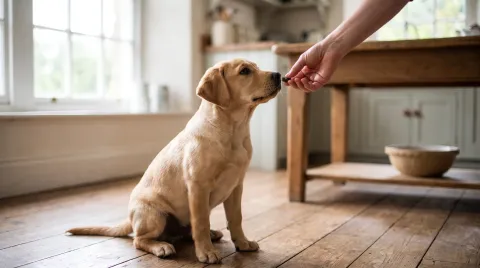
How to stop a puppy biting and mouthing
Puppy biting is normal, not aggression — and how you respond in the first months decides whether it fades or hardens. The reward-based fixes that actually work.

How to stop a dog barking too much
Barking is communication, not defiance, and the fix depends entirely on which of four reasons is driving it. The reward-based method for each, and why shouting or a bark collar usually makes it worse.
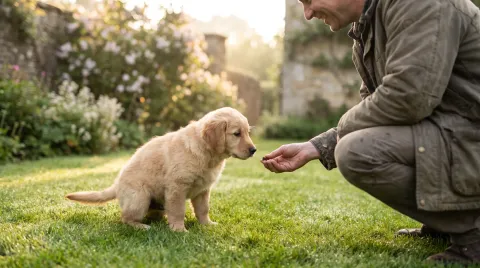
House training a puppy: the schedule that actually works
Most house-training failures are a supervision problem, not a stubborn puppy. The realistic age-based schedule, the signals to watch for, and how to recover from a setback.
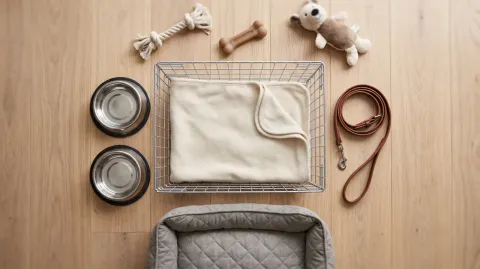
Leash training a puppy, from first steps to real walks
A puppy's first collar and lead should feel like nothing at all. The gentle, reward-based route from wearing the gear indoors to a calm walk outside, and what to do differently for a natural puller.
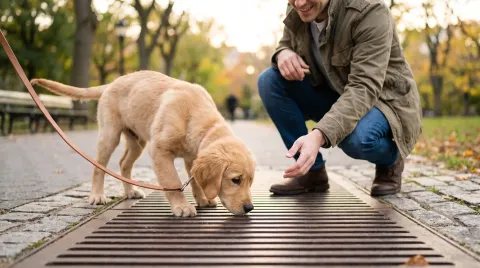
How to socialize a puppy: the critical window, done right
A puppy's sensitive period for accepting new things as normal narrows sharply by around 16 weeks. What to expose it to, why every single experience has to end well, and where more is not automatically better.

Working dog jobs: the breeds behind the badge
Which breeds do police, detection, rescue and hunting work, and the drive that makes each one right for the job.