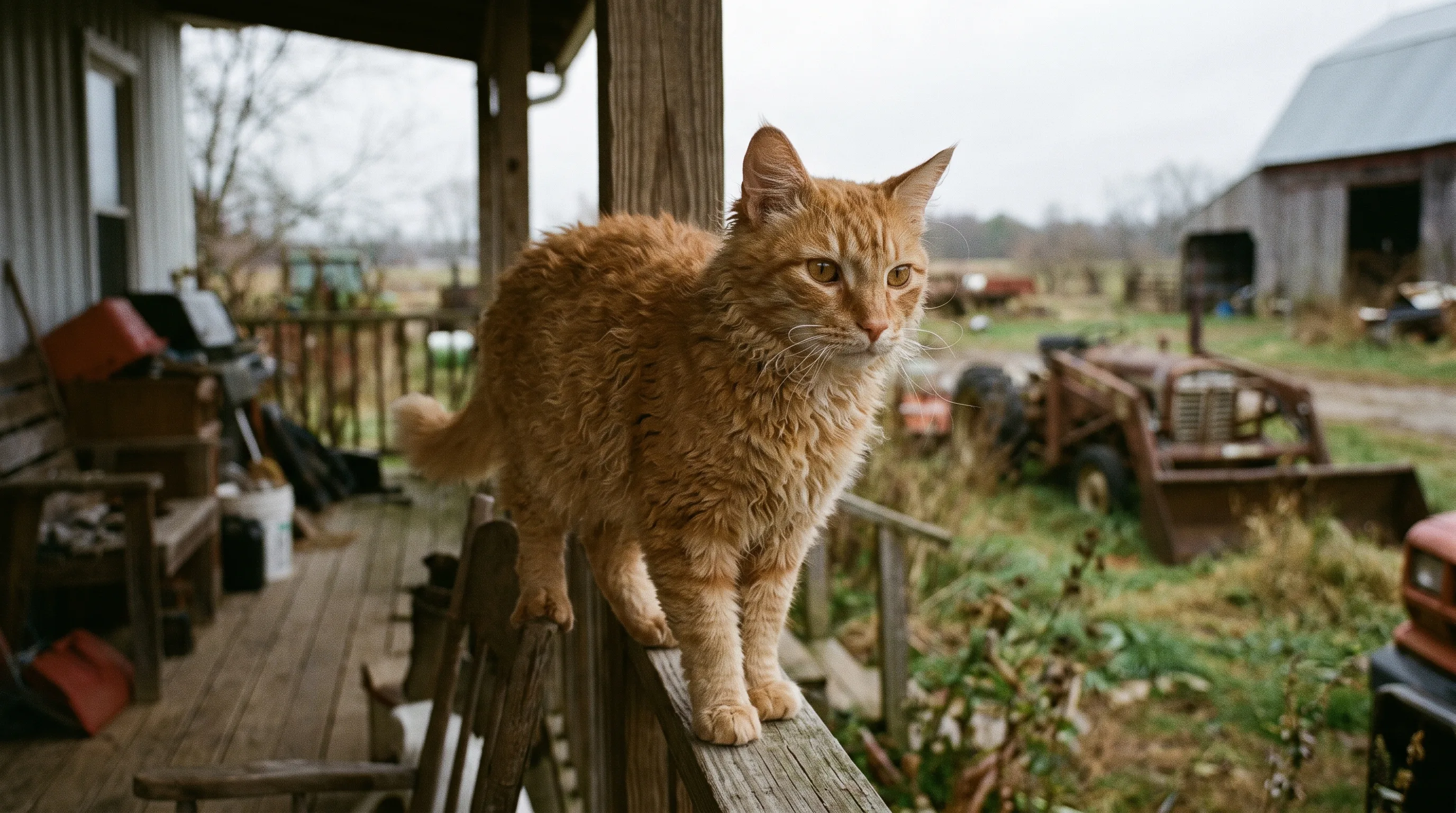
LaPerm
Born bald in a barn, grew ringlets, and never lost the working cat's temperament.
Vital stats
| Size | Medium · light-boned, athletic |
| Weight | 3–4.5 kg · males heavier |
| Life expectancy | 12–15 years |
| Energy | Moderate to high — busy, then on your lap |
| Shedding | Low, curls trap the loose hair |
| Coat | Short or long, in springy ringlet curls |
| Group | Shorthair |
| Origin | United States |
Breed traits
Friendliness
Care
Mind
The LaPerm by the numbers
The LaPerm facts owners search for most — price, lifespan, weight, shedding and colours, in one place.
Less common, so expect a waitlist and some travel to a reputable breeder — which pushes the price up. Ongoing costs stay modest — it eats little and routine vet care sits at the lower end.
We don't quote a single figure: the real price swings with breeder, region, bloodline and health testing — and a rescue costs a fraction of a breeder's litter. Adopting is almost always the cheapest route.
Temperament
LaPerms kept the farm cat's practicality and added a lap habit. They're affectionate and physically insistent about it — face-patting, shoulder-riding, sitting on the keyboard — but they'll also entertain themselves and hunt with real intent given the chance. They're quiet, using a small chirp rather than a demand, and they take new people and animals in stride. Most are good with children and with dogs. The breed is often described as gentle rather than clingy, which puts it in a useful middle ground: a cat that wants your company most evenings but doesn't fall apart when the house is empty for a working day.
Habits & quirks
Loses its coat and grows it back
LaPerm kittens are often born bald, or go bald in patches during the first year, before the adult ringlets settle in. It looks alarming and it's normal — a bald LaPerm kitten usually ends up with the best coat.
Pats your face
A recurring breed habit: a paw to the cheek or the mouth to get attention, usually followed by climbing onto a shoulder.
Still hunts
Generations of barn work left a real prey drive and good instincts. Indoors this needs a substitute; outdoors it makes the breed an efficient mouser.
Curls change with the weather
Humidity, season and moulting all alter how tight the ringlets sit. The same cat can look shaggy in January and sculpted in July.
Care
| Grooming | Light. A wide-toothed comb once a week is enough for either coat length — the curls hold loose hair rather than dropping it, so combing is what removes the shed. Don't brush: it pulls the ringlets out and leaves frizz for weeks. |
| Health screening | There's no breed-specific inherited disease on record, which is unusual and comes from the wide gene pool. That is not the same as no risk: ask for a cardiologist's echo for hypertrophic cardiomyopathy anyway, since it's the commonest inherited heart disease in cats regardless of breed. |
| Bathing | Rarely, and let it air-dry. Towel-drying or a hairdryer pulls the curl out for a week or two. If a bath is needed, blot rather than rub. |
| Company and play | Not a cat that needs constant supervision, but not a furniture cat either. A climbing route, a couple of play sessions and a lap in the evening cover it; a second cat is welcome rather than necessary. |
Life expectancy
This breed has a typical life expectancy of 12–15 years.
Similar breeds
Breeds with a similar build and background — worth a look if this one isn't quite the fit.
Common questions
Why was my LaPerm kitten born bald?
It's normal for the breed. Many are born hairless or with a very thin coat, grow curls over the first weeks, then shed some or all of it again before the adult coat comes in properly by around six months. It isn't illness and it doesn't predict a poor coat — often the opposite.
Is the LaPerm hypoallergenic?
No, and be careful with anyone who says otherwise. It sheds little because the curls hold onto loose hair rather than because it produces less allergen; Fel d 1 comes from saliva and skin, and a LaPerm makes it like any cat. Some allergy sufferers do manage better with curly-coated breeds — meet the individual cat first.
How is it different from the other rex breeds?
Different gene, different curl. The LaPerm's is dominant and produces a springy ringlet that stands away from the body, rather than the Cornish Rex's tight flat wave or the Devon's loose tousle. It is also the only one of the group developed from working farm cats, and the only one that still allows domestic outcrosses — which is why it carries no breed-specific inherited disease.
Does the LaPerm shed a lot?
Not much. The LaPerm is a low-shedding breed, so loose hair around the home stays minimal. It still needs regular grooming, but you won't be fighting drifts of fur.
Are LaPerm cats good with children?
Usually yes. The LaPerm is a sociable cat that tends to tolerate the noise and handling of family life better than most, which is why it comes up so often for homes with kids. It still needs somewhere high and quiet to retreat to, and children need teaching that a cat walking away is allowed to.
How much grooming does a LaPerm need?
Very little. The LaPerm handles its own coat and a comb once a week or so is plenty — mostly to catch loose hair before the cat swallows it. Claws, teeth and ears still want the usual checks, which is the part people skip on an easy-coated cat.