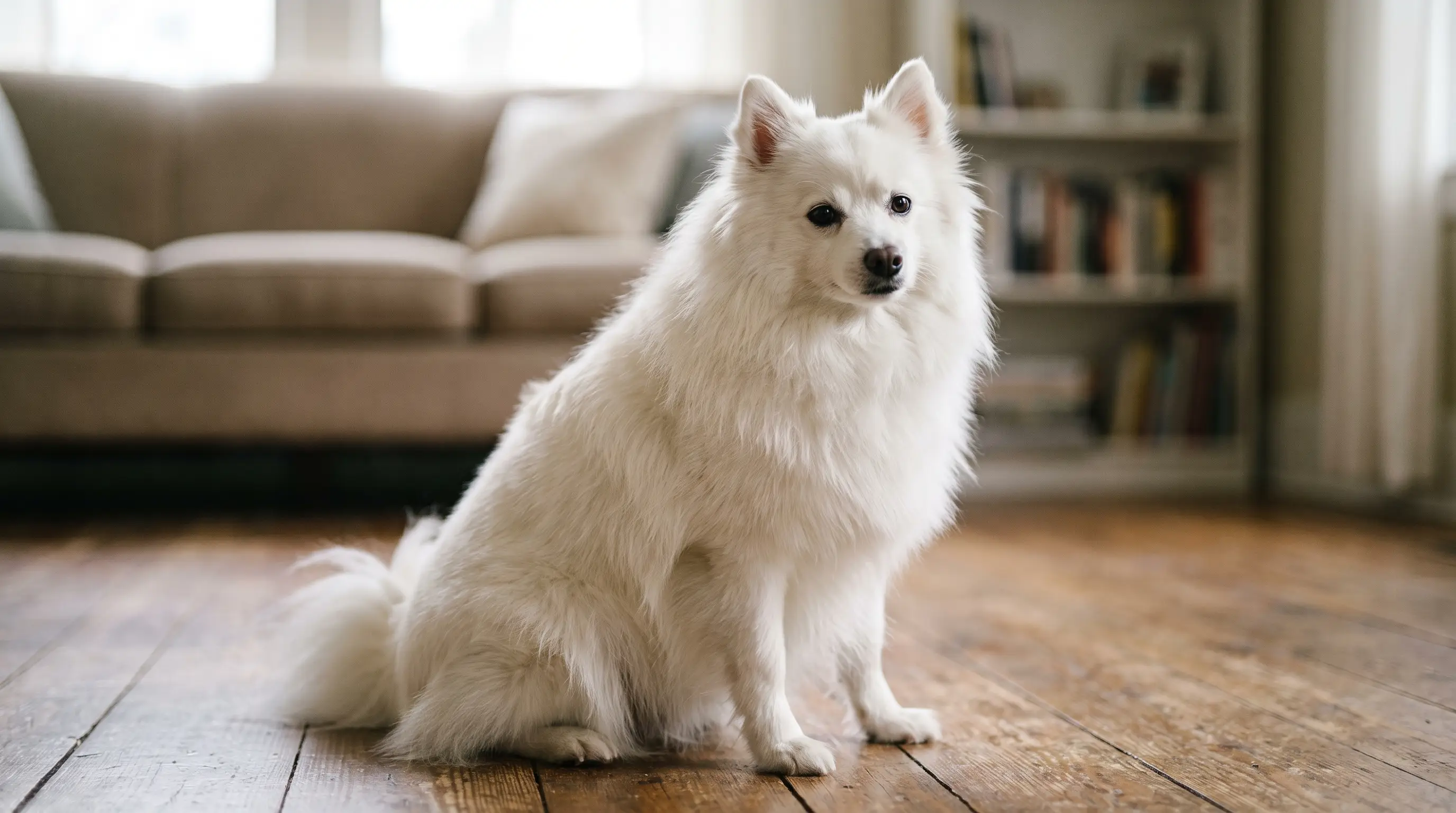
American Eskimo Dog
The circus star in snow-white — a German Spitz with an American name.
Vital stats
| Size | Toy to standard · 23–48 cm |
| Weight | 3–16 kg |
| Life expectancy | 13–15 years |
| Energy | Moderate-high — 45–60 min/day |
| Shedding | High, year-round |
| Coat | White double coat · white or biscuit cream |
| Group | Non-sporting · AKC |
| Origin | Germany / United States |
Breed traits
Friendliness
Care
Mind
The American Eskimo Dog by the numbers
The American Eskimo Dog facts owners search for most — price, lifespan, weight, shedding and colours, in one place.
Widely bred, so you can usually find a litter from a registered breeder without a long wait. Ongoing costs stay modest — it eats little and routine vet care sits at the lower end. Its coat also needs a professional groom every few weeks — a real line in the budget.
We don't quote a single figure: the real price swings with breeder, region, bloodline and health testing — and a rescue costs a fraction of a breeder's litter. Adopting is almost always the cheapest route.
Temperament
This is the German Spitz of immigrant farmsteads — watchdog, companion and, by the early 1900s, star of American travelling circuses. That history left a dog that learns tricks for the joy of it, announces everything that moves, and would rather be in your lap, or at least your room, than anywhere else on earth.
Habits & quirks
Trick collector
Learns a new behaviour in minutes and performs it forever — the circus blood tells.
Announcer on duty
Every delivery, dog and drifting leaf is reported promptly and clearly.
Velcro in white
Chooses whichever room you're in; solitude was never part of the contract.
Spin cycle
Celebrates good news — dinner, leads, your return — with tight, delighted spins.
Health
The American Eskimo Dog is generally a healthy, long-lived spitz, and good breeding plus a sensible weight keeps it that way. A couple of things are worth a routine check. Watch the joints: the knees and hips are the ones to keep an eye on, so keep him lean and let a growing dog build up gradually rather than pound its joints. In the smaller toy and miniature sizes, dental care matters more — small mouths crowd teeth, so brush regularly and keep the gums healthy. And that gleaming double coat needs managing rather than clipping: it insulates and protects, so keep it brushed out and never shave it.
Nutrition
| Grooming | Brush twice weekly, daily during moults — the coat repels dirt surprisingly well, so bathe sparingly. |
| Training | Feed the brain daily with tricks, puzzles or agility; boredom converts directly into barking. |
| Barking | Teach a reliable 'quiet' cue early — the watchdog instinct comes factory-installed. |
| Health | Generally long-lived; watch knees and hips, and keep teeth clean in the smaller sizes. |
Feed the Eskie to its size and its day, because 'American Eskimo Dog' covers everything from a 3 kg toy to a 16 kg standard, and their meals should differ just as much. This is a clever, food-motivated breed that will happily convince you it is starving, so weigh the portions, count the training treats — and there will be plenty, given how much this dog loves to learn — and check by feel under that thick coat, where a widening waistline hides easily. Lean is kinder on the knees and hips over a long life.
Puppy guide
An Eskie puppy is quick, eager and endlessly ready to learn, so put that first year to work. Channel the busy brain into short trick and training games from the start — this is a breed that learns for the sheer joy of it — and teach a calm, reliable 'quiet' early, because the watchdog voice comes as standard and boredom turns straight into barking. Get the puppy used to brushing and to having its feet, ears and mouth handled while it is small, so grooming the double coat stays easy for life. Keep exercise sensible while the joints are forming, and socialize widely so the alert nature stays friendly rather than sharp.
Training
Few dogs are more fun to train than an American Eskimo Dog. Circus history left a breed that picks up a new trick in minutes and performs it forever, so give it a proper hobby: tricks, puzzles, agility, anything that keeps the mind busy. Two things need deliberate work. Teach a solid 'quiet' cue early, because the alarm-barking is instinctive and easy to reward by accident. And keep the daily mental workout going, since a bored Eskie fills the silence with noise. Keep sessions short, upbeat and reward-based, and this dog will meet you more than halfway.
Life expectancy
American Eskimo Dogs live 13–15 years. The American Eskimo Dog is one of the longer-lived breeds, and it tends to stay well into old age with modest, consistent care: a lean weight that spares the knees and hips, a double coat kept brushed rather than shaved, clean teeth in the smaller sizes, and a busy mind. Keep it engaged and keep it trim, and an Eskie is good company for a long time.
Similar breeds
Breeds with a similar build and background — worth a look if this one isn't quite the fit.
Breeds that look like this
Common questions
Is the American Eskimo Dog a type of husky?
No — despite the name it's a German Spitz, a companion breed with no sledding history. The 'Eskimo' label was a wartime rebrand.
Do American Eskimo Dogs bark a lot?
Yes, they're among the more vocal breeds — alert, quick and keen to report. Early training and plenty of mental work keep it civilised.
What sizes do Eskies come in?
Three: toy, miniature and standard, spanning roughly 23–48 cm and 3–16 kg. All share the same white coat and bright spitz temperament.
Does the American Eskimo Dog shed a lot?
Moderately. The American Eskimo Dog sheds a fair amount, steadily through the year with heavier seasonal patches. A weekly brush keeps most of the loose hair off your floors and clothes.
Is the American Eskimo Dog hypoallergenic?
Not really. No dog is truly hypoallergenic, and the American Eskimo Dog's shedding coat releases plenty of the dander that sets off allergies. If someone at home is allergic, this isn't the easiest breed to live with — spend time around one first.
Is the American Eskimo Dog good with children?
They can be. The American Eskimo Dog is reasonably sociable and can be good with children in the right home, especially when socialised early. Supervise around young kids and teach dog and child to respect each other.
Is the American Eskimo Dog easy to train?
Yes. The American Eskimo Dog is one of the more trainable breeds — quick to learn and keen to work with you, which makes reward-based training straightforward. Start early, keep it positive, and it picks things up fast.