What breed is Bluey? The Heeler family, explained
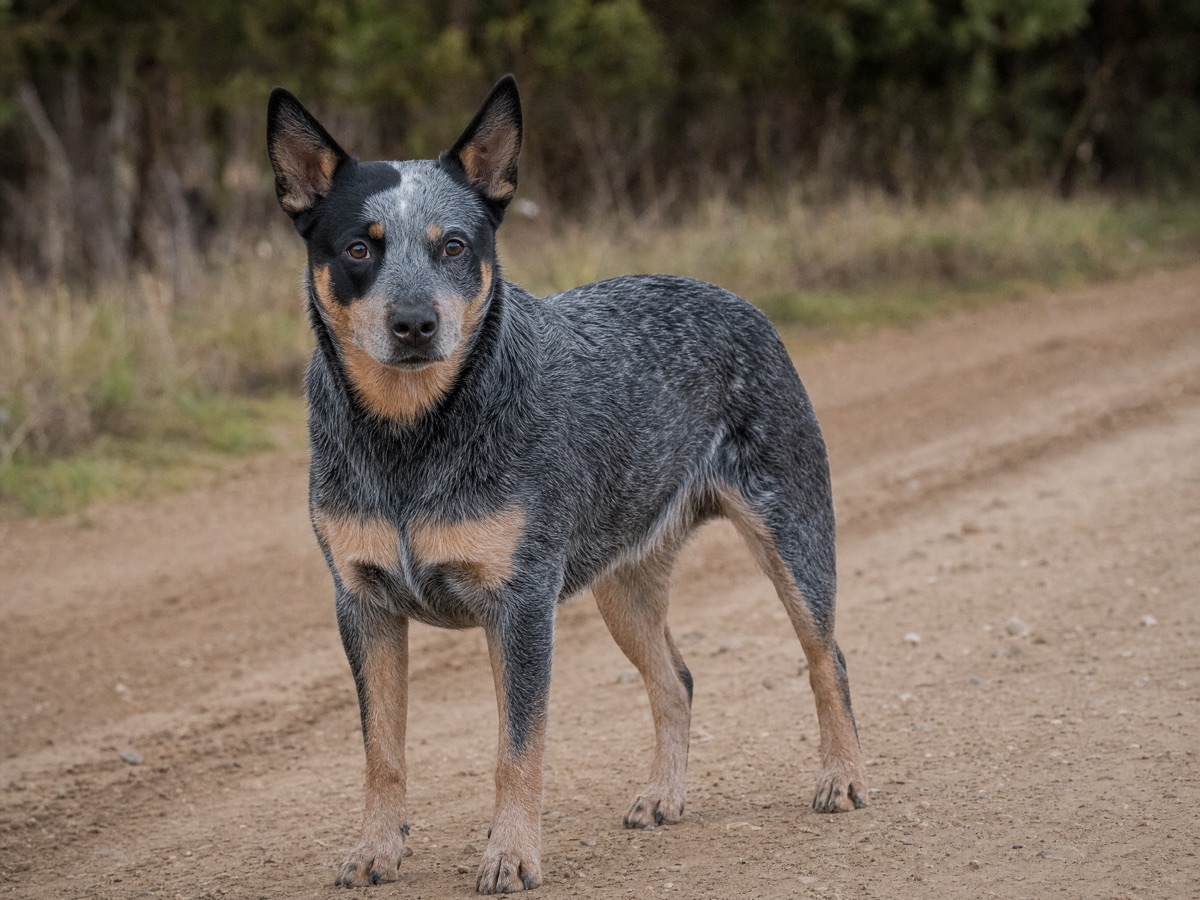
Bluey is a Blue Heeler. Her little sister Bingo is a Red Heeler. Their parents, Bandit and Chilli, are Heelers too, one blue and one red. All four are the same breed, the Australian Cattle Dog, and coat colour is the only thing that changes from name to name. That single fact answers one of the biggest character-breed questions of the last few years, and it explains more about the show than most parents realise. The endless invented games, the refusal to sit still, the constant herding of everyone in the house: none of that is exaggerated for the cartoon. It's what an Australian Cattle Dog actually does at home. Here's the real dog behind the whole family, and the one honest warning worth reading before anyone goes looking for a real-life Bluey.
Bluey and Bingo: one breed, two coat colours
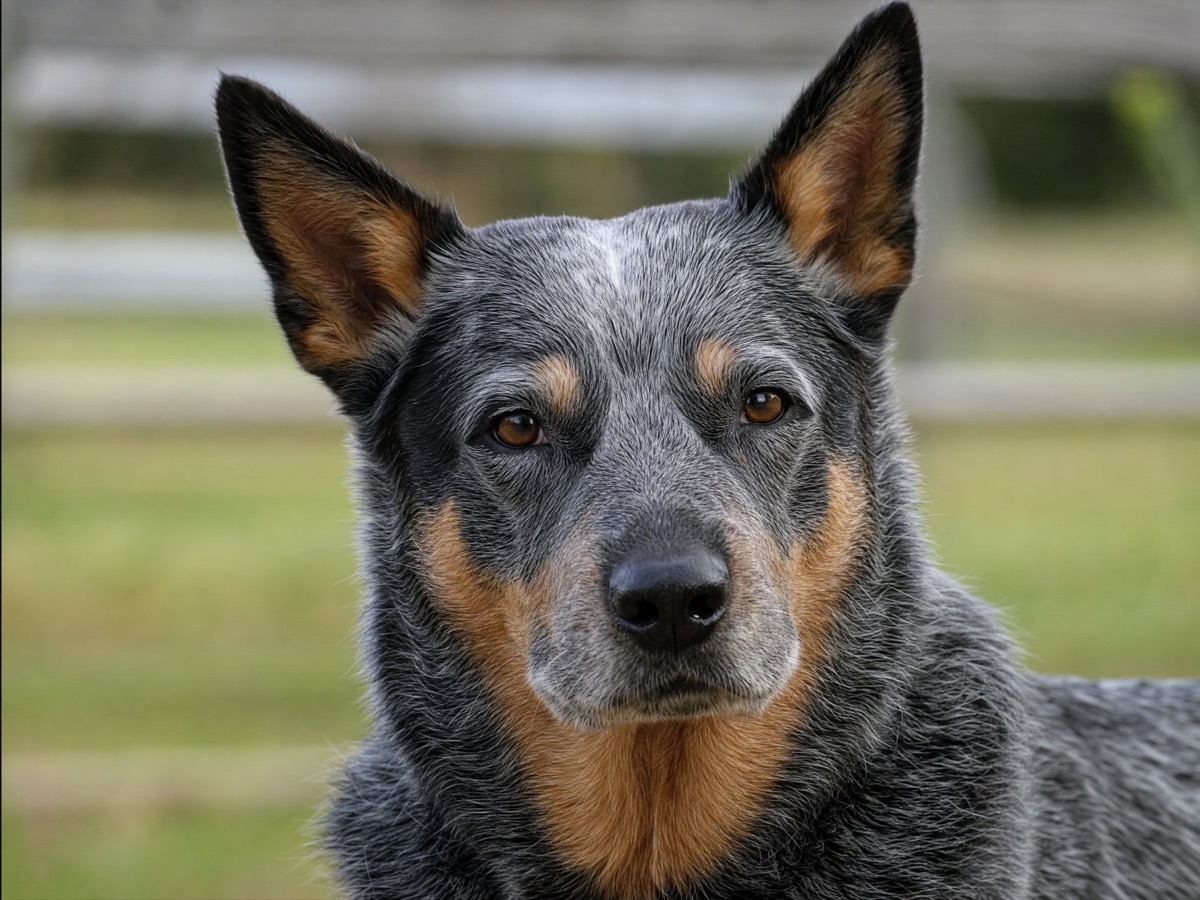
Bluey and Bingo are both Australian Cattle Dogs. 'Heeler' isn't a separate breed, it's the working nickname Australian stockmen gave the dog in the 1800s, earned by how it moves cattle: low, fast, and by nipping at the heels of anything that won't budge. Blue Heeler means a blue-mottled coat, Red Heeler means a red-speckled one, and that's the whole difference. One FCI standard, No. 287, covers both colours, and every major kennel club files them under a single name, Australian Cattle Dog, the way our guide to how dog registries actually work explains for dozens of breeds people assume are separate. Puppies are actually born plain white and only grow into their blue or red speckle over the following weeks, a trait the breed inherited from an early Dalmatian cross.
The coincidence in the name runs deeper than the show probably intended. The longest-lived dog Guinness World Records has ever verified was an Australian Cattle Dog named Bluey, who worked cattle and sheep in Victoria for about twenty years and lived to 29. The real Australian Cattle Dog is built for exactly that kind of durability, which is the whole premise the cartoon family borrowed along with the name.
Bandit and Chilli, the parents, are Heelers too
Bandit is a Blue Heeler and Chilli is a Red Heeler, so Bluey's entire immediate family is one breed in two colours: Bluey took her father's blue, Bingo took her mother's red, which is a fair reflection of how the colour actually plays out. Real Cattle Dog litters routinely mix blue and red pups from the same two parents, the same genetics the show spreads across a family tree instead of a whelping box.
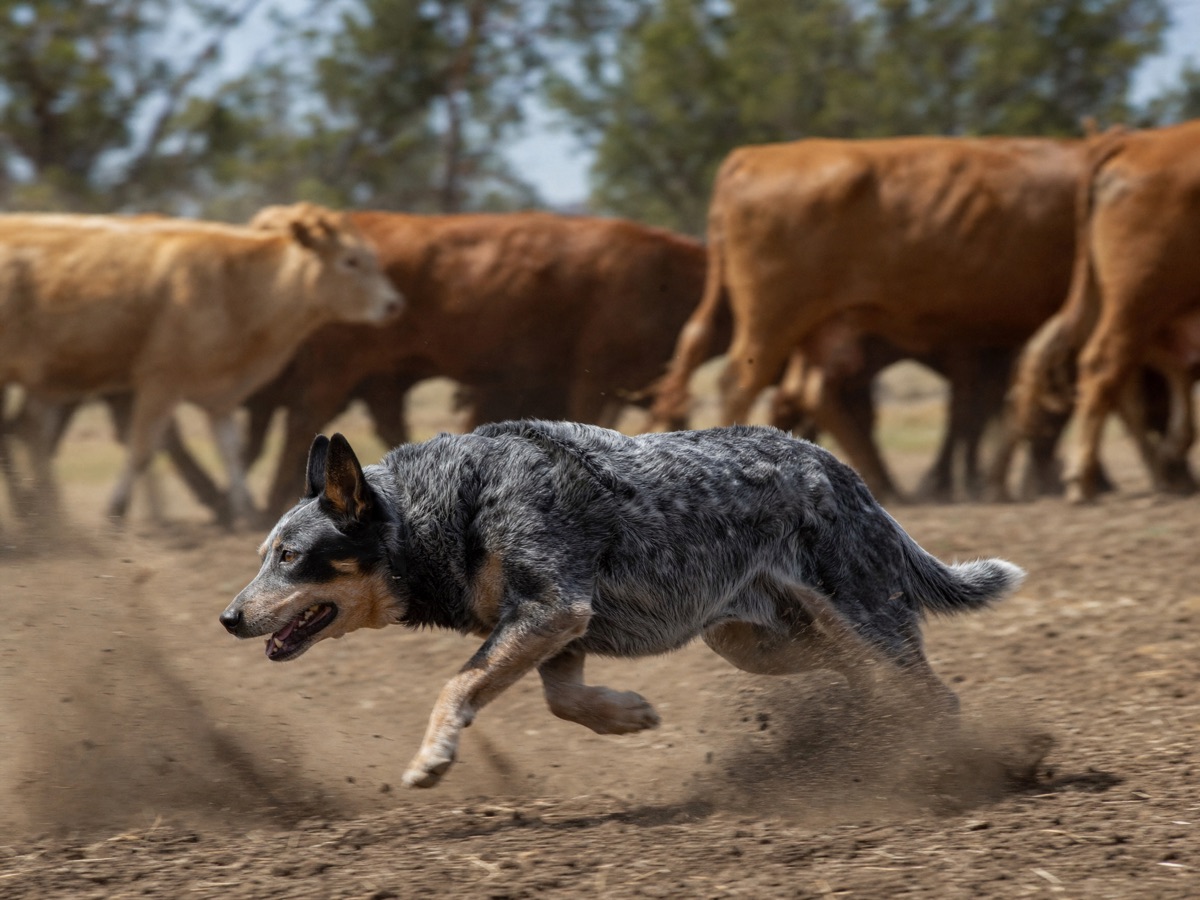
Casting two working parents raising two young herders also tracks with the breed's history. The Australian Cattle Dog was developed in New South Wales from collie stock crossed with dingo and, by most accounts, a dash of Dalmatian, built to push stubborn cattle across country too rough and too hot for most other breeds to handle. A dog built for that job doesn't switch off at home, which is the entire comic engine behind Bandit trying to referee a game he invented five minutes ago.
The herding instinct behind the chaos is real
The show's most exaggerated-looking trait, the family's endless invented games and total inability to sit still through an episode, is closer to a documentary than a cartoon licence. An Australian Cattle Dog needs upwards of two hours of real exercise and mental work a day, and a bored one doesn't nap, it finds a job: redesigning the garden, herding the kids, or inventing its own version of Keepy Uppy out of whatever's on the floor. That drive to control anything that moves is bred in, not written in. It's the same instinct that let one stockman work cattle across the outback with a single dog instead of several riders, and it's why a Cattle Dog left without a task tends to start supervising its household the way Bandit supervises his.
The nipping is real too, and it isn't aggression, it's the job description. A working Heeler moves stock by biting at the heels of anything reluctant to walk, and that's exactly the instinct a family with young children needs to redirect early, onto toys and training instead of ankles.
The honest warning: an Australian Cattle Dog is not a starter dog
Bluey's popularity has done what any hit show about an appealing dog tends to do: pushed people toward the real breed without pushing them toward the real workload. Vets and breed rescues have flagged the pattern already, the same one welfare groups traced after 101 Dalmatians sent Dalmatian demand soaring and Finding Nemo did the same for clownfish. A dog that behaves brilliantly on screen is drawn that way; a real, untrained Heeler puppy with nowhere to put its energy is a different animal entirely.
The honest answer, the one the show never has to give because Bandit and Chilli are drawn rather than owned: an Australian Cattle Dog is a serious working breed, brilliant with the right family and miserable in the wrong one. It wants one person to be devoted to, a real job or sport to channel that heel-nipping instinct into, and ideally an owner who has raised a working breed before. Breeders and rescues both describe it as rarely a good first dog. Fall for Bluey all you like, just do the reading before you call a breeder, not after.
Meet the cousin: the Australian Stumpy Tail Cattle Dog
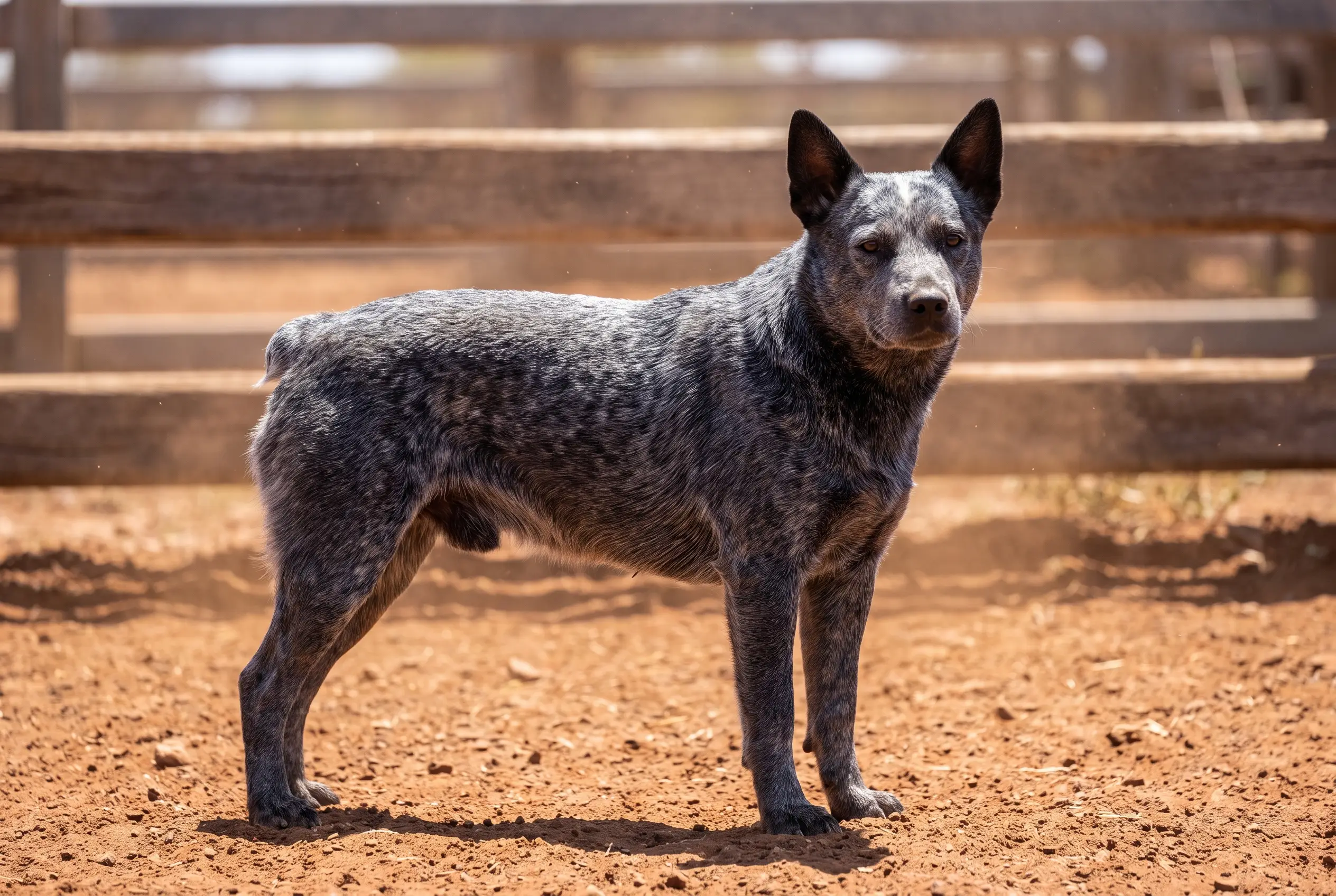
There's a second, rarer breed carrying almost the same story. It never appears in Bluey, but it's worth knowing if the show sent you down this rabbit hole. The Australian Stumpy Tail Cattle Dog shares the Australian Cattle Dog's start, the same Smithfield-type herding dogs crossed onto dingo in the early 1800s, then softened with a blue merle collie. After that the two breeds went separate ways. The Stumpy's line skipped the Dalmatian and Kelpie crosses that gave the Cattle Dog its tan points, so its standard bans tan markings outright, and its tail is exactly what the name says, a short natural stub the dog is born with, not a cut one; the FCI standard disqualifies any Stumpy whose tail has been docked.
It's an FCI breed in its own right, No. 351, but the AKC has never recognised it separately, so this is genuinely two distinct, closely related breeds, unlike Blue and Red Heeler, which are one breed wearing two coats. The Stumpy nearly disappeared in the early 1980s, and Australia rebuilt its studbook from working dogs found around the country through a register that ran from 1988 to 2007. Numbers are still small, and outside Australia it's a dog most people will never see in person, proof that not every heeler-shaped dog you find online is the one from the cartoon.
Common questions
What breed is Bluey?
Bluey is a Blue Heeler, the Australian nickname for the Australian Cattle Dog in its blue-mottled coat colour. It isn't a separate breed, just the coat name stockmen have used since the 1800s.
What breed is Bingo?
Bingo is a Red Heeler, an Australian Cattle Dog in its red-speckled coat colour. She's the same breed as her sister Bluey, just carrying her mother Chilli's colouring instead of her father Bandit's.
Are Blue and Red Heelers different breeds?
No. Blue Heeler and Red Heeler both mean Australian Cattle Dog, and the only difference is coat colour. One FCI standard, No. 287, covers both, and puppies from the same litter can come out either colour.
Is an Australian Cattle Dog a good family dog?
It can be, for the right family. It's loyal and playful with people it knows well, but it's a high-energy working breed that needs upwards of two hours of exercise and mental work a day and an outlet for its herding instinct, so vets and breeders generally rate it a poor choice for first-time or low-energy owners.
Why are Bluey's family called Heelers?
Because Heeler is the working name for the Australian Cattle Dog, earned by how the breed moves cattle: low to the ground and fast, nipping at the heels of any animal that won't budge. Bandit, Chilli, Bluey and Bingo are all Heelers because they're all that one breed.
See also
More in Dogs
PAW Patrol breeds: every pup's real dog, from Chase to Tracker
Chase is a German Shepherd, Zuma is a Chocolate Labrador, and Skye's Cockapoo isn't a registered breed at all. The honest, canon breed behind every PAW Patrol pup.
Cartoon dog breeds: what Scooby-Doo, Snoopy and Brian really are
Scooby is a Great Dane and Snoopy is a Beagle, but Clifford and Blue were never given a real breed. The honest, non-Disney roundup.
Disney dog breeds: the real dog behind every one
Lady is a Cocker Spaniel and Dug is a Golden Retriever, but Pluto and Bolt were never given an official breed. The honest list.
What a dog's tail is actually for
Balance, communication and scent - the three real jobs a dog's tail does, and why a wag on its own never means a happy dog.
Dog separation anxiety: signs, causes and the fix that works
The chewed door frame isn't revenge — it's panic. How to tell true separation anxiety from boredom, what actually rewires it, and the popular fixes that make it worse.
Why is my dog aggressive? Causes and what actually helps
Aggression is communication with the volume turned up — and almost never dominance. The real causes, the warning ladder your dog is climbing, and the fixes that don't remove the warnings.