Why is my cat drinking a lot? Causes and when to see a vet
A noticeable, lasting increase in how much your cat drinks is one of the earliest and most valuable signs of illness a cat gives you. It is easy to miss, and easy to dismiss, but three of the most common conditions in older cats announce themselves this way. Increased thirst is not something to treat at home — it is a reason to see a vet for simple tests that catch these diseases early.
The three big causes
In cats, a genuine rise in thirst most often points to one of three conditions, all commoner with age. Chronic kidney disease is very common in older cats: as the kidneys become less efficient, the cat drinks and urinates more to compensate. Hyperthyroidism, an overactive thyroid, speeds everything up and often comes with weight loss despite a big appetite. Diabetes raises blood sugar, which pulls water through the system. All three are manageable, and all three are caught with straightforward blood and urine tests — which is exactly why increased drinking is worth acting on rather than watching.
Is your cat really drinking more?
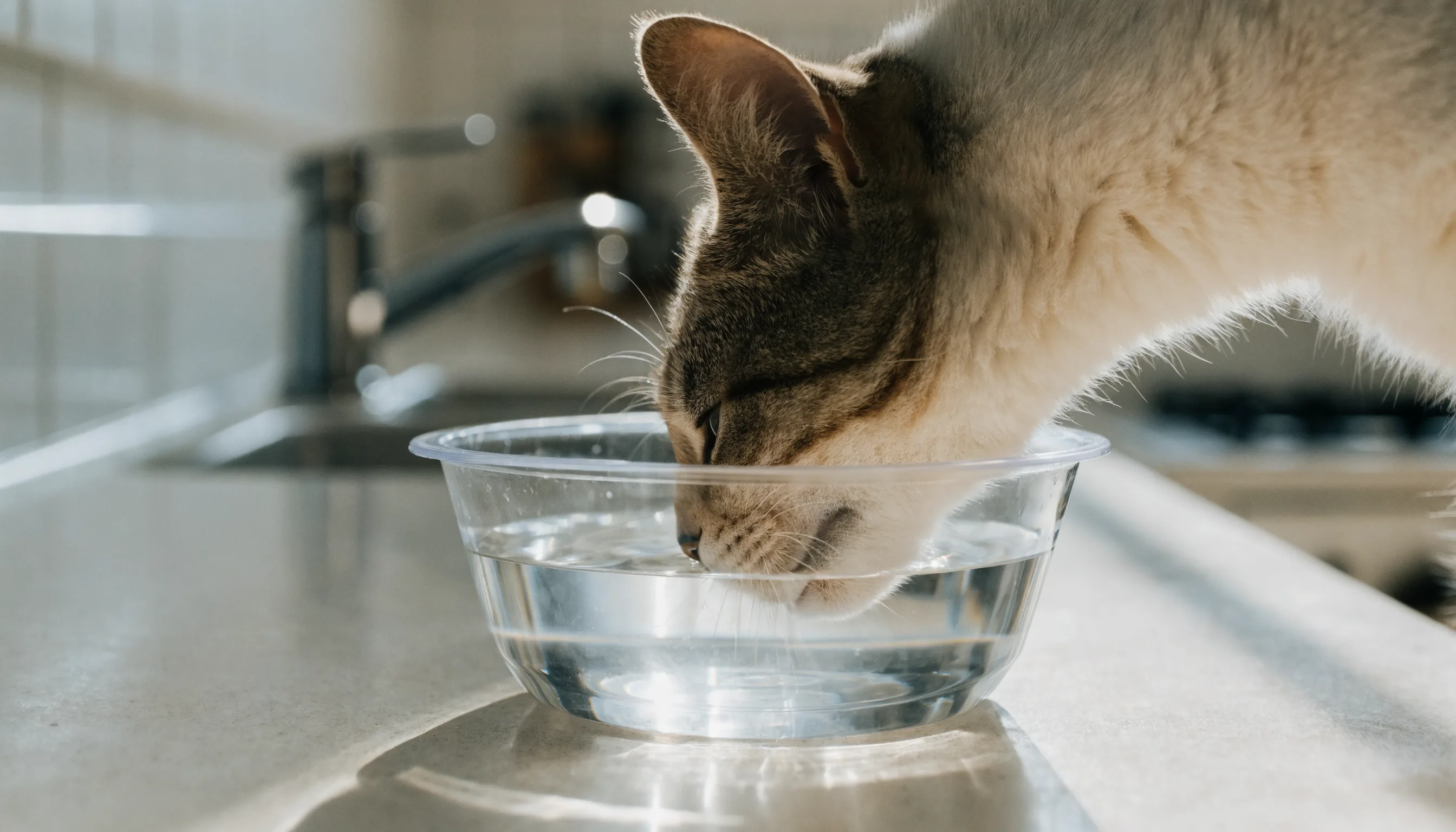
Cats are naturally low drinkers, especially those on wet food, so a real change stands out. You might notice the water bowl emptying faster, your cat drinking from taps, glasses or puddles when it never used to, larger or more frequent wet patches in the litter tray, or heavier clumping. A useful thing to do before the vet visit is to measure how much water goes into the bowl and how much is left after a day, over a couple of days, and take that number with you. Do not restrict your cat's water to control the drinking — that is harmful; the drinking is a response to a problem, not the problem itself.
See a vet if you notice any of these
Book a vet if your cat is drinking noticeably and persistently more than it used to, even if it seems well otherwise — the value here is early diagnosis. Go sooner if the increased thirst comes with weight loss, a bigger or smaller appetite, more or larger urination, vomiting, low energy, or a poor, unkempt coat. Any cat that is straining in the litter tray, or a cat that suddenly cannot pass urine, is a separate emergency and needs to be seen immediately. When in doubt, a vet visit with your water-intake figures is the right move.
Common questions
How much water should a cat drink in a day?
It varies with diet and weather, and cats on wet food drink very little because their food is mostly water. Rather than a fixed figure, what matters is a change: a cat that suddenly drinks much more than its normal, or starts seeking water from taps and glasses, is showing a sign worth a vet check. Measuring the bowl over a day or two gives your vet a useful number.
Why is my cat suddenly drinking a lot of water?
A sudden, lasting increase in thirst in a cat most often points to kidney disease, an overactive thyroid or diabetes, particularly in older cats. All three are common, manageable and diagnosed with simple blood and urine tests, so increased drinking is a reason to see your vet promptly rather than something to monitor indefinitely at home.
Is it bad if my cat drinks a lot of water?
A real, sustained increase in drinking is a meaningful sign, not a habit to ignore, because it commonly signals kidney, thyroid or diabetic disease. It's not something to fix by limiting water — that would harm your cat. Instead, get it checked so any underlying condition is found and managed early, which makes a real difference to the outcome.
My cat drinks more and is losing weight — what does that mean?
Increased drinking together with weight loss is a classic combination for an overactive thyroid or diabetes, and can also occur with kidney disease — all common in older cats. It warrants a prompt vet visit and blood and urine tests. These conditions respond well to treatment, and catching them early makes them much easier to manage.
Should I limit how much water my cat drinks?
No. Never restrict your cat's water to control increased drinking. The extra thirst is the body's response to an underlying problem, and limiting water can cause dangerous dehydration. The right step is a vet visit to find and treat the cause, while your cat has free access to fresh water throughout.
More in Cats
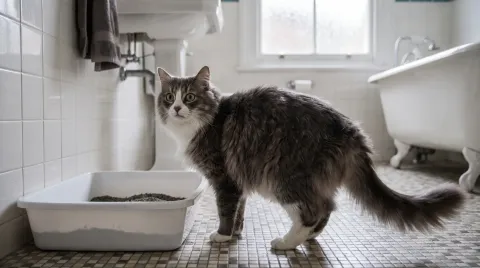
Why is my cat pooping outside the litter box? Causes and fixes
Poop on the floor has a different list of suspects than pee on the wall — urgency, pain, an unreachable tray, or (rarely) an actual message. Here's the order to check them in.
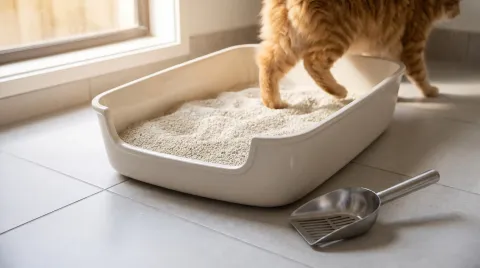
A litter box routine that actually works
Daily, weekly and monthly, plus the placement and the n+1 rule. How to keep a box a cat will keep using, and get rid of the smell without scented litter.

Autumn dangers for dogs: acorns, conkers and mushrooms
Autumn puts three scavenging hazards on the ground — acorns, conkers and wild mushrooms — plus rat bait and fermenting fruit. What's toxic, what the warning signs are, and when to call the vet.
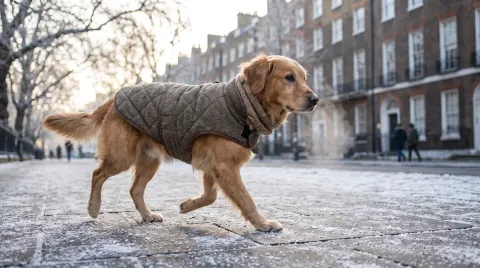
Winter pet dangers: antifreeze, road salt and chocolate season
Antifreeze is the winter emergency — sweet, deadly and quick. Plus gritted-salt paws, the festive-food gauntlet and cats sheltering in warm car engines. What to watch and when it's urgent.
The pet danger calendar: what to watch, month by month
Most pet hazards are seasonal and many are regional. Here's the year mapped out — when heatstroke, grass seeds, processionary caterpillars, antifreeze and the rest actually peak, and which ones your area even has.

Snake bites in dogs: first aid, symptoms and prevention
A calm, fast response is what actually saves a bitten dog. What to do in the first minutes, the myths that cost time, and which snakes matter across Europe.