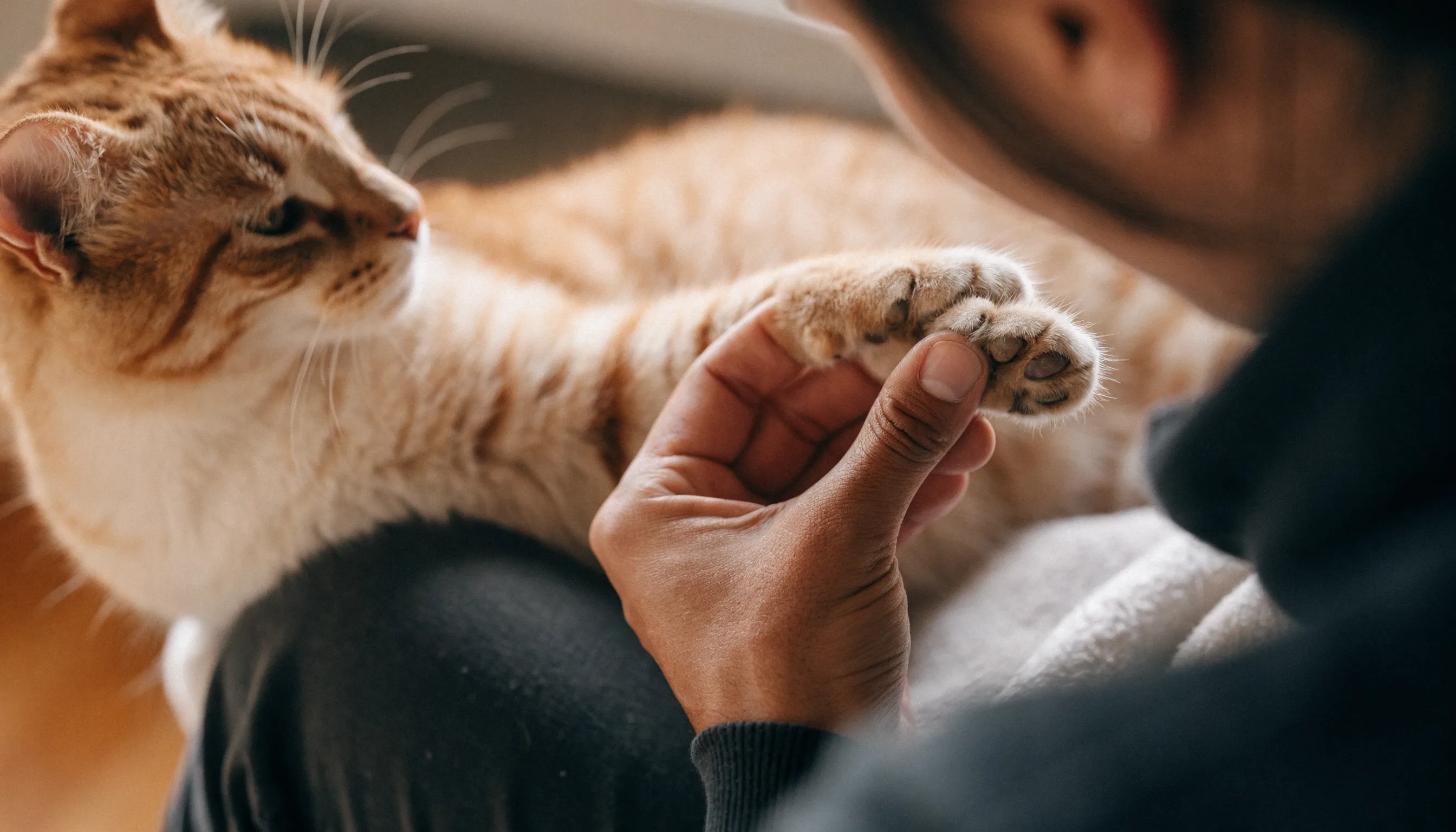
Why is my cat limping? Causes and when to see a vet
Cats limp for reasons that range from a minor sprain to a road accident, and because cats hide pain they often only limp when it really hurts. One cause is specific to cats — the bite abscess — and one rule is absolutely fixed: never give a cat human painkillers, because paracetamol is lethal to cats even in a tiny dose. Knowing the emergencies helps you judge how fast to act.
The likely causes
A common cause in cats that go outside is a bite abscess: a cat-fight puncture seals over, then becomes a hot, painful, sometimes smelly swelling a few days later, often with a limp and a temperature. Soft-tissue sprains, a torn claw, or something stuck in a pad are frequent too. In older cats, arthritis is far more common than people realise and easily missed, because instead of an obvious limp a cat simply jumps less, hesitates on stairs, or sleeps more. A fracture from a fall or a car can cause sudden severe lameness. A less common but critical cause is a clot lodging in the back legs (a saddle thrombus), which is a sudden, extremely painful emergency.
What you can safely do at home
For a mild limp in a cat that is otherwise bright and still using the leg, keep it calm and indoors so it rests, and gently check the paw, claws and pads for a thorn, a torn nail or a puncture wound. Look and feel for a hot, swollen area that might be a brewing abscess. The single most important thing is what not to do: never give a cat any human painkiller. Paracetamol (acetaminophen) is deadly to cats, ibuprofen and aspirin are also toxic, and there is no safe human option — pain relief for a cat must come from a vet. If a mild limp has not settled in a day or two, book a vet.
See a vet now if you notice any of these
Get your cat seen quickly if it: will not put any weight on the leg, or the leg looks deformed or is dangling; has a hot, painful swelling or a discharging wound, or a fever (a likely abscess); may have had a fall from height or a road accident, which can hide serious internal injury even when the cat then seems to walk; or has a limp that lasts more than a day or two. Treat sudden weakness or paralysis of the back legs, with obvious pain, crying and cold or pale back paws, as an immediate emergency — that can be a clot and needs a vet within the hour.
Common questions
Can I give my cat painkillers for a limp?
Never give a cat human painkillers. Paracetamol (acetaminophen) is lethal to cats even in a tiny amount, and ibuprofen and aspirin are also toxic — there is no safe human option. Pain relief for a cat must be prescribed by a vet. If your cat is in pain, that's a reason to see the vet, not to reach for the medicine cabinet.
Why is my cat limping but still walking on the leg?
A cat that limps but still uses the leg often has a minor sprain, a sore pad, a torn claw or a brewing bite abscess. Keep it calm and indoors, check the paw and feel for any hot swelling, and never give human painkillers. If the limp hasn't settled in a day or two, or a swelling or fever appears, see your vet.
How do I know if my cat has an abscess?
A cat-bite abscess shows up a few days after a fight as a hot, firm, painful swelling, often on the face, legs or base of the tail, sometimes with a limp, a fever, off food, or a foul-smelling discharge if it bursts. Outdoor and unneutered cats are most at risk. Abscesses need veterinary treatment, so book a vet rather than trying to manage it at home.
Could my older cat's stiffness be arthritis?
Very likely — arthritis is common and underdiagnosed in older cats, and it rarely looks like an obvious limp. Instead the cat jumps up less, hesitates on stairs, grooms less, sleeps more, or becomes grumpy about being handled. It's very manageable with vet guidance, so mention these changes at a check-up; never treat suspected arthritis with human painkillers.
When is a limping cat an emergency?
Treat it as an emergency if your cat won't bear any weight, has a deformed or dangling leg, may have fallen from height or been hit by a car, or has a hot swelling with a fever. Sudden weakness or paralysis of both back legs with obvious pain and cold paws can be a blood clot and needs a vet within the hour.
More in Cats
Why is my cat pooping outside the litter box? Causes and fixes
Poop on the floor has a different list of suspects than pee on the wall — urgency, pain, an unreachable tray, or (rarely) an actual message. Here's the order to check them in.

A litter box routine that actually works
Daily, weekly and monthly, plus the placement and the n+1 rule. How to keep a box a cat will keep using, and get rid of the smell without scented litter.

Autumn dangers for dogs: acorns, conkers and mushrooms
Autumn puts three scavenging hazards on the ground — acorns, conkers and wild mushrooms — plus rat bait and fermenting fruit. What's toxic, what the warning signs are, and when to call the vet.

Winter pet dangers: antifreeze, road salt and chocolate season
Antifreeze is the winter emergency — sweet, deadly and quick. Plus gritted-salt paws, the festive-food gauntlet and cats sheltering in warm car engines. What to watch and when it's urgent.

The pet danger calendar: what to watch, month by month
Most pet hazards are seasonal and many are regional. Here's the year mapped out — when heatstroke, grass seeds, processionary caterpillars, antifreeze and the rest actually peak, and which ones your area even has.

Snake bites in dogs: first aid, symptoms and prevention
A calm, fast response is what actually saves a bitten dog. What to do in the first minutes, the myths that cost time, and which snakes matter across Europe.