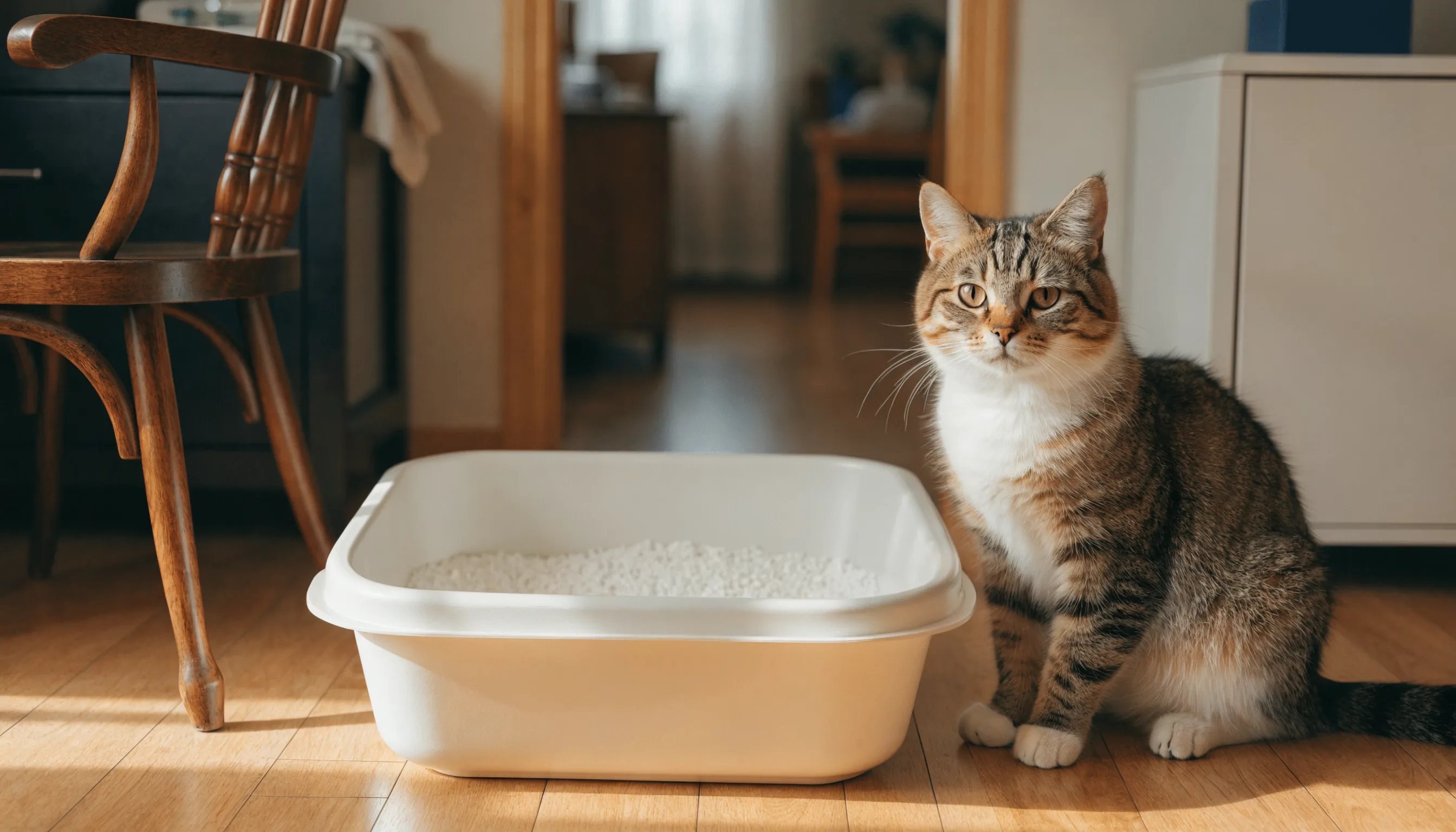
Why is my cat peeing outside the litter box? Causes and when to see a vet
A cat urinating outside its tray is one of the most misread signs in cat care, because it looks like bad behaviour and is often a medical problem. Before assuming your cat is being difficult, it is vital to rule out a urinary condition — and to know the one pattern, a male cat straining and passing nothing, that is a life-threatening emergency measured in hours, not days.
The emergency to rule out first
Learn this pattern before anything else. A cat, most often a male, that is going in and out of the tray straining, squatting again and again, passing only a few drops or nothing at all, crying out, licking at its back end, or restless and distressed, may have a blocked bladder — the urethra plugged so no urine can escape. This is a true emergency: it becomes fatal within a day or two as toxins and pressure build up, and affected cats can deteriorate very fast, becoming flat, vomiting and collapsing. If you see straining with little or no urine, do not wait to see if it passes — phone an emergency vet immediately.
The medical causes
Setting the blockage emergency aside, going outside the tray is frequently caused by a urinary problem that makes weeing urgent or painful, so the cat associates the tray with discomfort and goes elsewhere. The common one is feline lower urinary tract disease (FLUTD), an umbrella for bladder inflammation (often stress-linked), crystals or stones, and infection. Signs include frequent trips, straining, small amounts, blood in the urine, and licking the genitals. Increased urination from kidney disease, diabetes or an overactive thyroid can also lead to accidents. Because a medical cause is so common, the first step for a cat that suddenly changes its toilet habits is a vet check, not a behaviour plan.
The litter-tray and stress causes
Once illness is ruled out, tray and stress factors come into play, and cats are fussy. Common triggers are a dirty tray, a scented or newly changed litter the cat dislikes, a tray in a busy or exposed spot, a covered tray a cat feels trapped in, or too few trays — the rule of thumb is one tray per cat plus one spare, in separate quiet locations. Stress from a new pet, a house move, building work or tension between cats can also break toilet habits. Our cat litter guide and the piece on litter-box problems in older cats go further. Clean any accident with an enzyme cleaner so the scent does not draw the cat back, and never punish it — that adds stress and makes things worse.
See a vet if you notice any of these
Phone an emergency vet immediately if your cat is straining in or out of the tray and passing little or no urine, crying, or has become flat, is vomiting or collapsed — a blocked cat cannot wait. Book a prompt appointment if your cat: has started weeing outside the tray suddenly; makes frequent trips, strains, or passes small amounts; has blood in its urine; is licking its genitals a lot; or is also drinking more, losing weight or off its food. A cat that has always been reliable and suddenly is not is showing a health sign until a vet proves otherwise.
Common questions
Is a cat peeing outside the litter box a medical problem or behaviour?
Very often it's medical, which is why it's misread as naughtiness. Urinary conditions make weeing painful or urgent, so the cat avoids the tray. A sudden change in toilet habits should be checked by a vet before assuming it's behavioural. Once illness is ruled out, tray cleanliness, litter type, location, number of trays and stress are the things to address.
When is a cat not peeing an emergency?
Immediately. A cat — usually male — that strains in the tray but passes little or no urine, cries, or licks at its back end may have a blocked bladder, which is fatal within a day or two. Don't wait to see if it improves; call an emergency vet at once, especially if the cat is also restless, flat, vomiting or collapsed.
How many litter trays should I have for my cat?
The general rule is one tray per cat plus one extra, placed in separate, quiet, low-traffic spots. So one cat wants two trays, two cats want three. Keep them clean, use a litter your cat likes (many prefer unscented), and avoid busy or exposed locations. Too few trays, or trays cats dislike, are common reasons for accidents once illness is ruled out.
Why has my house-trained cat suddenly started peeing on the floor?
A sudden change in a previously reliable cat is a health sign until proven otherwise — most commonly a urinary problem such as FLUTD, but also increased urination from kidney disease, diabetes or thyroid trouble. Stress and tray issues can contribute too. See your vet first to rule out a medical cause, then address litter, location and stress.
Should I punish my cat for peeing outside the litter box?
No, never. Punishment adds stress, which is itself a common trigger for the problem, and it damages your bond without fixing the cause. Instead, rule out a medical problem with your vet, clean accidents with an enzyme cleaner so the smell doesn't lure the cat back, and improve tray cleanliness, litter, location and number.
More in Cats
Why is my cat pooping outside the litter box? Causes and fixes
Poop on the floor has a different list of suspects than pee on the wall — urgency, pain, an unreachable tray, or (rarely) an actual message. Here's the order to check them in.
A litter box routine that actually works
Daily, weekly and monthly, plus the placement and the n+1 rule. How to keep a box a cat will keep using, and get rid of the smell without scented litter.

Autumn dangers for dogs: acorns, conkers and mushrooms
Autumn puts three scavenging hazards on the ground — acorns, conkers and wild mushrooms — plus rat bait and fermenting fruit. What's toxic, what the warning signs are, and when to call the vet.

Winter pet dangers: antifreeze, road salt and chocolate season
Antifreeze is the winter emergency — sweet, deadly and quick. Plus gritted-salt paws, the festive-food gauntlet and cats sheltering in warm car engines. What to watch and when it's urgent.

The pet danger calendar: what to watch, month by month
Most pet hazards are seasonal and many are regional. Here's the year mapped out — when heatstroke, grass seeds, processionary caterpillars, antifreeze and the rest actually peak, and which ones your area even has.

Snake bites in dogs: first aid, symptoms and prevention
A calm, fast response is what actually saves a bitten dog. What to do in the first minutes, the myths that cost time, and which snakes matter across Europe.