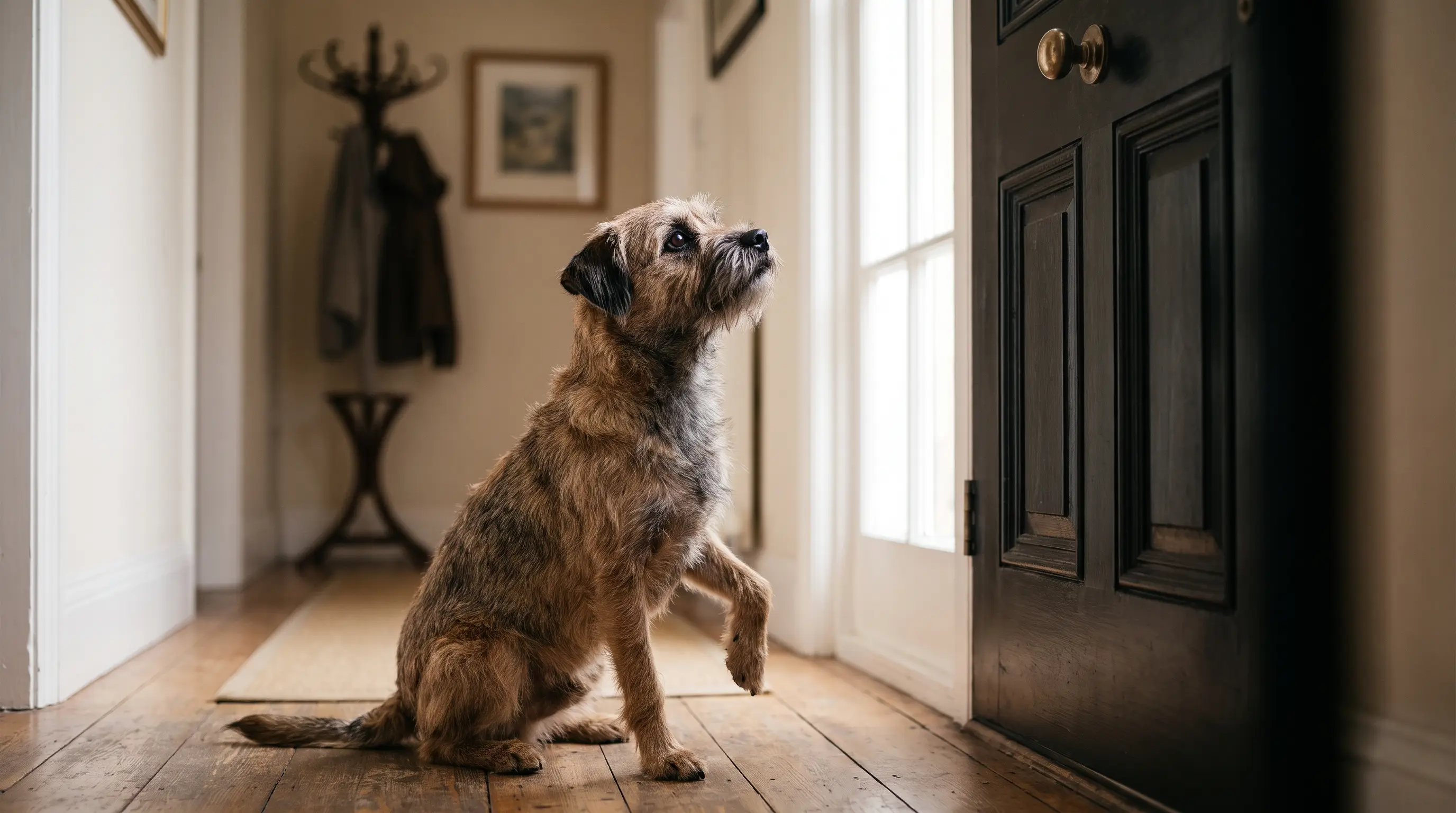
Dog separation anxiety: signs, causes and the fix that works
A dog with separation anxiety is not misbehaving while you're out — it is panicking, the way a claustrophobic person panics in a lift. That distinction decides everything: panic can't be punished away, trained away with obedience drills, or waited out, but it can be systematically dismantled, and the method is well established. Here's how to tell real separation anxiety from its imitators, what actually drives it, and the protocol that works — along with the popular fixes that reliably backfire.
Is it actually separation anxiety?
True separation anxiety has a signature. The distress starts within minutes of you leaving — most of the damage happens in the first half hour — and it aims at the exits: chewed door frames, scratched doors, blinds pulled off windows. Add howling or barking that runs through the absence, pacing, drooling puddles, a dog that won't touch food while alone, or house soiling from a dog that's reliably clean when you're home, and you're looking at panic. The imitators look different. A bored, under-exercised dog naps first and finds a project later, targets whatever's interesting rather than the exits, and greets you cheerfully surrounded by wreckage rather than frantic and soaked in drool. The cheapest diagnostic you own is a camera: film the first thirty minutes of an absence, and read the footage against our guide to dog body language. Panting, pacing, yawning and whining that starts as the door shuts is your answer.
Why dogs panic alone
Dogs are built for company — a species shaped over thousands of years to work beside humans doesn't come with an off switch for our absence. Most cases trace to a change: a rescue dog rehomed one or more times (the settling arc in the 3-3-3 rule is exactly when this surfaces), a household member leaving, a house move, or a schedule cliff — the dog that had you home for months suddenly alone for eight hours. Puppies that were never taught aloneness in small doses grow into adults who never learned the skill, and adolescence can switch it on in a dog that seemed fine. Temperament and genetics load the dice too — anxious parents tend to produce anxious pups. What it is not: dominance, spite, or a verdict on your leadership. The dog destroying the door isn't defying you; it's trying to reach you.
The fix: teach absence in doses it can handle
The treatment that works is gradual desensitization — being alone, practised below the panic line, in increments the dog barely notices. Find the current threshold (for a bad case that can be thirty seconds), leave for less than that, return before the panic starts, and repeat until boring; then stretch the duration. Two supporting moves make it stick. First, defuse the departure cues: keys, shoes and coat have become panic triggers in their own right, so pick them up, sit back down, and repeat until they predict nothing. Second, flatten your exits and entrances — no dramatic goodbyes, no jackpot reunions; you leaving needs to become the least interesting event of the day. A long-lasting food puzzle helps mild cases start absence on a good note. And the rule that outranks everything: while you're training, the dog doesn't do absences over its threshold. Every full-blown panic rehearses the disease, so bridge the gap with a sitter, daycare, or a neighbour rather than undoing each week's work in one afternoon.
What doesn't work
The folklore around this problem is heavy on fixes that backfire. Punishment is the worst: the dog cannot connect a telling-off with panic from hours ago, so what it learns is that your homecomings are dangerous — which adds fear to fear, and the guilty look owners cite as proof of knowledge is appeasement to your anger, not a confession. Letting the dog "cry it out" entrenches the panic instead of extinguishing it; unlike a sulking teenager, a panicking animal doesn't learn calm from being flooded. Getting a second dog usually disappoints, because the attachment is to humans — you mostly end up with a witness, sometimes with two anxious dogs. And the crate deserves nuance: a well-taught crate is a den for a relaxed dog, but confining a panicking one turns escape attempts into broken teeth and bloodied paws. If the camera shows panic in the crate, the crate is off the table for absences, whatever it does at bedtime.
When to get help — and the honest word on medication
Escalate on severity, not on embarrassment. A dog injuring itself, going through windows, or howling for hours needs more than a DIY protocol — and the first stop is the vet, because pain and illness amplify anxiety, and house soiling always earns a medical check before a behavioural verdict. From there, ask for a referral to a qualified behaviourist rather than a franchise trainer; panic disorders are clinical territory. Medication is neither a failure nor a magic pill: fluoxetine and clomipramine are licensed for canine separation anxiety, and what they do is lower the panic floor far enough that the desensitization work can actually happen — prescribed alongside a training plan, not instead of one. Handled that way, the outlook is genuinely good: most dogs improve substantially, and the ones that started as thirty-second dogs routinely become dogs that sleep through a working afternoon.
Common questions
How do I fix my dog's separation anxiety?
With gradual desensitization: practise absences below the panic threshold — seconds, if that's where your dog is — returning before distress starts, and stretch the duration as calm becomes boring. Defuse departure cues like keys and shoes, keep exits and returns flat, and don't leave the dog over its threshold while training; bridge with a sitter or daycare. Severe cases add a behaviourist and, via the vet, medication that makes the training possible.
What are the signs of separation anxiety in dogs?
Distress that starts within minutes of departure and targets the exits: chewed door frames and windowsills, howling or barking through the absence, pacing, heavy drooling, refusing food while alone, and house soiling from an otherwise clean dog. A camera on the first thirty minutes settles it — panic looks unmistakably different from boredom.
Should I ignore my dog crying when I leave?
If it's true separation anxiety, no — 'crying it out' floods a panicking animal and entrenches the fear rather than extinguishing it. The kind answer is also the effective one: shorten absences to below the panic point and build back up. Calmly ignoring attention-seeking whining while you're home is a different situation, and fine.
Does getting another dog help separation anxiety?
Usually not. The attachment driving the panic is to people, not to company in general, so a second dog mostly provides a witness — and occasionally a student. Fix the anxiety first; add a dog because you want one, not as treatment.
How long can you leave a dog with separation anxiety?
Only as long as it can currently manage without panicking, which for a severe case can be under a minute. That threshold is the starting line for training, not a life sentence — it stretches with desensitization — but exceeding it 'because you have to' rehearses the panic and sets the work back. Bridge longer absences with a sitter or daycare while you train.
Can dogs grow out of separation anxiety?
Rarely on their own — untreated separation anxiety tends to hold steady or worsen, because every panicked absence is practice. Puppies going through a clingy phase can improve with maturity and deliberate alone-time training, but an established adult case needs the desensitization work, and it responds well to it.
More in Dogs

Why is my dog aggressive? Causes and what actually helps
Aggression is communication with the volume turned up — and almost never dominance. The real causes, the warning ladder your dog is climbing, and the fixes that don't remove the warnings.

Why does my dog eat poop? The science and the fix
Coprophagia is common, mostly harmless, and almost never a nutrient cry for help. What the research actually found, when it is a medical flag, and what stops it — spoiler: not pineapple.
Leash reactivity: why your dog lunges on the lead, and the fix
Friendly off-lead, a roaring spectacle on it — leash reactivity is the lead itself changing the maths. What drives the display, why punishing it backfires, and the training that works.

Why does my dog chew everything? Causes and the fix
Chewing is a need with nowhere legal to go — not a vice to stamp out. Why the sofa keeps losing, what the destruction is telling you, and the redirect that saves your shoes.

Dog body language: what your dog is really telling you
A wag is not always happy, and hackles are not always aggression. How to read the whole dog — tail, ears, eyes, mouth and posture — and spot stress before it becomes a bite.
Do dogs love their owners? What the science measured
Yes — and unusually for a question about feelings, we have the receipts: oxytocin loops, attachment tests and brain scans. What dog love is made of, and what it looks like from the sofa.