Why is my dog aggressive? Causes and what actually helps
An aggressive dog is almost always a dog that ran out of politer options. Behind nearly every growl, snap and bite sits fear, pain, a guarded resource or boiling frustration — and behind none of it, despite fifty years of folklore, sits a plan to dominate your household. That matters practically: you can't punish fear out of a dog, but you can find what's driving it and change that. Here are the real causes, in the order a behaviourist would check them, and the responses that make dogs safer instead of quieter.
Aggression is a ladder, and the bite is the top rung
Dogs escalate in a predictable sequence that behaviourists call the ladder of aggression: look away, lip-lick, yawn; then stiffen and stare; then growl; then air-snap; and only then bite. Every rung is an attempt to end the encounter without violence, which leads to the single most important sentence in dog ownership: a growl is information, not insubordination. Punish the growl and you don't remove the emotion — you remove the warning, and you build the dog everyone describes afterwards as "he bit without any warning at all". The lower rungs are easy to miss because they're quiet; our guide to dog body language covers the stiffening, the hard stare and the whale eye that come long before sound. Note too what aggression isn't: a puppy gnawing your hands is learning bite control, not menacing you — that's normal mouthing with its own playbook.
Fear: the biggest bucket by far
Most dog aggression is fear wearing armour. The profile: a dog that lunges or snaps when cornered, handled, approached by strangers, or trapped somewhere it can't retreat from — weight shifted back, tail low, ears pinned, wanting the scary thing gone rather than a fight won. It's commonest in dogs that missed early socialisation (the window covered in socialising a puppy) and in rescues carrying history. The fix runs on distance and mathematics: keep the dog far enough from its trigger that it can stay calm, pair the trigger's appearance with food until the emotional sum changes, and close the distance over weeks. What never works is flooding — dragging a fearful dog into the thing it fears to "get it used to it" teaches it that warnings fail and escape is impossible, which is how fear biters are manufactured.
Pain and illness: the sudden change
A friendly dog that turns snappy has earned a vet visit before any training plan. Pain is the classic driver of sudden aggression, and it hides well: arthritis that makes the hindquarters no-go territory, dental disease that makes the muzzle untouchable, an ear infection that turns head-pats into threats. The giveaway is geography — aggression tied to touch, to one region of the body, or to being moved off furniture it used to vacate happily. Older dogs deserve special suspicion, because they hide discomfort expertly and the signs of pain in senior dogs are quieter than most owners expect; failing sight and hearing also mean more startles at closer range. You cannot train away a bite that hurts — treat the body first, then reassess the behaviour.
Resource guarding: mine means mine
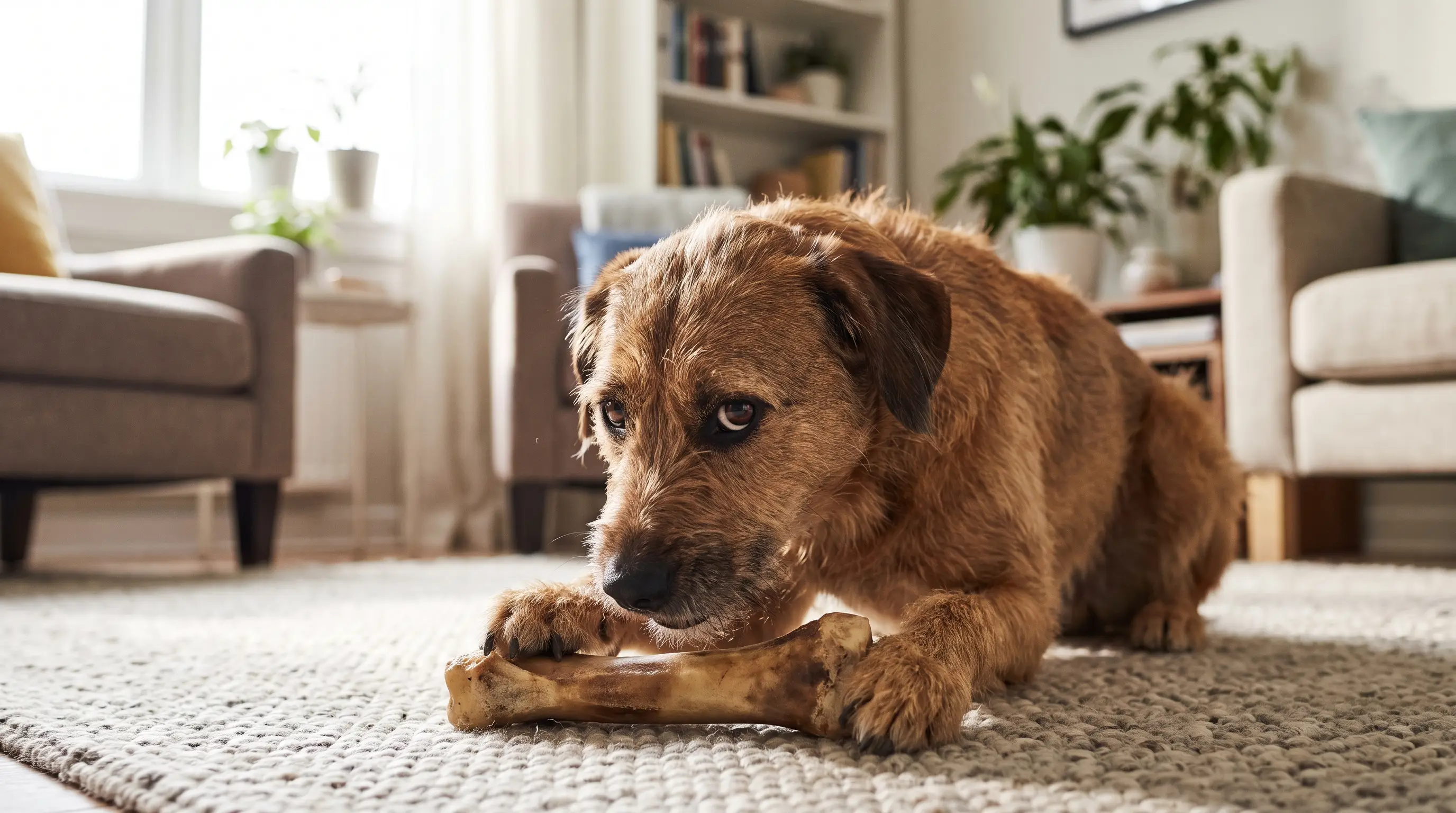
A dog that stiffens, growls or snaps over its bowl, a bone, a stolen sock, the sofa, or even a favourite person is resource guarding — an utterly normal ancestral behaviour that becomes a problem in a living room. The folklore fix is the dangerous one: repeatedly taking the bowl away, or putting your hand in its food "so he learns who's boss", teaches the dog precisely that its resources are under threat and that guarding harder is necessary. The working fix inverts it. Add, don't subtract: approach the guarding dog only to drop something better, until a human heading toward the bowl predicts improvement rather than loss. Teach a cheerful swap ("trade") with a jackpot for giving things up. Manage the environment meanwhile — feed in peace, pick up contested items, and give children an iron rule: nobody touches a dog that's eating or chewing. Guarding aimed at people over low-value items, or that draws blood, moves straight to the professional help below.
Frustration and redirection: the lead effect
Some aggression is boiled-over frustration rather than fear or possession. The textbook case is the dog that's friendly loose but a lunging, roaring spectacle on the lead: the barrier blocks its normal approach-and-greet, frustration climbs, and the display looks ferocious precisely because it has nowhere to go — a pattern with its own name, leash reactivity, and its own fix. The same mechanism produces the redirected bite: grab a dog's collar mid-standoff with another dog, and the arousal that was aimed at the rival lands on your hand — which is why you break up dog encounters with noise, a barrier or a thrown jacket, never with reaching hands. Frustration cases matter to diagnose correctly because the treatment is the opposite of the fear plan: these dogs don't need the world made less scary, they need impulse control taught, arousal kept below the boil, and the barrier problem addressed directly.
What actually helps, in order
First, keep everyone safe today: manage distance from triggers, use gates and leads, and if there's any bite risk, condition a basket muzzle with treats until it's just clothing — a muzzle is a seatbelt, not a shame. Second, the vet, for anything sudden or touch-linked. Third, diagnose the pattern from this page — who, where, over what — because fear, pain, guarding and frustration each want a different plan, and the wrong one makes things worse. Fourth, drop punishment entirely: prong collars, shouting and alpha rolls suppress the warning displays while pumping up the fear underneath, trading a noisy dog for an unpredictable one. And be honest about thresholds: a dog that has bitten a person, or that you're frightened of, is past the DIY line — ask your vet for referral to a qualified behaviourist, who will build the plan and, where anxiety is the engine, discuss medication that makes the training possible. Most aggressive dogs aren't broken; they're uncomfortable, and they improve when someone finally treats the discomfort instead of the noise.
Common questions
Why is my dog suddenly aggressive?
Sudden aggression in a previously friendly dog points first at pain or illness — arthritis, dental disease, an ear infection — so the vet comes before any trainer. If the vet finds nothing, look for a new fear trigger, a guarded resource, or frustration that's found no outlet. Sudden never means random; something changed.
Why is my dog aggressive towards me?
Usually fear (you've become unpredictable to it, often via punishment), pain that handling disturbs, or resource guarding of food, places or items — not dominance, which decades of behaviour science has retired as an explanation. Map when it happens: touch-linked points to pain, bowl-and-bone-linked to guarding, cornered-and-trapped to fear.
How do I stop my dog being aggressive?
Identify the driver before anything else: vet check for pain, then work out whether it's fear, guarding or frustration, because each has a different plan. Manage triggers and distance meanwhile, never punish the warnings, and for anything involving bites get a vet referral to a qualified behaviourist rather than experimenting.
Should I punish my dog for growling?
No — the growl is the warning system working. Punish it and the emotion stays while the warning disappears, producing the dog that 'bites out of nowhere'. Thank the growl by ending the situation, then work out what pushed the dog that far and change it.
Why is my dog food aggressive?
That's resource guarding: an ancestral keep-what-you-have behaviour, not a rank claim. Taking the bowl away or handling its food 'to teach him' confirms the fear driving it. Instead, add rather than subtract — approach only to drop something better, teach a rewarded swap, feed in peace, and keep children away from a dog that's eating.
Can an aggressive dog be cured?
Most improve substantially once the real driver is treated — pain medicated, fear counter-conditioned, guarding retrained, frustration given outlets — though 'managed and predictable' is a more honest goal than 'cured', and trigger management usually stays part of life. Dogs with a bite history need that work run through a qualified behaviourist.
More in Dogs
Dog separation anxiety: signs, causes and the fix that works
The chewed door frame isn't revenge — it's panic. How to tell true separation anxiety from boredom, what actually rewires it, and the popular fixes that make it worse.
Why does my dog eat poop? The science and the fix
Coprophagia is common, mostly harmless, and almost never a nutrient cry for help. What the research actually found, when it is a medical flag, and what stops it — spoiler: not pineapple.
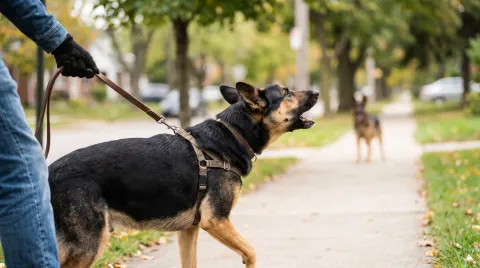
Leash reactivity: why your dog lunges on the lead, and the fix
Friendly off-lead, a roaring spectacle on it — leash reactivity is the lead itself changing the maths. What drives the display, why punishing it backfires, and the training that works.

Why does my dog chew everything? Causes and the fix
Chewing is a need with nowhere legal to go — not a vice to stamp out. Why the sofa keeps losing, what the destruction is telling you, and the redirect that saves your shoes.
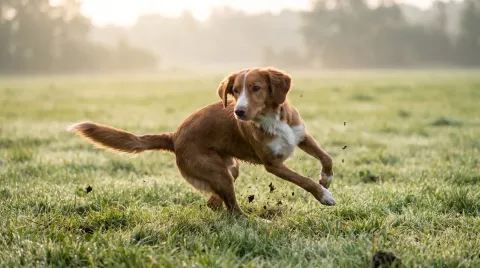
Dog body language: what your dog is really telling you
A wag is not always happy, and hackles are not always aggression. How to read the whole dog — tail, ears, eyes, mouth and posture — and spot stress before it becomes a bite.
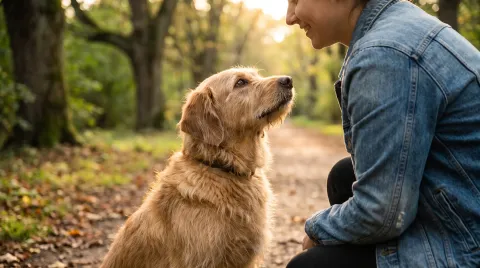
Do dogs love their owners? What the science measured
Yes — and unusually for a question about feelings, we have the receipts: oxytocin loops, attachment tests and brain scans. What dog love is made of, and what it looks like from the sofa.