Why does my dog stare at me? Every stare, decoded
Somewhere across the room, a pair of eyes is tracking you right now, and has been for most of your dog's waking life. Dogs are professional human-watchers — evolution built them for it, and then built them a special face muscle to weaponise it — and their stares sort into a handful of readable types: the affectionate, the informational, the transactional, the vigilant, and one that means something entirely different. Here's the full catalogue, bathroom vigil included.
The soft stare, and the muscle built for you
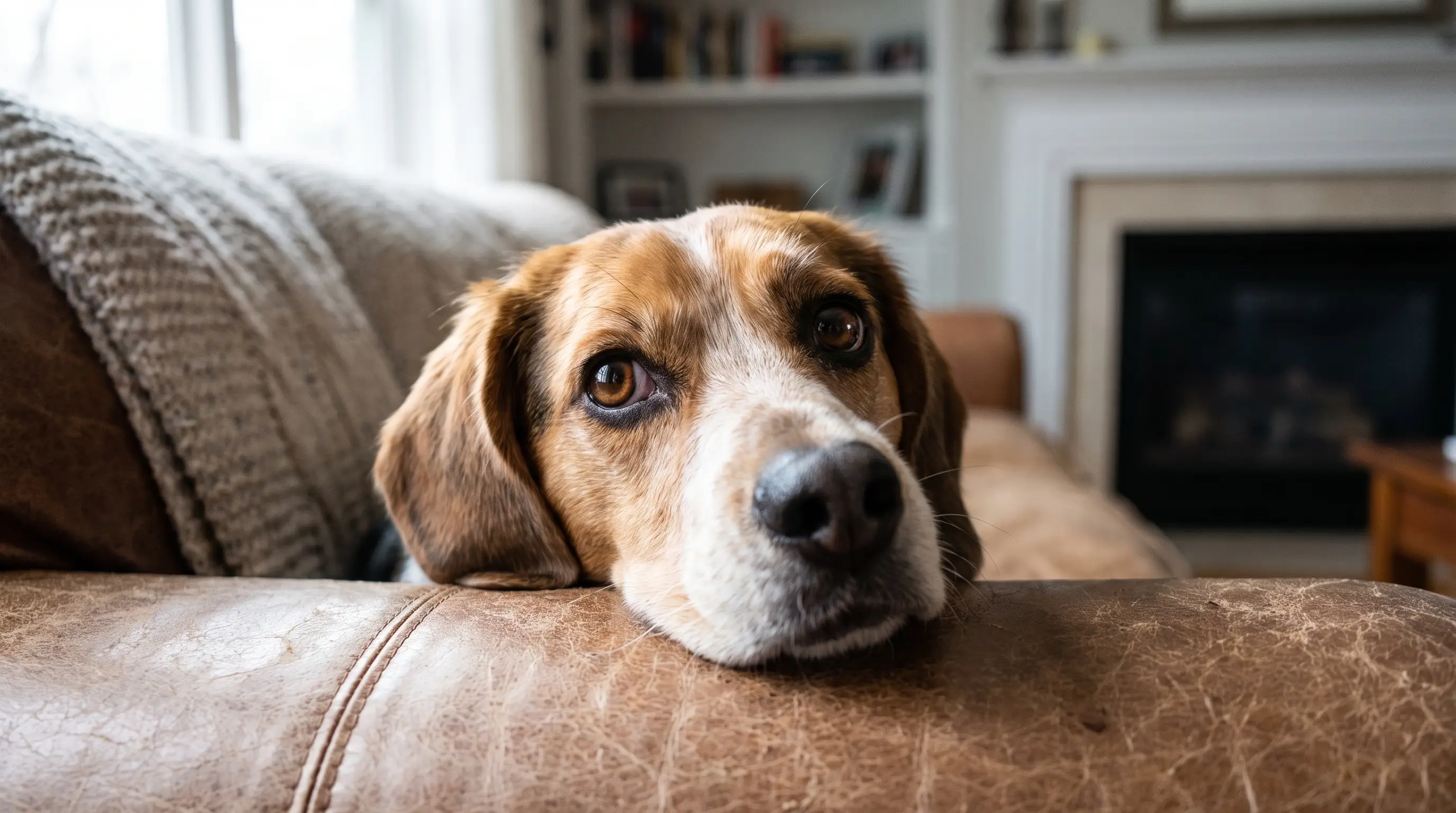
The default stare — soft eyes, loose face, often from across the room for no reason you can find — is affiliative: watching you is simply what a bonded dog does, and the mutual-gaze oxytocin loop measured in do dogs love their owners means the watching is, chemically, its own reward. Then there's the deliberate version. In 2019, researchers dissecting canine and wolf faces found that dogs — and not wolves — possess a well-developed muscle dedicated to raising the inner eyebrow: the anatomical engine of "puppy dog eyes". That expression makes a dog's eyes look larger, rounder and more infant-like, humans respond to it measurably, and shelter dogs who deploy it more get adopted faster. Domestication, in other words, didn't just make dogs watch us — it re-engineered their faces for the conversation.
The forecaster's stare
A large share of staring is meteorology: you are your dog's weather system, and it studies you for fronts moving in. Dogs learn the chains that precede events with unsettling precision — this pair of shoes means a walk, that drawer means dinner, the laptop closing means company — so the stare that tracks you around the kitchen is prediction, not neediness. Layered on top is social referencing, the same move human toddlers make: confronted with something new or ambiguous, a dog looks at your face first to borrow your verdict before forming its own. And in the working breeds, watchfulness is the job itself — a herding dog monitoring its human is running software refined over centuries. A dog that stares at you is usually just reading the most informative object in its world.
The transactional stare
Then there's the stare with an invoice attached. The dinner-time gaze, the ball dropped at your feet with eye contact held, the pointed look at the door — these are requests, and they run on straightforward economics: every stare that produces food, play or an opened door funds the next one. There's nothing wrong with a polite request system — plenty of owners happily accept the door-stare as functional communication — but it pays to notice which stares you're financing. The table-side beg that earns a scrap becomes a permanent dinner guest; the demand-stare that gets attention whenever deployed will be deployed always. The fix is bookkeeping, not scolding: pay the behaviours you want (settling on a mat near the table, say), stop paying the ones you don't, and accept that a previously funded stare takes a few persistent weeks to accept the account is closed.
The bathroom vigil, and other odd stares
The internet's favourite entry: why does a dog lock eyes with you while pooping? Because elimination is the most vulnerable moment in a dog's day — it can neither flee nor defend mid-squat — and it watches the most trusted thing in the area for the duration. You're not being judged; you're on sentry duty. It's a small compliment wearing a strange costume. Two other odd stares deserve notes. Staring at walls or "nothing" is usually hearing, not haunting — dogs track sounds (mice, pipes, neighbours) far beyond our range — but in an older dog, wall-staring paired with disorientation, pacing or getting stuck in corners is a recognised sign of cognitive decline and belongs at the vet. And a stare aimed at you that arrives with a stiff body and a closed mouth after you've reached for a bone or a sofa spot isn't a request — it's the next entry.
The hard stare — and how to stare back politely
One stare carries a warning label. The hard stare — fixed, unblinking, from a stiffened body, often over a resource — is a low rung on the warning ladder covered in why is my dog aggressive, and the correct response is to defuse the situation, not to win the staring contest. The same rule governs strangers: in dog language, direct sustained eye contact from an unfamiliar human is confrontational, which is why the polite way to meet a new dog is side-on, soft-eyed and brief — the full grammar is in dog body language. With your own dog, the opposite applies: soft mutual gazing is bonding (the oxytocin loop runs in both directions), voluntary eye contact is the foundation of every attention exercise in training, and the long, blinking, heavy-lidded look your dog gives you from the sofa needs no decoding at all. It's the whole relationship, condensed.
Common questions
Why does my dog stare at me?
Usually one of four things: affection (watching you is rewarding to a bonded dog — mutual gazing raises oxytocin in both of you), forecasting (you're the source of all schedule information), a request with eye contact attached, or vigilance on your behalf. Soft eyes and a loose body mean all is well; the stare only changes meaning when the body stiffens with it.
Why does my dog stare at me while pooping?
Because mid-squat is the most vulnerable moment in its day — it can't run or defend — so it keeps eyes on its most trusted ally until the situation resolves. You've been assigned sentry duty, not an audience role. It's trust, oddly packaged.
Why does my dog stare at me without blinking?
Check the rest of the body. Relaxed face and loose posture: an ordinary watch-and-wait or a patient request. Stiff body, closed mouth, frozen stillness — especially near food, a toy or a resting spot — is a hard stare, an early warning to give space, and the moment to defuse rather than challenge.
Should I stare back at my dog?
With your own relaxed dog, yes — soft, blinking mutual gazing is bonding and runs the oxytocin loop in both directions. What to avoid is hard, sustained eye contact: with an unfamiliar dog it reads as confrontation, and answering a stiff-bodied hard stare with your own escalates exactly the situation you should be defusing.
Why does my dog stare at walls?
Most wall-staring is ears, not eyes: dogs track sounds far beyond our range — mice, pipes, a neighbour's TV — and orient toward what they hear. It earns attention when the dog is older and the staring comes with disorientation, pacing, or getting stuck in corners, which is a recognised pattern of canine cognitive decline and worth a vet visit.
What are puppy dog eyes?
A genuine anatomical feature: dogs — unlike wolves — have a well-developed muscle that raises the inner eyebrow, making the eyes look bigger and more infant-like. The 2019 anatomy work that described it suggests the expression evolved during domestication precisely because humans respond to it; shelter dogs who use it more even get adopted faster. Your dog is playing an instrument evolution tuned for your heartstrings.
More in Dogs
Do dogs love their owners? What the science measured
Yes — and unusually for a question about feelings, we have the receipts: oxytocin loops, attachment tests and brain scans. What dog love is made of, and what it looks like from the sofa.
Why do dogs eat grass? The myth, the data, the real risks
It's rarely self-medication and almost never a missing nutrient — the biggest survey ever run on grass-eating dogs retired both stories. What's actually going on, and when to pay attention.
Dog zoomies: why dogs suddenly sprint like maniacs
The tucked tail, the mad loops, the gleeful eyes — zoomies have a scientific name, a set of reliable triggers, and exactly one thing you shouldn't do about them.
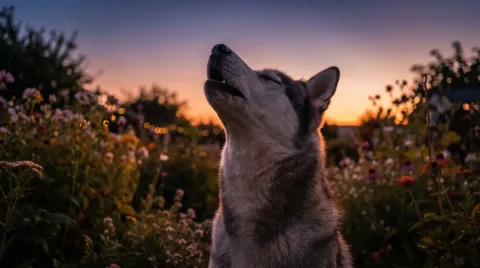
Why do dogs howl? Sirens, solitude and the wolf inside
The howl is long-distance radio inherited from wolves — and no, the siren isn't hurting your dog's ears. What each howl broadcasts, and the one kind that's a message for you.
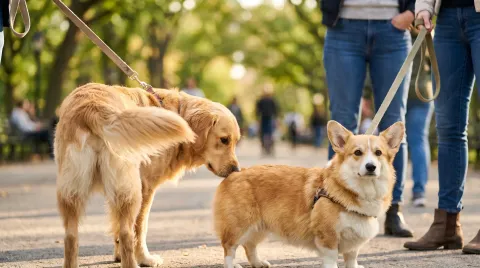
Why do dogs sniff each other's butts? The chemical handshake
It's not rude — it's the most information-dense greeting in the animal kingdom. What's actually in the message, the equipment that reads it, and the etiquette your dog is following.
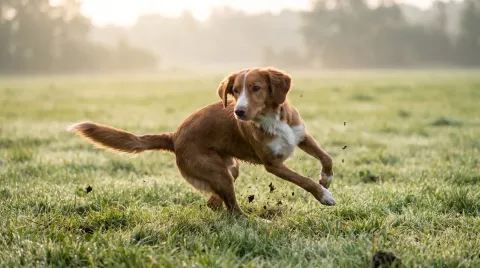
Dog body language: what your dog is really telling you
A wag is not always happy, and hackles are not always aggression. How to read the whole dog — tail, ears, eyes, mouth and posture — and spot stress before it becomes a bite.