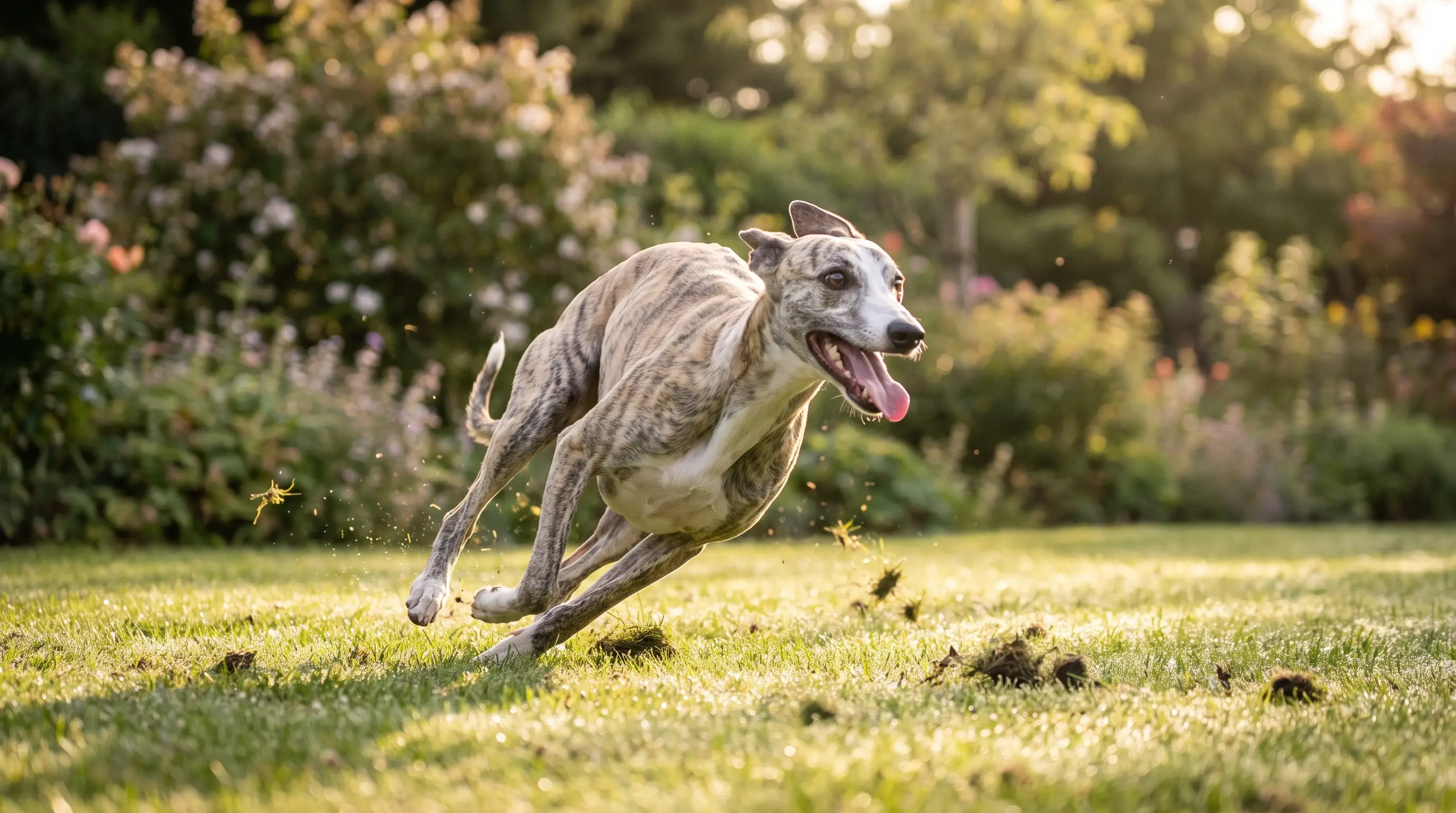
Dog zoomies: why dogs suddenly sprint like maniacs
One moment a calm dog, the next a low-slung blur doing laps of the garden with its hindquarters tucked under it and joy all over its face. Behaviourists call these outbursts FRAPs — frenetic random activity periods — and everything about them is normal: puppies get them daily, adults get them after baths and vet visits, and even old dogs pull one out on a cold morning. Here's what sets them off, how to keep them safe, and how to tell a zoomie from the handful of look-alikes that aren't play at all.
What zoomies actually are
A zoomie has a recognisable anatomy: the sudden ignition, the flat-out sprint with the rear end tucked low for cornering, the wild loops or figure-eights around furniture or flowerbeds, often a play bow between laps, and then — as abruptly as it started — the off switch, a panting dog and a nap. The technical name, frenetic random activity period, is unusually honest labelling: it's a burst of surplus energy leaving the body all at once, and it's documented across young mammals generally, not just dogs. Cats run the same program on a nocturnal schedule, as the sibling piece on cat zoomies explains. Frequency tracks age: puppies may fire daily, adolescents often, adults occasionally, seniors rarely but gloriously. A dog mid-zoomie is not out of control in any worrying sense — the eyes are soft, the mouth is open and loose, and the whole body says play.
The reliable triggers
Zoomies cluster around two situations: pent-up energy finding a door, and tension discharging after it breaks. The first family covers the classics — release from the crate, the end of a long car ride, the first snow, the evening burst after a day indoors. The second family explains the strange ones. The post-bath zoomie is the most famous: a dog that tolerated the ordeal explodes across the house the moment it's over, part relief, part drying strategy, part reclaiming its own smell. The same discharge follows vet visits and grooming — mildly stressful events the dog is shaking off, literally and figuratively. And the internet's favourite mystery, the post-poop zoomie, likely combines simple relief and lightness with a dash of scent politics; nobody has run the definitive study, and any dog owner will tell you it hardly needs one. What the triggers share: something was held in, and now it isn't.
Zoomies and the energy budget
Occasional zoomies are weather; daily indoor zoomies from an adult dog are climate, and the climate is usually under-stimulation. A dog that reliably detonates every evening is telling you its energy budget doesn't balance — common in high-drive herding and sporting breeds asked to live a commuter's life, and near-universal in adolescent dogs, whose bodies have outgrown their walks. The fix isn't just more miles: sniff-heavy walks drain a dog faster than jogging the same loop, training sessions tire the brain the way sprints never do, and food puzzles turn dinner into work. A dog whose days contain real outlets still zooms — happily, occasionally — but stops needing to liquidate the whole account on your rug at 8pm. If the surplus energy is also eating your furniture, the same budget review appears in why dogs chew everything.
Let it run — but choose the racetrack
The rule for a zooming dog is simple: don't stop the zoomie, manage the venue. Grass beats tile and hardwood, where high-speed cornering ends in wipeouts and, in bigger dogs, genuine joint injuries; stairs, pool edges, toddlers and unfenced spaces near roads all disqualify a racetrack. If a zoomie ignites somewhere unsafe, never chase — to a dog, a running human is either a playmate joining in or the start of the best keep-away game ever invented, and both extend the sprint. Instead, run away whooping happily (most dogs pursue), throw a toy along a safe line, or drop into the recall you've paid into — the method in recall training earns its keep precisely here. Evening zoomies in a puppy deserve one extra reading: like toddlers, overtired puppies get frantic rather than sleepy, and the kindest response to the 9pm demon is not more play but a calm wind-down and bed.
When it isn't a zoomie
A few look-alikes deserve a different response. Compulsive circling or tail-chasing is the big one: a zoomie is episodic, gleeful and self-ending, while compulsive spinning is repetitive, joyless, hard to interrupt and returns daily — that pattern needs a vet and often a behaviourist, not a bigger garden. Discomfort sprints masquerade too: a dog that suddenly bolts, then scoots, chews at its rear or races from a standstill with none of the play signals may be reacting to fleas, itching skin or blocked anal glands — the checklist in why is my dog scratching covers the itch side. And in senior dogs, new pacing, circling or restless wandering — especially at night — reads nothing like a zoomie's joy and can signal pain or cognitive decline, which is a vet conversation. The tell, every time, is the face and the ending: zoomies look delighted and finish on their own. Anything grim, frantic or endless has borrowed the speed but not the fun.
Common questions
Why do dogs get the zoomies?
Because surplus energy and post-tension relief need somewhere to go, and a flat-out sprint is the canine release valve. The bursts — technically called FRAPs, frenetic random activity periods — are normal across young mammals, peak in puppies and adolescents, and reliably follow crating, car rides, baths and vet visits. A zooming dog is discharging, not malfunctioning.
Why does my dog get zoomies after a bath?
The bath zoomie is a tension-release classic: the dog tolerated a mildly stressful, restraining event, and the sprint discharges it the moment freedom returns. Mixed in are practical motives — shaking off water at speed, and rolling or rubbing to swap the shampoo smell back for its own. It's relief with a drying cycle attached.
Why does my dog get zoomies after pooping?
Nobody has run the definitive study, but the likely blend is relief, sudden lightness, and a little scent business — some dogs kick and dance after eliminating anyway. It's common, harmless and usually brief. The only version worth attention is a dog that bolts and then scoots or chews at its rear, which points at irritation or anal-gland trouble rather than joy.
Should I let my dog do zoomies?
Yes — zoomies are healthy discharge, and suppressing them just bottles the energy. Your job is the venue, not the behaviour: steer them onto grass and away from tile floors, stairs, pool edges, small children and roads. If one ignites somewhere unsafe, don't chase (that extends the game); run away to invite pursuit, throw a toy along a safe line, or use your recall.
Why does my puppy get zoomies at night?
The evening witching hour is part energy accounting — the day's unspent balance clearing at close of business — and part overtiredness: like toddlers, puppies past their sleep window get frantic instead of drowsy. If the 9pm demon is nightly, add real outlets earlier in the day and answer the evening burst with a calm wind-down and bed, not another play session.
When should I worry about zoomies?
When the joy is missing or the ending never comes. Repetitive, hard-to-interrupt circling or tail-chasing that returns daily points at a compulsive problem; sprinting paired with scooting or chewing at the rear points at itch or anal-gland discomfort; and new pacing or night-time wandering in a senior can signal pain or cognitive decline. All three are vet visits, not bigger gardens.
See also
More in Dogs
Do dogs love their owners? What the science measured
Yes — and unusually for a question about feelings, we have the receipts: oxytocin loops, attachment tests and brain scans. What dog love is made of, and what it looks like from the sofa.
Why do dogs eat grass? The myth, the data, the real risks
It's rarely self-medication and almost never a missing nutrient — the biggest survey ever run on grass-eating dogs retired both stories. What's actually going on, and when to pay attention.
Why do dogs howl? Sirens, solitude and the wolf inside
The howl is long-distance radio inherited from wolves — and no, the siren isn't hurting your dog's ears. What each howl broadcasts, and the one kind that's a message for you.
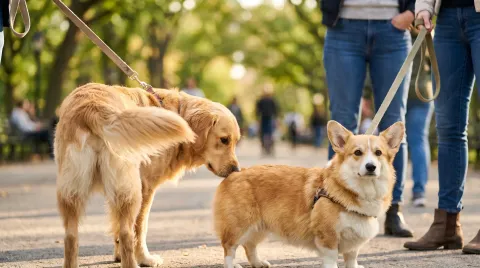
Why do dogs sniff each other's butts? The chemical handshake
It's not rude — it's the most information-dense greeting in the animal kingdom. What's actually in the message, the equipment that reads it, and the etiquette your dog is following.
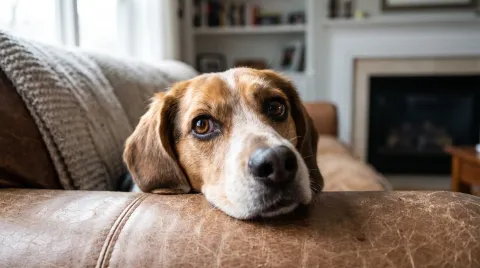
Why does my dog stare at me? Every stare, decoded
Affection, forecasting, negotiation, security detail — a dog's stare is never empty. What each one means, including the famous bathroom vigil, and the one stare to take seriously.
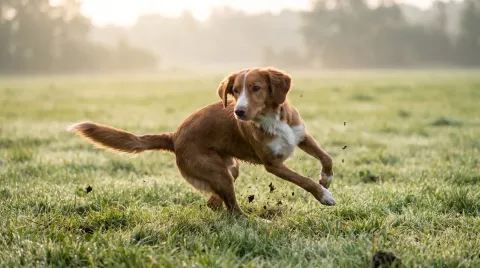
Dog body language: what your dog is really telling you
A wag is not always happy, and hackles are not always aggression. How to read the whole dog — tail, ears, eyes, mouth and posture — and spot stress before it becomes a bite.