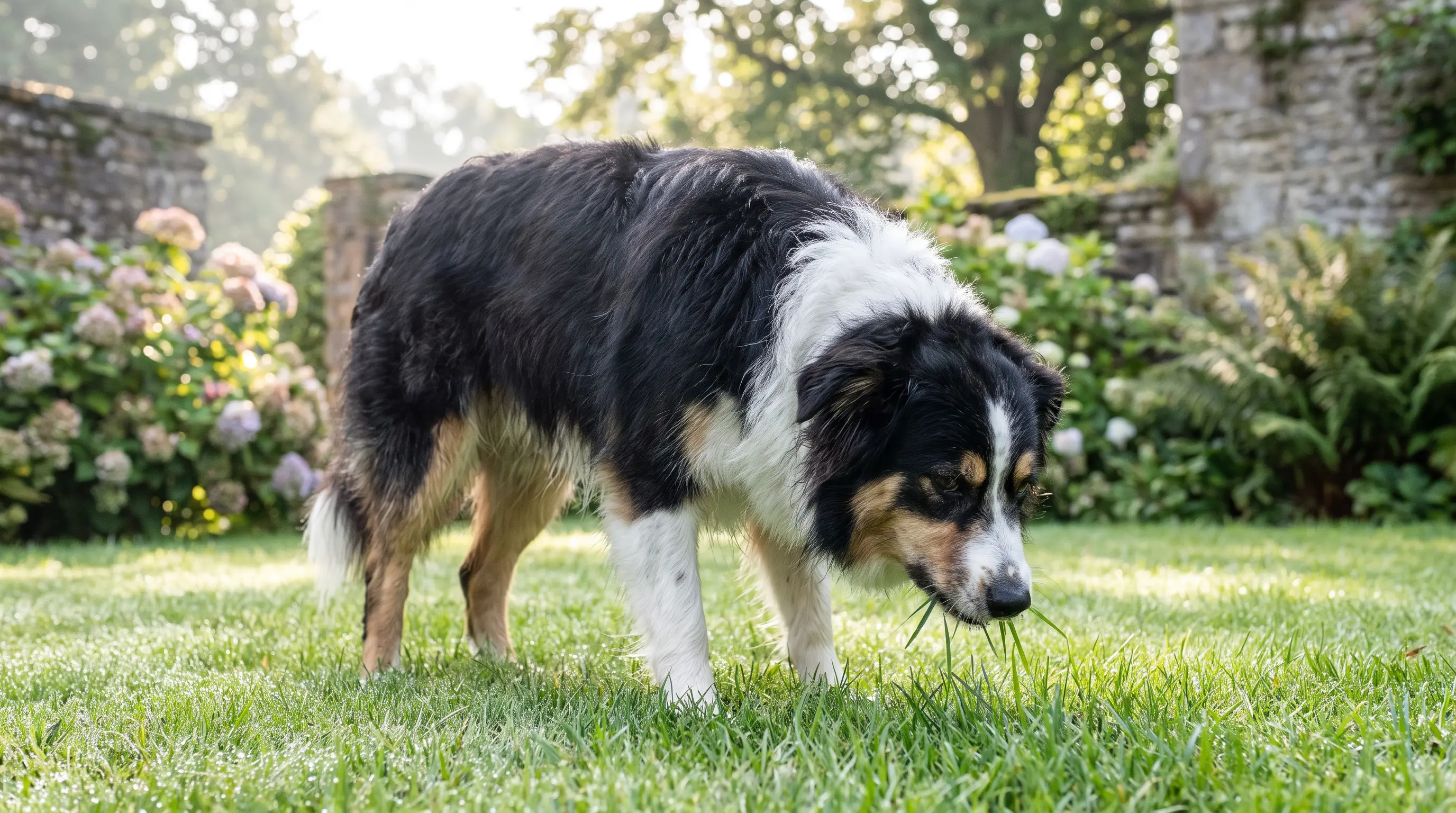
Why do dogs eat grass? The myth, the data, the real risks
The most repeated explanation in dog ownership — "he eats grass to make himself sick" — is the one the evidence supports least. When researchers finally asked owners of thousands of dogs what actually happens on the lawn, the answer was mundane and a little liberating: most dogs eat grass regularly, most weren't unwell beforehand, and most don't vomit afterwards. Grass-eating is, for the overwhelming majority of dogs, just something dogs do. Here's the data, the small print where it does matter, and the risks that live in the grass rather than the habit.
What the survey actually found
The reference study came from Benjamin Hart's group at UC Davis in 2008, which surveyed well over a thousand dog owners about plant-eating in detail. The headline numbers dismantle the folklore neatly: grass-eating was close to universal, with about two-thirds of dogs eating plants weekly or more — yet fewer than one dog in ten had seemed ill beforehand, and only around one in five vomited afterwards. Read that again against the myth: if grass were medicine for a sick stomach, sick dogs should eat it and grass should produce vomiting, and mostly neither is true. Younger dogs grazed more and were even less likely to be ill or to vomit, which fits curiosity better than therapy. Plant-eating also isn't a domestic quirk — grass turns up routinely in the scat of wild wolves — so whatever the lawn habit is, dogs brought it with them rather than inventing it on our watch.
The two myths, retired in order
Self-medication survives as a story because the exception is vivid: everyone has seen a dog gulp grass and then throw up, and nobody notices the hundred quiet grazing sessions that ended in nothing. The data puts the vivid case in its place — a real but minority pattern, not the explanation. The missing nutrient fares no better: in the same survey, dogs on complete commercial diets grazed as happily as anyone, and no link to diet emerged — the same null result, incidentally, that the sibling research found for poop eating. The honest residue after the myths are cleared is almost embarrassingly simple: dogs appear to like grass. Many show a connoisseur's preference for fresh young blades, spring grazing peaks accordingly, and fibre may add a small practical bonus. Not every behaviour needs a hidden medical plot.
Why they actually do it
Zoom out and grass-eating stops needing a special explanation at all. Dogs are not the strict carnivores of pet-food marketing; they're flexible scavenger-omnivores whose ancestors spent millennia eating whatever villages left lying around — a heritage covered in the village dog — and browsing plants sits comfortably inside that job description. On top of the heritage, add the ordinary drivers of any low-effort habit: grazing gives an under-stimulated dog something to do with its mouth on a boring garden patrol, the same vacancy that fuels destructive chewing indoors, and a dog whose grass-eating reliably summons an alarmed owner has also learned a reliable attention button. For most dogs it's some blend of taste, heritage and pastime — which is why it needs managing about as urgently as sniffing lamp posts.
When grass eating is a red flag
The minority case deserves its paragraph, because it's real. Some dogs genuinely do seek grass when nauseated, and that version looks different from grazing: sudden, frantic gulping of long grass, often with gulping and lip-licking beforehand, followed by vomiting — and then the pattern repeating. An episode of that now and then is unremarkable; on a loop, it points at an unsettled gut, and paired with appetite loss, lethargy or repeated vomiting it earns a vet visit — the decision tree in why is my dog vomiting applies. A sudden obsessive grass habit in a dog that never cared before deserves the same curiosity, and a dog eating quantities of non-plant material — soil, stones, fabric — has left grazing territory for pica, which is a medical work-up, not a quirk. The rule stays the one from every guide in this series: sudden change plus a body change means vet first.
Making grazing safe
The dangers of grass-eating live almost entirely in what's on and in the grass. Chemicals: herbicide- and pesticide-treated lawns, roadside verges and freshly sprayed parks are the real toxicity risk — if you treat your own lawn, keep the dog off it per the product's instructions, and let curbside grazing go. The wrong plants: a dog head-down in a flower bed rather than a lawn can sample genuinely toxic species, so grazing is a lawn activity, not a border one. Hitchhikers: in much of Europe the serious one is lungworm, carried by slugs and snails that a grazing dog can swallow accidentally — which is a parasite-prevention conversation to have with your vet, not a reason to ban grass. Beyond that: let a healthy dog graze clean grass in peace, add enrichment if the grazing smells like boredom, and skip the punishment entirely — a habit this normal, policed, just becomes a habit practised further from you.
Common questions
Why do dogs eat grass?
Mostly because they like it and because it's normal canine behaviour — dogs are scavenger-omnivores, wild wolves eat grass too, and the largest owner survey found grazing to be near-universal with no link to illness or diet. Taste (especially fresh young grass), heritage, a little fibre and simple boredom cover the overwhelming majority of lawn sessions.
Do dogs eat grass to make themselves sick?
Rarely. In the UC Davis survey of grass-eating dogs, fewer than one in ten seemed unwell beforehand and only about one in five vomited afterwards — the opposite of what the self-medication story predicts. A minority of dogs do frantically gulp grass when nauseated, but that's the exception with its own recognisable pattern, not the reason your dog grazes.
Should I stop my dog from eating grass?
Usually no — calm grazing on clean grass is normal and harmless. The exceptions are about the grass, not the habit: keep dogs off chemically treated lawns and verges, out of flower beds where toxic plants grow, and up to date on parasite prevention where lungworm is a risk. Ban the locations, not the behaviour.
Why is my dog eating grass frantically?
Frantic, gulping grass-eating — often with lip-licking and swallowing beforehand — is the pattern that can signal nausea. Once in a while, it's nothing; repeatedly, or paired with vomiting episodes, appetite loss or lethargy, it points at an unsettled gut and earns a vet visit rather than a theory.
What is my dog lacking if he eats grass?
Very probably nothing. The survey evidence found no connection between grass-eating and diet — dogs on complete, balanced foods graze as enthusiastically as any others. Fibre may add a small practical benefit, but grazing is not a deficiency signal, and changing food to stop it usually changes nothing.
Can eating grass harm my dog?
The grass itself almost never; what's on it can. Herbicides and pesticides on treated lawns and verges are the main chemical risk, toxic garden plants are the flower-bed risk, and in much of Europe slugs and snails swallowed with grass can transmit lungworm — which is managed with the parasite prevention your vet recommends, not by ending the grazing.
More in Dogs

Do dogs love their owners? What the science measured
Yes — and unusually for a question about feelings, we have the receipts: oxytocin loops, attachment tests and brain scans. What dog love is made of, and what it looks like from the sofa.
Dog zoomies: why dogs suddenly sprint like maniacs
The tucked tail, the mad loops, the gleeful eyes — zoomies have a scientific name, a set of reliable triggers, and exactly one thing you shouldn't do about them.

Why do dogs howl? Sirens, solitude and the wolf inside
The howl is long-distance radio inherited from wolves — and no, the siren isn't hurting your dog's ears. What each howl broadcasts, and the one kind that's a message for you.

Why do dogs sniff each other's butts? The chemical handshake
It's not rude — it's the most information-dense greeting in the animal kingdom. What's actually in the message, the equipment that reads it, and the etiquette your dog is following.

Why does my dog stare at me? Every stare, decoded
Affection, forecasting, negotiation, security detail — a dog's stare is never empty. What each one means, including the famous bathroom vigil, and the one stare to take seriously.
Dog body language: what your dog is really telling you
A wag is not always happy, and hackles are not always aggression. How to read the whole dog — tail, ears, eyes, mouth and posture — and spot stress before it becomes a bite.