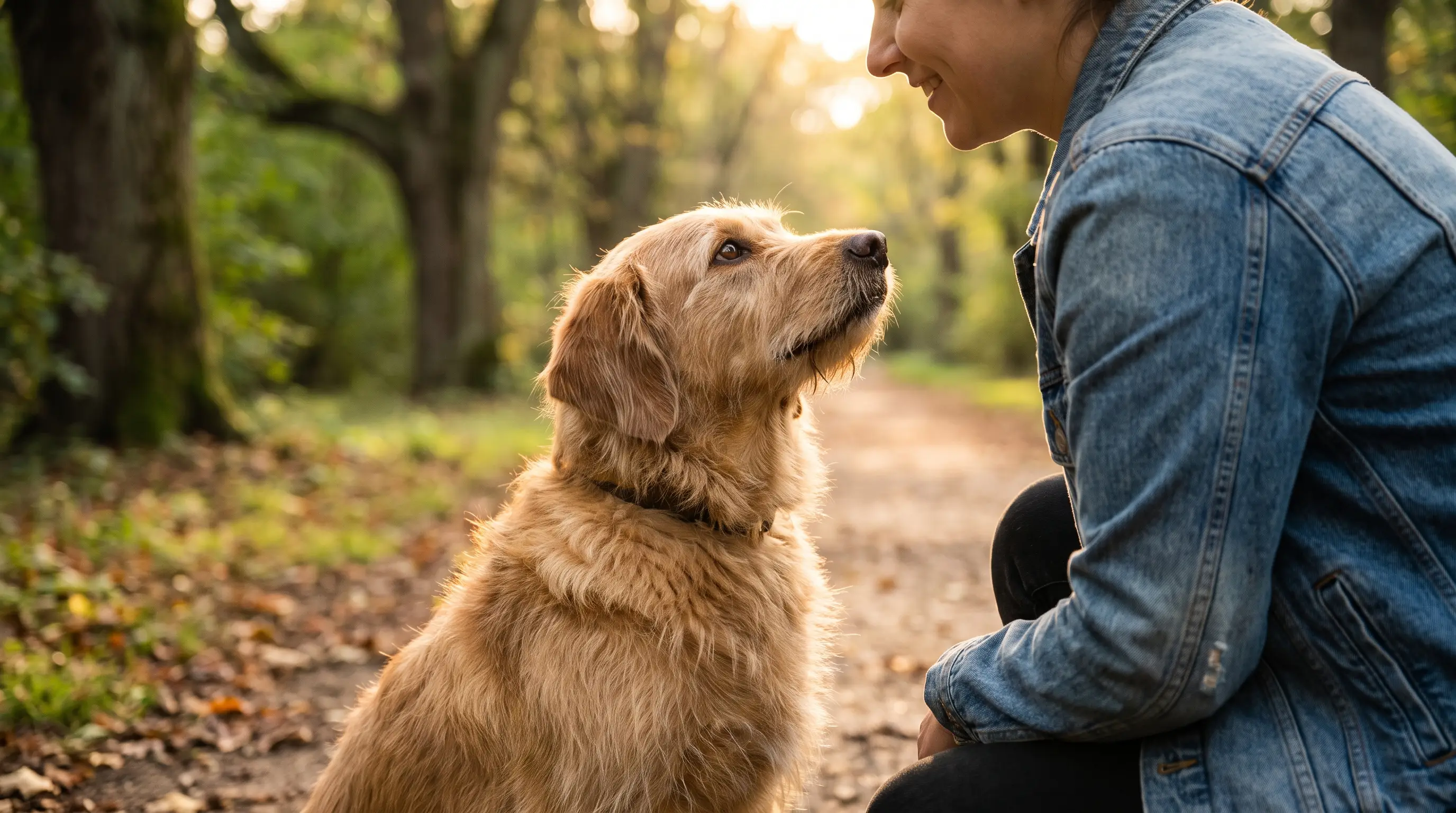
Dog psychology: what your dog is actually doing
The oxytocin loops, the scent politics, the zoomies and the bathroom vigil. What behavioural science actually knows about the animal watching you from the sofa — study by study, without the folklore.
Start here

Everything in this collection

Why does my dog stare at me? Every stare, decoded
Affection, forecasting, negotiation, security detail — a dog's stare is never empty. What each one means, including the famous bathroom vigil, and the one stare to take seriously.
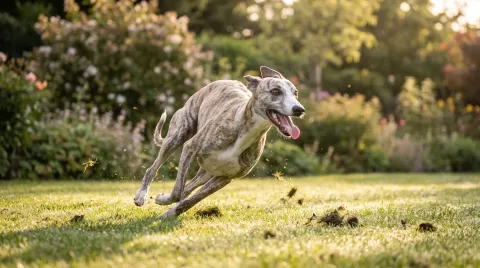
Dog zoomies: why dogs suddenly sprint like maniacs
The tucked tail, the mad loops, the gleeful eyes — zoomies have a scientific name, a set of reliable triggers, and exactly one thing you shouldn't do about them.
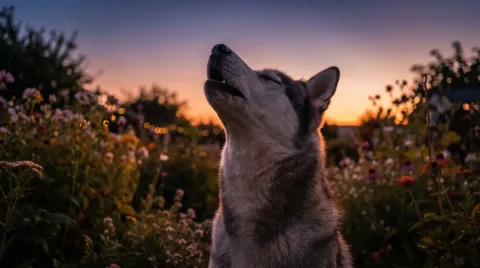
Why do dogs howl? Sirens, solitude and the wolf inside
The howl is long-distance radio inherited from wolves — and no, the siren isn't hurting your dog's ears. What each howl broadcasts, and the one kind that's a message for you.

Why do dogs sniff each other's butts? The chemical handshake
It's not rude — it's the most information-dense greeting in the animal kingdom. What's actually in the message, the equipment that reads it, and the etiquette your dog is following.
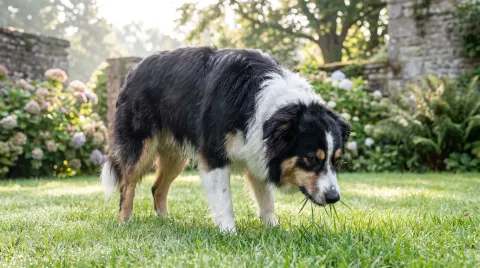
Why do dogs eat grass? The myth, the data, the real risks
It's rarely self-medication and almost never a missing nutrient — the biggest survey ever run on grass-eating dogs retired both stories. What's actually going on, and when to pay attention.

Dog body language: what your dog is really telling you
A wag is not always happy, and hackles are not always aggression. How to read the whole dog — tail, ears, eyes, mouth and posture — and spot stress before it becomes a bite.
What a dog's tail is actually for
Balance, communication and scent - the three real jobs a dog's tail does, and why a wag on its own never means a happy dog.
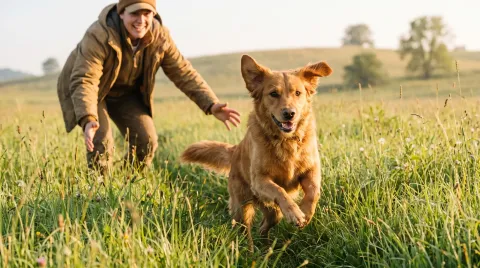
Why does my dog follow you everywhere?
Velcro dogs shadow you from room to room for good reasons — bonding, breeding and plain reinforcement. When it is sweet, and when it tips into separation anxiety.

Why does my dog lick you so much?
Affection, taste, attention, instinct — dog licking usually means something friendly. The honest reasons, whether it is hygienic, and when licking is a sign of a problem.
Do dogs dream? What the twitching and paddling mean
Yes, and a 1960s experiment on cats is how we know. What the paddling paws are really doing, why puppies twitch most, and the one time you should worry.
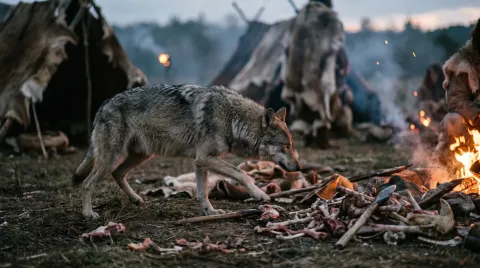
Are dogs and wolves the same species?
Technically yes — a dog is a subspecies of grey wolf, and the two make fertile pups. But a dog is not a tame wolf, and the differences run deeper than looks.
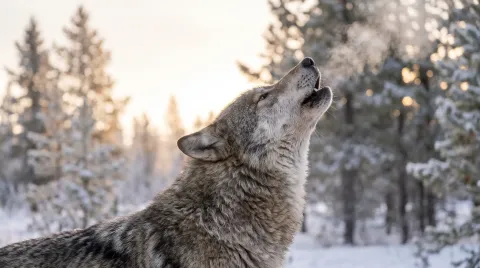
Why wolves howl (and why not at the moon)
A howl is a phone call, a fence, and a family song rolled into one. What it does, and why the moon has nothing to do with it.
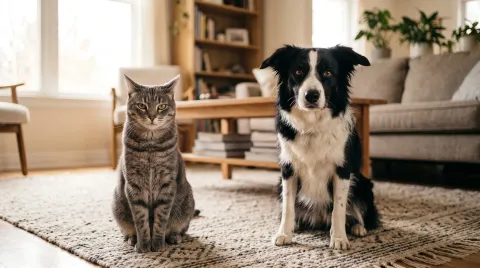
Are cats smarter than dogs? What we can actually measure
Dogs have twice the neurons; cats fail experiments by refusing them. The oldest argument in pet ownership, settled as far as science can settle it — which is less far, and more interesting, than either side hopes.
Bred to read you — and still not a person
The dog is the only animal on earth shaped, over tens of thousands of years, specifically to live with humans and read them — and the science of that partnership has stopped being sentimental and started being measurable. Mutual gazing runs the same oxytocin loop as parent and infant. Dogs pass attachment tests designed for toddlers. They have a face muscle, absent in wolves, whose apparent job is making eyes at us. When people say a dog is part of the family, the instruments agree.
And yet the second mistake is as common as the first: a dog is not a furry little person. The zoomies are surplus energy finding a door, the butt-sniff is a chemical business card, the howl at the siren is wolf software running in a flat — none of it needs human reasoning to explain, and reading it as human reliably misreads it. Hold both truths and your dog comes into focus: an animal genuinely built for you, running an operating system that is genuinely not yours. The same double reading works for the household's other species in our cat psychology collection — and on the day a behaviour tips from quirk into problem, the fix-it counterpart is dog behaviour problems.