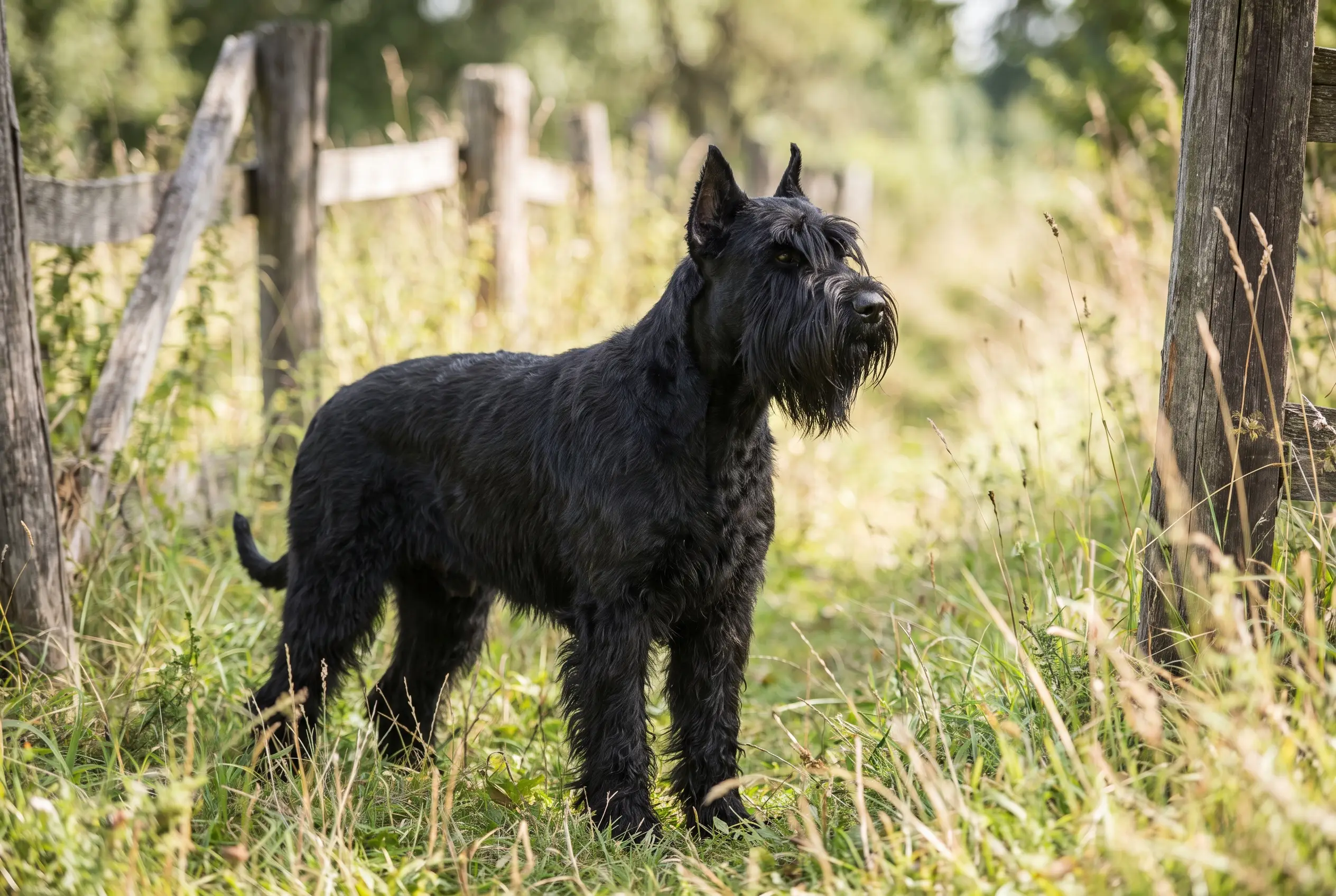
Are Schnauzers terriers? No — here's their real group
No — Schnauzers are not terriers, however much the wiry beard, bushy eyebrows and feisty streak suggest otherwise. In the Fédération Cynologique Internationale (FCI), the world's largest registry, all three Schnauzers sit in Group 2 alongside the Pinschers, not in the terrier group at all. The confusion is real and has a specific cause, and untangling it is a quick lesson in how differently the big registries carve dogs up.
The short answer, and the AKC wrinkle
The Schnauzer is a German breed of the pinscher-schnauzer type, and the FCI places the Giant, Standard and Miniature all together in Group 2 (Pinscher and Schnauzer type), Section 1. Not terriers.
So where does the idea come from? Largely from the American Kennel Club, which splits the sizes up: the Miniature Schnauzer is placed in the AKC's Terrier Group, while the Standard and the Giant Schnauzer sit in its Working Group. That single American placement, plus a coat and temperament that genuinely look the part, is why 'are schnauzers terriers' gets typed into search bars so often. The honest answer is that one registry files the smallest one with the terriers for convenience; the breed's actual origin is not terrier at all.
What actually makes a terrier
A terrier is defined by a job, not a look. The name comes from the Latin terra, earth: terriers were bred to go to ground, chasing rats, foxes and badgers into their burrows, and most of the classic ones come from Britain and Ireland. The wiry coat and bold character are means to that end.
Schnauzers were bred for different work in Germany — ratting around farms and stables, guarding, and droving livestock — and were grouped with the Pinschers, the smooth-coated German farm dogs they're closely related to. They share the terrier's boldness because ratting rewards it, but they never belonged to the earth-dog family. Same attitude, different roots.
Why two registries disagree
This is really a story about classification, not the dog. The FCI uses ten groups and sorts by type and country of origin, which lands every Schnauzer in Group 2. The AKC uses seven groups and makes some pragmatic, size-based calls, which is how the Miniature ends up among the terriers.
Neither is wrong — they're answering slightly different questions. It's the same reason a breed can be a 'Utility' dog in one country and a 'Non-Sporting' dog in another. If you like this kind of untangling, our guide to how dog registries actually work lays out who recognises what, and why the number of groups even differs.
Common questions
Are Schnauzers terriers?
No. Schnauzers are a German pinscher-schnauzer breed, and the FCI — the world's largest registry — places all three sizes in Group 2 with the Pinschers, not among the terriers. They look and act the part, but they were never bred as earth-dogs.
What group is a Schnauzer in?
In the FCI, all Schnauzers are in Group 2 (Pinscher and Schnauzer type). In the AKC it's split by size: the Miniature Schnauzer is in the Terrier Group, while the Standard and Giant are in the Working Group.
Why is the Miniature Schnauzer in the terrier group?
Only in the AKC, and it's a classification choice rather than a statement about the breed's origin. The AKC groups the small, wiry, feisty Miniature with the terriers; the FCI keeps it with the other Schnauzers in Group 2. The breed's roots are German farm dog, not earth-dog.
What were Schnauzers bred for?
Schnauzers were German working dogs — ratting around farms and stables, guarding property, and droving livestock. The Giant was used for cattle and later police and guard work. That ratting job is why they share a terrier's boldness without being terriers.
How many groups do dog registries have?
It varies, which is the root of a lot of confusion. The FCI uses ten groups, the AKC uses seven, and the UK Kennel Club uses seven of its own. The same breed can therefore sit in differently named groups depending on the country.
See also
More in Dogs
What is a Kelpie? Australia's tireless farm dog
The Australian Kelpie is a medium herding dog built for endless work in brutal heat. What it is, how big it gets, whether it sheds, and who it actually suits.
Is a Cockapoo a breed? What designer crosses really are
A Cockapoo is a hugely popular dog — but not a breed any major registry recognises. Why a cross isn't a breed, what F1 and F1b actually mean, and why it matters.
The fastest dog breeds, and how fast they really go
The Greyhound hits about 72 km/h — second only to the cheetah, and the winner over any real distance. Honest top speeds for the sighthounds and the surprises, plus how fast a Dobermann actually is.
The smallest dog breeds in the world
The Chihuahua is officially the smallest, at 1.5–3 kg. Here are the toy breeds just above it — and an honest warning about the 'teacup' label, which is marketing, not a breed.

Low-shedding dog breeds, ranked from our own data
We scored every breed for shedding, 1 to 5. Here are the ones that scored lowest — the curly coats worth the grooming bill, the genuinely low-maintenance short-hairs, and why none of them are hypoallergenic.
Which dog breeds are actually ancient?
Genetics keeps naming the same handful of breeds as “ancient” — but that word means isolated from the Victorian breed factory, not unchanged since antiquity.