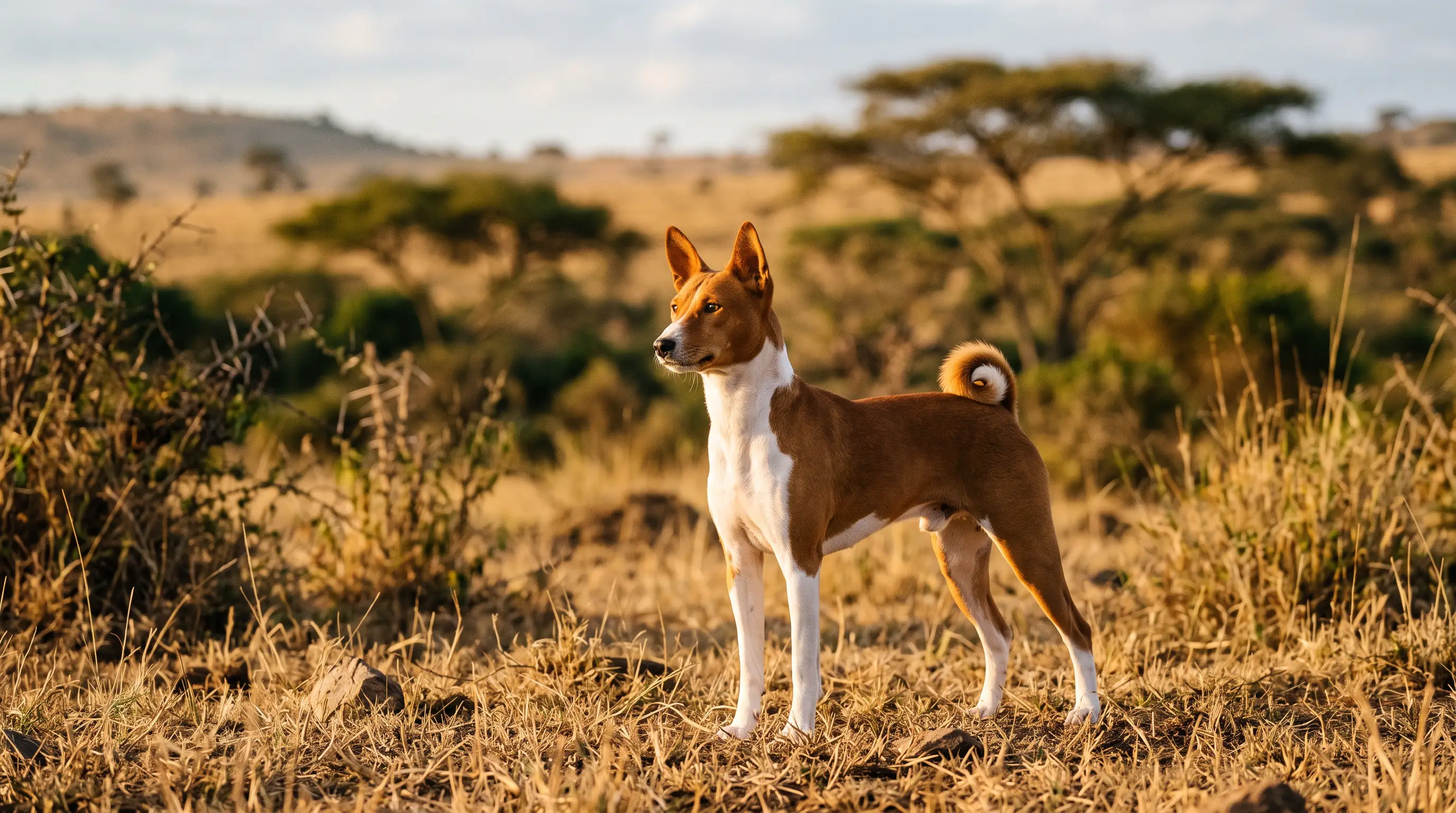
Which dog breeds are actually ancient?
The honest answer to “which dog breeds are ancient?” is smaller and stranger than the marketing suggests. DNA studies keep pulling the same dozen or so breeds toward the base of the dog family tree, and it is easy to read that as proof they have survived unchanged for thousands of years. They mostly have not. “Genetically ancient” describes a breed that sat out the 19th-century invention of the pedigree dog, not a living fossil. Once you separate those two ideas, the question gets more interesting, and a working sled dog from Greenland ends up mattering more than any folklore about pharaohs.
The oldest-breed title just changed hands
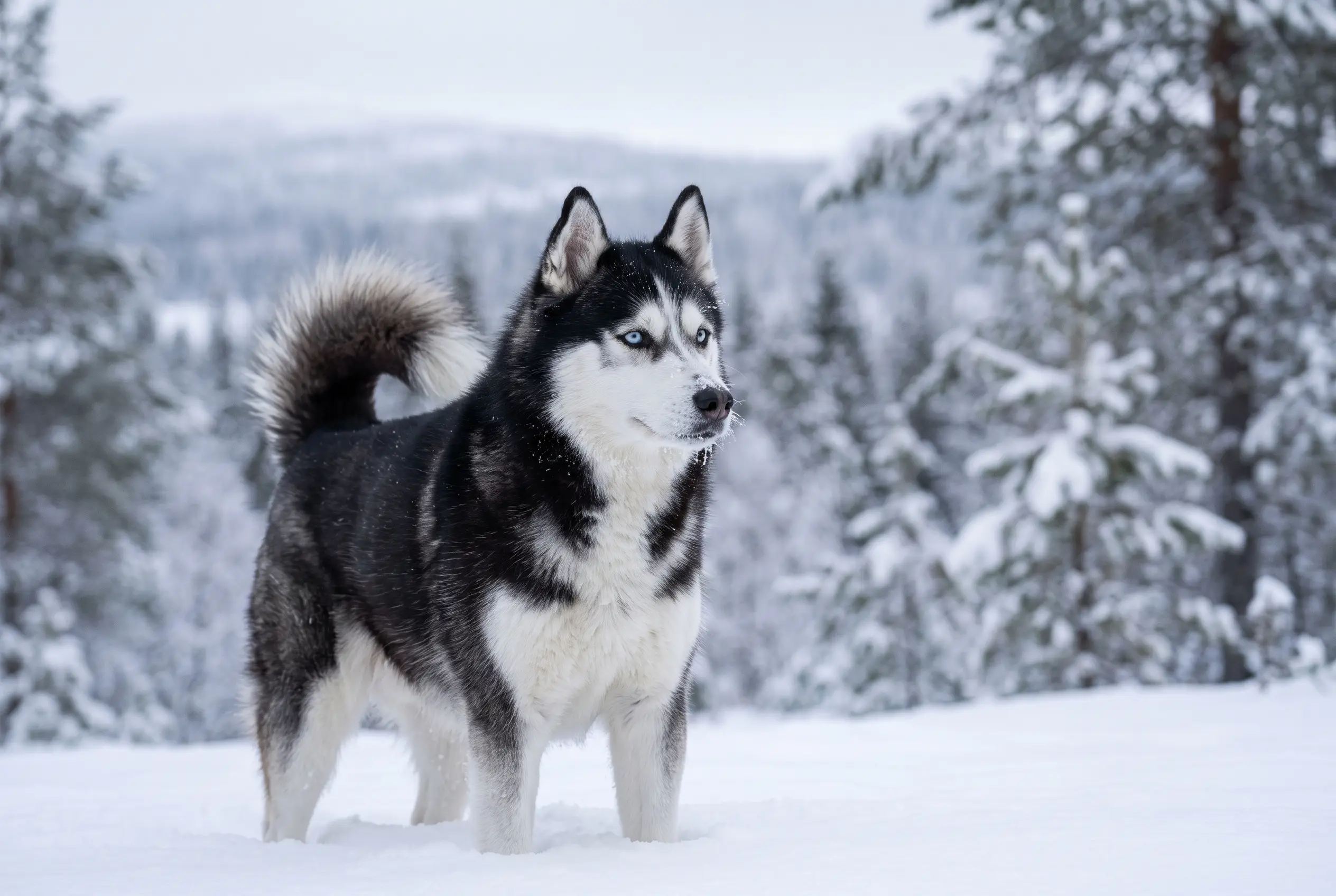
In July 2025, a study in Science gave the “oldest dog breed” label a genuine claimant with evidence behind it. Researchers sequenced the Qimmeq, the Greenland sled dog, and traced its line back to roughly 9,500-year-old Siberian sled dogs from Zhokhov Island, then followed the Inuit who brought those dogs into Greenland about a thousand years ago. Guinness World Records picked it up for its 2026 edition and listed the Greenland sled dog as the oldest.
What makes this worth leading with is not the trophy. It is the type of claim. The Qimmeq is a working landrace that stayed geographically and reproductively cut off, doing the same job in the same place for a very long time, and the DNA shows a continuous line rather than a modern reconstruction. That is documented continuity. Most “ancient breed” copy you read about the Basenji or the Akita is not that. It is a genetic pattern being mistaken for a calendar age. The rest of this piece is about telling the two apart, and the wider Origins work on where breeds come from keeps running into the same confusion.
What “genetically ancient” actually measures
When geneticists call a breed ancient, they mean it sits on a divergent, basal branch of the dog tree, further from the big cluster of modern European breeds. That is a statement about position, not about years. The load-bearing paper here is Larson and colleagues in PNAS in 2012, which analysed 49,024 SNPs across 1,375 dogs from 35 breeds plus 19 wolves. Its central, awkward finding: the breeds that look ancient in the DNA do not come from the regions with the oldest archaeological dog remains.
So the position is real but the reason is not antiquity. These breeds look basal because they were isolated from the 19th-century breed-formation event, the moment when British and European fanciers built the stud-book system and manufactured most of the breeds we now think of as normal. If your ancestors were never poured into that funnel, your line reads as separate. That is what the signal is picking up. We tell the story of that funnel in the invention of dog breeds, where most “ancient” breeds turn out to be younger than the bicycle. This article is the other half of that argument: some lines genuinely did sit it out.
The breeds that keep landing at the base of the tree
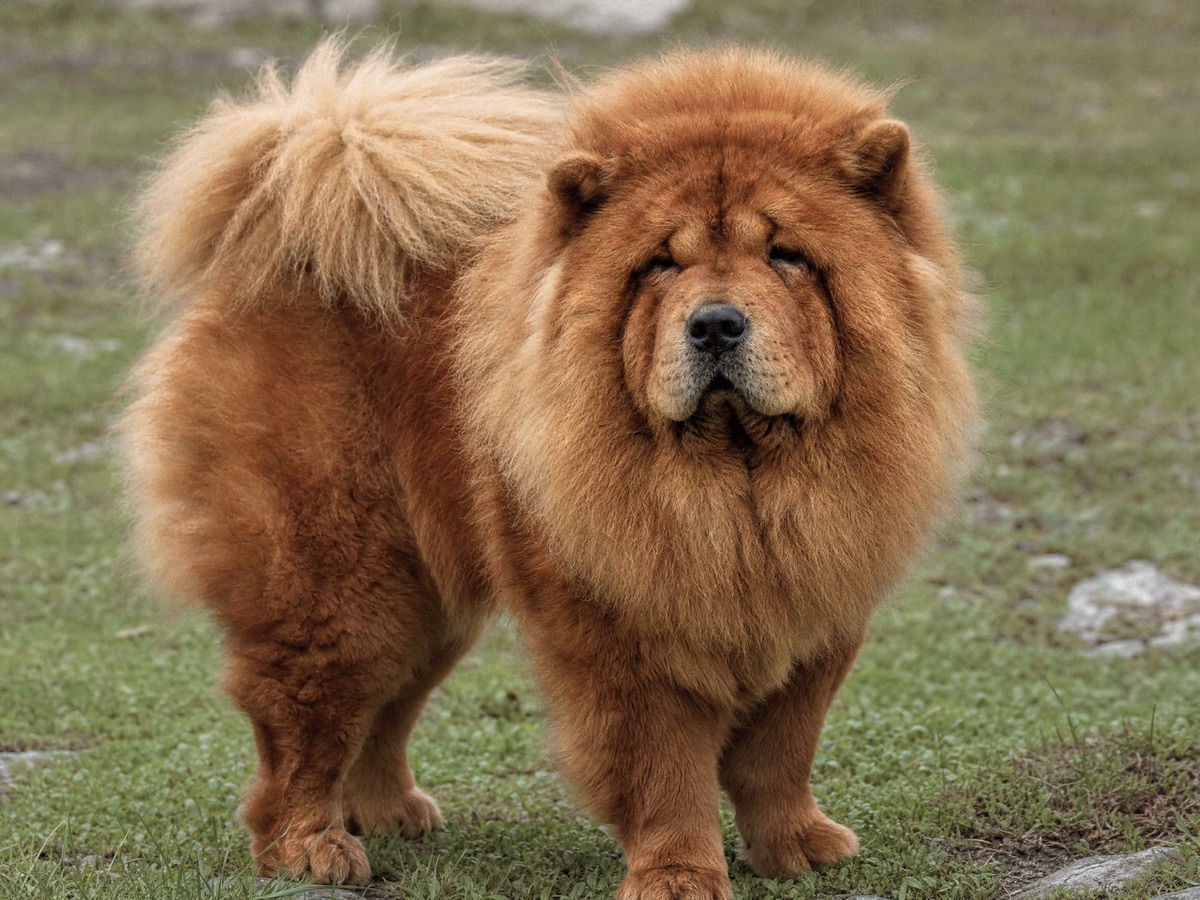
A short list of breeds gets recovered as basal again and again, which is more convincing than any single study. Parker and colleagues opened this up in Science in 2004 using microsatellites across 85 breeds and 414 dogs; breeds accounted for around 30% of genetic variation and 99% of dogs were correctly assigned to their breed, and the analysis split off a small set of breeds of ancient Asian and African origin from the large modern-European cluster.
VonHoldt and colleagues sharpened it in Nature in 2010 with roughly 48,000 SNPs across 912 dogs and 225 grey wolves, and named an ancient cluster: the Basenji, Afghan Hound, Samoyed, Saluki, Canaan Dog, New Guinea Singing Dog, Dingo, Chow Chow, Chinese Shar-Pei, Akita, Alaskan Malamute, Siberian Husky and the American Eskimo Dog. I am not going to give you a fixed number, because the roster shifts by study and method. The point is the overlap: sighthounds, spitz-type sled dogs, and a couple of African and Pacific outliers keep turning up together.
Isolation, not a time capsule
Here is the part the brochures skip. A basal position tells you a line escaped the Victorian bottleneck. It does not certify that the modern breed is unchanged, and several of these breeds were reconstructed or standardised quite recently even though their underlying stock is old. The Canaan Dog was formalised in the 20th century from free-living Middle Eastern dogs. The Basenji's European breeding pool was shaped by a small number of imports. So the honest reading is case by case: old lineage, yes; frozen relic, no.
This is why the Qimmeq stands out rather than blends in. Its claim rests on a continuous working population plus a genetic line you can actually follow, not on a divergent branch alone. It also explains why a breed can be genetically basal and still look and behave differently from its ancestors, because a few centuries of selection for a job, a look, or a show ring leave marks. Parker and colleagues showed the machinery in Cell Reports in 2017: using the CanineHD array on 938 dogs across 127 breeds, expanded to 161 breeds in 23 clades, they documented breeds arising by division and admixture, with cross-breed hybridisation written into the data. Breeds are built and rebuilt. Even the old ones.
Closest to wolves, closest to the first dogs
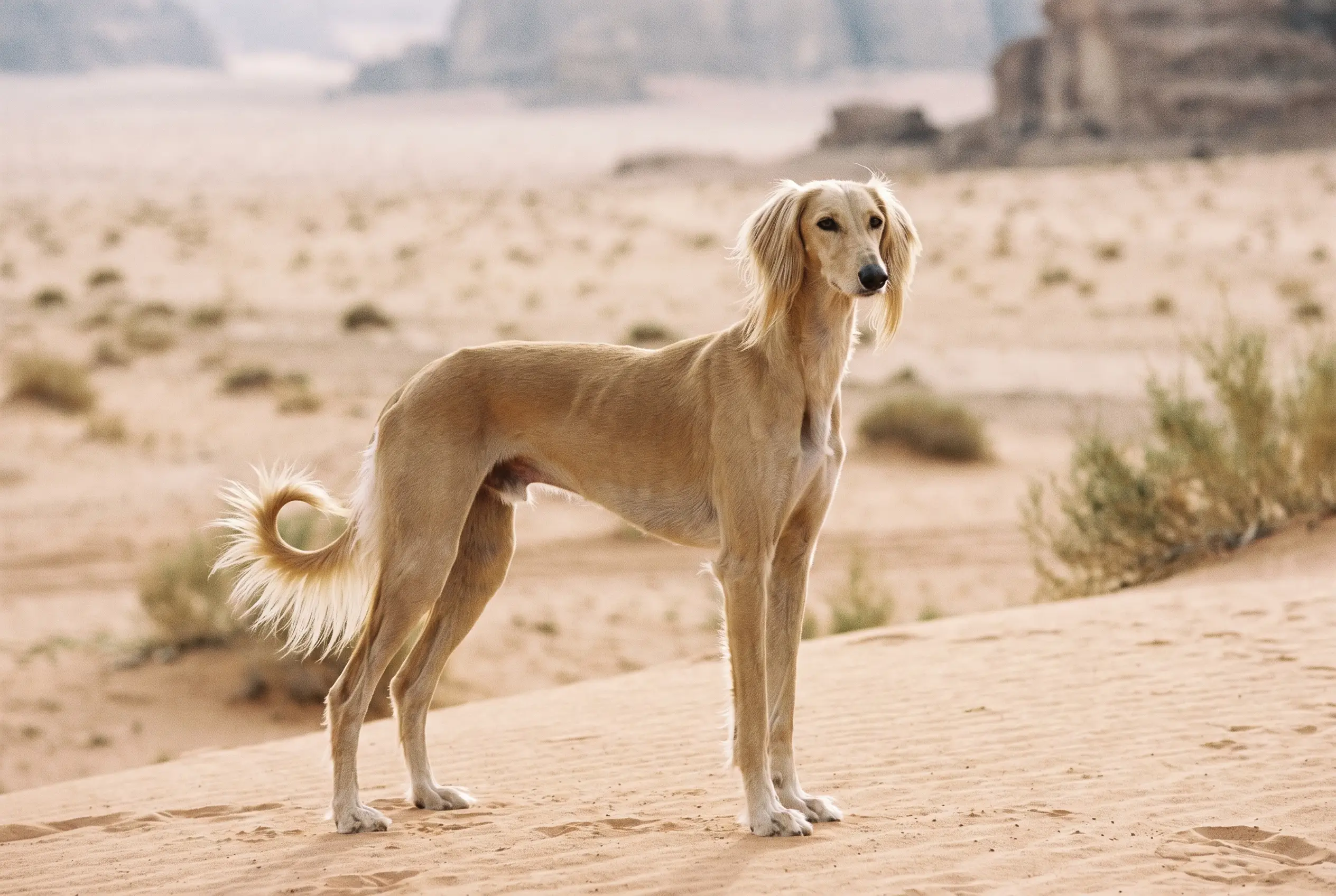
People often collapse three different questions into one: oldest breed, closest to wolves, and closest to the first domesticated dogs. They have different answers. The breeds that sit closest to grey wolves in these datasets tend to be the same spitz and basal types, the huskies, malamutes, Shar-Pei and Basenji, but genetic proximity to living wolves is not the same as being an early dog, and it is heavily distorted by recent wolf admixture in some lines.
Closest to the first domesticated dogs is harder still, because the first dogs are gone and no living breed is a straight line back to them. For the deep-time story of how wolves became dogs at all, we cover the archaeology and the dating fights in wolf to dog. And for most of the dogs that have ever lived, the honest category is neither wolf nor pedigree but the free-breeding village dog, the global default that the whole pedigree world is a thin recent layer on top of. Basal breeds are interesting precisely because they sit near that older, looser way of being a dog.
How to read an “ancient breed” claim
Treat any “thousands of years old” line about a specific breed as a red flag until you see what it rests on. Genetic divergence dating is not the same as breed age, and a basal branch does not come with a birth certificate. If a source gives you a tidy round number of years for a modern breed, it is almost certainly borrowing a folklore figure and dressing it as science. The genetics papers themselves avoid those numbers on purpose.
A better set of questions: is there a continuous working or geographic population behind the breed, or was it reconstructed by fanciers? Does the DNA show a divergent line, admixture, or both? And is the antiquity claim about the lineage or about the modern standardised breed, because those come apart. Browse the dog breeds in the collection with that lens and the ancient ones get more impressive, not less. They are not costumes from the past. They are lines that stayed out of the room while everyone else was being redrawn.
Common questions
What is the oldest dog breed in the world?
There is no settled winner, but the strongest recent claim is the Greenland sled dog (Qimmeq). A 2025 study in Science traced its line to roughly 9,500-year-old Siberian sled dogs, and Guinness World Records listed it as the oldest in its 2026 edition. It is a rare case of documented, continuous ancestry rather than folklore.
Is the Basenji the oldest dog breed?
Not in any way that can be dated. The Basenji is repeatedly recovered as a basal, divergent lineage in DNA studies, which means it sat outside 19th-century breed-making, not that it is unchanged since antiquity. The popular “5,000 years old” and cave-painting claims have no primary source behind them.
Are ancient dog breeds really ancient?
Their lineages are genuinely divergent, but “ancient” mostly means isolated from the Victorian invention of pedigree breeds, not frozen in time. Larson and colleagues showed in 2012 that these breeds don't even come from the regions with the oldest dog remains, and several were reconstructed or standardised recently.
What is the oldest dog breed still around today?
The best-evidenced living example is the Greenland sled dog, a working landrace kept isolated for centuries with a traceable genetic line. Other breeds such as the Saluki, Basenji and various spitz types are consistently basal in the DNA, but their exact ages can't be pinned to a number.
Which dog breeds are closest to wolves?
In genetic studies the closest tend to be spitz and basal types, including the Siberian Husky, Alaskan Malamute, Chinese Shar-Pei and Basenji. But proximity to living wolves is partly driven by recent wolf admixture and is not the same as being an early or ancestral dog.
What dog breed is closest to the first domesticated dogs?
No living breed is a direct line to the first dogs, which no longer exist. Basal breeds like the Basenji and Dingo sit nearer the base of the tree, and free-breeding village dogs may be closer in lifestyle, but the earliest dogs left no unbroken modern descendant we can point to.
See also
More in Dogs

National dog breeds: how a dog becomes a country's symbol
A nation doesn't just adopt a breed. Somewhere there's paperwork, a patron country, and an official standard. Here's the machinery, and the cases that actually hold up.
The village dog: the real default, and why your breed is the odd one out
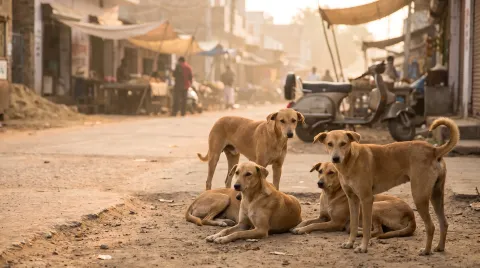
Most dogs on Earth are free-ranging scavengers, not purebred pets. The breed is the recent human invention sitting on top of a much older, stabler kind of dog.
The dog breeds that vanished — and the one a 2023 genome brought back into focus
A woolly dog from the Pacific Northwest, a spit-turning kitchen worker, and the working landrace behind every retriever: what killed them, and what modern DNA can and cannot recover.
Seven groups, ten groups, three answers: how dog breeds get sorted
Kennel clubs sort several hundred breeds into a handful of groups. Here is how those lines were drawn, why the AKC's seven don't match the FCI's ten, and why the Standard Schnauzer belongs to three groups at once.
Dog breeds named after the wrong country
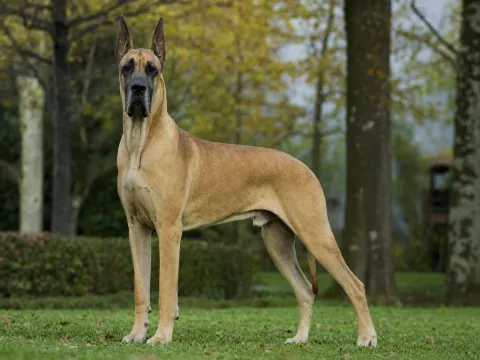
The Great Dane is German. The Australian Shepherd is American. Breed names are charming, and they are terrible geography.
Who invented dog breeds, and when
Most 'ancient' breeds are younger than the bicycle. The breed as we know it was invented by Victorians with a stud book, in about 1873.