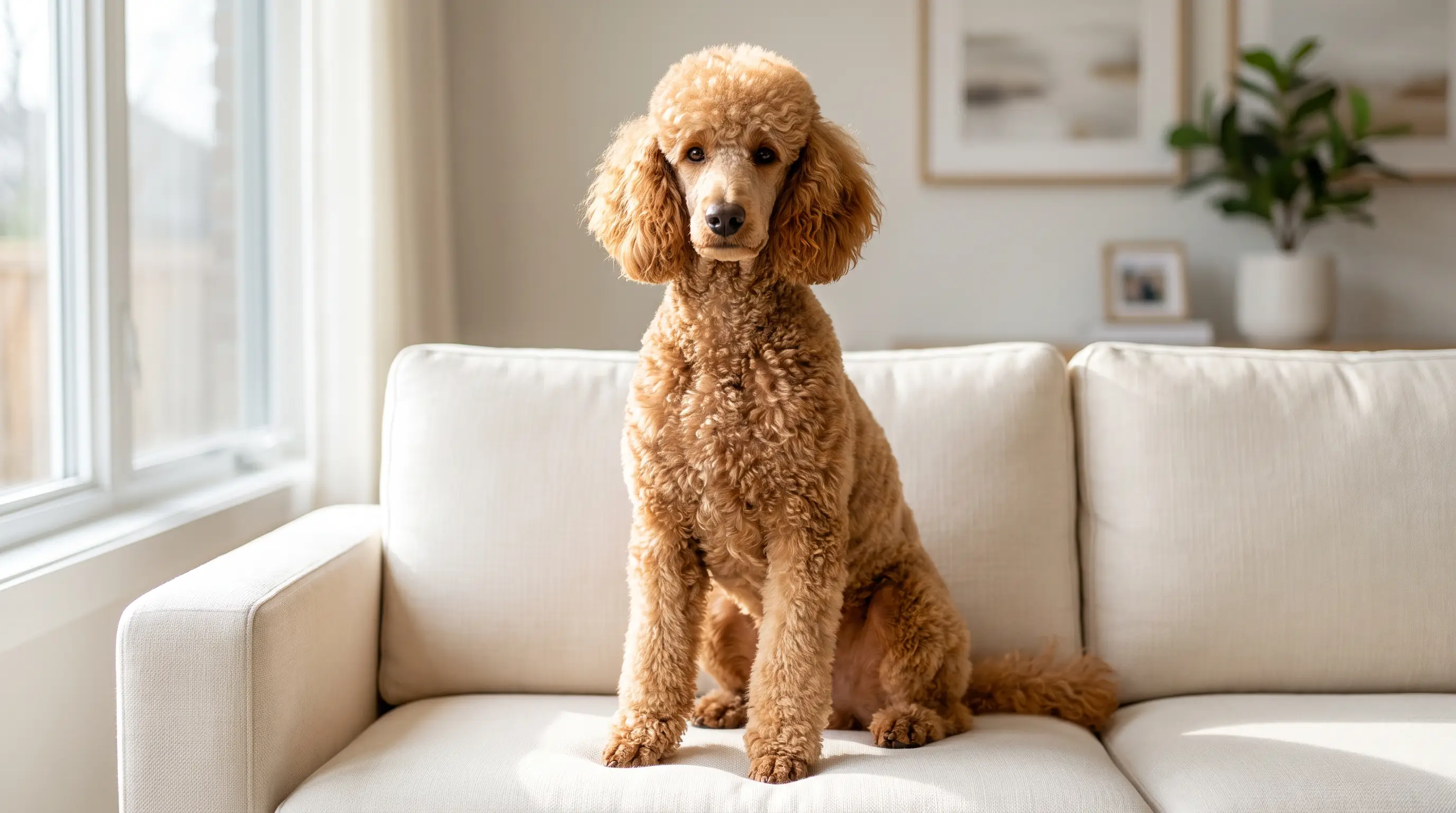
Low-shedding dog breeds, ranked from our own data
We hold a shedding score for every breed in our database, rated from 1 (barely sheds) to 5 (sheds constantly), so we can answer the low-shedding question from our own data rather than repeating a list. The breeds below all score a 1. Two honest points frame the whole thing: most of the famous 'low-shedding' dogs earn that score by trapping their dead hair in a curly coat you then have to groom out, and low-shedding is not the same as hypoallergenic — no dog is. Here is what our data actually shows.
What 'low-shedding' really means, and doesn't
Start with the myth, because it is the important part. Allergies are triggered mainly by dander — flakes of skin — and by proteins in a dog's saliva, not by hair itself. That is why no dog is truly hypoallergenic, whatever the coat does, and why a low shedding score is about your sofa and your clothes rather than your allergies. A dog that sheds less simply leaves less loose, dander-carrying hair around the home, which can help, but it never removes the allergen.
The second thing our scores reveal is a trade-off. Most breeds that score a 1 for shedding do it with a curly, wavy or wiry coat that holds onto dead hair instead of dropping it — and hair that does not fall out on your floor has to be brushed and clipped out of the coat instead. So the low-shedding win is usually paid for at the groomer. A handful of breeds dodge that bill with short coats that genuinely shed little and need almost nothing, and it is worth separating the two.
The curly and wiry coats worth the grooming
These are the breeds people picture when they say low-shedding, and in our data they all score a 1 for shedding — but a 4 or 5 for grooming effort, the highest on the scale. The Poodle is the archetype: its dense curly coat barely sheds and is why so many crosses are bred from it, but it needs clipping every few weeks or it mats. The same bargain runs through the Bichon Frise, the Portuguese Water Dog, the Lagotto Romagnolo and the Bedlington Terrier.
The silky toy coats belong here too. The Maltese, Shih Tzu, Yorkshire Terrier and Havanese all score a 1 for shedding and demand regular upkeep to earn it, as do the hand-stripped terrier coats of the Miniature Schnauzer and the Soft Coated Wheaten Terrier. Wonderful for a hair-free home; budget for the groomer.
The genuinely low-maintenance ones
The best-kept secret in our data is the group that scores a 1 for shedding and a 1 for grooming — low-shedding with almost no upkeep at all. These are short, fine-coated dogs rather than curly ones. The Basenji is the standout: it sheds very little and grooms itself fastidiously, cat-like, so it barely needs you. The Italian Greyhound and the Whippet carry so little coat there is next to nothing to shed or to brush.
If your real goal is a clean home without a grooming routine, this is the group to look at rather than the celebrity curly coats. The catch is the flip side of that thin coat: these dogs feel the cold and often want a jumper in winter, and their fine skin needs a little more care against knocks and weather. Low-shedding and low-maintenance in one dog is possible — it just tends to come in a short-haired, cold-sensitive package.
The hairless caveat
At the very bottom of the shedding scale are the hairless breeds, and they need an asterisk. The Xoloitzcuintli, the Chinese Crested and the American Hairless Terrier score at the floor of our shedding data for the obvious reason that there is barely any coat to shed. On paper they are the ultimate low-shedding dogs.
In practice, no coat means a different job rather than no job. Bare skin needs protecting from sun in summer and cold in winter, wants regular cleaning to manage oils and the odd spot, and can be prone to its own issues. So "hairless" solves shedding completely and swaps it for skincare. It is a fair trade for the right owner, but it is a trade, not a free lunch — which is the theme of this whole list.
What the data can't tell you
A shedding score of 1 means "barely sheds", not "never sheds". Every dog drops some hair and some dander, the amount rises and falls with the seasons and with the dog's health, and individuals vary within any breed. Our scores are a reliable guide to what to expect, not a guarantee about a particular puppy, so read them as the strong tendency they are.
And the honest bottom line bears repeating, because it is the one that actually matters to allergy sufferers: none of these breeds is hypoallergenic. If someone in the home reacts to dogs, a low-shedding breed may help, but the only real test is time spent with the specific dog before you commit — reactions are to that individual animal, not to the label. Our editorially chosen best low-shedding dogs list pairs these breeds with the temperaments they come with, and the smallest breeds overlap this list more than you would think.
Common questions
What dog breeds don't shed much?
In our data, the breeds scoring lowest for shedding include the Poodle, Bichon Frise, Portuguese Water Dog, Maltese, Shih Tzu, Yorkshire Terrier, Miniature Schnauzer and Lagotto Romagnolo among the curly and silky coats, and the Basenji, Whippet and Italian Greyhound among the low-maintenance short-hairs. Every one of them still sheds a little — 'low-shedding' means barely, not never.
Are low-shedding dogs hypoallergenic?
No dog is truly hypoallergenic. Allergies are triggered mainly by dander and proteins in saliva, not by hair, so a dog that sheds less leaves fewer allergen-carrying hairs around the home but still produces the allergen. A low-shedding breed may help a mild allergy sufferer, but the only real test is spending time with the specific dog before committing.
What is the best low-shedding dog for allergies?
There is no single best answer, because reactions are to the individual dog rather than the breed. Curly-coated breeds like the Poodle and Bichon Frise are the usual recommendations because they trap dead hair rather than dropping it, but they are not allergy-proof. The most reliable approach is to spend real time with the actual dog first and see how you react, whatever its breed.
Do Poodles shed?
Very little — the Poodle scores at the bottom of our shedding scale. Its dense, curly coat holds onto dead hair instead of dropping it around the home, which is exactly why so many low-shedding crossbreeds are bred from Poodles. The trade-off is grooming: that same coat needs professional clipping every few weeks and regular brushing, or it mats.
What is the lowest-maintenance dog that doesn't shed?
The Basenji is a strong choice: it scores lowest for both shedding and grooming in our data, sheds very little and cleans itself fastidiously like a cat. The Whippet and Italian Greyhound are similar — so little coat that there is almost nothing to shed or brush. The catch is that these thin-coated dogs feel the cold and often need a jumper in winter.
Which small dogs don't shed?
Several of the smallest breeds are also among the lowest-shedding: the Maltese, Shih Tzu, Yorkshire Terrier and toy Poodle all score a 1 for shedding in our data. All of them pay for it in grooming, since their low-shedding coats need regular brushing and clipping. For a small dog that sheds little and needs less upkeep, the Italian Greyhound is the exception worth knowing.
See also
More in Dogs
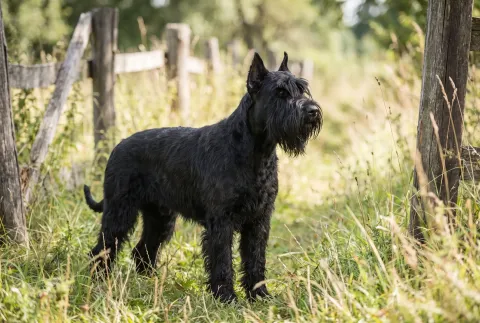
Are Schnauzers terriers? No — here's their real group
They've got the beard, the wiry coat and the attitude, but Schnauzers aren't terriers. Why the world's biggest registry files them somewhere else entirely.
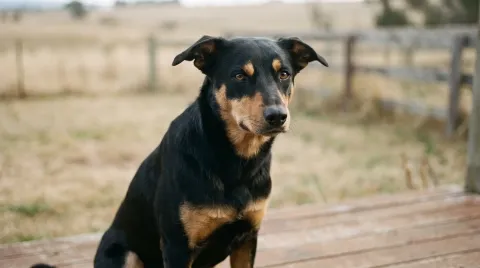
What is a Kelpie? Australia's tireless farm dog
The Australian Kelpie is a medium herding dog built for endless work in brutal heat. What it is, how big it gets, whether it sheds, and who it actually suits.
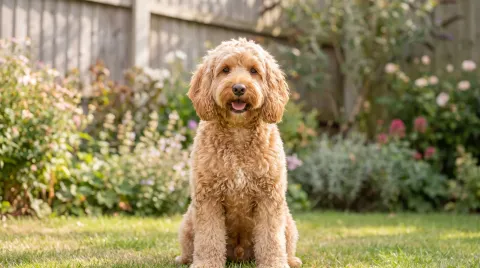
Is a Cockapoo a breed? What designer crosses really are
A Cockapoo is a hugely popular dog — but not a breed any major registry recognises. Why a cross isn't a breed, what F1 and F1b actually mean, and why it matters.
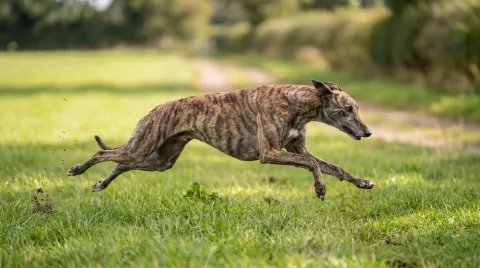
The fastest dog breeds, and how fast they really go
The Greyhound hits about 72 km/h — second only to the cheetah, and the winner over any real distance. Honest top speeds for the sighthounds and the surprises, plus how fast a Dobermann actually is.
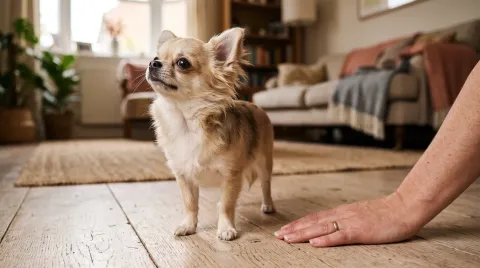
The smallest dog breeds in the world
The Chihuahua is officially the smallest, at 1.5–3 kg. Here are the toy breeds just above it — and an honest warning about the 'teacup' label, which is marketing, not a breed.
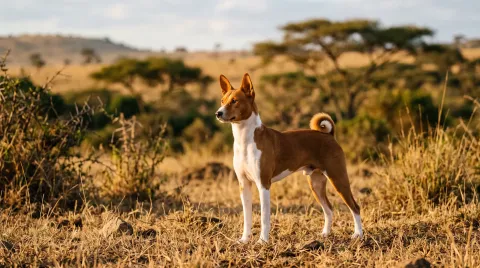
Which dog breeds are actually ancient?
Genetics keeps naming the same handful of breeds as “ancient” — but that word means isolated from the Victorian breed factory, not unchanged since antiquity.